This State Will Determine If Dems Win the Senate—and Give an MRI of Their Soul
A three-way contest for the nomination in Michigan is a microcosm of the debate over the party’s future.

THE BIG DEMOCRATIC WINS LAST TUESDAY mean control of the Senate could really be in play next November.
That is why—as my colleague Lauren Egan reported last week—Democrats are talking seriously about states like Alaska, Iowa, and Ohio, where, in a strong year, they could flip seats now held by Republicans.
But Democrats won’t have a shot at a majority if they can’t defend seats they already hold. And in at least one state, that’s no small thing. That state is Michigan.
Incumbent two-term Democratic Senator Gary Peters announced in January that he would not seek another term, following in the footsteps of longtime Michigan Senator Debbie Stabenow, who had announced her retirement before the 2024 elections. Stabenow’s decision was a conscious, deliberate attempt to hand off leadership to a new generation of Michigan Democrats, and the plan worked seamlessly.
The 2024 Democratic field cleared for Elissa Slotkin, who had already parlayed her bipartisan credentials and national security experience into a string of victories in red-leaning House districts. Slotkin went on to win the Senate seat even though Donald Trump carried Michigan in the presidential election.
This time around, things aren’t going to fall into place so neatly.
Three Democrats are seeking the party’s nomination, each formidable in his or her own way. One is a generational orator who thrills the party’s progressive base. Another is a breakout national star who first won acclaim by punching back at Republican bullying. The third is an industrious, widely respected legislator who can honestly say she played a role in saving Michigan’s auto industry.
But each one also has big questions hanging over their candidacies. Can a Bernie Sanders–styled progressive win such a decidedly purple state? Can the national media darling connect with Michiganders as well as she has with MSNBC audiences? Can that industrious legislator survive in a political era that puts a premium on the ability to get and sustain attention?
The anxieties about these candidates tap into broader doubts Democrats have felt about their party ever since Trump won last November. That’s one of the reasons the Michigan race is so important nationally: It’s a microcosm of the larger debates about how the party should position itself. And the decision Michigan’s Democratic primary voters make—as they weigh not only their own preferences but try to pick a candidate who will resonate with the full electorate—may give us hints of what to expect nationally in 2026 and 2028.
The good news for Michigan’s Democrats is that the political environment for 2026 seems likely to be favorable, given Tuesday’s wins and the general tendency of midterms to be bad for the president’s party. Plus, the last time a Republican Senate candidate won in Michigan was 1994, and this time the nominee is likely to be Mike Rogers, the same establishment Republican and Trump-critic-turned-supporter who lost to Slotkin last year.
But the volatility of Trump’s presidency—to say nothing of other unpredictable factors, from the economy to natural disasters—make it impossible to be certain what political conditions will prevail a year from now. And the last two Democratic Senate wins were anything but comfortable. Peters defeated his opponent by less than 2 points in 2020; Slotkin beat Rogers by just three-tenths of a percent last year.1
The campaign has barely started, so there’s plenty of time to ponder all of this. For now, here’s an introduction to the contenders, including some of the potential and peril they would bring to the Democratic ticket.
It is informed by about a dozen long conversations I’ve had with political insiders, advocates, and observers over the past few weeks—in some cases, granting anonymity because they work in Democratic politics. It also reflects my own impressions as a longtime Michigan resident who has seen all three candidates up close.
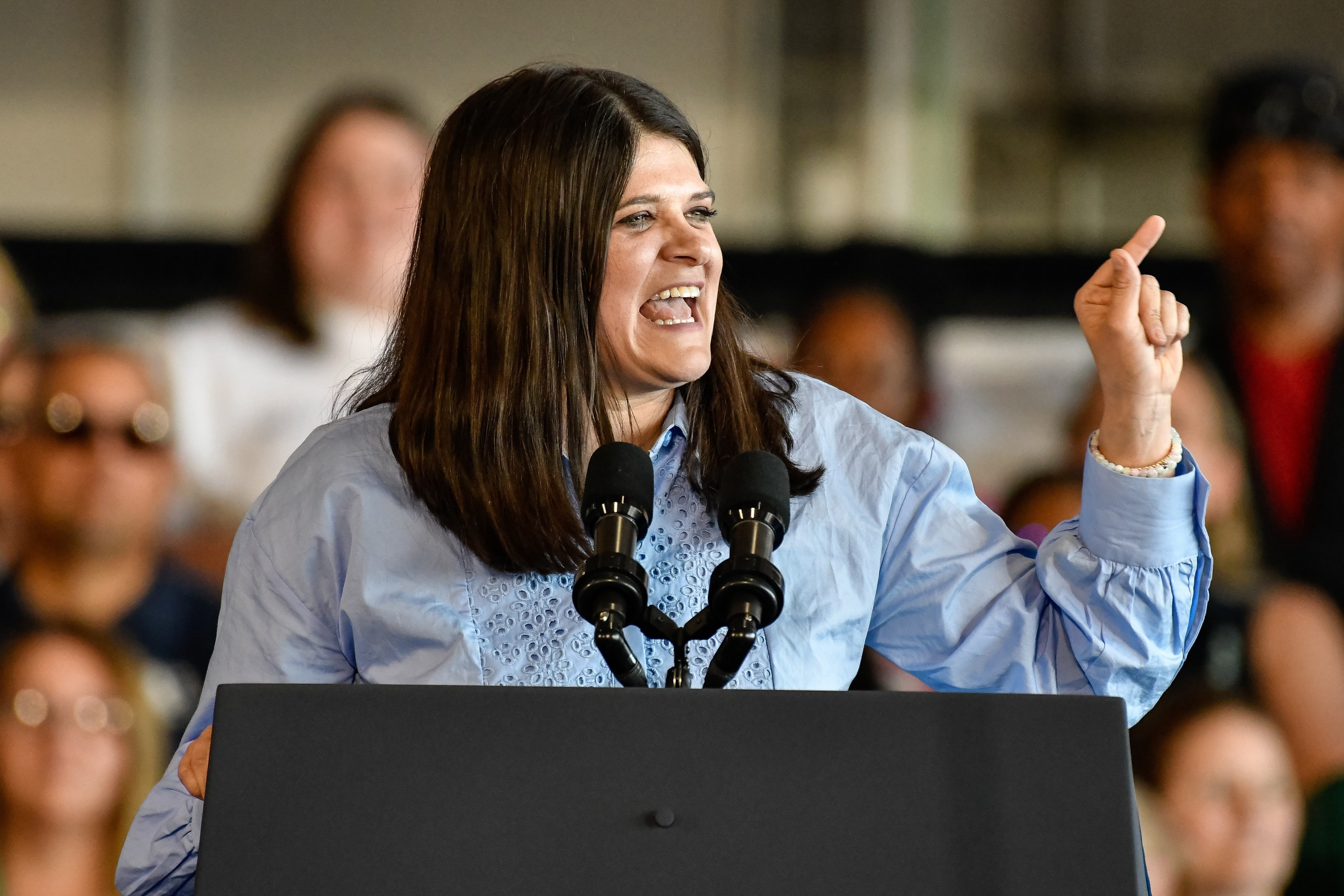
U.S. Representative Haley Stevens
Haley Stevens is widely understood to be the preferred choice of national Democratic leaders. That has a lot to do with the familiar contours of her candidacy.
She’s a mainstream, relatively moderate Democrat with a Michigan accent as thick as Stabenow’s or Governor Gretchen Whitmer’s, two highly popular politicians whom party leaders would clone if they could. Stevens is the daughter of small business owners in Macomb County, the famous swing county where Ronald Reagan and later Trump turned so many Democratic voters into Republicans. Her announcement video began with a scene of her walking through a car dealership lot, talking about the used Oldsmobile that was her first car.
In a year when issues like tariffs and jobs loom large, Stevens can speak confidently about the manufacturing economy in a way few political figures can. She was chief of staff for the Obama administration task force that in 2009 engineered the rescue of General Motors and (what was then) Chrysler, which by saving the companies from liquidation may have saved more than a million jobs nationwide.
Those credentials were a big part of her 2018 congressional campaign, when she flipped a suburban Detroit seat Republicans had held almost continuously for twenty-five years. Since getting to Congress, Stevens has taken a classic “workhorse” rather than a “showhorse” approach, passing enough low-profile, bipartisan economic initiatives to win her recognition as one of the most effective Democrats in the House, and tops in the Michigan delegation.2
Stevens has built close relationships with local and state organizations, including not just reliable Democratic allies in labor and the civil rights community, but also Republican-leaning ones like the U.S. Chamber of Commerce. It’s among the many ways she cuts the same political profile as Peters, who isn’t a headline grabber but is well-liked on Capitol Hill and seems to have friends in every one of Michigan’s union halls.
“She’s ‘slow and steady wins the race,’ not flashy . . . and she’s won tough races that way,” Jeff Timmer, a strategist and Lincoln Project adviser who served as Michigan GOP chair in its pre-Trump days, told me. “It shows that she’s got something that appeals to the Democrats who knew her best.”
But the fact that she is a reliable, familiar quantity in Michigan could cut against Stevens, too, if midterm voters are frustrated with politicians and looking for an outsider. That was one possible factor in Peters’s tight race in 2020: He couldn’t position himself as a “change” candidate in a year voters wanted something different. The same thing could hold back Stevens if the public is in that sort of mood next November.
A separate complicating factor could be her record of strong, vocal support for Israel. It was a strength for her during her primary campaign in 2022, when redistricting put her up in a more heavily Jewish district against Andy Levin, a more progressive incumbent Democrat who had been more critical of Israel. But winning a Senate seat means winning statewide and already the financial support she has drawn from AIPAC has prompted attacks from both progressives and leaders in Michigan’s large Muslim community.
The other big question facing Stevens’s candidacy centers more on personality than positioning. Even her supporters worry about her presence in front of the cameras and what they describe as an awkwardness in her public appearances, like her now-viral 2020 House speech when she was screaming over the chair’s attempts to cut her off.
“She’s somebody who’d clearly rather be crafting a bill than standing in front of a television [camera],” one Democratic insider said to me. “She’s not a very effective communicator.”
Already some prominent Democrats are getting nervous. A recent article in NOTUS quoted insiders who were worried that Stevens has not done more to separate herself from the field, despite her familiarity in the state and her prodigious fundraising.
“I’m not seeing any enthusiasm for her campaign,” Michigan-based strategist Chris De Witt said. “That certainly can change, but it doesn’t seem like there’s a lot of excitement about her effort.”
Former county public health director Abdul El-Sayed
Generating excitement has never been a problem for Abdul El-Sayed, who first made a name for himself in Michigan politics when he ran a surprisingly strong progressive challenge to Whitmer in the 2018 Democratic primary.
An athletic and academic standout in his suburban Detroit public high school, El-Sayed went to the University of Michigan, where in 2007 he graduated Phi Beta Kappa with highest distinction—and gave the student graduation speech as well. That made him the warmup act for that year’s official commencement speaker, former President Bill Clinton, who was so blown away by El-Sayed’s speech that he tracked down the graduating senior afterwards and urged him to pursue public service.
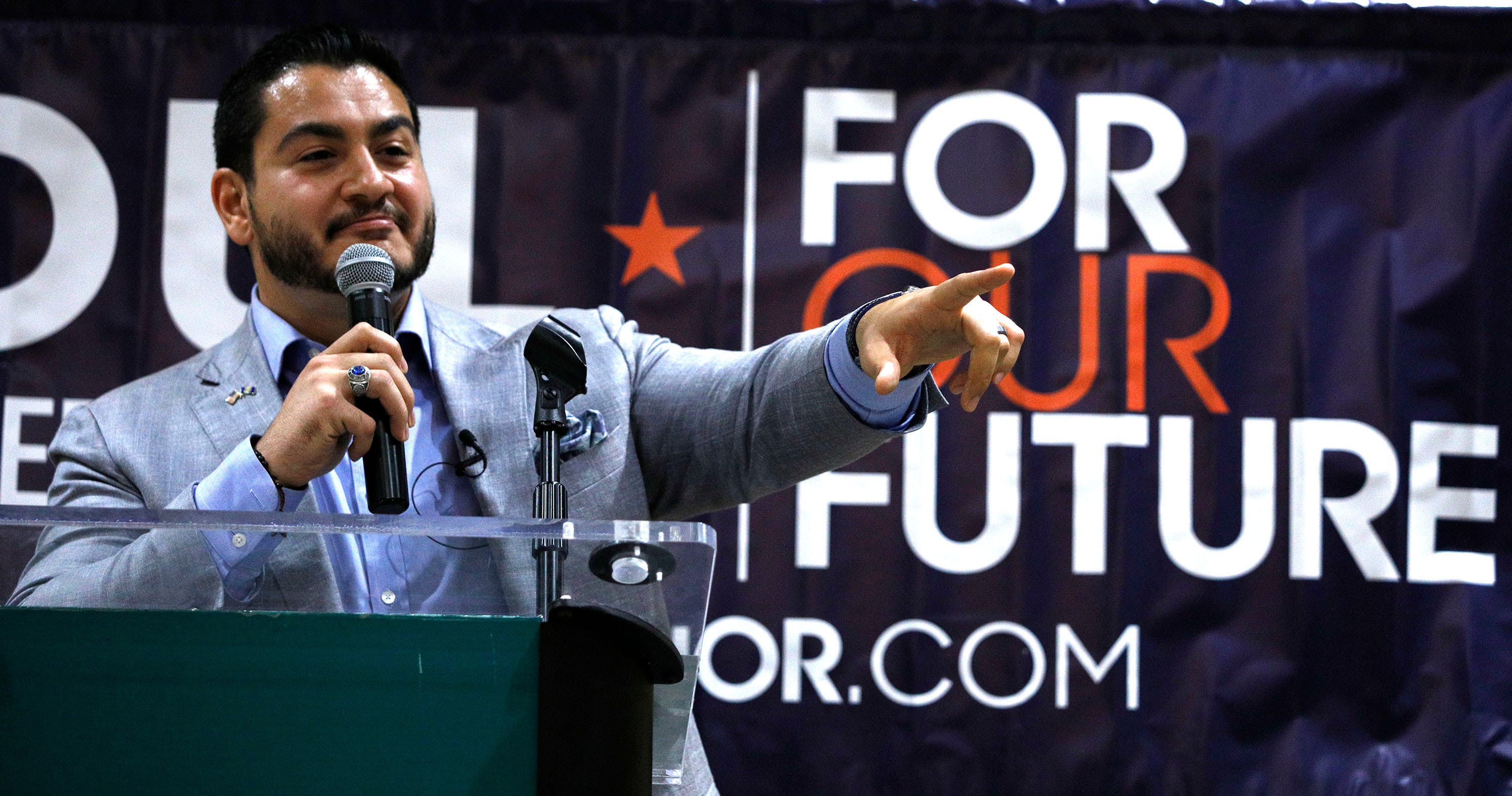
El-Sayed would do just that. After picking up a medical degree at Columbia University and a doctorate at Oxford that he got through a Rhodes Scholarship, El-Sayed returned to Michigan to become public health director for Detroit and, later, for Wayne County, spearheading efforts to wipe out medical debt and distribute free eyeglasses to low-income children.3 That pedigree is among the assets he would carry into a general election next year, because he could speak with unique authority about the human costs of Trump’s assault on the CDC, medical research and government health insurance programs.
El-Sayed’s signature cause is Medicare for All. It’s one of many ways his politics mirror those of Sen. Bernie Sanders, who endorsed him back in 2018 and has already endorsed him again. But the comparison on everybody’s mind after last Tuesday has been to another progressive: Zohran Mamdani, who just became New York City’s mayor-elect.
El-Sayed gives off less of a hipster vibe than Mamdani, but otherwise the similarities are real, from the man-on-the-street social videos both have produced to the shared belief that energizing progressive voters can change the political landscape. Just as Mamdani will be New York’s first Muslim mayor, El-Sayed would be the nation’s first Muslim senator. And like Mamdani, El-Sayed has focused his campaign so far on affordability and attacking big corporations.4
“You saw what happened in the New York’s mayor’s race—that guy was out there on the streets, talking to people and explaining himself, and people really respect that,” Chad Fabbro, a local UAW official in Flint and cohost of the “Unapologetic Americans” podcast, told me. “I don’t care if [El-Sayed] is the farthest left. If he’s the one most willing to get out there, he can be the guy.”
Still, Michigan is not Manhattan, or even Staten Island. And El-Sayed would be asking the state to elect the kind of progressive it simply never has. Democrats have a lock on statewide office at the moment, but pretty much every one of those Democrats’ politics fall firmly within mainstream political boundaries. If anything, they lean slightly more to the center.
The worry with El-Sayed—even for people generally sympathetic to his causes—is that he would be creating vulnerabilities for right-wing attacks a more mainstream Democrat wouldn’t have. It could happen if his support of Medicare for All spooks voters nervous about giving up the insurance they have, or if his outspoken criticism of Israel—which antedates the war in Gaza—ultimately alienates more voters in the general than it attracts in the primary.
It could also happen if he comes off like a know-it-all—or, as one progressive advocate put it to me, “like a Bernie Bro.”
El-Sayed is betting that his authenticity, eagerness to hear out critics and status as an outsider will overcome skepticism in more conservative parts of Michigan like the upper peninsula, where he’s already made two campaign swings. But that’s the bet progressives always make, and it has yet to work outside of the deepest-blue pockets of America.
“I think that Michigan voters, even center-left behavioral Democrats who aren’t doctrinaire progressives, aren’t going to embrace a candidate who positions themselves as . . . an AOC, Bernie, Mamdani kind of candidate,” Timmer said, expressing a view widely shared among political professionals. “It’s great in a Democratic primary, perhaps, but bad in a competitive, purple Midwestern federal election.”
State Senator Mallory McMorrow
Not many state senators have national profiles. Then again, not many have given speeches like Mallory McMorrow did in April 2022, after a Republican fellow state senator attacked her in a fundraising email for supposedly seeking to “groom and sexualize” children.
The letter had gone out in the midst of a statewide fight about whether and how to address sexuality in the public schools. McMorrow gave her angry, forceful answer on the Senate floor, describing herself as a “a straight, white, Christian, married, suburban mom” determined to make sure all kids “feel seen, heard, and supported.” The speech picked up millions of views on YouTube and brought in more than $1 million in small donations from across fifty states.
It also gave McMorrow a chance to appear on national media, where she’s become a fixture. Partly that’s because, as one insider put it, “she has a face and a voice for media.” And partly that’s because of her ability to talk about policy in a way that sounds more like a neighbor than an elected official, all while standing up unabashedly for Democratic party values.
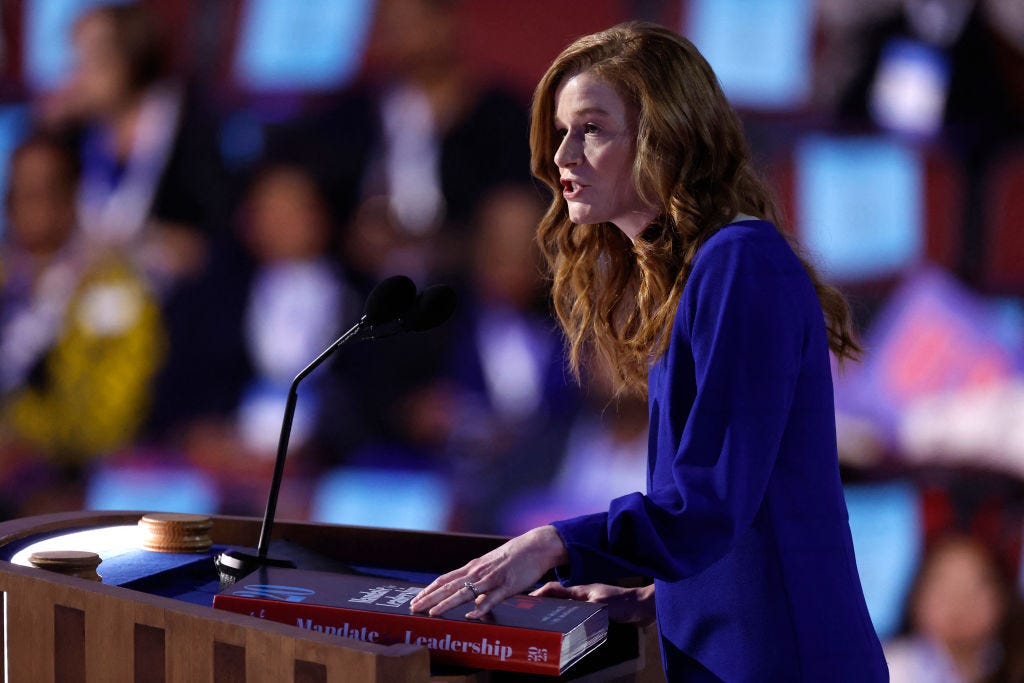
One reason McMorrow doesn’t sound like a politician is that she hasn’t been one for very long. Like El-Sayed and Stevens, she first ran for public office in 2018. But the leap into electoral politics was bigger for McMorrow, because she had previously worked only in the private sector, most recently at a design firm with contracts in the auto industry. She decided to engage in politics—and then run for her state Senate seat—following Trump’s 2016 election, and has said frequently it was the lack of alarm among so many around her that convinced her to speak out.
McMorrow can hold her own in policy discussions (yes, all three of the Democratic contenders are brainy) and likes to wonk out on topics like economic development.5 But it’s her attention to kitchen-table issues on the minds of people like her—the strain on working parents, or those annoying ads the NFL Network has added to its “RedZone” channel—that could win her support of the middle-class voters whom Democrats need to win.
In theory, McMorrow could be a Goldilocks candidate: more appealing to progressives than Stevens, less off-putting to moderates than El-Sayed. But she has never run for federal office (as Stevens has four times) or statewide (as El-Sayed did in 2018). Michigan state Senate districts have about 250,000 people in them. Winning in a demographically diverse, geographically spread-out state of 10 million people—while contending with more aggressive media coverage and fighting off well-financed, inevitably brutal Republican attacks—would present a whole other kind of test.
“You can definitely make a case that she has what it takes to thread the needle, between what it takes to win the primary and then win in the general,” Timmer said. “But going from the legislature to statewide is like going from being governor to running for president. You know, there’s a lot of great triple-A players who can’t hit a major league curveball.”
And that’s only if she gets out of the primary, where it’s not clear how big that proverbial middle lane really is. Prying progressive votes from El-Sayed could be damn near impossible given his clear, consistent record and the backing of icons like Sanders. But her talk about diversifying Michigan’s economy (including references to beekeeping that have drawn shade from Stevens) could cause problems with the autoworkers. Pulling support from key constituencies like the black community is looking tough as well, because Stevens has such deep ties to pastors and other influential leaders.
“Haley has locked so many of the endorsements—the African-American preachers, small business owners, women—and you’re going to see more national ones coming in soon,” one Democratic operative told me. “And Mallory hasn’t made a lot of inroads out of her Senate district.”6
McMorrow’s decision to run for Senate—rather than, for example, the U.S. House seat Stevens is vacating—surprised a lot of people in state and national politics, and irked plenty who thought she was taking advantage of her celebrity to jump the line. But the reality is that nobody gets far in politics without ambition. And another reality is that women get attacked for ambition in a way men rarely do.
The successful candidates win over supporters through a combination of conviction and inspiration—and showing they are in sync with the values and priorities of the public. McMorrow has nine months to prove she’s that kind of candidate. The same goes for Stevens and El-Sayed.
THE NIGHTMARE FOR DEMOCRATS is that things get ugly—if, for example, the candidates end up spending down their treasuries to tear each other apart, so that the winner enters the general election short on funds, damaged by months of intraparty attacks, and yoked to positions that are toxic outside of loyal Democratic constituencies.
But there’s another possibility. Whoever wins the Democratic primary could emerge battle-tested and with statewide recognition, not to mention the aura of a winner. It’s true all three candidates have liabilities. It’s also true that all three have a lot going for them. Whichever choice emerges from the primary will say a lot about what Democratic voters think it takes to win in a general election—although only the general election itself will determine whether they were right.
The candidate Peters defeated in 2020, businessman and Army veteran John James, has since been elected to Congress, and has announced his candidacy for governor of Michigan in 2026. Expect to hear more about that race soon.
The ranking comes from the Center for Effective Lawmaking, a joint project of the University of Virginia and Vanderbilt University, and assesses legislators based on their ability to enact an agenda.
Along the way, he found time to write two meaty books on policy and host a Crooked Media podcast called “America Dissected” that ran for more than 200 episodes.
He’s not the only one trying it. Graham Platner in Maine is doing much the same.
Over the past two years, McMorrow has been making a nuanced critique of state strategy for attracting investment—a strategy with support from both parties, as well as Whitmer. McMorrow thinks the state is giving prospective employers too much money with too few conditions; she’d prefer more money into programs for infrastructure and training that she says are more likely to benefit the state in the long run.
Pretty much everybody in Michigan politics refers to all three candidates by their first names—a reflection of all three’s relative youth, and their eagerness to have strong local presences.
After reading Cohn's description of Stevens, I thought, "Michigan should pick her."
After reading Cohn's description of El-Sayed, I thought, "Michigan should pick him."
After reading Cohn's description of McMorrow, I thought, "Michigan should pick her."
MI resident here. Stevens is "the conventional past" who will be running against Mike Rogers, another "conventional past." Both will have a lot of money: Stevens from AIPAC and Rogers from the DeVos family. This will be a classic electoral race from the "conventional past."
Both El-Sayed and McMorrow will disrupt "the conventional past." They are new candidates with new and creative ideas. Both are terrific communicators. Both will make Mike Rogers look like last week's news. The "conventional past" to date has not stood up to the chaos and cruelty we are now living through. I, for one, definitely want a fighter who will be unafraid to disrupt the lawlessness, greed, and cowardice now exhibited by the incumbents of the legislative branch.