‘No Other Choice’ Review
Park Chan-wook, Tim Robinson, and masculinity in crisis.

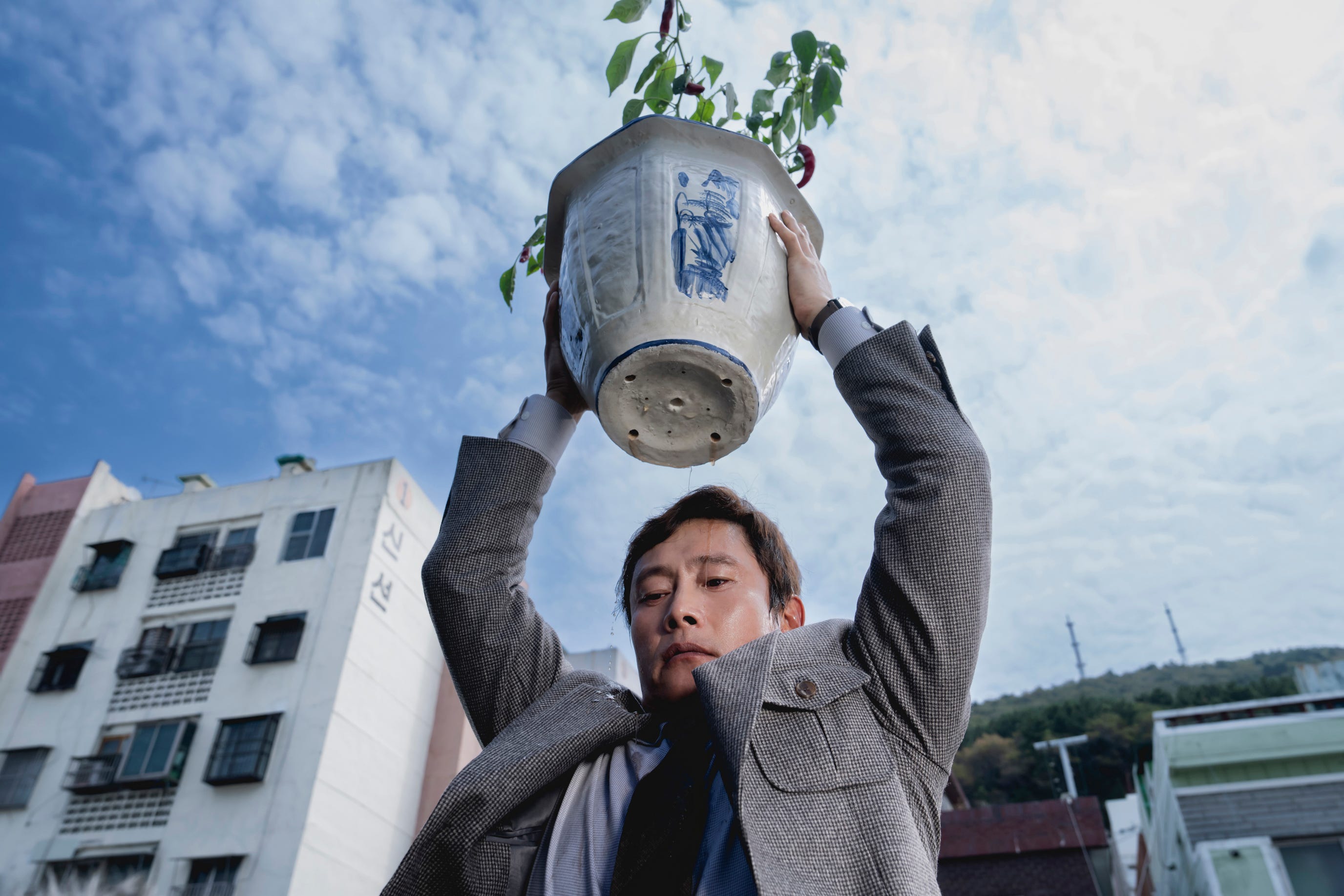
PARK CHAN-WOOK’S LATEST FILM, No Other Choice, belongs firmly in the canon of South Korea’s burgeoning lament for late-stage capitalism alongside Bong Joon Ho’s high-octane Snowpiercer and his Oscar-winning Parasite, as well as the Netflix blockbuster show, Squid Game.1 More than those, however, No Other Choice reminded me of something else, something closer to home: Tim Robinson’s absurdist workplace comedy for HBO, The Chair Company.
The Chair Company is nominally about a guy trying to figure out why the chair he sat on during an important business presentation collapsed, causing him to look foolish in front of his peers and his bosses. Answering this question entails an incredibly byzantine adventure through the bowels of business and local government that may or may not involve an international drug cartel. But the show is only nominally about this, because it’s really about Ron Trosper (Robinson) and his inability to handle success at work. About his own lack of self-control.
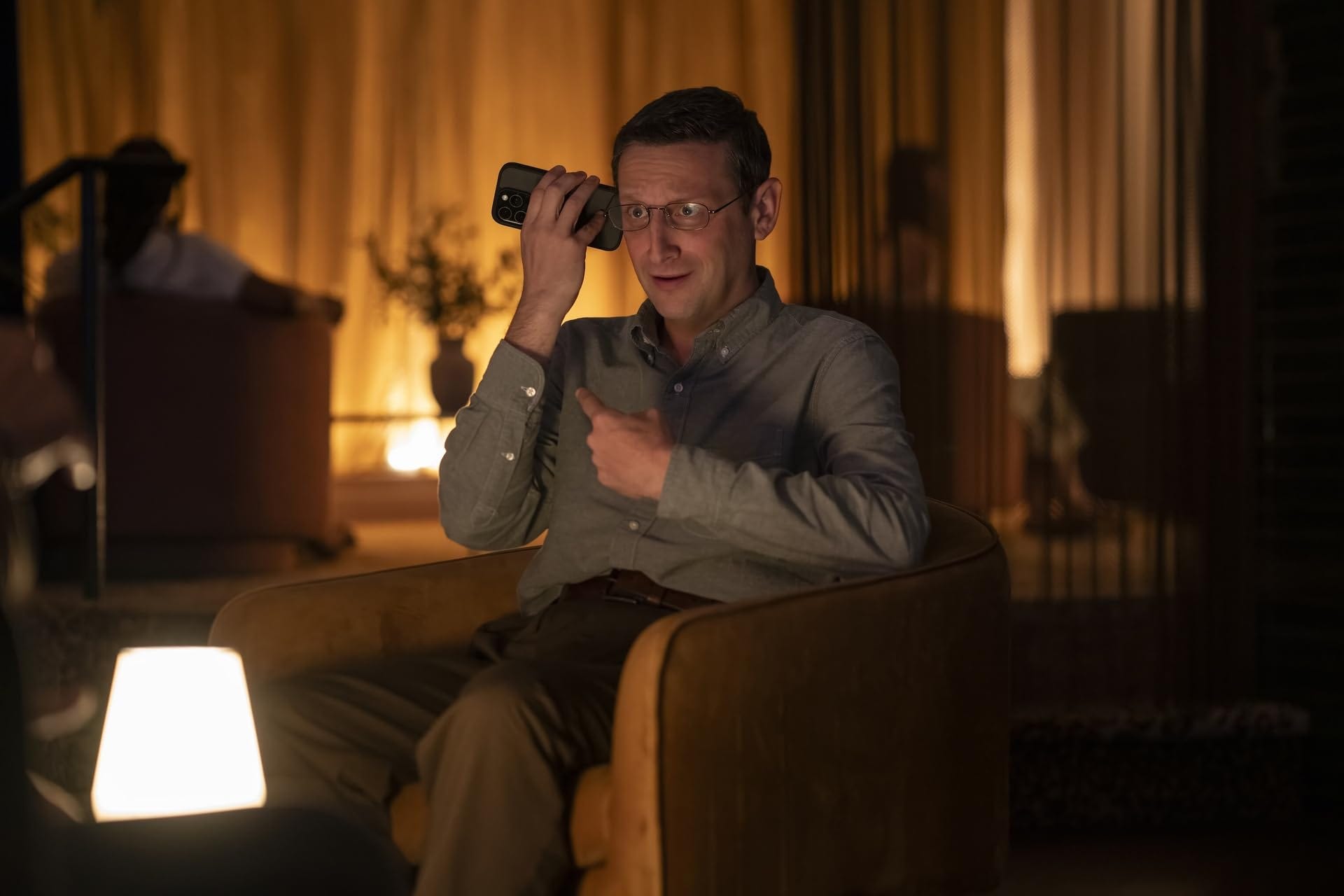
Every time Ron is given a chance to stop his mad pursuit of the labyrinthine puzzle this chair company represents—its lack of a board of directors; its phony website; the call service that gives him the runaround when he tries to report the defective seat that has caused him so much anguish—he rejects it. He cannot allow himself to be happy despite his well-paying job and the support of a loving family. He is one of the lucky winners in the game of late-stage capitalism, yet he cannot focus on the task he has been hired to do: design an outdoor mall in Akron, Ohio. His problem isn’t the chair. His problem is himself.
Unlike Ron, Yoo Man-su (Lee Byung-hun) is not one of the winners in our economic hunger games. A longtime employee at a paper company recently purchased by an American conglomerate, Yoo is one of the casualties when layoffs are handed down. Like so many others in the field of paper production, he has been let go, and the pool of applicants for every job is crowded. To thin out the herd all grazing on the same spot, Yoo comes up with an ingenious plan: create a fake company, inspire his competition to apply for it, and then kill the top men who apply so he looks better by comparison when new gigs open up and the inevitable flood of applications comes in.
Like Ron, however, the men of these paper companies are less concerned with the fact of putting food on the table than the idea that their value is tied to what they do, the product they’re obsessed with: paper. After learning that he’s been fired, Yoo’s wife, Mi-ri (Son Ye-jin), reminds him of being a “brave bachelor who proposed to a single mom,” telling him he can make a “new start.” Easy to say. Harder to do. He’s a paper man; he’s got vellum in his blood.
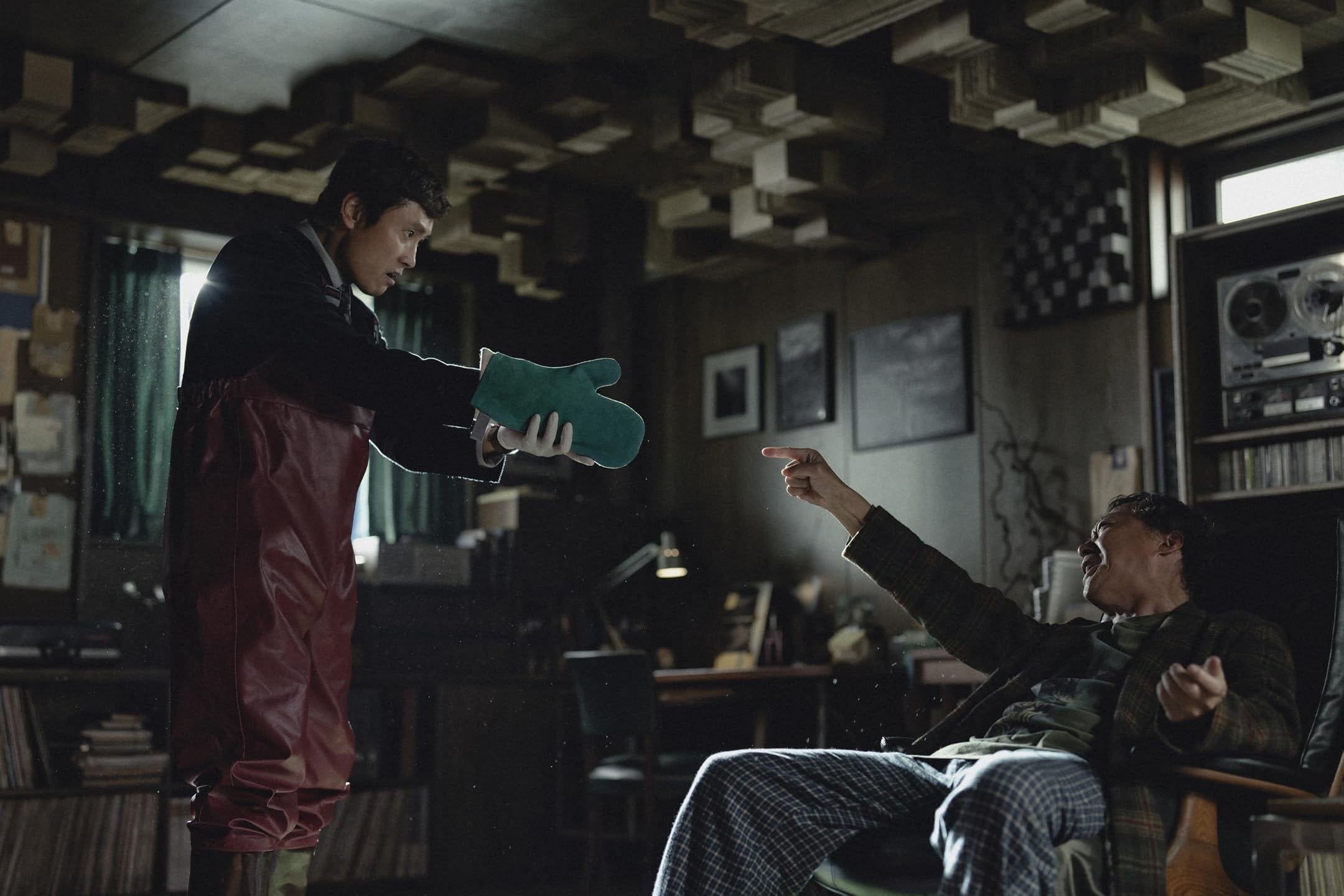
Just like Yoo’s first victim, Goo Beom-mo (Lee Sung-min). Responding to Yoo’s ad, Goo delivers a monologue that sings to me: “As a resolutely analogue person, I play music only on vinyl, take photos only on film, and write letters only on paper. My bond to paper, as durable as reinforced synthetic paper, began before I was even born.” This bond drives his loving wife to distraction: “Paper, paper! Damned paper! My dad kept offering to set you up with a café, but no, it had to be paper. Even if they hire you, you’ll retire in six to seven years. What then? In an age of living to 100? You, with your nice audio system, you could earn even more with a music café.”
Yoo, who has been stalking his prey at a near distance, hears this and it strikes a chord. Like Goo, he too is obsessed with paper, with the old ways. He cannot bear the thought of a new job, of a new career. For both of these men, the problem isn’t simply external. It’s not solely about the remorseless, empathy-free nature of corporate downsizing. It’s about an inability to change. It’s about believing, in a world of wide-open options, that he has no choice other than to pursue this one line of work, even to bloody ends.
It also struck a chord with your humble reviewer, working as he does in an industry that is often on the brink of disaster and holding a specialty that makes him virtually unemployable in the open market. In this age of economic uncertainty—one in which AI threatens to unleash a wave of unemployment unseen in decades; one in which tariffs and international trade wars threaten instability unheard of since the Great Depression—what’s scarier than the thought of being on the outside looking in of your chosen profession? “No other choice” is the muttered refrain of nearly every character in this film, from the suits cutting staff to the applicants desperate for work. But we all have choices, even if those choices are unpleasant. (Me, I’ve already settled on my post-journalism career path once this whole “film critic” thing explodes: Uber driver. Now there’s a job that can never be replaced by robots or AI!)
Park Chan-wook has made a career out of obsession and obsessives; Oldboy is practically Athenian in its tragedy, a tale of two men destroyed by their respective quests for revenge. I love the way he uses light and shadow in this film; from the early moments, when shadows block out the sun on the happy family, to the closing moments, as overhead fluorescents wink off, one after the other, behind Yoo, it is as though darkness is chasing our hero, attempting to consume him as it attempts to consume us all.
That we have been in this late stage for nearly thirty years—the very American book on which No Other Choice is based, Donald E. Westlake’s The Ax, debuted in 1997—is neither here nor there, I suppose. We’ve been in the late stage my whole life, it seems, as Westlake’s protagonist, named Burke, says all this began even fifteen years before that, “when the air traffic controllers were all given the chop.” Suicides in that group spiked, but “I don’t want to kill myself,” Burke narrates. “I don’t want to stop. I want to go on, even when there’s no way to go on. That’s the point.” Burke’s automaton-like effort to maintain his place in his industry (like Yoo, he is a paper man) has anesthetized him to the world; at one point, his wife complains that “he’s like a rock or a dead person.” Again, these are people dealing with internal problems, internal struggles.
Really good review. It’s also interesting that Yoo’s justification is that he is acting to preserve his family. He talks of the family being at “war”, so ends justify means (and I know that I would do anything to get my dogs back!). And the family are given life - Mi-ri is just great and in some ways the emotional centre of the film. And I like that the victims were sympathetic, complicating any identification with Yoo’s actions.
I respectfully suggest reading Vonnegut’s Player Piano (published in 1952) which addresses the replacement of human workers and the consequences of that dislocation.