

One Easy Pro-Consumer Trick Congress Will Never Pass
Plus: Getting lost in the tunnels of a techno-thriller.

MY FRIEND RICHARD RUSHFIELD over at the Ankler noted briefly earlier this week that Italian courts had not only reversed a price increase enacted by Netflix but also required a refund of previous price increases. This led Richard to write the following:
So imagine that. In some countries, laws prevent companies from simply shoving an increase down their customers’ throats without making it abundantly clear what they are doing and why.
The idea that one’s customers are not just piggy banks to be shaken until all the coins fall out but partners in a relationship is nice to hear about, if it exists somewhere.
I understand the need to charge more to deliver more, which is what Netflix would say they’re doing. You see it all the time. I’ll just use a personal-professional example: Not long ago, The Bulwark itself raised the monthly rate from $10 to $12 a month for new subscribers, in no small part because we’ve added a whole raft of newsletters and writers, great additions like Adrian Carrasquillo, Catherine Rampell, Lauren Egan, Mark Hertling, and Will Sommer … to say nothing of new editors like Sam Stein, new video producers, and whole support teams to ensure that the trains run on time. Trust me: I look at the expansion inside The Bulwark and just marvel at how quickly and largely it has grown. That growth is made possible by our Bulwark+ members—and if you’re among them, thank you.
If you aren’t a paying member yet, well, here’s your chance. The good news is that the price of a yearly sub remained static, while a monthly sub is now $12 a month . . . meaning that signing up for a year saves you nearly a third off the monthly rate. Given that we’re also running a special giving you the first two weeks for free, you’re basically losing money by not signing up for an annual sub to take advantage of all the ad-free videos, the legions of podcasts, and newsletters via our brand-new handy-dandy app (available on Apple and Google).
That said, it has become incredibly obvious that the business model of certain streamers, particularly the larger ones, is largely one of inertia. Most people don’t actively monitor how much they’re paying for each sub, and the renewal charges go through automatically because people just sign up for recurring payments with their credit cards. It’s all automated. There’s no friction for a price increase. My Disney+ sub has almost doubled in price over the last few years and I barely even notice it because it’s one of a thousand lines on a credit card statement. And their longer-term hope is to move some of those ad-free subscribers into the ad-supported tier, as advertising is where the real monetary growth will likely be in the future.
The Biden-era FTC tried to introduce some friction with its “click-to-cancel” rule, which would have required easier means of canceling subscriptions and active affirmation for price increases. The click-to-cancel rule was voided unanimously last year by the Eighth Circuit. I am in no position to judge the merits of this ruling, so I’ll just assume, for argument’s sake, that they handled it correctly; the Constitution is a tricky thing.
But that assumption allows me to make another assumption: Congress could absolutely pass a law demanding that service providers a.) make it easier to cancel subscriptions and b.) require active consent to increase prices. (Seems like pretty straightforward interstate commerce, no?) The form that active consent should take I leave up to the legislature, though I might add that merely clicking a button confirming the price increase simply will not do. There should be some further step, a requirement to restate the credit card number tied to an account, perhaps. Something to make the customer actually think about what they’re doing.
Because, let’s be real: Netflix’s decision to raise prices for the second time in less than a year feels pretty egregious. And I bet a lot of people, if they think about it, might not think it’s worth all that extra cash every year.
Anyway, I’m not in the business of offering the GOP Congress easy wins. But I genuinely cannot think of an easier win than ‘make it harder for faceless streaming companies to charge you more the sub you already have.’ And if they decide this is too hard? That they have better things to do than try to protect consumers from predation by the tech lords? Well, hey. Seems like an easy win for the sure-to-be-incoming Democratic majority, no?
From Gaming to Podcasting: New Frontiers in Film
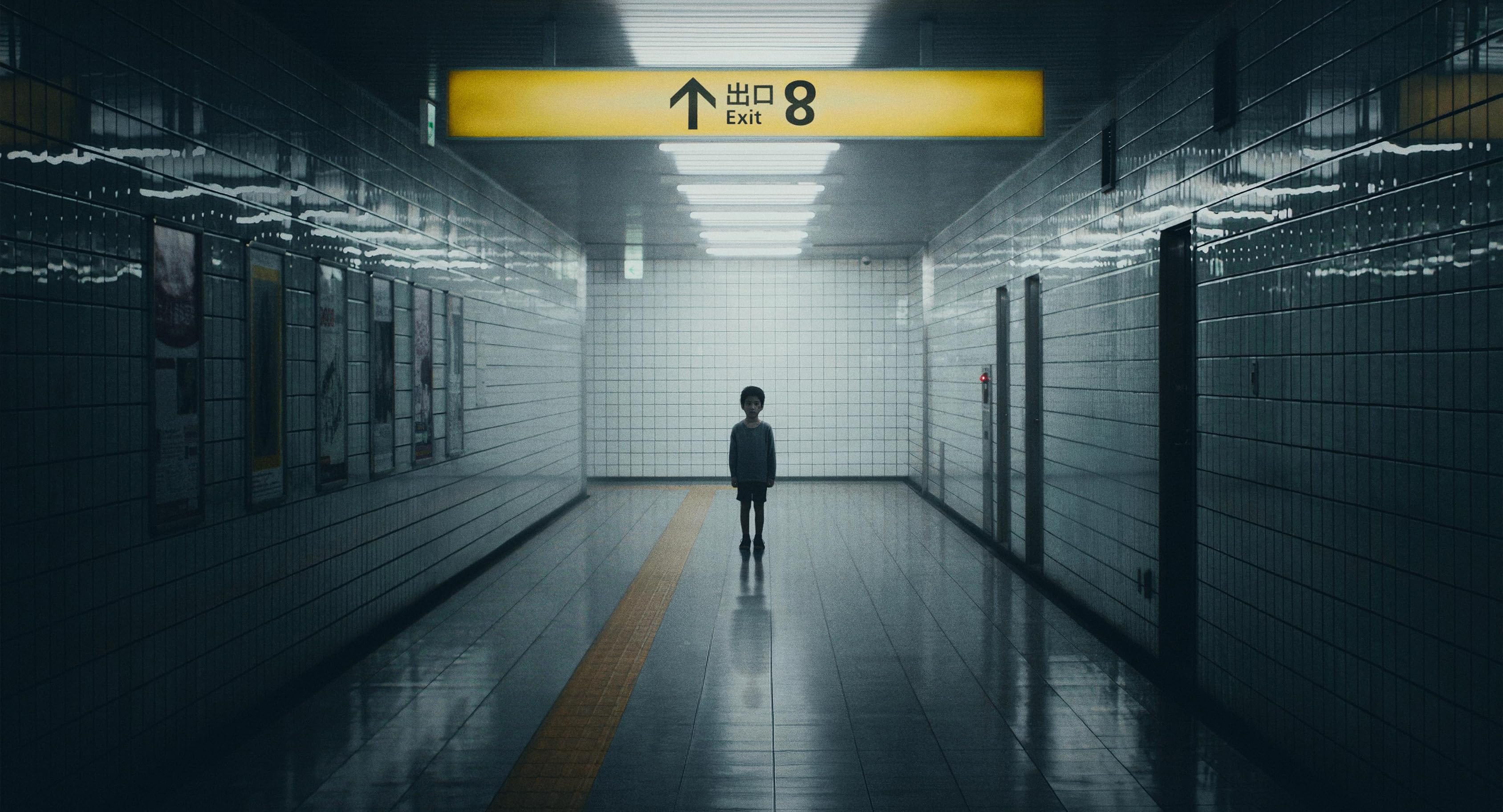
I’M NOT GOING TO REVIEW the new Super Mario Galaxy, but I feel confident saying that Exit 8 is the best video-game adaptation in theaters this week. And that’s at least in part because director and cowriter Genki Kawamura understood how to meld the source material’s gameplay with the tricks of cinema. A brief taste of my review of this Japanese psychological horror-thriller:
Some audiences will find Exit 8 grating, and I get it: It is repetitive by design, and if your brain hasn’t been trained by video game logic to pick up on tiny details or engage in foolishly intricate puzzle-solving to, say, extricate a medallion from a locker (I’m looking at you, Resident Evil), you’ll likely find the entire exercise pointless.
However. I couldn’t help but find Exit 8 charming at times and, eventually, quite moving. It is, ultimately, a film about a man trapped in a doom loop of his own making and trying to break out of it, a mode of living that corresponds well to the fears that so many in the younger generation struggle with. How can I get married; I don’t have a good job. How can I have kids; I’m just a temporary worker. Where will we live; we don’t have a proper home. I can’t move forward until everything is perfect; nothing is ever perfect, I can’t move forward.
Contrast that to Undertone—also in my review linked above—which uses a horror podcast as the basis of its story but doesn’t seem to have any interest in or knowledge of how podcasts actually, you know, work.
The biggest problem with Undertone is that it is, frequently, kind of boring. There are long stretches where nothing of import and nothing terrifying happens. But there are moments when it is tremendously effective—jarringly creepy and genuinely frightening—and those moments all revolve around Evy’s (ridiculous) podcast. I feel there is a lesson to be learned here.
The effectiveness is achieved by leaning into the advances and the limitations of the technology available to podcasters. The way the sound design mimics what it’s like to wear noise-canceling headphones, for instance, is striking: There’s something intensely eerie about being in a big, old, empty house while wearing cans that cut you off from the noise around you. It’s an unnatural short-circuiting of the systems we’ve evolved to protect ourselves, a lowering of our defenses in a situation where they should be up. (Or, at least, we know they should be up since we’re watching a horror movie.) We’re on edge because she’s on edge, and she’s on edge because once she starts listening to the audio files, things start getting weird.
Anyway, Exit 8 is hitting theaters today and Undertone is still on some screens. But if I were you, I would prioritize the Japanese film.
Assigned Viewing: ‘The Christophers’ (Theaters)

IF HORROR’S NOT YOUR THING, you should go check out The Christophers (which is playing in a few cities this week and expanding wider next). I interviewed screenwriter Ed Solomon about his work on this film and his previous collaborations with Steven Soderbergh, alongside all sorts of questions about art and authenticity and set design and lens choices. It was a fun chat, and I hope you listen:

One thing we didn’t have time to discuss, though I alluded to it at the top of the interview, is that I recently showed my daughter 1997’s Men in Black, which Solomon wrote. She loved it and that made me very happy: Showing your kids something you watched and loved as a kid (I was 14 when this came out; she’s 10 now) is always a dicey proposition. However, the movie holds up well: Yes, a few of the CGI shots are a little dated, but it’s funny and propulsive and clever, and you have to give Solomon a good deal of the credit for that.
It really should be as easy to cancel as it was to subscribe. I got stuck with an Instacart subscription that I paid for 2 years because I could not cancel it. I tried everything I could think of to cancel it and Instacart had made it basically impossible. And then one day in 2024, on my credit card statement was a 800#, and I called it and a person answered and I was able to cancel the subscription. Before that moment, Instacart did not have a phone number published anywhere. I don't know what happened, but I am so grateful. That charge on my credit card bill every month used to send me into a rage for a day because I could not cancel the subscription. All services should be this easy to cancel.
I’m no lawyer either Sonny, but I actually read your link to the court’s decision vacating the Biden Administration FTC’s “click-to-cancel” rule, which would have been important to consumers faced with proliferating streaming services, and it seems to have been (?) a procedural violation of the FTC, i.e., not one of substance. If the negative economic impact, e.g., on streaming services, and including other industries, exceeded $100 million, then the FTC had to follow certain steps that it did not do. So sure, streaming services (again, as an example) benefit economically from customer inertia due to cumbersome and difficult procedures to cancel services prolonging, perhaps by a number of months, revenue accruing from your credit card. But the economic loss from expedited cancellations, that is incurred by business firms by click-to-cancel, is exactly matched by consumer savings. Wasn’t Congress’s goal for the FTC (1914) oriented to protection of consumers and not protection of businesses. Oh, I forgot, Republicans are now in charge of the executive branch!