Randolph Scott, Virtuous Loner of the West
Lonesomeness, nobility, and anti-machismo: the ‘Ranown’ westerns are an underappreciated treasure of American cinema.

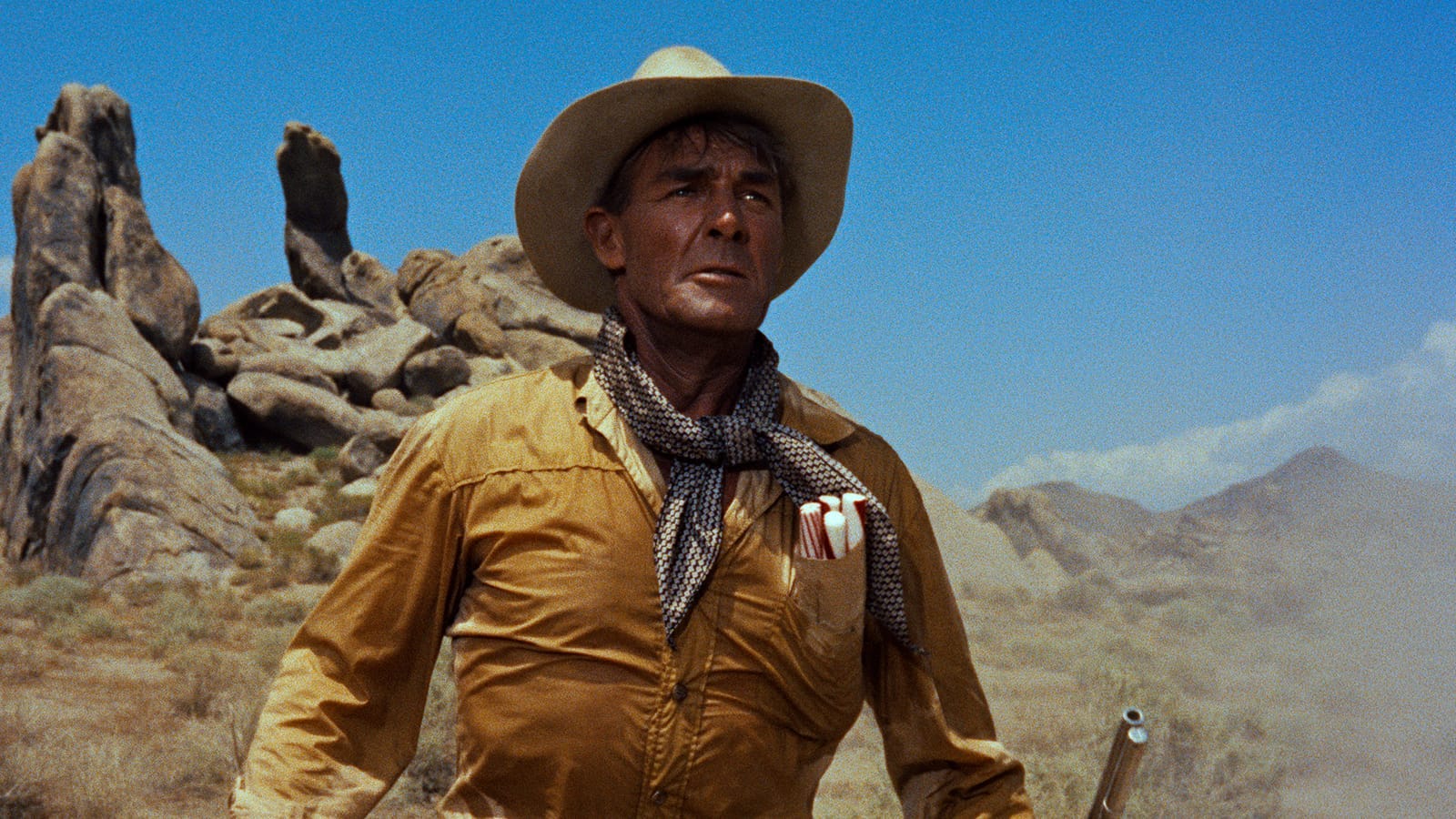
THE BLACK PALACE OF LECUMBERRI was no joke. As the cell door closed behind him, a wave of dread struck Budd Boetticher. Stench rose from a hole in the ground, and the only window, twenty feet above, yielded little light.
The year was 1961. The Black Palace was the colloquial name for Mexico City’s most notorious prison—a place where people went to disappear. In six decades, only one person had escaped alive. Boetticher was in Mexico to film a documentary about the bullfighter Carlos Arruza when he was locked up for unpaid debts.
“I knew I was going to be there a long time,” the director said, four decades later. “And I thought to myself—this saved my life—I thought, I wonder what Randolph Scott would do in a situation like this?”
Happily, he didn’t have to find out. Thanks to the intervention of a powerful friend, Boetticher was released much sooner than expected.
Half a decade before this, Boetticher had made a cluster of exquisite westerns, all starring Randolph Scott as the personification of manly poise amid crisis. The films were scripted by Burt Kennedy or Charles Lang, and produced by Harry Joe Browne, whose name, with Scott’s—Randolph + Browne—would create the portmanteau Ranown Productions.
In 2023, Criterion released new 4K versions of the five Ranown westerns. It was a welcome upgrade for films that critic Dave Kehr, writing in 1982, described as being “among the major glories of American movies,” even though they are “barely known outside the small circle of film cognoscenti.”
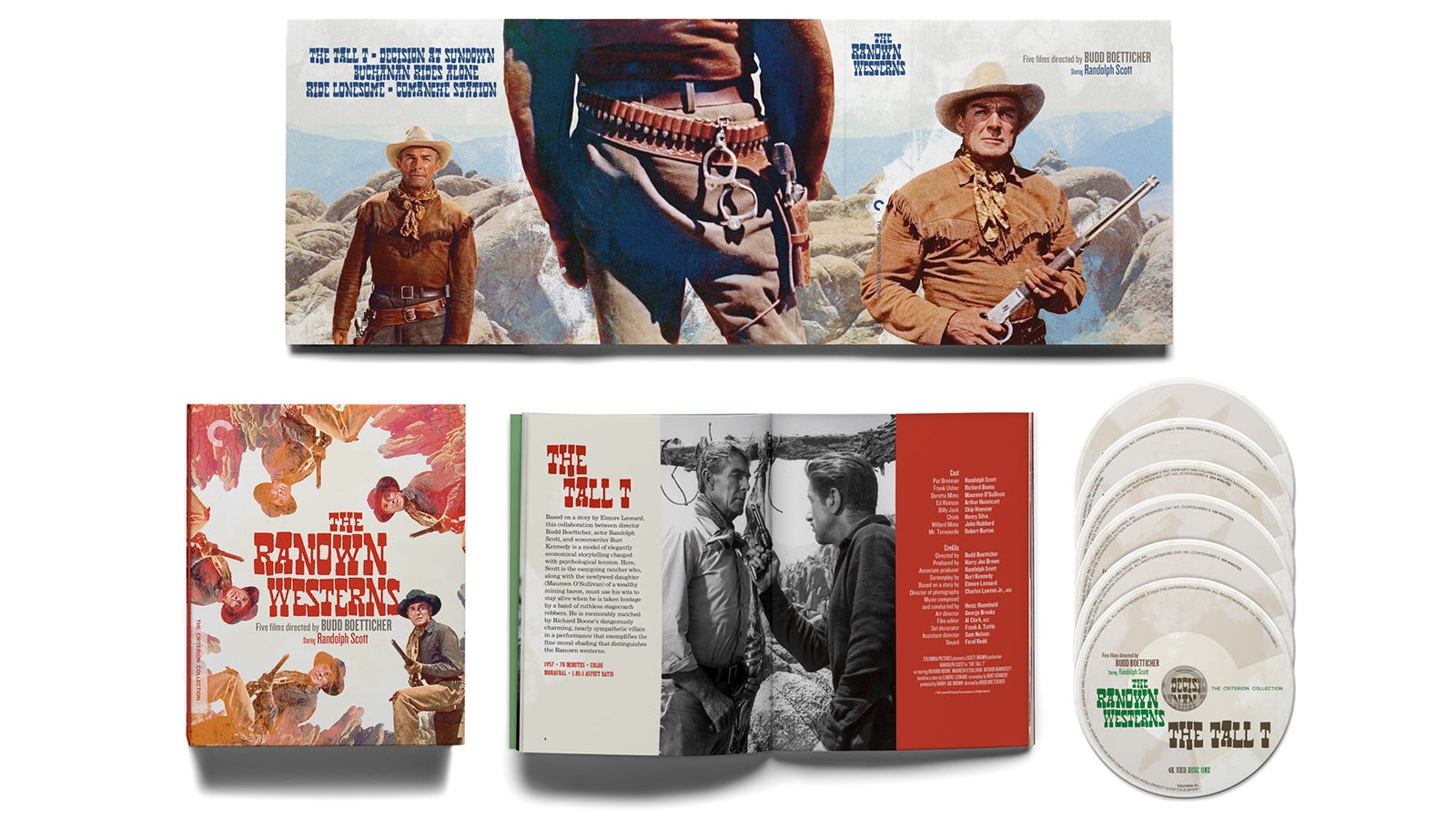
The Ranown films were produced during a liminal period for the genre, and it’s tempting to view them as the missing link between the stately classical westerns of the ’40s and the gritty revisionist era that kicked off in the ’60s. But even if their “dirty West” style foretold the coming aesthetic transformation, the Ranown cycle’s tone and ethos were, and are, unique.
Hemingwayesque in their brevity and violent candor, the films are humanistic tragicomedies, with a tenderness and a poetry in their language and assumptions about life. Boetticher’s world is small-scale and spare, practical, authentic. But it is not empty. If Sergio Leone’s Man With No Name wanders through a nihilistic and cynical wasteland, Randolph Scott’s Man of Many Names traverses a wilderness of the biblical type, a dusty stage for a man to search for the meaning of things.
Despite their weighty themes, the films never seemed weighed down. The Ranowns are trim pictures—following a day of rehearsal, shooting schedules were typically twelve to eighteen days—and deliberately anti-glamorous. They radiate the integrity of experience.
They’re also about something: lonesomeness, that most American of afflictions. The Ranown films generally start with Scott alone on a horse, silhouetted against a big country. This is how Americans imagine ourselves: trailblazers, mavericks, pioneers. With solitude comes freedom. But, we are meant to ask, what is freedom for?
EVERY RANOWN HERO STARTS the story lonesome. Not lonely, mind you. Whereas loneliness connotes desperation and incompleteness, lonesomeness evokes a romantic and wistful state, melancholic but content.
Boetticher’s landscapes, too, were lonesome. He liked to direct from horseback. During the Ranowns, he would scout on mornings in the aptly named Lone Pine, California. As the sky grew pink over the eastern Sierras, the director cantered through the foothills—so barren and foreign they resembled Martian wastes—to line up shots with his cinematographer.
He was by nature a swashbuckler. In his youth, Boetticher fought bulls in Mexico. He spent years as a matador before his horrified mother, a society lady back in Evansville, Indiana, arranged a job in Hollywood instead.
Whereas John Ford gloried in the elegance of Monument Valley, Boetticher made the starkness of Lone Pine his own. Ford’s wistful skylines, country dances, and American mythmaking take in the sweep of history. Boetticher’s work is smaller in scale. Instead of dramatizing Custer, Lincoln, and Wyatt Earp, Boetticher considers people on society’s fringe, the inarticulate, the simple.
Based on a short story by Elmore Leonard, The Tall T (the first film in the Criterion set) follows rancher Pat Brennan, who is caught up in a hostage situation. Played by Scott with sardonic Southern charm, Brennan is revealed as a hardened, calculating man of conviction. He is reluctant but ultimately willing to take swift and brutal action to free himself and the other hostage, a rich woman whose spineless new husband sold her out to the outlaws.
Brennan is alone by choice. The first twenty minutes of the film dwell on his decision to leave his longtime job as a foreman to start his own ranch. The chief outlaw, Richard Boone’s Frank Usher, will paraphrase Scripture to criticize Brennan’s chosen solitude. “Ain’t right for a man to be alone.” Brennan is skeptical. He grunts. “They say that.”
Envy is the motivator for Usher’s critique. Usher is an urbane highwayman, an intellectual—but despite his easy authority over the pathetic young juveniles he “runs with,” he is lonely. Recognizing Brennan as a superior sort of man, Usher keeps him alive merely because he wants a worthy conversation partner.
Maureen O’Sullivan’s heroine, Doretta Mims, is prone to nerves and hysterics, but she plays a crucial role in the story, conquering her own insecurity to save the day. Her quiet recollections of a miserable life give her an emotional storyline parallel with that of the men. This is a world of lonely people.
The question arises: What difference is there between Brennan’s lonesomeness and the loneliness of Doretta, which is mired in self-loathing? Or between Brennan and Usher, the murderous utilitarian who envies Brennan’s contentment? Usher has won his own freedom by the sword, but there seems to be a vital difference between his liberty and Brennan’s. Similarly, Doretta has achieved independence from her father, but at the cost of demeaning herself in a loveless marriage.
The difference between lonesome integrity and lonely compromise is not so great as it might seem. Martin Scorsese, discussing the Ranown cycle, highlights the importance of the loner in the western, where genre conventions pit the individual against society. There is always some problem with this “good bad man” integrating into civilization. Maybe he’s too violent, as with Shane or Ethan Edwards in The Searchers. Perhaps society is too judgmental or corrupt, which results in the Ringo Kid in Stage Coach or Will Kane in High Noon turning their backs on the sinful city. A few heroes defy the odds and end up with a girl and a pal, like John T. Chance in Rio Bravo, but such cases are rare. In westerns, lonesomeness is the punishment and independence the reward for such men’s choices.
The ideal, then, is a man alone—uncompromised and uncompromising. And what better man to exemplify that essential American type than Randolph Scott, whose name was so honored that Mel Brooks satirically invokes it in Blazing Saddles as a rallying cry that inspires terrified heartlanders to defend their town?
MY FAVORITE ICONOGRAPHIC IMAGE in the Ranown series is from The Tall T: Scott, bedraggled and half-soaked from a dare gone wrong, no horse (that was the bet), carrying his saddle on his back, a bag of cherry candy melting in his shirt pocket, squinting in the blazing sun—and pausing to pick rocks out of his boots:
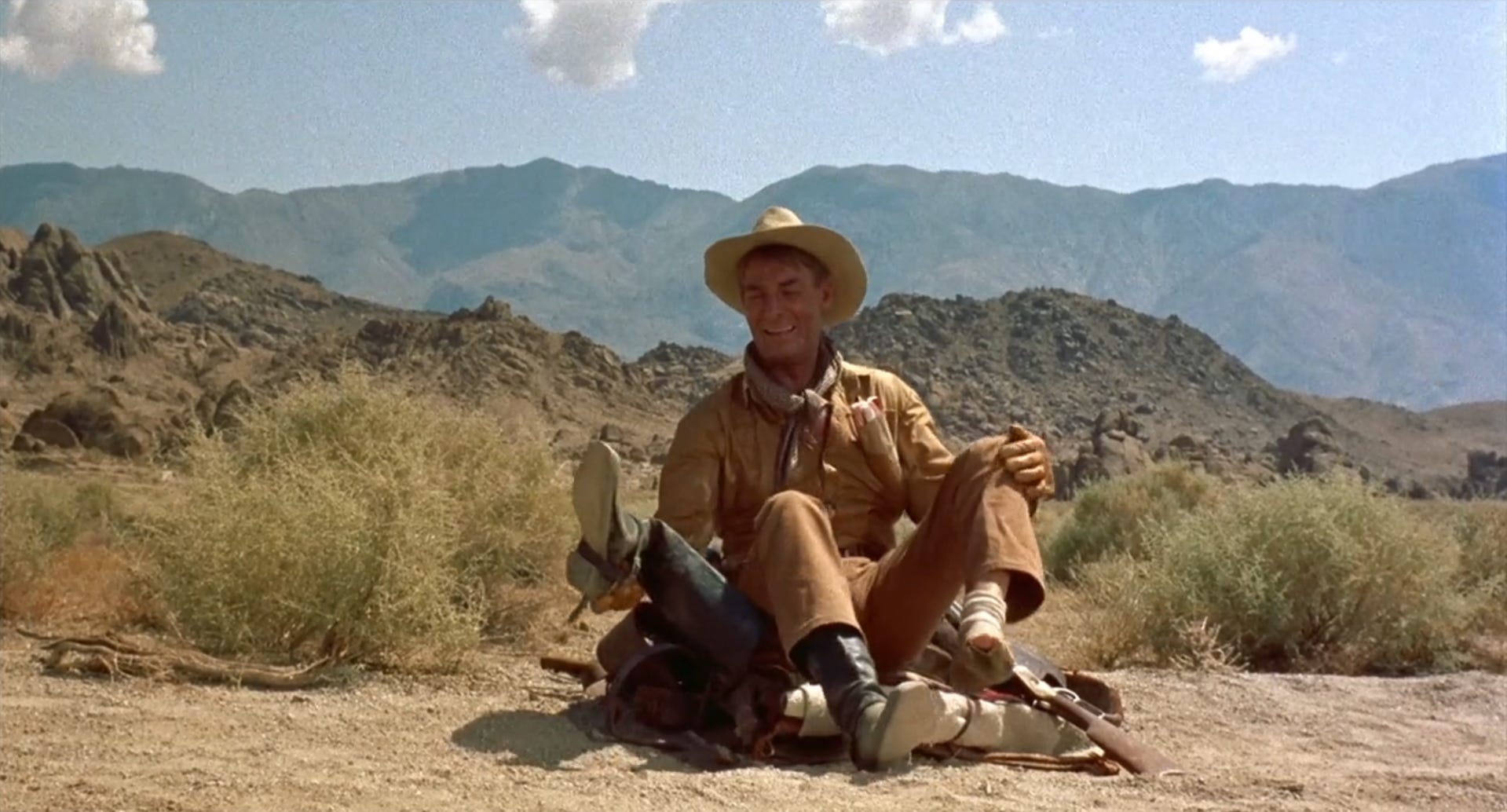
The elements jump off the screen: heat, the grit of sand, the taste of melting candy, the smell of sweat. Scott’s serenity in the face of misfortune—he is down on his luck but dignified—represents a sort of small-scale heroism. Given his 6′4″ frame, aristocratic accent, and movie-star looks, his unselfconscious ease is delightfully at odds with our expectations.
By this point in his life, Scott had aged from his youthful roles as muscular Adonis to a weathered and wizened knight of the desert—serious, disillusioned, and ironic. His leathery, lined face and wary eyes make him look like he’s spent decades squinting against the Mojave wind. A native North Carolinian from a notable family, Scott’s life had followed an aristocratic arc from his boyhood in a private school in Virginia to the trenches of France as a forward artillery observer, to a personal introduction to Howard Hughes in the 1930s.
He spent the next three decades working steadily and cannily to build a marketable image as a courtly, steely leading man. Shunning interviews, he built a mystique that separated the rugged hero from the private self: an extremely wealthy businessman who, Hedda Hopper diagnosed, “looked about as Western as the Brooklyn Bridge.”
It was no trial to avoid publicity; Scott was powerfully reserved by nature. His childhood best friend and fellow forward artillery observer, later–Brigadier General Andrew H. Harriss Jr., recalled that even in a foxhole, “we always reserved a sort of privacy between us. I always felt that Scotty was not comfortably designed to be an actor, which he most certainly became.”
According to one much-repeated story, Scott gained a spot at the Los Angeles Country Club, which did not admit actors, by explaining, “I’m not an actor, and I have fifty films to prove it.” The critics seemed to agree with his self-effacing joke. For many years, Scott was dismissed as wooden. However, he didn’t give himself enough credit. He was absolutely magnetic in a good role, stealing the show from leading man Robert Young as early as 1941’s Western Union. And by the 1950s, he was turning out reliably charming and invariably compelling performances in solid, unexceptional, medium-budget westerns.
Despite enthusiastically tackling characters with dark sides, Scott, a devout Episcopalian and Republican, still wanted his heroes to exemplify the values he believed in. Friends and acquaintances invariably described him as a Southern gentleman. “If the South had one hundred Randolph Scotts, they would have won the Civil War,” Boetticher proclaimed. Lee Marvin, a tough ex-Marine, diagnosed him “a lovely man” by whom he was happy to be cinematically “outdrawn.” Billy Graham said simply, “I never knew a finer character in my whole life than Randy Scott.” Three quite diverse endorsements, to say the least.
Scott’s persona was even more muted than that of John Wayne, with whom he developed a box-office rivalry. For some years, Scott was Wayne’s only competition as top cowboy in Hollywood. Ironically, the first Boetticher-Scott collaboration, Seven Men from Now, was produced by John Wayne’s production company, Batjac. Wayne intended to star himself, but since he was caught up in shooting The Searchers, he suggested Scott as lead, dismissively: “He’s through.” (At that particular moment, Wayne was right.)
While it’s not included in the Criterion bundle—it isn’t technically a “Ranown” picture since Harry Joe Brown did not produce it1—Seven Men from Now establishes the template for films that follow. Each is a variation on a theme: A strong loner, Scott, meets a woman with a weak partner with whom he is contrasted. Gradually, we are introduced to other familiar elements, including complex and perversely admirable villains, poignant young criminals, and a crisis that confronts Scott with something he “just can’t ride around.”
In Seven Men, the admirable villain is a charismatic young Lee Marvin, needling Scott right up until their inevitable showdown, a tense standoff that Sergio Leone must have admired (“Budd! I stole everything from you!” Leone bellowed upon meeting Boetticher for the first time at a festival). Scott draws so fast we don’t actually see the move, but he sinks to the ground after shooting Marvin, looking sick to his stomach. The test audience was so astonished by the clever editing of this scene that they insisted the projectionist roll it again. For 1957, it was something quite new.
Seven Men’s depth of emotion wasn’t expressed through histrionic action—Scott instead turned his stillness into a virtue. It’s all done through body language—minuscule choices. There’s a funny moment earlier in the film that finds naïve pioneer Gail Russell flirting with an impassive Scott—her charms break on his face like waves on a rocky shore. Making small talk, she mentions they hark from the east. Her interlocutor’s mask slips for the first time as he raises an eyebrow. “Yes, ma’am, I figured that.”
It’s very funny, but it’s not mean—a Southern gentlemen would never be discourteous. Scott’s remoteness is not cruel or amoral.
His physical affect drives commentators to reach for deific adjectives. His stony face, André Bazin wrote, “irresistibly recalling William Hart’s right down to the sublime lack of expression,” with a detachment, Paul Schrader mused, akin to that of a “Pantocrator looking down from a Constantine dome” who “increasingly . . . refers to himself in the third person.”
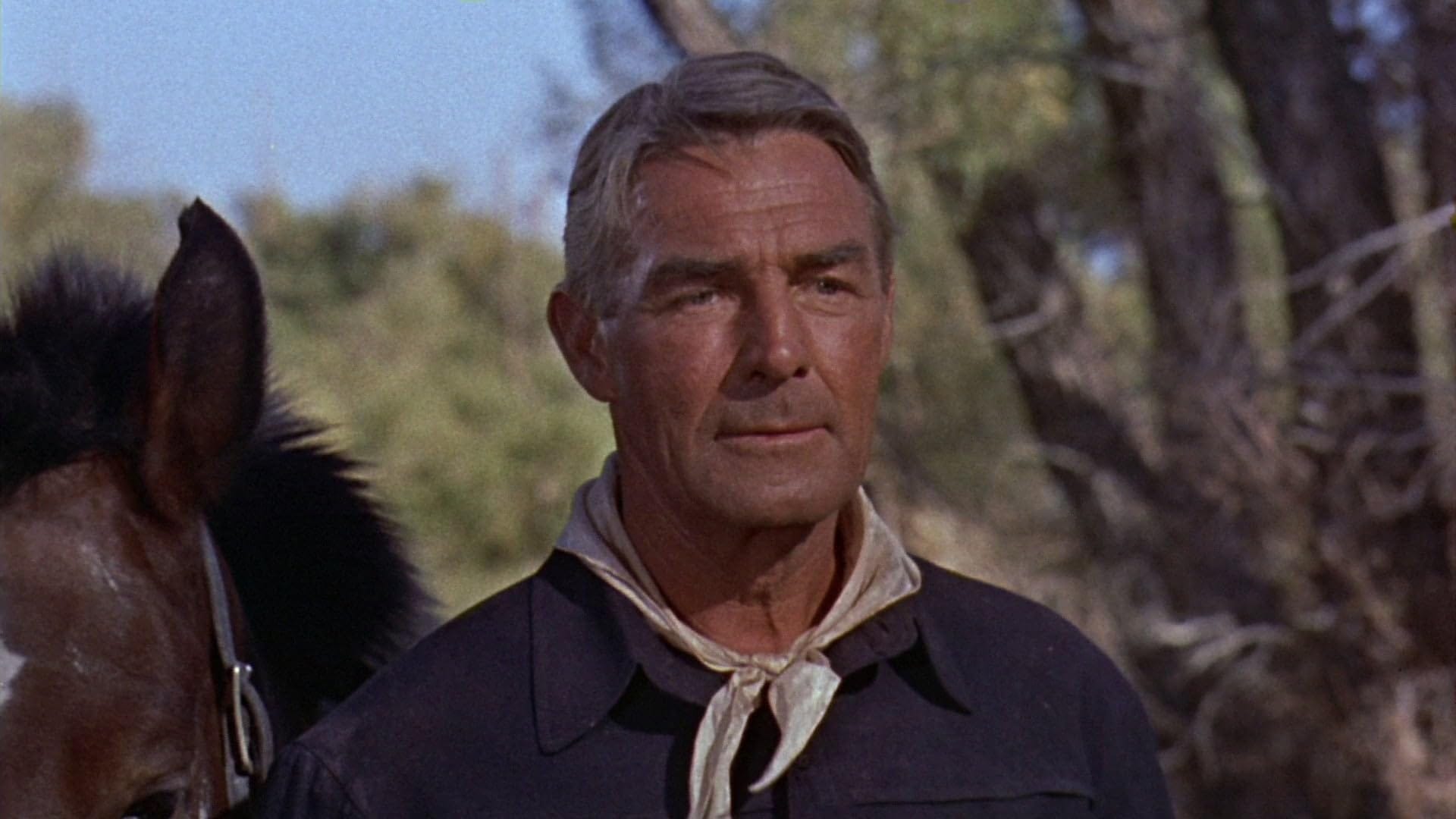
Schrader may be onto something when he compares Scott to an austere deity. Scott’s hero in Seven Men from Now drops offhanded comments, judgments by implication. He uses them to subtly undermine the weak and corrupt men around him. Schrader dubs it a “crackerbarrel Socratic method: questioning, teasing, suggesting.”
Other characters chatter themselves into corners, imagining the silent Scott is along for the ride, only to be brought up short with a simple contradiction. A cavalry officer scornfully describes a Chiricahua uprising and too late realizes Scott isn’t echoing his sentiments. Scott comments that the natives are hungry, which makes them dangerous. “Then we agree,” the soldier prompts.
“Do we?” Scott responds.
SCOTT’S AUTHORITY—HIS IRONY—makes him seem very cool, but not in the same way that Clint Eastwood’s Man with No Name would be cool when he sauntered along a few years later.
In 1970, Boetticher was sitting in a theater for the premiere of a new Eastwood film, Two Mules for Sister Sara, which had evolved from a story that he originally wrote. Behind him were Eastwood and director Don Siegel. Not long into the film, as Eastwood’s antihero walks languorously to extinguish the burning fuse of a stick of dynamite, Boetticher huffed in annoyance. His outrage only grew as the film continued. By the time the credits rolled, his friend Ron Ely said, “We ought to get up and hit those two guys behind us,” to which Boetticher replied, “You hit Clint, and I’ll hit Don.”
No one had told Boetticher, who had written the original story for Two Mules, that the script had been radically changed on the way to the screen. His earnest love story had become a highly stylized Spaghetti Western, cooler than cool.
Boetticher later explained why he hated the new action-hero conception of valor. “People in Europe have asked me, ‘Why are your pictures so different from everybody else’s?’” he said. The reason was that “everything on the screen is either something that I have actually done or it can be done. There’s nothing that’s phony. You don’t blow up a building and the leading man’s the only one who escapes.”
He hated the word “macho.” He found the effect a “repulsive egotistical pain-in-the-neck.” By contrast, his own stories were “of a very strong man who had a gigantic personal problem—the death of his wife or something similar—who went out in 72 or 82 minutes to solve that problem.”
The Boetticher hero is brave, but he has no bravado. He knows he’s alone. He doesn’t assume there’s a camera hidden behind the nearest rock. He doesn’t know he’s the main character, and so he is naturally afraid of death. When Brennan first meets Usher, a murder has just taken place. “You know what’s going to happen to you?” asks Usher, coolly.
Brennan, no fool, deadpans, “I think so.”
“Are you scared?”
Scott plays his response, not with tremulous terror, but with anger at the question. “Yeah!”
It’s a subtle choice, but an important one. Why wouldn’t he be afraid? Why would he pretend not to be? The reality of his fear lends poignancy to his Socratic questioning, because, Schrader observes, he is a servant of “Grace, this extraordinary power that Scott possesses, and is available to every character if he will only choose it.” It’s impossible to imagine Clint Eastwood (or, for that matter, John Wayne) reasoning evangelistically with a killer, trying to find the string to pull to unravel his conscience.
THERE’S LITTLE ACTION IN THE FILMS. Most of the drama comes from conversations which feel like “floating poker games where every character took turns at bluffing about his hand until the final showdown,” as Andrew Sarris put it. Those unironic conversations, the handiwork of screenwriter Burt Kennedy who went on to direct comedy westerns in the 1960s, helped give the Ranown films a crystalline purity. They were morality plays, simple, practical, cheap films, by necessity grounded in character because action scenes were expensive.
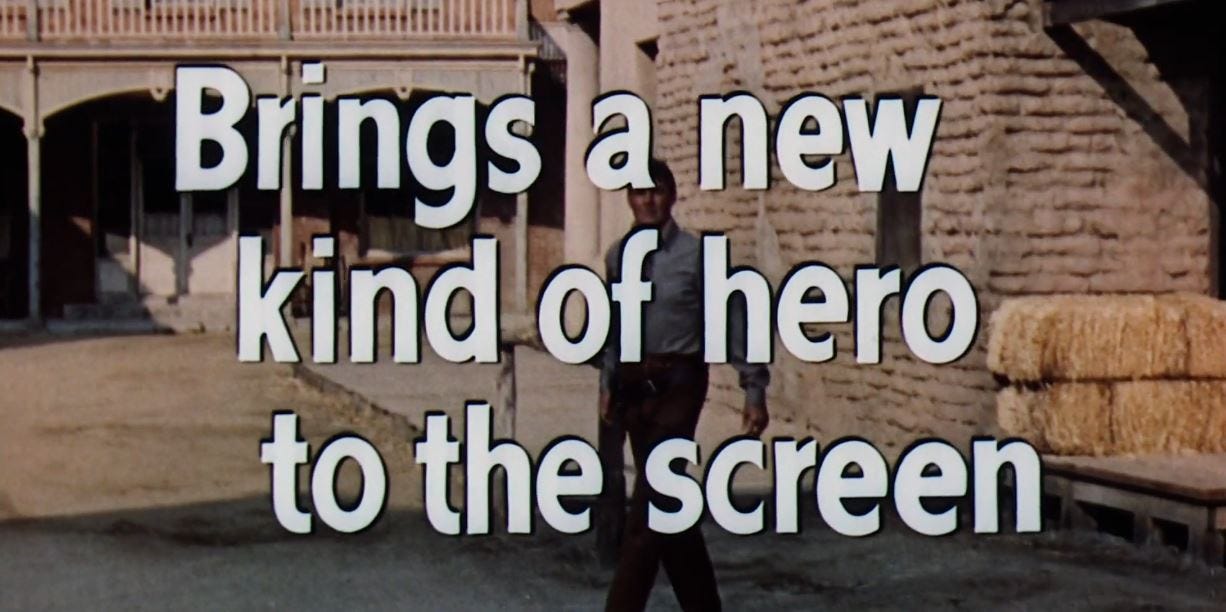
In most of the stories, Scott has lost his wife, but the circumstances of that loss matter. It’s never the sort of thoughtless “wife-fridging” that manipulative action films use to provide cover for what is really an unbridled revenge fantasy. Often the wife’s death presents Scott with a moral problem. In Decision at Sundown, our endorsement of his crusade to avenge her death begins to wobble following revelations that complicate his narrative and motivations. Determined to kill his wife’s lover, he’s holed up in a stable, holding the town as a sort of psychological hostage while his despair sends him into a spiral of rage.
Although its surprises and dialogue elevate it from the average Scott oater, Decision at Sundown and the other Charles Lang–penned installment, Buchanan Rides Alone, are too chatty and emotionally intemperate, despite their charms. Decision is desperate and dramatic, and Buchanan is a wacky black comedy which veers from broad slapstick to the dry wit of a funeral speech that could come straight out of a Coen Brothers flick. (Apparently Lang’s script was so rough that Kennedy came in and helped Boetticher improvise throughout shooting.)
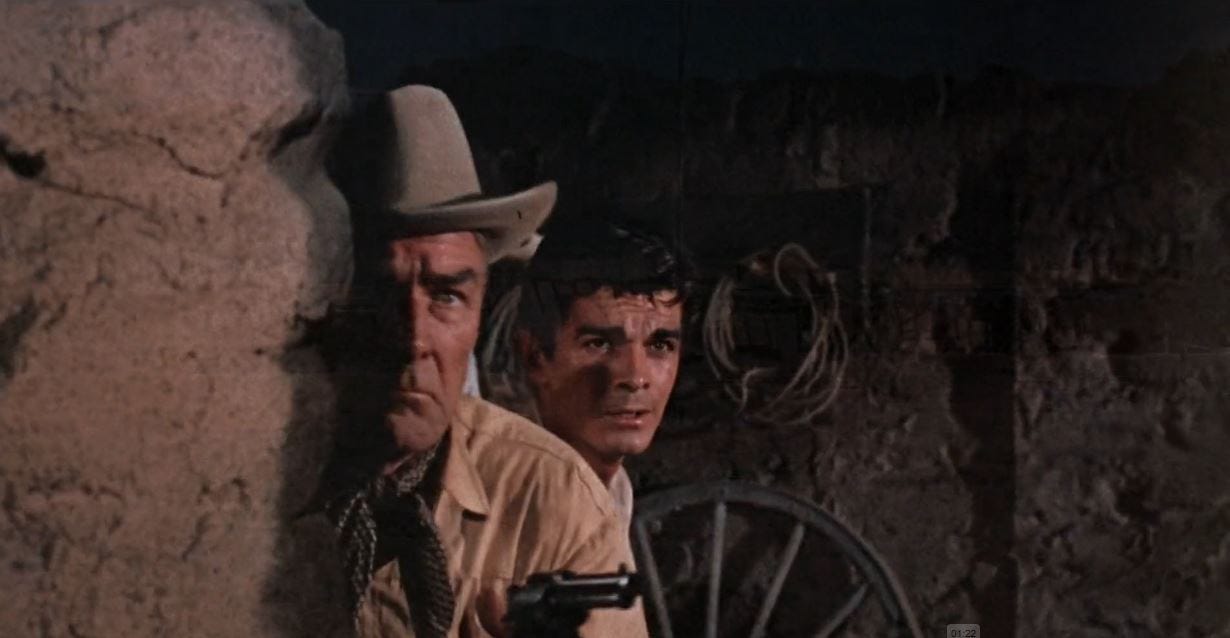
The high standard set by the first films returns with the final two installments, again written by Kennedy. Ride Lonesome copies the basic plot of Seven Men from Now: There is again the dead wife, but this time, revenge might just eat Scott’s character, Ben Brigade, alive. And if the first film was about the perils of hubris, this one highlights the possibility of redemption. Sam Boone (Pernell Roberts) and Whit (James Coburn) are a pair of drifters determined to take in violent outlaw Billy John (James Best) in exchange for amnesty.
They’re inarticulate men, but they know what hope means. Boone tells Brigade, “me and Whit went near a week before we found out what that word, ‘amnesty’ meant. A fella sellin’ Bibles over in Santa Cruz told us. It means the law’s willin’ to drop any and all charges it’s got against a man.”
Forgiveness in this space means a chance to escape the wilderness. A ranch of one’s own. “Something to belong to; be proud of.”
“You’re a long way from home,” Brigade says.
“No more than you,” Boone replies.
Brigade’s reply is loaded. “I can go back.”
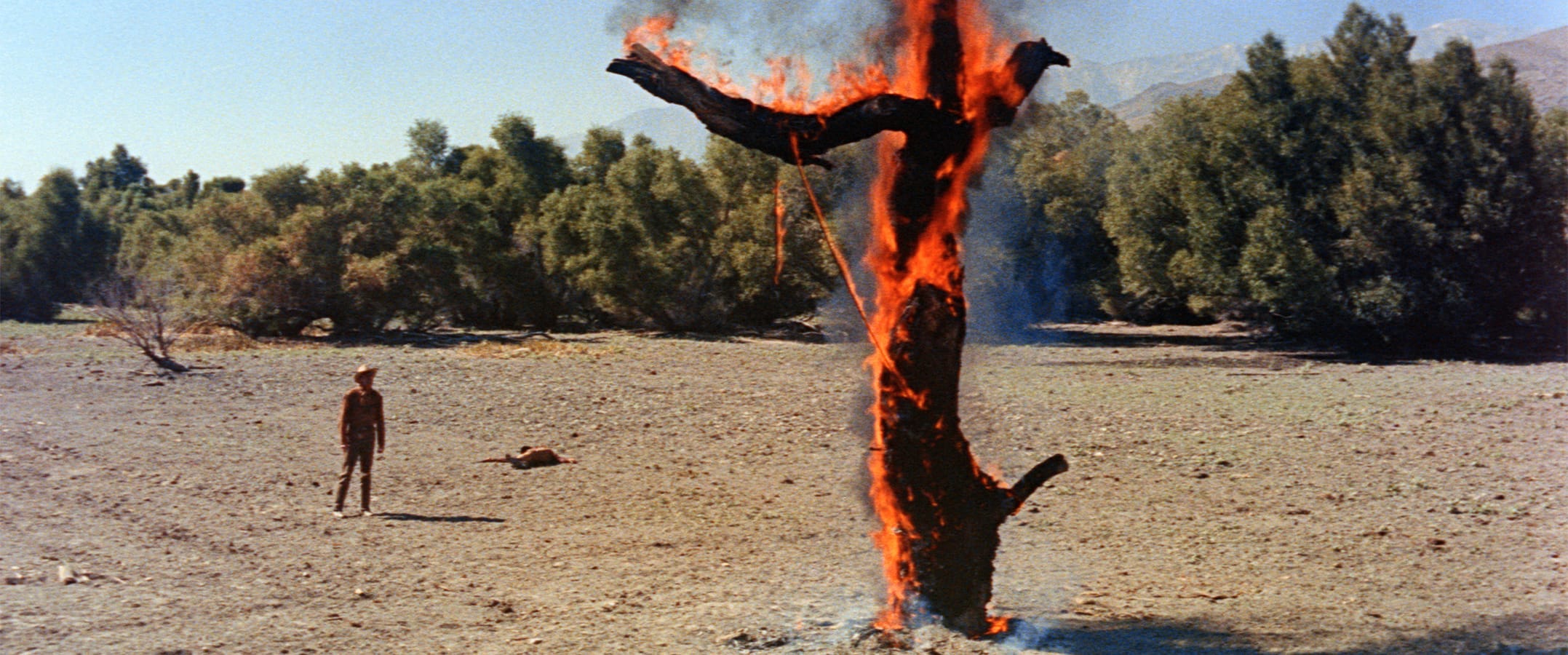
It’s notable that a fellow selling Bibles offers Boone and Whit the hope that Scott’s character doesn’t. These men in the wilderness don’t see much point in reading words over a grave—won’t do any good to the men who are dead. The only promise of redemption comes from someone who believes and lives differently than they do. The other reason that Brigade can’t offer hope is that he’s on a hell-bound path himself. Ride Lonesome is a revenge story leading to a hangman’s tree—one that’s perversely shaped like a twisted cross.
While the good bad man was a longstanding trope in Hollywood westerns—the male equivalent of a hooker with a heart of gold, usually dying a melodramatic redemptive death—admirable villains like Boone and Whit felt like a bracingly new type of character. This isn’t the suave gentleman thief archetype of Alan Rickman in Die Hard or Robert Shaw in The Taking of Pelham 123. Rather, these men are small-time crooks with superior minds. They wish that life had taken a different turn, but they are so lost in their own self-deceptions that they end in misery every time.
What a waste! Despite their depravity, these superior men truly find a bond with Scott’s hero. They recognize in him something of themselves—perhaps something that they wish they had become instead. Some of them do end up being redeemed, but the tragic thing is that all of them are clearly redeemable, if only they’d made different choices.
ONLY SCOTT’S CHARACTERS DEMONSTRATE self-mastery, but not even he is perfect. No one is. Because, in these stories, sin crouches forever in the doorway. Scott’s rectitude can give way to hubris and judgmentalism. It is easy to falter: “A man can cross over anytime he has the mind.”
Ultimately, the superiority of a Scott character is not the result of his righteousness or efficiency, but his grace and compassion. What makes Scott different from later heroes—photocopied Ford-by-way-of-Kurosawa, macho images divorced from meaning—is that he knew what lonesomeness was for.
“I liked the loner,” Burt Kennedy once explained. “I always thought that one secret of a good Western is that the leading man should be able to walk away at any point, but he chooses not to, and that’s what makes him a hero.”
Or as Scott might say, “There are some things a man just can’t ride around.”
Boetticher paints the world as one of constant temptations—green-scarved Mephistophelean outlaws; winsome gentlemen thieves; lost, poetic boys. His world looks more like The Pilgrim’s Progress than the New Hollywood.
We can’t quite map that great allegory’s protagonist, “Christian,” onto Scott, however, as the latter seldom comes through the gauntlet with his soul in sparkling condition. His moral certitude and authority are counterbalanced by a haunting anger rooted in his past. What has this man done? What is he willing to do? “You just don’t seem the kind that would hunt a man for money,” says a naïve woman in Ride Lonesome.
“I am,” he says, without ceremony.
And yet he says this while he’s sitting over an injured, beloved horse, comforting him, letting “him know he’s not alone.” That’s the answer to the foundational question: Freedom is meant to be used for others. In each story, when confronted with injustice that isn’t his problem, the hero makes it his problem.
BUDD BOETTICHER’S CAREER FOUNDERED PERMANENTLY after making his jinxed bullfighting documentary in Mexico. The production had lasted nearly a decade and encountered numerous obstacles: the death of the film’s subject, Boetticher suffering a nervous breakdown, a divorce, and that stint in prison where he summoned the spirit of Randolph Scott to draw on fictional strength amid his all-too-real peril. In that moment, it must have seemed impossible to him that he would ever achieve the sort of praise that all the great directors received, hundreds of miles away in Beverly Hills.
It’s long past time that the Ranown cycle receive its due. But if it doesn’t—if it ends up a noble and still-unsung work of beauty—well, that would just about fit.
There is a seventh Boetticher-Scott collaboration from this period that also does not count as a Ranown film. Westbound (1958) was not produced by Brown, was not written by Kennedy or Lang, and was only directed by Boetticher because he wanted to stick with Randolph, who owed a film to Warner Bros.
 | A guest post by
|