

Robert Redford, 1936–2025
Actor, star, indie entrepreneur.

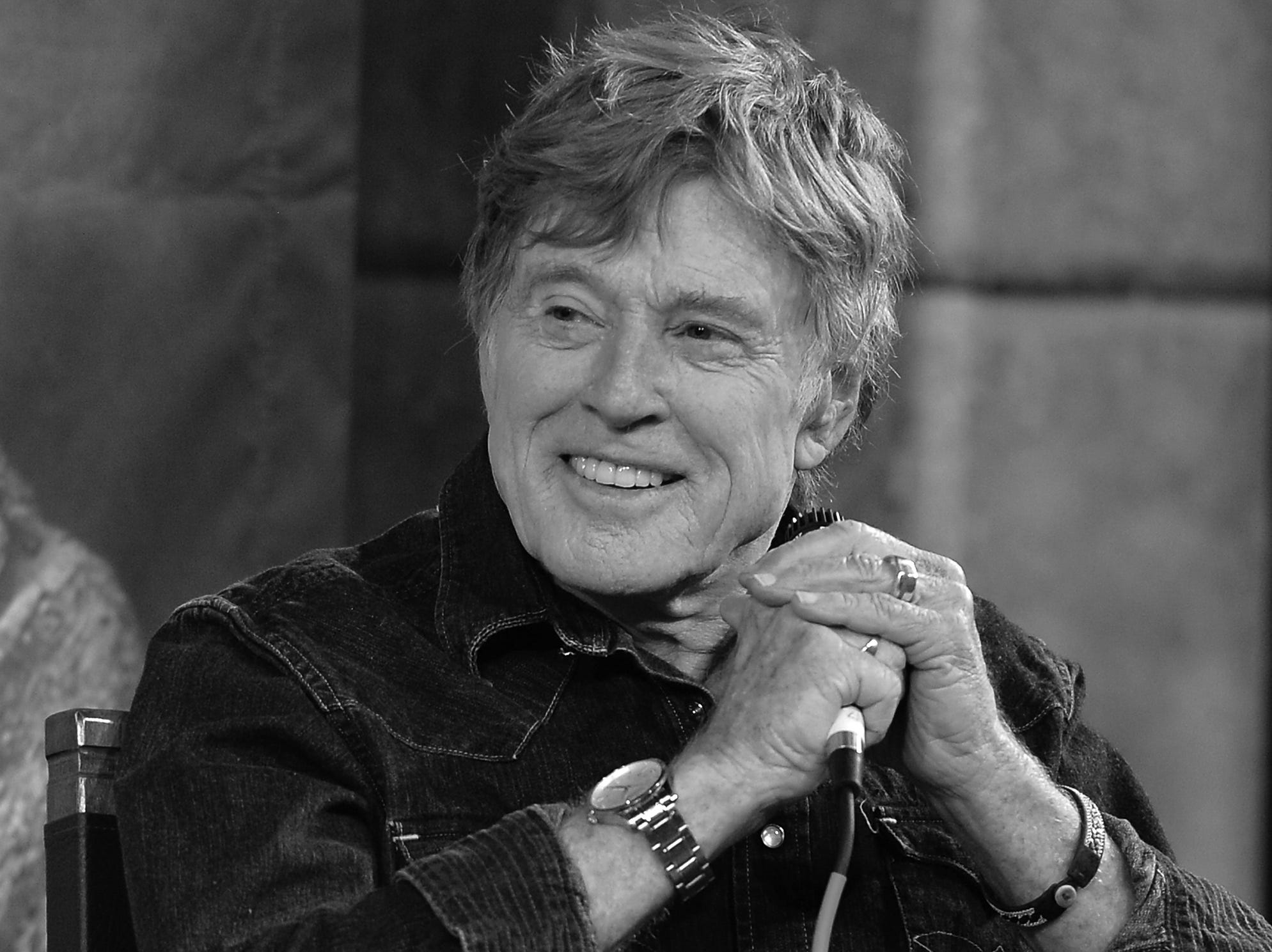
THE NAME ROBERT REDFORD calls forth an image of the consummate movie star: the swept, sandy hair tousled down just above the eyes, which have a magnetic, piercing quality. The mouth in a half-cocked Mona Lisa smile. Mysterious, inviting, and a little imperial. It doesn’t matter if he’s dressed like a bank robber or a Washington Post reporter or a grifter or a computer hacker or an imprisoned general or a man on a boat all by himself fending off the elements: The look is the look, and the look wooed a generation of moviegoers.
More about that beguiling face in a minute. But Redford was more than just a movie star, more than an actor whose talents were sometimes buried underneath said stardom. He was also a visionary. He saw the state of the industry as it evolved out of the auteur-driven New Hollywood of the 1960s and 1970s and into the bombs, brawn, and boobs of the 1980s and envisioned a better cinematic world.
“Although Redford had been one of Hollywood’s leading box-office earners for a decade, when he looked around him at the end of the 1970s, he didn’t like what he saw,” writes Peter Biskind in Down and Dirty Pictures: Miramax, Sundance, and the Rise of the Independent Film, his 2004 sequel of sorts to Easy Riders, Raging Bulls. “Redford understood that the most creative filmmakers were increasingly shut out of the system. He also recognized that if a would-be filmmaker were brown, black, red, or female—forget it; his or her chances of getting a project produced were virtually nil. He knew that indie filmmaking was generally a trust-fund enterprise, because outside of a few federal grants and cash from the proverbial family friends, orthodontists, eye doctors, and so on, there was precious little money available to produce them.”
And so it was that the Sundance Institute was born in 1981 on a plot of land in Park City, Utah purchased by Redford after hitting it big on Butch Cassidy and the Sundance Kid. The full history of Sundance—its successes and failures and the role that Redford himself played in both—is a story for another day, but the idea here was sound, the hope he had was pure. And the impact? Undeniable. From crowd-pleasing awards fare like Coda and Little Miss Sunshine to innovative horror like Hereditary and Saw to talent-incubating indie gems like Fruitvale Station and Whiplash, the festival has, since its first big hit with Sex, Lies, and Videotape (1989), helped define the non-blockbuster filmmaking scene. The masses will remember Redford jumping off that cliff with Paul Newman, but it’s the work in Park City that may have had the greatest effect.
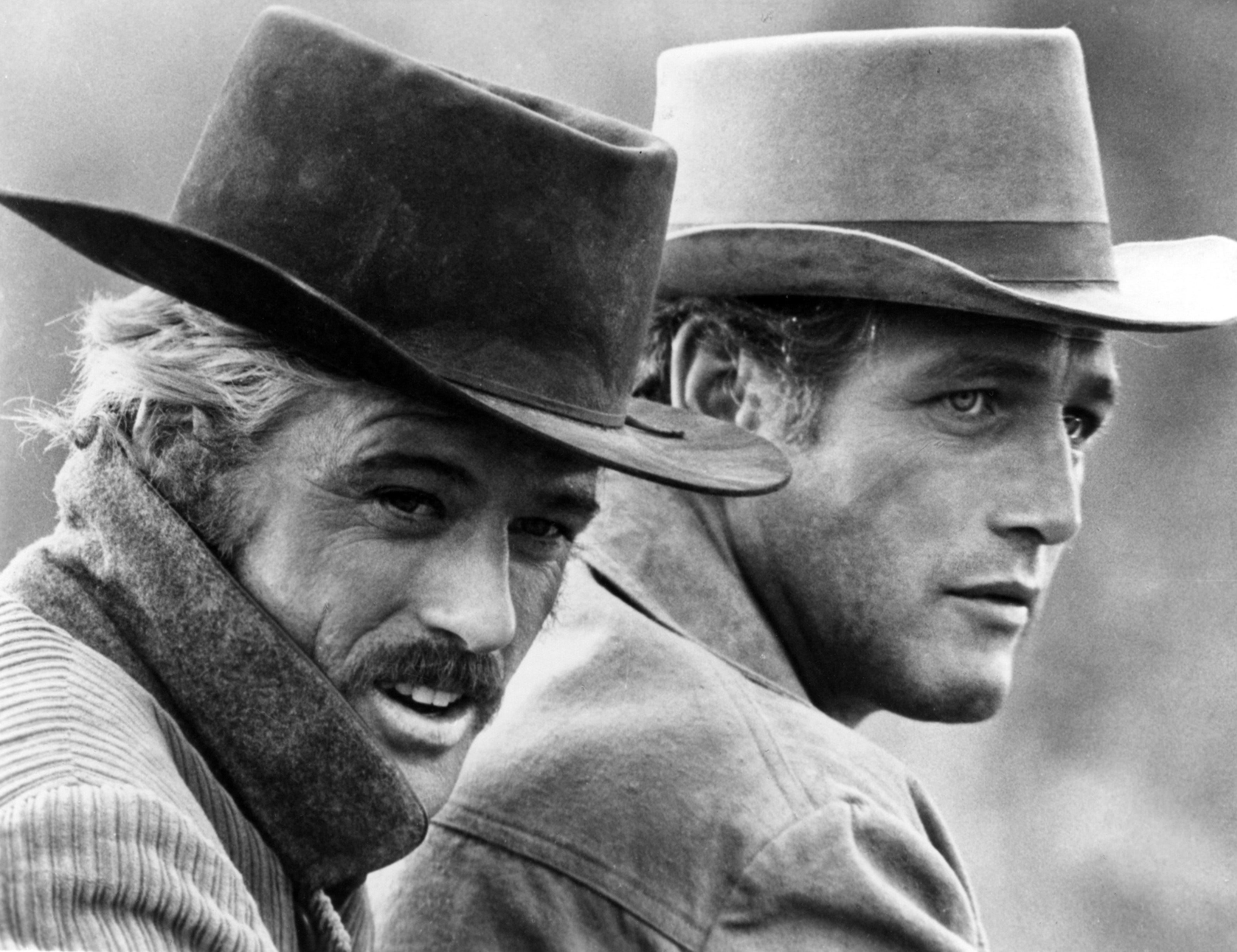
And look: There are worse things to be remembered for than Butch Cassidy and the Sundance Kid. A western in the post-Bonnie and Clyde style, all rakish outsiders and young kids having fun and stealing some money while doing a little bit of the ultraviolence. (Not for nothing that the film was a favorite of Weatherman Terry Robbins, who blew himself up in a New York City townhouse a year after its debut.) Redford’s bemused warmth played great against Newman’s more detached chill in this picture, and it’s a pairing that would work again, to enormously successful effect, a few years later in The Sting.1
It’s always been at least a little amusing that Redford, one of the most attractive people on the planet, would become the avatar of the Great Journalist thanks to his work in All the President’s Men. (Sadly, most of us in journalism do not look quite that good.) But he kind of nailed the sort of patient frustration that comes with tracking down a big, important story, about wangling reticent sources (though who could say no to those piercing blue eyes?), about dealing with lying officials and bullshit responses. Between this and Three Days of the Condor, Redford embodied both effortless youthful cool and intense paranoia, two hallmarks of the 1970s.
And he aged as gracefully as any male star I can think of, sliding into properly middle-aged roles like The Natural and Sneakers and The Last Castle, before delivering one final powerhouse performance: All Is Lost (2013). The movie is just Redford, on a boat, trying to survive in the middle of the ocean, for 105 gut-wrenching minutes. There’s very little in the way of dialogue (the shooting script was, famously, around 30 pages long); the story is told entirely through writer/director J.C. Chandor’s camera placements and Robert Redford’s face. And that face remained expressive to the end, emoting a mixture of determination and stoicism and frustration though never quite resignation. It was as if Robert Redford looked at the cinematic landscape, sighed, and said, “You don’t need all this makeup, all this CGI crap to tell a story. You just need my face.”
Would that we could all be so fortunate.
The twenty-first highest-grossing film of all time, adjusted for inflation. Impossible to imagine a movie like that putting up such numbers today. The past really is a foreign country.
Just found this anecdote:
Just prior to making The Graduate, Nichols had directed Redford in a Broadway production of Neil Simon’s Barefoot in the Park. According to Mike Nichols: A Life by Mark Harris, Redford wanted the part of Benjamin “badly” and Nichols even shot a screen test with Redford and Bergen.
But Nichols eventually realized that Redford was all wrong for the role. Why? Well, because he was just too attractive. “I said, ‘You can’t play it. You can never play a loser,’” Nichols once recalled. “And Redford said, ‘What do you mean? Of course I can play a loser.’ And I said, ‘Okay, have you ever struck out with a girl?’ and he said, ‘What do you mean?’ And he wasn't joking.”
I was in my mid twenties when The Natural was filmed in Buffalo, NY, where I was living at the time. I totally disdained the whole concept of Hollywood Beauty being at all important (leftover from the hippy era, no doubt). But I was walking around Delaware Park and there he was: Robert Redford. So strikingly handsome, he stopped me in my tracks. The crew were just hanging out, eating lunch. No makeup, no anything, just an incredibly beautiful man. At ease and enjoying the people he was with. It shifted something in me. I still remember that moment, 45 some odd years later