Why Dems Are Pouring Money Into the Tennessee 7th
Party’s high hopes in special election leave Republicans rattled.

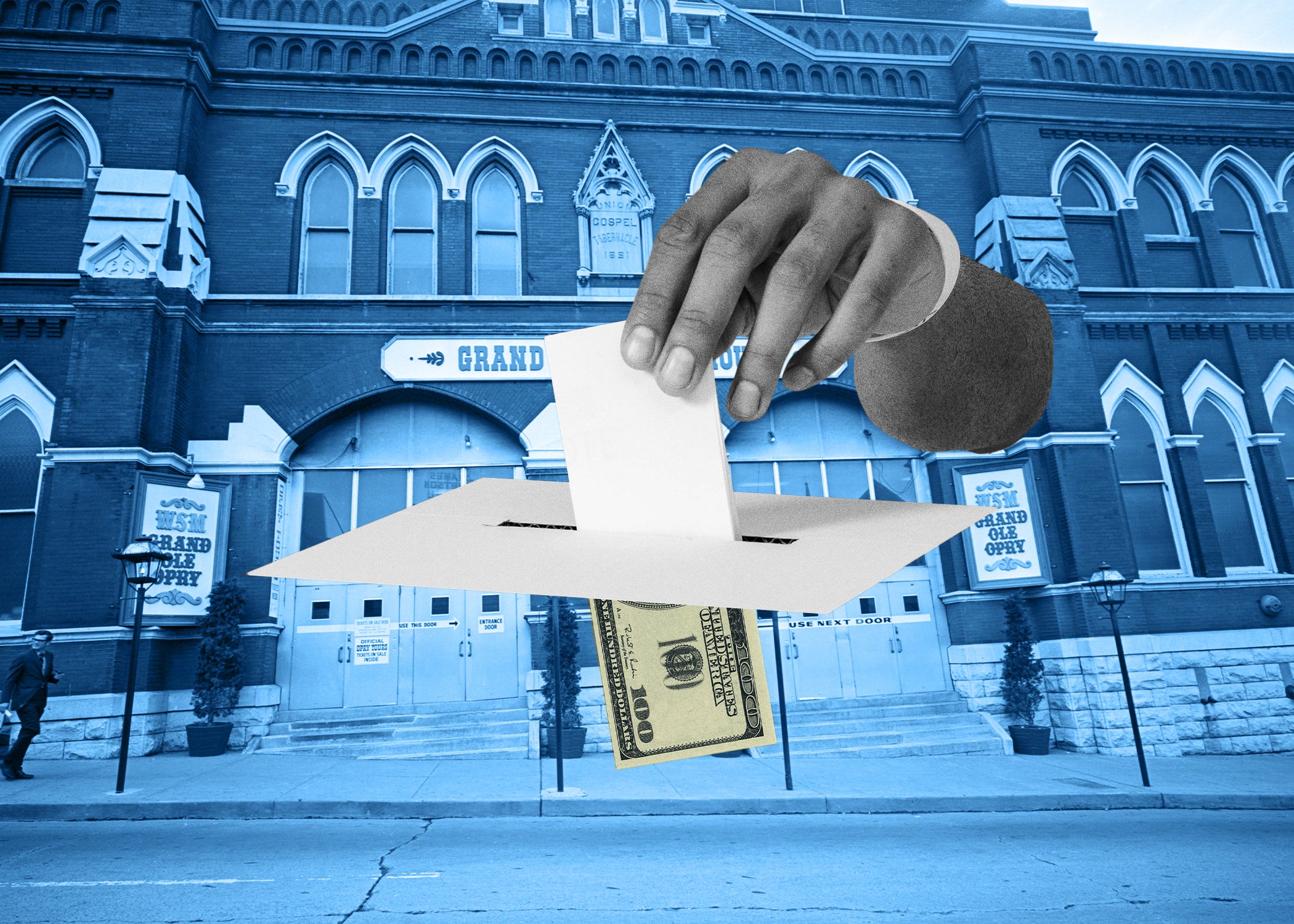
IT’S BEEN A GOOD MONTH for the Democratic party. Double-digit wins in the Virginia and New Jersey gubernatorial races, fractures within the Republican coalition over releasing the Jeffrey Epstein files, and polls showing Donald Trump’s approval rating at its lowest since he returned to office. All of it has party leaders feeling like the pendulum is finally swinging in their direction. It has them dreaming of previously unimaginable prospects too—like a takeover of a congressional seat in a deep red enclave.
Tennessee’s 7th Congressional District, which runs from Kentucky to Alabama and cuts through Nashville, is holding a special election on December 2 to replace former Republican Rep. Mark Green. Just a few years ago, parts of the 7th district made up the state’s Nashville-based congressional seat represented by Jim Cooper, a moderate Blue Dog Democrat. But following the 2020 census, Tennessee Republicans broke up the safe blue seat into three districts.
The 7th is now reliably Republican; Trump carried it by 22 percentage points in 2024 and Green won his last two races by a similar margin. It includes part of Williamson County—one of the wealthiest counties in the country. The Fort Campbell military base also falls within the district, along with a vast swath of rural farmland. Perhaps most tantalizing for Democrats: a number of MAGA firebrands live in or near the district, like conservative sports radio personality Clay Travis, YouTuber Brett Cooper, and right-wing podcaster Candace Owens. Imagine, as an example, the psychic shock of a Republican emerging victorious in the movie star enclave of Beverly Hills.
In short, TN-7 is not exactly the place where the two political parties tend to fight it out, let alone spend meaningful sums of money. Yet that’s exactly what is happening in this special election.
Millions of dollars have poured into middle Tennessee in an attempt to tip the balance between Democrat Aftyn Behn, a progressive organizer and state representative, and Republican Matt Van Epps, the former Tennessee General Services commissioner.
Over the past couple weeks, I’ve been taking the temperature of politicians in the area, as I live just a mile outside the district. And while it’s notable how much more bullish Democrats have gotten about their prospects, most party officials I spoke with (both in Tennessee and at national party organizations) think that Van Epps will ultimately win. It’s simple math. While Democrats tend to overperform in special elections and a Trump backlash is clearly brewing, a 22-point deficit is just a lot to overcome.
In private, Democratic officials tell me that they are hoping to see a single-digit loss. They believe even that would be enough to send a message that the political winds are at their backs, that Trump’s agenda is politically toxic, and that Democrats can seriously compete in red parts of the country that just a few weeks ago felt out of reach.
“We believe that any overperformance is a significant victory in a district like this,” Democratic National Committee chair Ken Martin told me. Martin recently visited Nashville to campaign for Behn. “This district is in play for us, and . . . there’s an opportunity for us to do really well.”
But beyond the horse race intrigue, the race may provide real insight into our national politics for another reason. Behn is running a campaign designed to turn out Democrats more than to make crosscurrent appeals to Republicans. That may work in a special election. But officials here think that such an approach would doom her in a regular election cycle, when Republican voters are more clued in and willing to show up. If Democrats want to be anything other than the party of highly educated people who show up in special elections, then they have to figure out how to win over more moderate and conservative voters.
It’s a question Democrats are confronting particularly in the South, where the party is facing two massive challenges: a Supreme Court decision that could dismantle the Voting Rights Act and allow southern states to redistrict as many as nineteen Dems out of office, and a 2030 census that is expected to grant the South a historic number of House seats.
With that region of the country gaining additional importance, and with the composition of congressional seats potentially changing in dramatic ways (with safe Democratic districts broken up and some GOP-held seats becoming slightly more competitive) it is imperative for Democrats to find a formula that works. Behn may benefit from running in a special election—in which her party has routinely overperformed—but her success (or failure) is going to be closely studied for which voters are activated and why.
“Republicans will come to regret this,” said Rachel Campbell, chair of the state Democratic party, speaking about the state GOP’s decision to break the once-safe Democratic seat of Nashville into three districts. “[Behn has] obviously got the GOP scared to death. They’re dumping millions of dollars into this race. And that was unthinkable even just last year, for the Republicans to be putting any money into what they believed was a foregone conclusion for them.”
Democrats in the state insist that a base-turnout strategy could work. In my conversation with Martin, he stated plainly that the race was “not about persuading voters, it’s about turning them out.” And at a canvass launch I attended last week, organizers for the Behn campaign told volunteers that they would be knocking only on the doors of Democratic voters and likely wouldn’t encounter any Republicans.
Behn has leaned into an economic populist message focusing on affordability issues. She’s gone after billionaires and attacked Republicans for their handling of the Epstein files. And she’s focused on Trump’s threats to privatize the Tennessee Valley Authority. But figuring out how to energize the party base while not creating any unintended backlash—especially in a red district where the Democratic national party brand is still deeply tarnished—is a difficult balance to strike.
“Democratic voters are generally excited but I think to get the best turnout to win the race you’ve got to find ways to reach people and make sure they know there’s an election. And that’s primarily through finding high-profile ways to turn out your voters and hope that doesn’t motivate the opposition more,” Jeff Yarbro, a Democratic state senator, told me.
Republicans have attempted to paint Behn as too liberal, resurfacing old podcast comments she made about policing and going after the work she did for the progressive grassroots group Indivisible. They’ve dubbed her the “AOC of Tennessee” and circulated clips of her calling Trump a “racist, white-supremacist bigot.”
There are some signals that Behn recognizes the risks and rewards of a base-turnout approach—and is trying to balance them. She has campaigned with progressive stars like Rep. Jasmine Crockett and activist David Hogg. But her buzziest campaign video does not even mention her party affiliation. When Kamala Harris made a surprise appearance in Nashville to encourage people to vote in the special election, it was hosted by the Tennessee Democratic Party, not Behn’s campaign. Harris, who had long planned to be in town for her book tour, never mentioned Behn by name and the two did not appear together. Behn left the rally to attend a fundraiser just a few minutes before the vice president arrived.
“I think you can see it in the decisions we’re making, whether you agree with them or not. We’ve been very careful about when and who to associate with,” Behn told me in a phone interview last week, when I asked how she thought about turning out the Democratic base while still operating within the constraints of the political dynamics of the district. Of Harris’s visit specifically, Behn said she didn’t stay because it was a true “scheduling conflict” and she was “grateful” for Harris.
Local Democratic officials whom I spoke with last week are increasingly bullish about a good showing in the election. But in typical party fashion, they also said that they worry some of their colleagues in the state will take the wrong lesson from a close race—that the best way to regain power is to amp up their economic populism to overcome their progressive cultural views, rather than running old-school Blue Dog Democrats in the mold of former Rep. Cooper.
The Behn model might be the smartest play for a special election, but the Democrats I spoke with warned that it was not how the party would unseat other Republicans in deeply red districts, like GOP Rep. Andy Ogles in Tennessee’s 5th—a race that the national Democratic party has already said they will spend money on next year.
“If Aftyn comes within 10 points, I absolutely think most Democrats in Tennessee will see this as ammunition to run further to the left in all races,” said a local elected official.
Regardless of the result, Democrats already believe that the TN-7 race has proved fruitful. Forcing Republicans to spend money on this race means that they will have fewer resources for more closely contested contests elsewhere. The Trump-allied super PAC MAGA Inc. and the Club for Growth have spent a combined $1.7 million in support of Van Epps over the past few weeks. Meanwhile, the House Majority PAC—which backs Democratic candidates—announced on Friday that it was spending $1 million on TV and digital ads boosting Behn.
Democrats also believe that Van Epps’s campaign will serve as a warning sign to frontline GOPers that they need to do more to break with Trump if they want to preserve their own seats.
That’s because while Van Epps won a crowded Republican primary thanks to an endorsement from Trump, he’s done very little to highlight his MAGA credentials in the general election. In a recent TV ad, Van Epps doesn’t even mention he’s a Republican.
“It’s an astounding indication of how toxic the political environment is for the GOP,” said Ian Russell, who served as the national political director of the Democratic Congressional Campaign Committee in 2014 and 2016 and is advising Behn’s campaign.
🫏 Donkey Business:
— There’s another election in December that’s got the attention of the national Democratic party: the race for Miami mayor. The mayoral race is nonpartisan. But the December 9 runoff between former Miami-Dade County Commissioner Eileen Higgins and former Miami city manager Emilio González has become a nationalized event, thanks to Donald Trump’s endorsement of González. And it has Republicans anxious that the election will now become a referendum on Trump. If Higgins wins, she would be the first Democratic mayor of Miami since the 1990s.
The Democratic National Committee, which typically does not get involved in mayoral races, announced last week that it would help organize for Higgins. Democrats would interpret a win here as the latest sign that the party was cutting into Trump’s 2024 gains with Latino voters, following the New Jersey gubernatorial election earlier this month.
My open tabs:
— How Right-Wing Superstar Riley Gaines Built an Anti-Trans Empire
— This Year’s Thanksgiving Surprise: Half of the Guests Are Stoned
Here's a question: if the South is gaining population, why should the GOP, let alone MAGA, think they are reliable voters? These people moved from Blue states, maybe even Blue cities, where there are government services that Southern states don't provide, where environmental protect is cherished, where wages were higher, where preachers don't control politicans, and where trump is loathed. Demographics and attitudes change. It's good to see the DNC taking the TN special election seriously. Maybe if the DNC gets some Bernie-style populism combined with a Howard Dean 50 state strategy, the the modern Democratic party (i.e., post-Jim Crow) will be a force in Dixie.
I didn't realize that Van Epps *also* is refusing to identify himself as a Republican in his ads... That's... interesting...