Trump and the Kennedy Center: Renaming, Rebuilding, Revolting
For locals, this demolition project hits home.

IMAGINE A RENAMING SPREE in your town or state. The Donald Trump–Radio City Music Hall. The Donald Trump–Hollywood Bowl. The Donald Trump–Las Vegas Sphere. The Donald Trump Ryman Auditorium. Donald Trump’s Red Rocks. Donald Trump’s Madison Square Garden.
Or, in a different vein, the Donald Trump–George Washington Monument. The Donald Trump–Abraham Lincoln Memorial. Donald Trump and the Mount Rushmore Four. The Donald J. Trump–John F. Kennedy Eternal Flame. The Donald Trump–William McKinley National Memorial, with a new inscription about their shared devotion to tariffs.
Or even worse, imagine all of those venues and memorials stripped down to steel supports, to be rebuilt by the man who fancies himself the tastemaker for a nation of people who don’t know what good taste is until he foists his vulgar vision upon them.
Sorry, sorry, sorry.
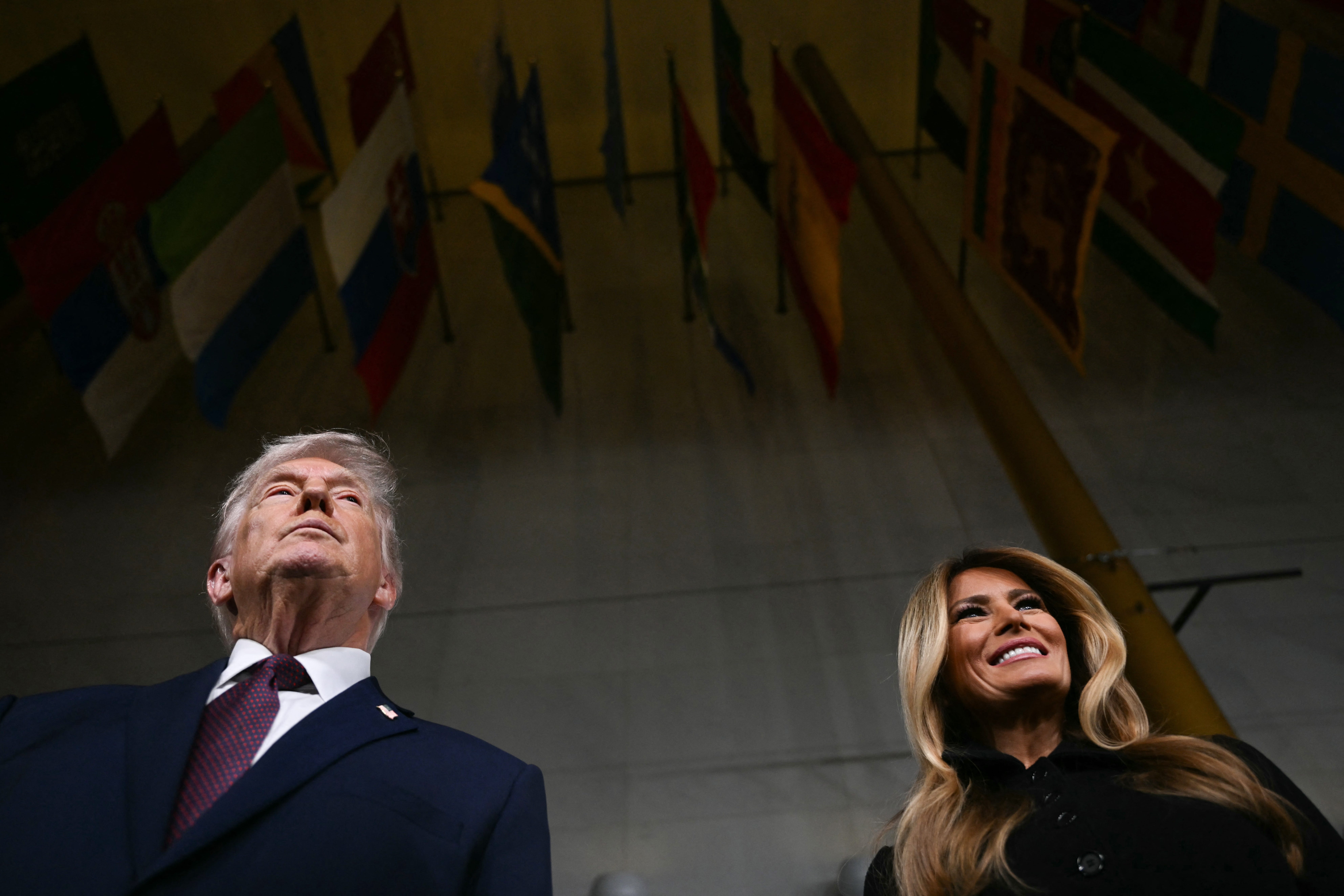
These numbing thoughts were brought on by the approaching anniversary of Trump’s stunning takeover of the John F. Kennedy Center for the Performing Arts in Washington, D.C. on February 7, 2025, his illegal move in December to rename it by inserting his name in front of Kennedy’s, and his abrupt announcement this week that he plans to close it for two years to make way for a complete demolition a new Trump hotel “Construction, Revitalization, and Complete Rebuilding” (but “I’m not ripping it down, I’ll be using the steel,” which will be “fully exposed”). And with his unerring instinct for the most disturbing timing and symbolism possible, the teardown is to begin this July Fourth, America’s 250th birthday.
Yes, folks, a rebirth (of America and the Kennedy Center), with Trump as midwife.
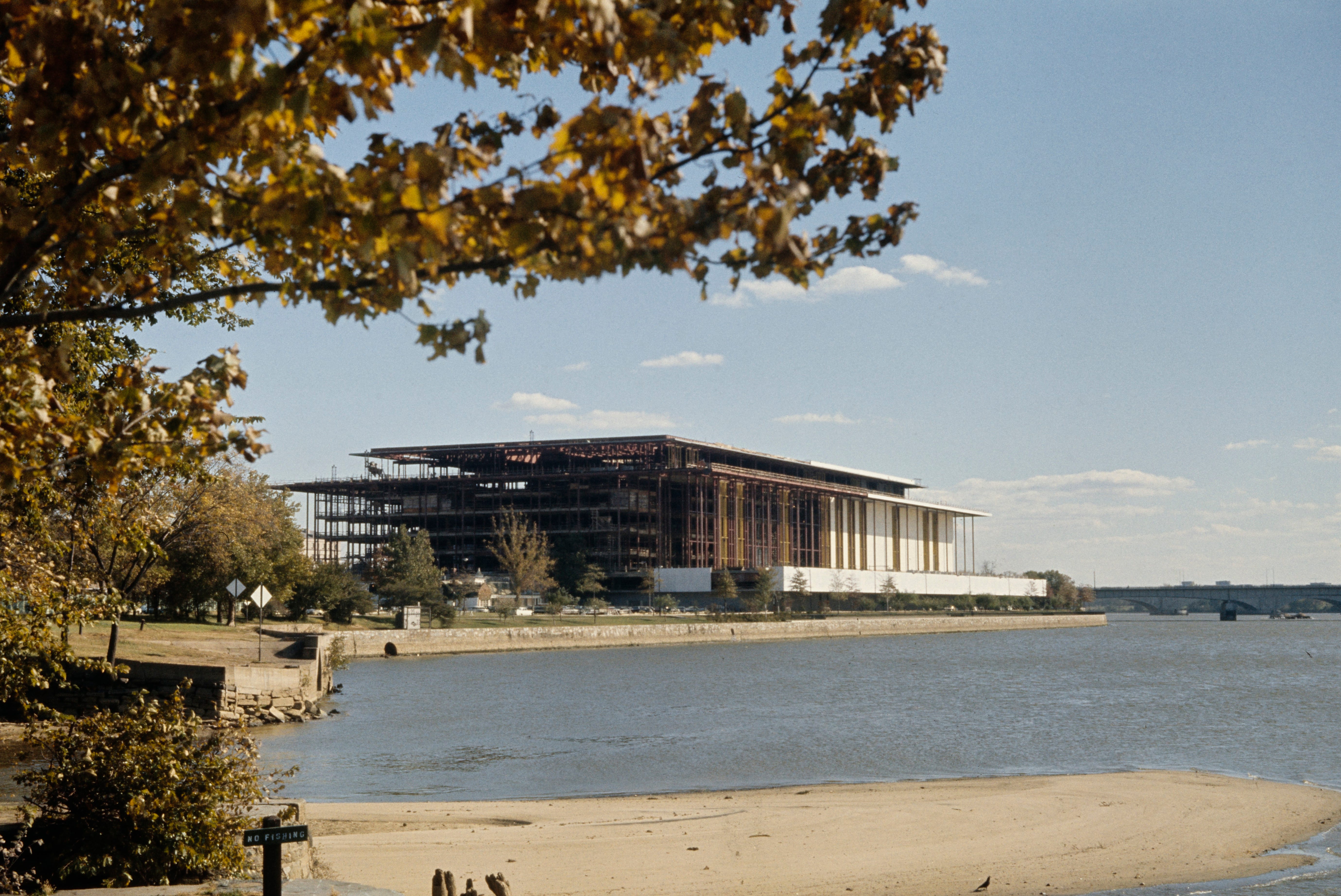
All of this has been an outrage, as well as unlawful and deeply offensive. The center was named and established by Congress in 1964 as a living, permanent memorial—the only one in the nation’s capital—to an assassinated president who had loved the arts. It was a cultural force from day one, opening in 1971 with the world premiere of a work it had commissioned: Leonard Bernstein’s requiem mass honoring President Kennedy. The New York Times called it “a gigantic marble temple to music, dance and drama on the Potomac’s edge.”
The center was also a local economic engine, home of the National Symphony and the Washington National Opera, with top performers and creators across the arts. Even before (and likely why) Trump unilaterally announced he would shut it down, patrons were boycotting (conflicted, in my case, but unable to bear the new reality) and dozens of artists were canceling their events.
The Kennedy Center—national, local, and personal
Among the cancellations and withdrawals: A Rhiannon Giddens roots concert we had tickets to attend, the U.S. launch of Canadian author Louise Penny’s latest book, soprano Renée Fleming, the Hamilton touring company, the Ohio folk duo Magpie, and a bookend to the 1971 opening: the world premiere in June of another commissioned work about another fallen president, from composer Philip Glass. “Symphony No. 15 is a portrait of Abraham Lincoln, and the values of the Kennedy Center today are in direct conflict with the message of the Symphony,” Glass told the center last month. The work is based on Lincoln writings and speeches, including an address on the dangers of tyranny.
It’s no surprise that Kennedy Center finances, ticket sales, and attendance are tanking, or that the MAGA crowd is living the good life, champagne and all, as the ship goes down. Trump, of course, has milked what he can—board chairman (elected by his handpicked board), host of the Kennedy Center Honors (“agreeing” after urging by staff and “a certain television network”), first president to announce World Cup matchups at the Kennedy Center, recipient of the first and only participation trophy for world peace, spouse-of-the-star last week at the center’s Melania movie premiere. Clearly he’s ready to move on.
But we who live here are not. The Kennedy Center has played a huge role for families and kids, from its annual Halloween Spooktacular! and Messiah singalong to Sesame Street the Musical, Old MacDonald’s Symphony, and much more. For my household, it’s a memory bank of riveting performances over decades: Bach and Billy Childs. Brahms and Audra McDonald. Vince Gill and the Judds. The Book of Mormon and musicals chronicling the careers of Carole King and the Temptations. The painfully relevant What the Constitution Means to Me, and the emotional gut-punch of the Ukrainian Freedom Orchestra.
I’ve seen one young cousin dance at the Kennedy Center as a member of the American Ballet Theater, and heard another—a drummer—in a jazz ensemble on the Millennium Stage, a free showcase in the lobby. My own sons have performed there—one playing jazz guitar with the Blues Alley Youth Orchestra on the Millennium Stage, the other a few years earlier playing the first movement of a Max Bruch violin concerto on the Concert Hall main stage.
That last one was particularly memorable because a day or two before the performance, he smashed up his ring finger on his left hand—an essential finger for violinists. How? Playing handball. Right before the highest-profile moment of his life.
The concert was a 1999 tribute for a patron, with every important arts group in Washington participating. Our son, then 13, was representing the Washington Performing Arts Society after winning a competition the group had sponsored. Talk about nerve-racking. We did what any good parents would do—dosed him up with painkiller and hoped for the best.
It worked out, although I stared at my lap the whole time, too anxious to look up at the stage.1
JFK’s presence still felt
When I worked in the Watergate complex across the street from the Kennedy Center, I grabbed lunch a couple of times a week at the terrace-level KC Café—an actual cafeteria with trays, prepackaged food, and lines at serving stations for hot food. All of that is still there, I discovered this week when my husband and I stopped in for lunch—expensive, as always, but not bad at all.
Aside from a crack in a marble floor tile on the parking level, the center did not look “dilapidated,” as Trump called it. The international flags are still flying in the Hall of Nations. The chrome and crystal in the Grand Foyer still gleams. The sweeping views across the Potomac to Virginia, and across the capital on the other side, still inspire awe.
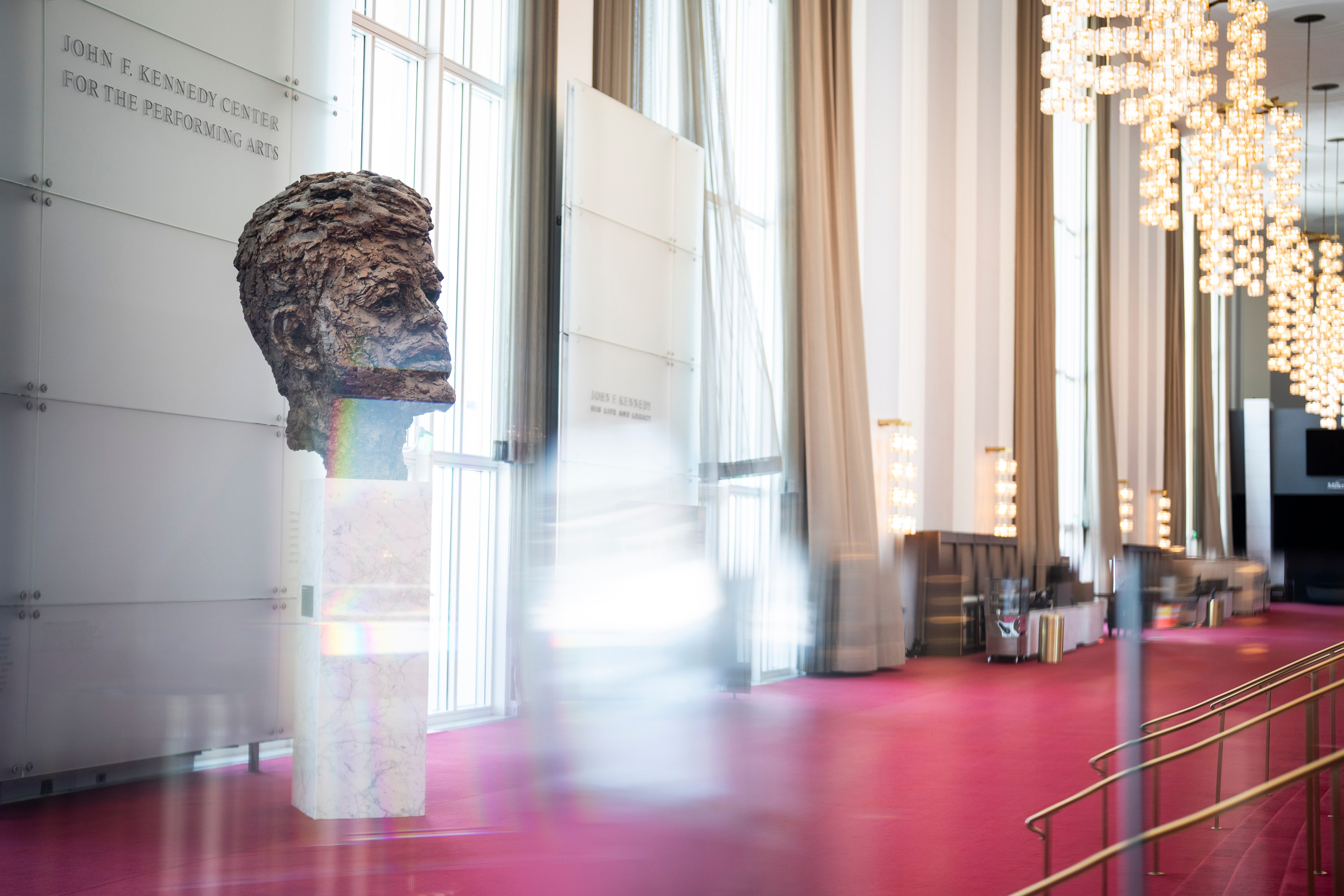
And JFK is still a presence, with an extensive terrace-level exhibit called “Art and Ideals: President John F. Kennedy.” In the MAGA worldview, it’s mockery-worthy—a festival of woke, from “Equal Rights for All” (“a moral issue” as “old as the scriptures” and “as clear as the American Constitution,” in JFK’s words) to “Jazz Ambassadors” (jazz as “a Pandora’s box of friendliness totalitarians won’t easily be able to close,” a gem from jazz producer and broadcaster Willis Clark Conover Jr.). For the rest of us, it’s balm amid a storm of shocks and losses.

The Washington National Opera announced its exit from the Kennedy Center last month, citing reduced support and artistic differences, and is now lining up alternative performance venues. National Symphony musicians and staff learned this week that the center will continue funding them, but where they’ll perform for the next two years is unclear.
Lots of other things are unclear as well: What will happen to some 2,500 administrative, union, and federal employees at the building. Whether donors will stick with the Kennedy Center during an extended shutdown. Whether it’s accurate to say, as Trump has, that the arts center is tired, broken, and run down. Whether most of it, or parts of it, could stay open while other parts are upgraded or renovated.
Or whether courts and laws can prevent the whole damn thing. The legal engines are revving up. Democratic Rep. Joyce Beatty of Ohio, an ex-officio trustee of the center, sued Trump and others in December to fight the renaming. Her lawyers, Norman Eisen of Democracy Defenders Action and Nathaniel Zelinsky of the Washington Litigation Group, said the two-year shutdown “will add further injury to the damage already done. We already have court proceedings pending and we will be considering all legal remedies to address this new and concerning development.”
Meanwhile, my fellow non-MAGA Americans, keep an eye on your iconic monuments and performance spaces. Because when it comes to Trump, what happens in D.C. doesn’t always stay in D.C.
I had always ridiculed parents who treated their talented musician kids like delicate flowers and kept them away from baseball or, God forbid, handball, especially right before performances. After that trauma, I decided they probably had a point.
 | A guest post by
|