Washington’s Problems Might Be Too Big for the Problem Solvers Caucus
The bipartisan group is on the sidelines while negotiations sputter.

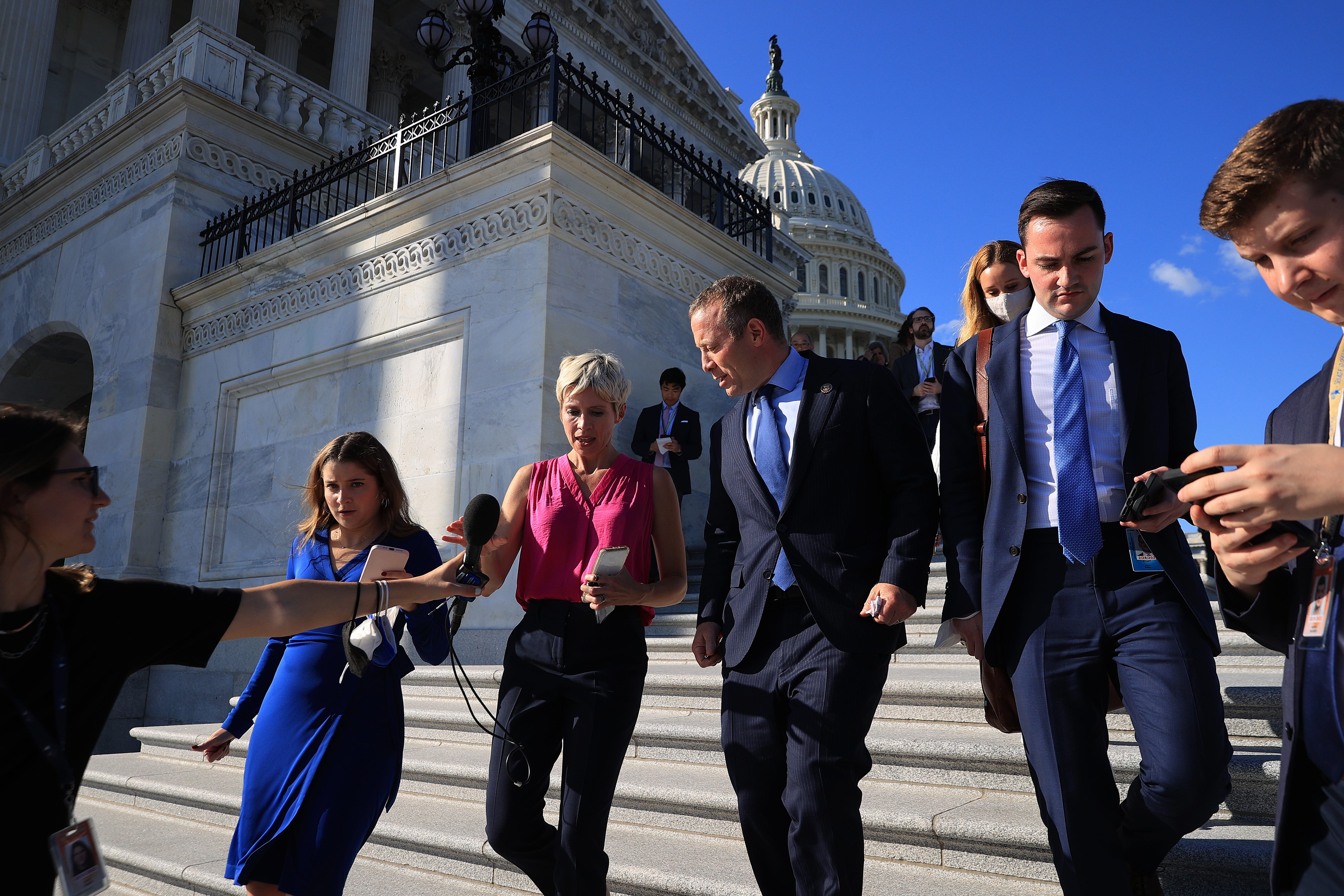
Once upon a time, the House Problem Solvers Caucus had a genuine role in Congress. The bipartisan group was organized to find solutions to seemingly intractable problems through compromise and broadly palatable centrism. And in moments of governing friction, they’d often emerge with some sort of proposal for a path forward.
Their results did not always measure up to their goals, however. In fact, the caucus became a bit of a punchline on the Hill, where lawmakers and journalists alike have come to dismiss them as preaching bipartisanship with little to show for it. As the Trump administration has taken to acting unilaterally and with almost complete disregard for the impotent and adrift Democratic opposition, the Problem Solvers have receded further, virtually disappearing while the problems they sought to address have grown and grown.
Take the government shutdown underway right now. Thanks to House Speaker Mike Johnson, the House is still in recess; Democrats are idling in their offices and demanding a return to session while House Republicans are uninterested in wading into the funding fight before seeing how the Senate acts.1
It’s the type of moment that, in the past, the Problem Solvers would have jumped on: demanding meetings between leadership, offering shopworn critiques of the hyperpartisan nature of modern politics, and even charting out some sort of middle ground.
Now, well, we’re not seeing that.
Join Bulwark+ to unlock the rest
Become a paying member of The Bulwark to get access to this post and other subscriber-only content. A subscription gets you:
- Unlimited access to articles and newsletters including The Triad by JVL and Receipts by Catherine Rampell.
- Ad-free editions of our shows (with transcripts) and member-only shows like The Secret Podcast.
- Plus community chats and commenting features. Your support helps keep our work sustainable and available to those who cannot afford a membership. Cancel anytime.