

What I Saw When Hasan Piker and Abdul El-Sayed Came to Town
Two theories about the Senate race making so much news right now.

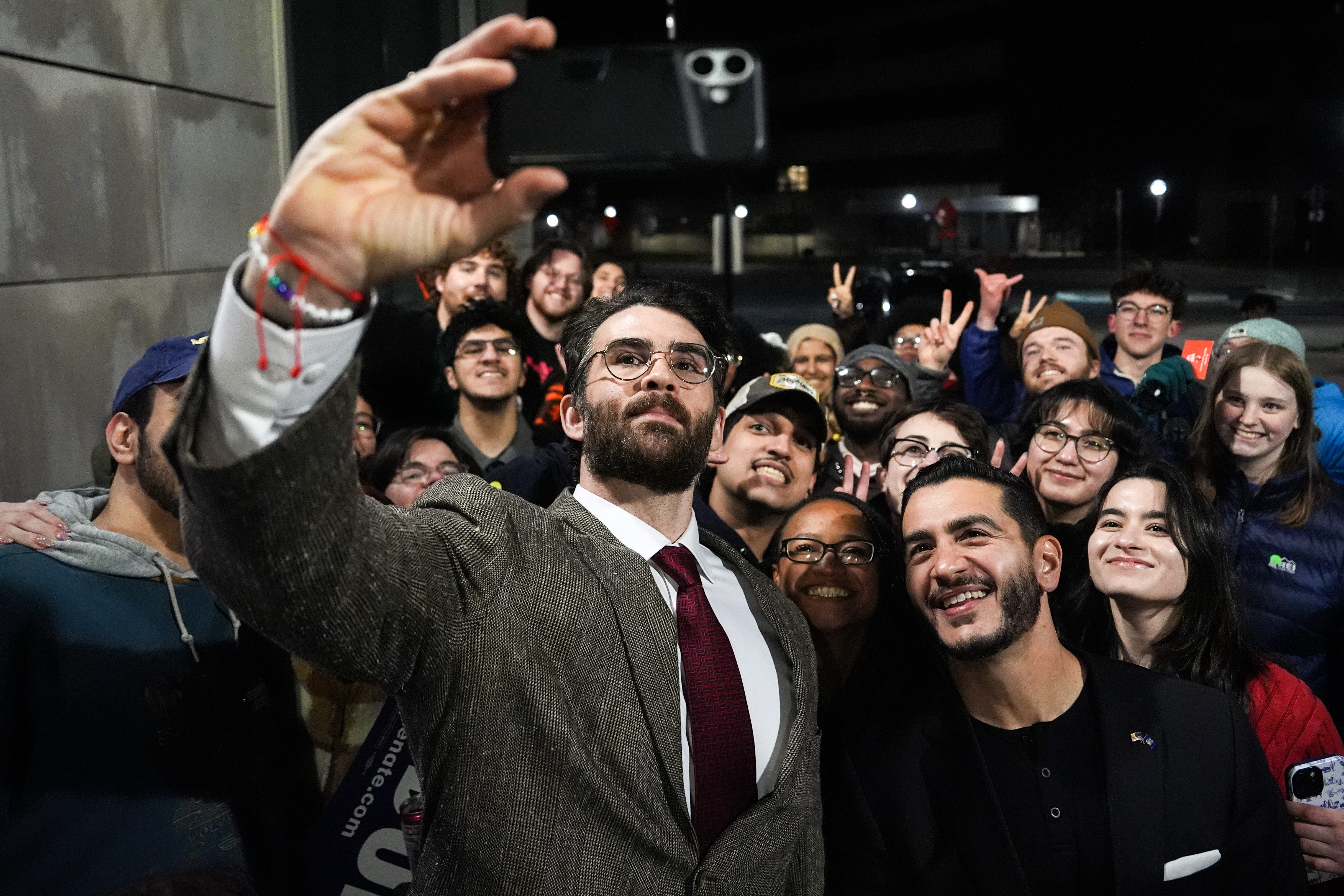
Ann Arbor, Michigan
ROUGHLY SIX HUNDRED PEOPLE filled a University of Michigan lecture hall for a campaign rally last Tuesday evening. That’s pretty high turnout for a campus political event, let alone one taking place while many students were still hungover from celebrating their basketball team’s national championship from the night before.
The event was for Abdul El-Sayed, one of the three Democratic contenders for Michigan’s open Senate seat. But it was not any old political rally: El-Sayed was joined by a figure who, in the last few weeks, had become the subject of heated debate: left-wing influencer Hasan Piker.
If you follow politics—or read my Bulwark colleague Lauren Egan—you know why the event was such a big draw, and a source of national controversy. Piker is a Twitch and YouTube streamer with a combined follower count on those platforms of nearly 5 million. His history includes inflammatory and provocative statements like saying that “America deserved 9/11” and that “It doesn’t matter if fucking rapes happened on October 7. That doesn’t change the dynamic for me.” (He later said that the former remark was “inappropriate” but that he stands by the latter.)
El-Sayed’s decision to appear alongside Piker drew lots of criticism, including from fellow Democrats. Unbowed, El-Sayed proceeded with the plan, which included another (and equally well attended) rally in East Lansing at Michigan State University.1
During press appearances afterwards, El-Sayed refused to disavow Piker’s comments, arguing that Democrats need to reach the young, frustrated Americans who make up Piker’s audience. El-Sayed also said he doesn’t consider himself responsible for everything Piker—or any other supporter—might say. “This whole gotcha game, platform policing, cancel culture—I thought we were over it,” El-Sayed told Politico.
I’m not here to weigh in on the merits of the Piker controversy. (That’s for the likes of Tim and Sarah to hash out.) I’m also not here today to comment on the substance of El-Sayed’s remarks, his rhetoric in general, or his policy platform. (That’s for another newsletter, which, I promise, is coming.) I am here to ponder the question likely to be on the minds of many Democratic voters casting ballots in the August primary: Can a candidate like El-Sayed, running a campaign like he is, actually win in my home state of Michigan?
The question is vital because Democrats’ hopes for a Senate majority depend on winning every single contest they can. Michigan is on the list of seats they hold now and should be able to keep, following the retirement of two-term incumbent Gary Peters. Democrats have been winning most statewide races for the past decade, thanks in part to a bevy of politically talented leaders, including the popular, two-term governor Gretchen Whitmer. And with Donald Trump’s poll numbers in the dumps, the environment seems favorable to Democrats.
Considering a Bulwark+ membership? Try it now for fourteen days free! We’re sure after two weeks you’ll be hooked. Get all the newsletters, podcasts, and livestreams, plus commenting privileges. Check it out!
But this is still a purple state that Trump won twice. The archetype of a successful Michigan Democrat has been a moderate like Peters or Whitmer—or like Elissa Slotkin, who narrowly won the Senate seat that Debbie Stabenow (another moderate) vacated for 2024.
El-Sayed is a different kind of candidate. He’s an unabashed progressive, running against Haley Stevens (an establishment U.S. House member who profiles as another Peters or Stabenow) and Mallory McMorrow (a state senator who leans more progressive but is part of her caucus’s leadership). And El-Sayed is not just challenging a pair of more conventional rivals. He is also challenging the conventional view of what it takes to prevail here.
El-Sayed has been called the “Michigan Mamdani” for that reason, a reference to the New York City mayor who is also an unabashed progressive—and who, by the way, is the first Muslim to hold his job, just as El-Sayed would be the country’s first Muslim senator. But Mamdani didn’t lean into controversy the way El-Sayed has by embracing and (literally) standing by Piker. On the contrary, even though Mamdani had the luxury of trying to win over a far more Democratic electorate, he called Piker’s 9/11 comments “objectionable and reprehensible.”
Mamdani made those comments during a televised mayoral debate, a month after catching flak for dodging questions about Piker. That’s a reminder that campaign dynamics evolve, as they surely will in Michigan, where it’s a long four months until the primary. The candidates are still introducing themselves to the electorate, and to some extent still figuring out how they want to present themselves.
Given all that, it’s hard to be confident about what will happen—or even what could happen. And watching Tuesday’s rally unfold, I found myself constructing two very different theories—one for why El-Sayed could win, one for how he couldn’t.