Why ‘Lonesome Dove’ Continues to Resonate
Plus: Reject AI Val Kilmer. Embrace real Val Kilmer.

Late-breaking news: Chuck Norris, the iconic martial artist and movie star, has died at the age of 86. I wrote a quick obit for him while sitting in the Austin airport as I waited to fly home after our amazing show at the Paramount Theater last night.
Which is to say: My tribute to Norris is slight and quickly done, but I hope it suffices.
Chuck Norris, 1940–2026

IF YOU HAD HBO IN THE LATE 1980s and early 1990s, odds are good you were never more than a few hours away from a certain type of film. They were straightforward, pleasing pictures: a laconic, sandy-haired American dis…
And now, on to your regularly scheduled newsletter.
On The Bulwark Goes to Hollywood this week, I talked to David Streitfeld about his new book on the late Larry McMurtry, Western Star. It was a fun chat and I hope you give it a listen:
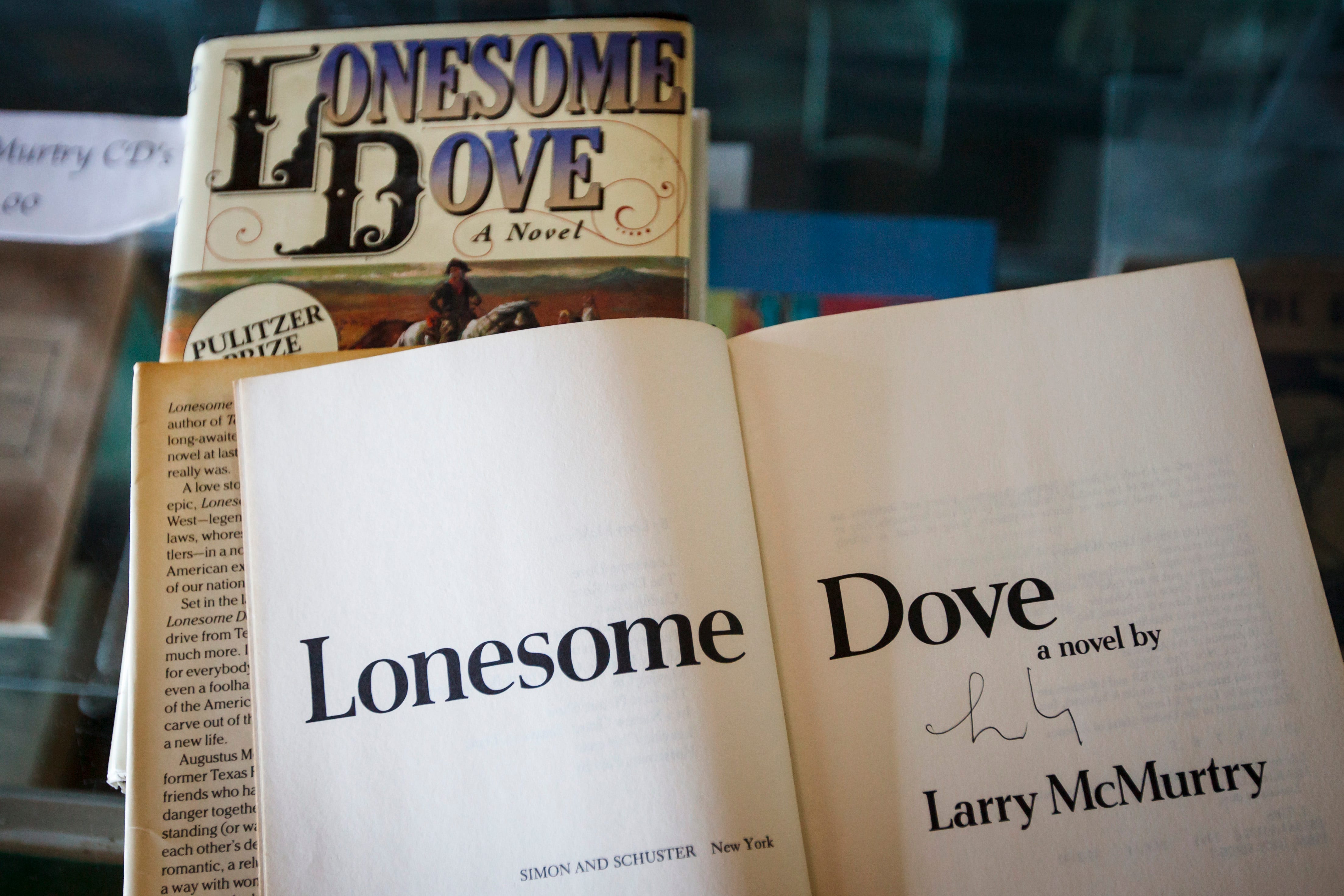
Larry McMurtry: Man of the West

On this week’s episode, I’m very pleased to be joined by David Streitfeld to discuss his new book, Western Star: The Life and Legend…
McMurtry’s relationship to and with Texas is … complicated. The bookish son of cattlemen who never quite fit in with the cowboy ethos, McMurtry both understood the state’s appeal and was repelled by the hypocrisies large and small of all such folk. Hud (which was based on McMurtry’s Horseman, Pass By) and The Last Picture Show (the film adaptation of which was cowritten by McMurtry and director Peter Bogdanovich) both hit on the quiet desperation and the undercurrent of seedy sexual infidelity that small towns harbor. It’s no wonder that folks in McMurtry’s base of operations, Archer City, weren’t all that fond of him.
But his masterpiece is Lonesome Dove, a book that was published more than forty years ago and yet remains near the top of the Amazon bestseller charts on a fairly regular basis; when we taped that episode, it was in the top 100 or so. And it feels like people all around me are itching to read or reread McMurtry’s classic. Just one example: Toward the end of last year, my friend John DeVore wrote about trying to convince one of his friends to read it—he called it “the Lord of the Rings of Texas” in a (thus far unsuccessful) effort to convince him to crack it open—and summarized the book thus:
Every time I read this book, I am moved. Yes, it’s a corny western. The prose ping-pongs between pulp and purple. It’s a long book that takes its sweet time getting started. The story is simple, but I still find it stunning.
Life is a long, treacherous, breathtaking journey, like a cattle drive from the Rio Grande to the Rockies, and the only way to get through it all, from start to finish, is with those you love.
This is a fair and accurate description of Lonesome Dove: The book is compulsively readable; filled with great, lovable characters; and, frequently, deeply unsettling.
I get the sense that there are some who read Lonesome Dove and consider it to be an elegy to a better, forgotten time—Gone with the Wind but on a cattle drive and set in the West instead of the South. I don’t know what book those people read. Maybe they just saw the miniseries and were confused by the irritatingly jaunty music that played over the constant death, the immiseration of nearly everyone onscreen. Because Lonesome Dove is one of the saddest texts I think I’ve ever read.
It is, more than anything else, a book about people compelled to build a world that wants nothing to do with them—and with which they want nothing to do. As Streitfeld puts it in his book, “The cowboy flourishes through contradictions: He is quick with his fists and deadly with his six-shooter but disdains violence. His life is close to the earth and its creatures but he has a spiritual air. He respects property but has only his horse and his gun. He works to create a better civilization but declines to join it.”
This, better than just about anything else, sums up the ethos of the discursive Capt. Augustus McCrae and the laconic Capt. Woodrow F. Call, formerly of the Texas Rangers. Augustus laments having killed all the interesting people in the West—the Comanche and the rustlers and the bandits—to make the world safe for “bankers” and “lawyers.”
“We’ll be the Indians, if we last another twenty years,” an agitated McCrae says to Call in San Antonio after the talkative captain was forced to slap some respect into a mouthy bartender. “The way this place is settling up it’ll be nothing but churches and dry-goods stores before you know it. Next thing you know they’ll have to round up us old rowdies and stick us on a reservation to keep us from scaring the ladies.”
And this, ultimately, is what Lonesome Dove is really about: the drive to see the wilderness before it is tamed. McCrae and Call are like Johnny Appleseed, clearing land and planting towns rather than apple orchards. But they don’t want to live on the orchard. They want to see that little bit left to be tamed before folks like them can bring it to heel. But there’s a cost to that, and it’s a cost paid by characters throughout the book: the young Irish boy who dies after stumbling onto a water moccasin nest; the longtime trailhand of McCrae and Call killed by a young Indian fighter while offering aid to a blind child; the woman taken captive by a vicious native bandit; and the fate suffered by McCrae himself. It’s a hard life in a hard world, one that few modern Americans are fit for.
We are lawyers and bankers (and school teachers and shopkeepers and, ew, journalists). And yet Lonesome Dove’s depiction of life on the trail calls to many of us; in our chat, Streitfeld suggested this was particularly during times of international strife, at moments when it feels as though the world has grown dangerous and some portion of the American mood turns expansionary. But as the oil fields in Iran, Qatar, and Saudi Arabia burn, maybe we should think back to the poor Irish boy screaming in the water, covered in snakes, venom coursing through his veins.
It’s a dangerous world out there. One not fit to be settled by lawyers and bankers.
FOR REASONS HAVING TO DO WITH TRAVEL—I’ve gone from Paris, France with my flesh-and-blood family to Dallas and Austin, Texas, with my Bulwark family for our (fabulously fun and successful Bulwark Live shows this week)—I don’t have a new movie review this week. Instead, I’ll just remind you that Project Hail Mary is out this week and that you should see it if you enjoy seeing things that are fun and good. From my positively gushing review:
Project Hail Mary, from Goddard and the directing team of Christopher Miller and Phil Lord, is a little like Interstellar but with the Spielbergisms turned up to 11. It is the most perfectly crowd-pleasing movie I’ve ever seen in my life: the comedy is carefully calibrated to generate laughs on demand; the emotional well it draws from is deep and produces tears with precision; and it’s smart without feeling preachy or condescending. Indeed, it’s so successful I almost dismissed it as manipulative while I was watching it. And then I realized that if I was being manipulated, I didn’t really care.
Project Hail Mary is, in short, a masterpiece of pop filmmaking.
Assigned Viewing: Heat (Hulu, Disney+)
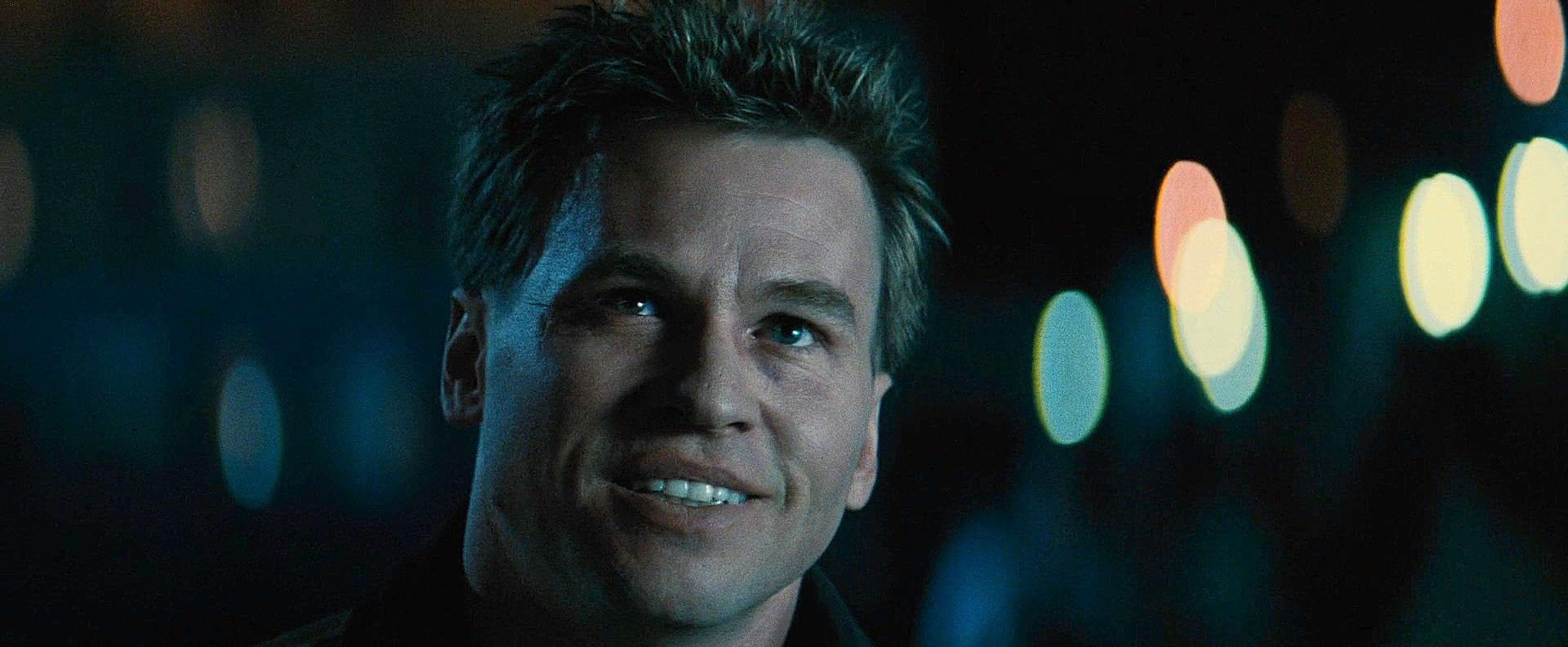
Real talk: This is the most disgusting (entertainment-related) story I’ve seen in some time. Short version: Val Kilmer is being resurrected by AI to star in a movie he’d signed on to do before getting sick with cancer. His daughter says this is something he would have loved, yadda yadda. I’m sorry, I don’t care. The idea that Kilmer himself—a consummate pro who reveled in finding the soul of every individual character—would sign off on this effort to “create” a performance from an amalgamation of past Kilmer performances strikes me as insane. I just don’t believe it.
Anyway, instead of ever watching this (or, indeed, ever thinking about it again), you should just watch Heat. It’s always a good time for Heat. And Val Kilmer is delightful in it.
OMG I loved Val Kilmer. The thought of AI Val is loathsome!
Since I never actually watched Lonesome Dove, and after reading a good portion of the story, I stopped reading and will return after I actually watch starting this evening. SONNY'S word is good enough to make me realize I have missed out on something.