Are Dems Gonna Wimp Out on Redistricting?
Beneath the bravado are signs the party is skittish.

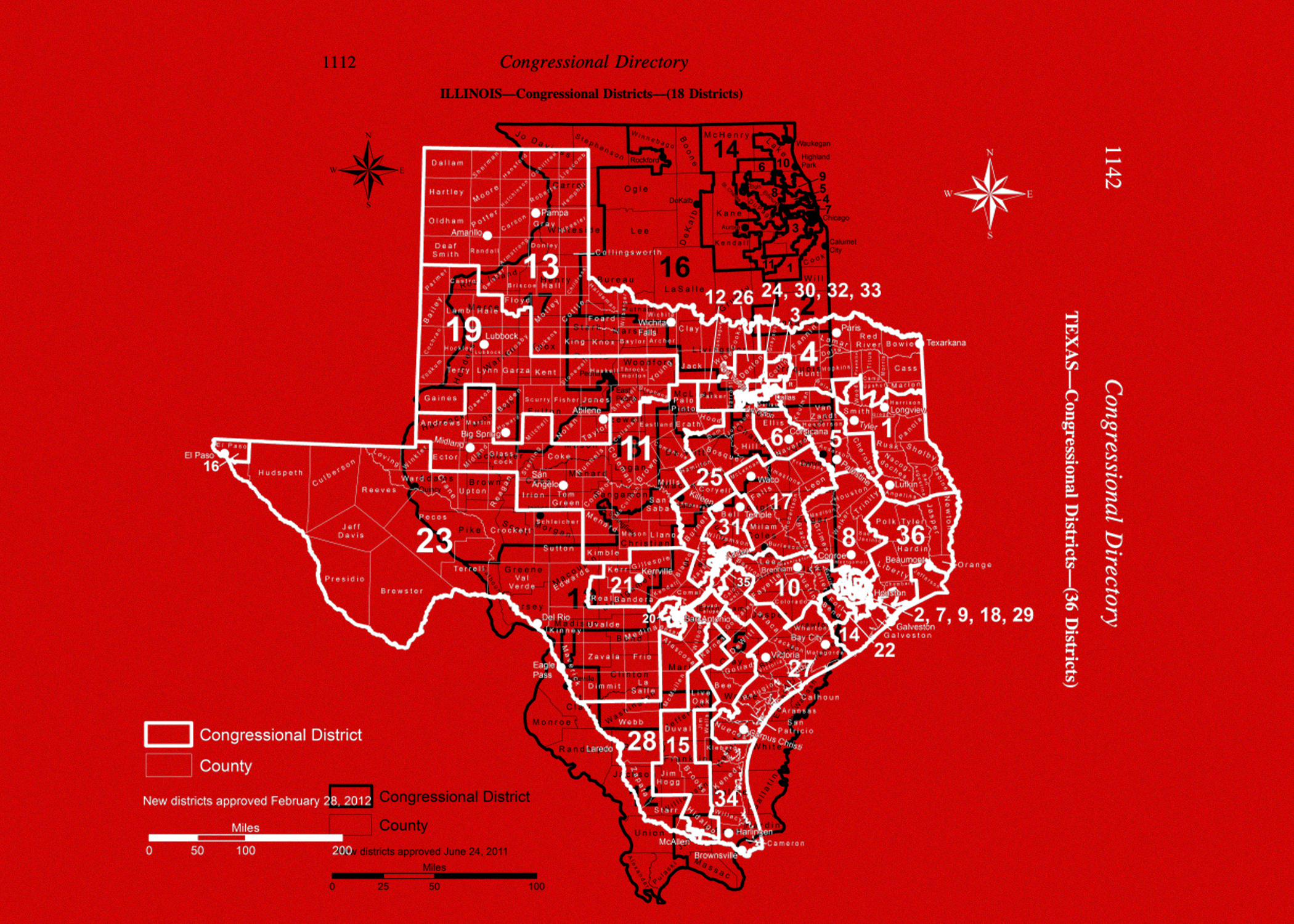
DEMOCRATS IN WASHINGTON, D.C. are insistent that they will aggressively fight Texas Gov. Greg Abbott’s plan to redraw his state’s congressional maps in favor of Republicans during a special legislative session this summer.
Lawmaker after lawmaker has said that they won’t be caught bringing a “knife to a gun fight.” Legal challenges are being planned. PR campaigns are being envisioned. If the Lone Star Republicans complete the mid-decade redistricting, thereby putting at least four currently blue districts within reach of the GOP, the Democratic party is pledging to invest resources into keeping some of those seats. There is talk of countering Abbott’s move by pursuing mid-decade redistricting in Democratic bastions like California, New York, and Illinois—or in some cases, even preemptively, before the Texas special session concludes.
But beneath the surface, there are already signs that the party may not be up for the fight, that the tough talk is bluster, that the gun they may bring to the fight is filled with blanks. And in private conversations, there is a clear element of anxiety that the party could be outmaneuvered by Republicans, worsening their prospects for flipping the House in the midterms.
A clear distillation of this dynamic came Tuesday, as Illinois Gov. JB Pritzker, one of the party’s most vocal Trump critics, took questions from reporters in Chicago’s Union Station. The Democrat was asked whether his state should redraw its map to give the party a bigger footprint.
“We have to see what they decide to do about Texas,” he responded. “I think we ought to play by the rules, everybody. . . . But I think cheating the way the president wants to is improper. We all ought to stand up against it.”
Pritzker’s ambivalence may make sense when you look at the numbers. If Illinois were to pursue a new map, Democrats wouldn’t gain much. The party already controls fourteen of the state’s seventeen House seats; with creative map-drawing it could potentially squeeze out just one more. But doing so would be a messy, time-consuming process fraught with legal challenges.
Yet those barriers don’t seem to be stopping Republicans. Shortly before Pritzker’s remarks, Punchbowl reported that the White House was throwing its support behind Missouri Republicans’ plan to crack a Kansas City–area district. Missouri already has a 6–2 Republican advantage in its congressional delegation. But the president and his allies appear eager to knock out one of the state’s two Democratic congressional seats.
And they’re unlikely to stop there. Trump suggested last week that there are as many as six states where Republicans could redraw maps to help them hold on to the House.
Democrats have several opportunities as well. But even in states where they could have a chance at gaining more seats, some officials have been skittish. New Jersey Gov. Phil Murphy told reporters this week that it was “too early to make any definitive statement” about whether he’d pursue redistricting (Garden State Democrats have nine House seats while Republicans control three). But he said it would be a topic of discussion among Democrats at the National Governors Association summer meeting this weekend. Murphy borrowed everyone’s favorite cliché: “Never bring a knife to a gun fight.”
Even in California, there are some indications that redistricting talk from Democrats may be more boast than bite. And it’s not just because the steps involved are complicated. It’s because Gov. Gavin Newsom, who has insisted he will move with haste if Texas does, faces dissent from within his own ranks.
“This is core to the Democratic platform. For as long as I’ve been alive, we’ve been the anti-gerrymandering party, anti-corruption and pro-democracy people. And are we going to just stoop to their level?” Assemblymember Alex Lee, the head of the state legislature’s Progressive Caucus, said in a phone interview with The Bulwark. “It’s a race to the bottom where everyone loses.”
DEMOCRATS ARE USED TO AGONIZING over the conflict between the necessities of adversarial politics and their self-conception as the responsible, moral, upright party. So, it’s not entirely surprising that some in the party are skittish about redistricting even as Republicans dive headlong into it.
If Texas Republicans do move forward with their plans, the pressure will mount to potentially untenable levels for Democrats to stop listening to their supposed better angels. Already, national Democrats have been racing to TV cameras and podcast mics to warn that Democrats can’t accomplish their goals and implement their policies if they’re not willing to fight as hard, as craftily—and by some lights even as dirty—as Republicans.
Rep. Lizzie Fletcher (D-Texas) told CNN that Democrats (you guessed it) “cannot bring a knife to a gunfight.” Rep. Greg Casar (D-Texas) said in an interview with The Bulwark that Democrats can’t be “Boy and Girl Scouts in this.” Michigan Sen. Elissa Slotkin said at an Axios event that she would not “fight with one arm tied behind my back.” House Minority Leader Hakeem Jeffries held emergency strategy sessions and began looking into other Democratic-controlled states where the party could redraw more favorable maps, such as New York and New Jersey. And former Texas Rep. Beto O’Rourke went so far as to call on Newsom and others to move before Texas.
“This is for the very future and fate of the Republic. We lose it, you will never, ever get it back,” he said. “Why the fuck are we responding and reacting to the other side instead of taking the offense on these things?”
In an interview with The Bulwark, O’Rourke was fairly blunt about why he felt Newsom needed to redistrict preemptively, rather than in retaliation.
“We know the end of this movie,” he explained. “If we wait and watch and respond, it might be too late.”
THE FEAR THE AMERICAN DEMOCRACY is on the verge of crumbling under Trump’s assault—and that Democratic leaders ought to act like it—may be motivating much of the current discussion among Democrats about what to do with Texas. But that talk also reveals some of the difficulties that come with redrawing maps.
It’s true that, as Lee said, Democrats have long decried partisan gerrymandering as undemocratic and corrosive to the political system. And in response, some blue states have implemented independent redistricting committees. In some states, such as California, those committees were approved by voters in ballot initiatives. Messing with the maps in those states will be complicated and require creative legal maneuvering. And as Democratic data analyst Lakshya Jain noted, any crack in Democratic support will make that effort all the more difficult. “If you’re going to push through a strategy that’s likely to be highly contested legally and your own party isn’t united, well, good luck,” he said.
There are also more opportunities ahead for Democrats to get bogged down in intraparty debates. Arizona Sen. Ruben Gallego said Tuesday that it was “time for Democrats to understand the existential threat” in front of them and “dilute” Voting Rights Act–protected districts where they win by comfortable margins. That comment is likely to frustrate members of the Congressional Black Cacus, many of whom represent those majority-minority seats and won’t necessarily be keen on endangering their own political futures, even to help the party as a whole.
Some Democrats look back now and think that the party made serious strategic blunders with independent redistricting committees. Casar, the Texas representative, said that blue states should have passed laws saying that their independent commissions would only go into effect once places like Texas and Florida implemented similar nonpartisan rules.
“That’s the way that this should work so that the entire country gets rid of gerrymandering,” he said. “We shouldn’t have a situation where, say, a Colorado gets an independent commission and therefore disincentivizes an Alabama from ever having one.”
Rick Ridder, a Democratic strategist in Denver, agreed. He said Colorado Democrats misstepped by supporting the independent commission back in 2018.
“Democrats have a sense that they’ve got to be fair and that reform is good. But reform gives up power,” he said. “If you’re going to be in politics, if you’re going to be engaged in this, you got to be prepared to fuck or be fucked.”
🫏 Donkey Business:
— On the topic of Texas, this week I interviewed Texas state Rep. James Talarico, whose profile recently blew up after he was invited on the Joe Rogan Experience. Talarico is one of the rare Democrats who seems to have cracked the code on social media (it helps that he’s a Millennial who grew up on MySpace), which we get into in the conversation. Talarico and I also spoke about the tools that Texas Dems have to fight back against the GOP’s redistricting push, including breaking quorum.
And, as mentioned above, former Texas Rep. Beto O’Rourke also stopped by The Bulwark studio this week to sit down with Sam Stein. O’Rourke was pretty honest about the limitations of breaking quorum (two-thirds of the elected members constitute a quorum in each chamber, so this would require Democratic legislators to leave Austin or even the state).
“It’s a very, very heavy lift,” O’Rourke said, noting that when Democrats have tried this in the past, they have always wound up caving and coming back to the state capitol. “We know from precedent that this is not going to be easy—and maybe is even unlikely to succeed. But we sure as hell better try before we give in.”
— Kentucky Gov. Andy Beshear, a potential 2028 presidential candidate, got the Vogue treatment this week. But as the New York Times’s Mike Isaac points out, “Vogue covers feel like the kiss of death in politics over the past ten years.”
Still, I learned some new facts about the gov: He runs on his treadmill seven mornings a week (that is some impressive self-discipline); he didn’t make law review at UVA; Maryland Gov. Wes Moore is his “workout muse”; and he was on MrBeast a few years ago (admittedly, just a mention and a picture), way before appearing on YouTube was trendy among his fellow Dems.
My open tabs:
— Comeback in ’90s Offers Democrats a Bit of Hope. But Not Much.
Elected Dems cannot tell voters that Trump and MAGA are existential threats to democracy if they are unwilling to do their part.
The problem with Democrat elected officials is that they are still operating under the illusion that this is just normal politics amped to 11. They refuse to grasp that things have fundamentally changed. When a criminal is in charge of enforcing the law then laws cease to have real meaning.