Dems See a Major Black Voter Backlash to SCOTUS
The Supreme Court’s gutting of the Voting Rights Act unleashed a wave of redistricting. Did it unleash a wave of voter anger too?

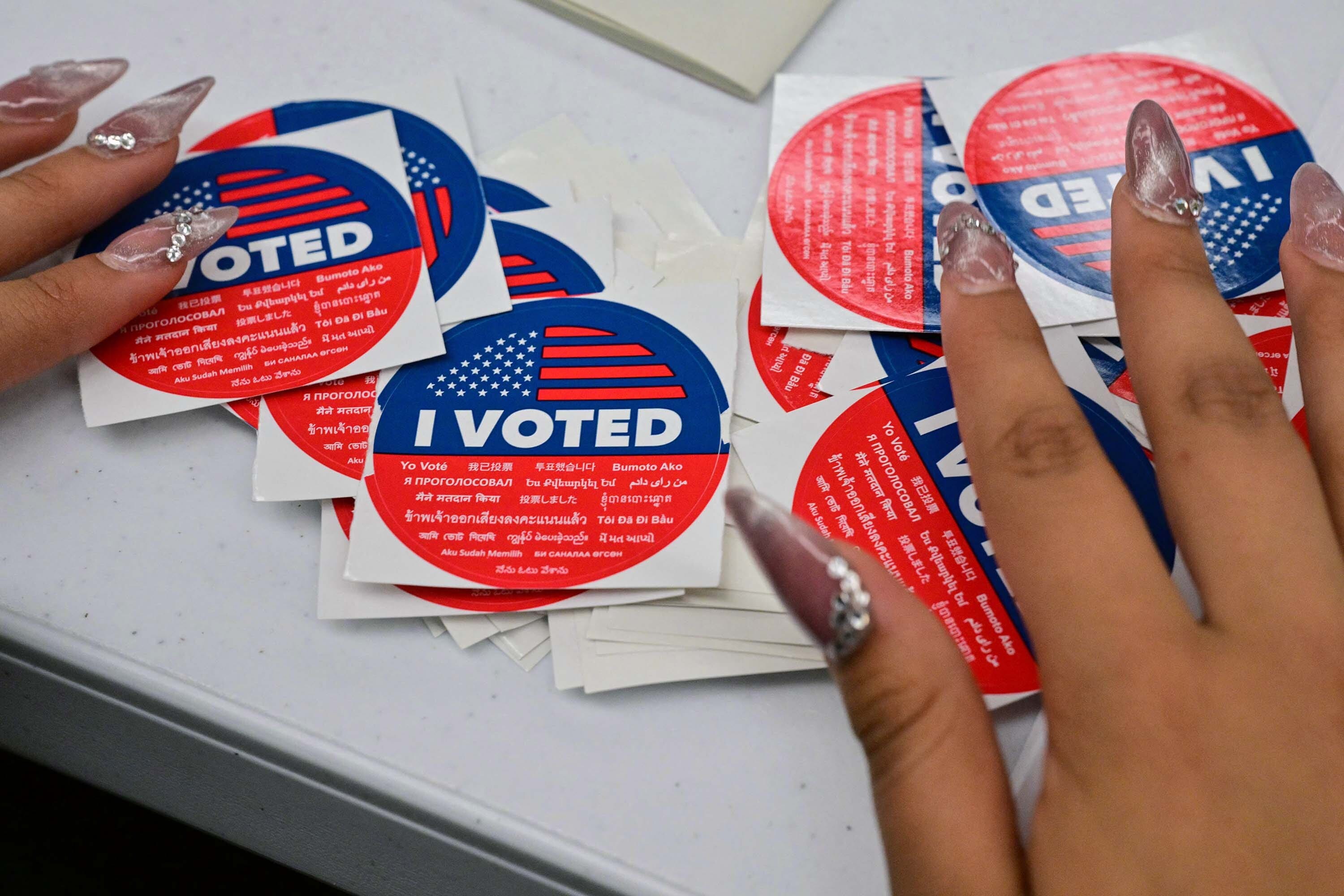
DEMOCRATS MAY HAVE BEEN rightly apoplectic with the Supreme Court’s ruling gutting Section 2 of the Voting Rights Act—and the rush to carve up the electoral power of black voters in the South that followed. But in the short term, they have begun to see political opportunity.
In the past few weeks, operatives involved in competitive House, Senate, and gubernatorial elections have argued to me that the Republican attack on black rights and representation unleashed by the Supreme Court will powerfully energize their base this midterm cycle. And not just in Southern states that are redrawing congressional lines. The Court’s ruling, Democrats say, could increase black voter turnout enough to clinch narrow elections.
“It could be a game changer across the country, especially in these marginal districts where candidates win with less than 2 percent of the vote,” said Donna Brazile, the former Democratic National Committee chair.
The Democratic Congressional Campaign Committee provided me with a list of eighteen districts they’re eyeing in which black residents make up between 12 and 33 percent of the voting-age population. Some districts on that list, like North Carolina’s 1st Congressional District, are swing seats that Democrats are defending. But others—like Virginia’s 2nd district, Ohio’s 10th, Michigan’s 10th, and North Carolina’s 3rd—are critical pickup opportunities. The DCCC believes that historical turnout among black voters could be the difference in flipping those seats.
“People are very upset,” said former Rep. Elaine Luria, who is running to take back the seat she once held in Virginia’s 2nd district, adding that the way the Virginia Supreme Court threw out the state’s redistricting referendum only added to the outrage. “This is a district where one in five or four voters are African American. . . . All of this was just a very emotionally charged combination of things, and we’ve certainly been hearing about it everywhere we go.”
There’s no denying that some of this analysis is the product of party officials desperate to find a silver lining to the VRA ruling. And it’s not clear that even a groundswell of black opposition to the Court would be enough to make up for the seats that GOP legislatures have redrawn to their favor since the Callais decision.
But there’s some evidence that such a groundswell might be coming.
If you want careful reporting, smart analysis, and expert commentary, support our independent journalism with a Bulwark+ membership today.
Cornell Belcher, a pollster who worked closely with Barack Obama in 2008 and 2012, told me that in a recent nationwide poll he conducted on behalf of the group BlackPAC—which works to turn out black voters for Democrats—81 percent of likely black voters said they were very motivated to participate in the upcoming election. At this same point in June 2024—during a presidential election year wherein voter enthusiasm is almost always higher—Belcher said 76 percent of likely black voters were very motivated to participate.
“That [high motivation] is not something I typically see at this juncture, especially going into a midterm,” said Belcher. “There’s tremendous potential here: a different kind of turnout and participation if messaged correctly.”
While affordability and cost-of-living concerns remain a major source of motivation for voters this cycle, Belcher and other Democratic operatives argue that economic issues—although important to black voters—don’t generate the intense frustration and righteous indignation that the dismantling of black representation does. Strikingly, according to Belcher’s poll, more black voters (41 percent) now identify the Supreme Court as the top threat to their community than the Trump presidency (39 percent). In June 2024, just 26 percent said the Court was the top threat.
There are other data points too. In Georgia, which faces Republican-led redistricting, Democrats drew over 1 million ballots in last month’s primary, compared to Republicans’ 940,000. Charlie Bailey, chair of the Georgia Democratic Party, told me that was the largest edge that the party has held over the GOP in a primary since 1998. And he attributed the turnout to Georgia’s primary taking place shortly after the SCOTUS ruling and while Republican lawmakers announced plans to redistrict ahead of the 2028 cycle.
“It’s pissing people off. And that’s maybe even an understatement,” said Bailey. “It is emotional. I think it is disrespectful, and it is not hard to explain [to voters].”
Likewise, Adrianne Shropshire, the executive director of BlackPAC, says black voters around the country frequently bring up redistricting and the VRA ruling unprompted in her focus.
We shouldn’t be surprised that Georgia voters are especially motivated by the VRA ruling since their congressional representation could soon be upended. One challenge for Democrats will be figuring out how to motivate black voters around the ruling in states that aren’t facing imminent redistricting.
Another is making the issue land with black voters who, compared to their peers, are relatively disengaged. As the Democratic pollster Josh Doss has documented, black voters aren’t a monolith, and finding a winning message that resonates with voters—young and old, regular and irregular—is difficult.
“There’s a different understanding about what is actually happening in real time between older voters and younger voters. Older voters remember Jim Crow,” said former North Carolina state Rep. Raymond Smith, who is running to flip the state’s 3rd Congressional District. Younger black voters may not be so outraged: “[The GOP’s] effort, in my humble opinion, could be lost on the younger generation.”
Last month, the DCCC launched a digital ad campaign in hopes of imparting those historical lessons. The ads highlighted GOP attacks on black voters’ representation and voting rights, while decrying the Trump administration’s “white nationalist agenda” and “Jim Crow 2.0.”
Operatives like Belcher want even more. In their view, Democrats should dedicate more resources to messaging about the dismantling of the Voting Rights Act and, with it, black political representation. They see a parallel to the ways the party rallied around abortion rights after Roe v. Wade was overturned during the 2022 midterm election cycle.
“Almost every piece of literature going into that campaign season had something about the rights of women being rolled back and attacked,” Belcher said. “What’s the difference here?”
Other operatives agree. They told me the party had a track record of fixating on appealing to white women and white working-class voters but had shown itself to be slow to respond to black voters’ interests.
“The fact that we’re already in June and I’m not seeing an attempt to have targeted conversations with key constituencies within the Democratic coalition, the black community—I’m not sure where money is being spent right now,” said Shropshire. “We continue to see elections where black folks just decide that they’re going to stay home because the party that’s supposed to be standing up for their interests simply is not.”
🫏 Donkey Business:
— Graham Platner officially became the Democratic nominee for Maine’s Senate seat on Tuesday evening, earning around 72 percent of the vote. Gov. Janet Mills got 19.4 percent, even though she had dropped out of the race; David Costello came in third place with 8 percent. The challenge for Platner now will be earning the trust of those primary voters who didn’t back him while also broadening his appeal to independent and Republican voters whom he will have to win over in order to defeat Susan Collins.
“To any of those who feel let down or disappointed or disillusioned, it is my job to earn your trust, faith, and support. And I will spend every day of this campaign—and if I have the privilege, every day in the United States Senate—doing exactly that,” Platner said in his victory speech on Tuesday evening.
— Some progressive House members are threatening to withhold their DCCC dues out of frustration with the committee’s handling of the primary in California’s 22nd district, Axios reports. Shortly before the election, the DCCC took the rare step of picking sides in a primary race, endorsing the more moderate California Assemblymember Jasmeet Bains over progressive activist and political science professor Randy Villegas, who had been endorsed by Bernie Sanders. Despite DCCC’s $135,000 joint ad buy in support of Bains shortly before the race, Villegas won 5 percent more of the vote than Bains—enough to advance to the general election against GOP Rep. David Valadao. It’s just one congressional race, but it underscores the continuing divide within the party about what sort of candidate is most “electable” in the purple and red parts of the country.
My open tabs:
— The New College Football Millionaires Spending $80,000 on Their High School Proms
Gerrymandering can backfire. Just because a district is no longer ‘majority Black’ doesn’t mean it automatically elects a Republican. In Illinois we have four Black House members, and guess how many come from majority-Black districts?
Zero.
Excellent and timely report. Let's hope all Dems are very incentived to vote this November