Texas Fight Shows Dems Stuck in Limbo
State lawmakers managed only to slow GOP redistricting plans. Can Dems hope for more than partial victories before the midterms?

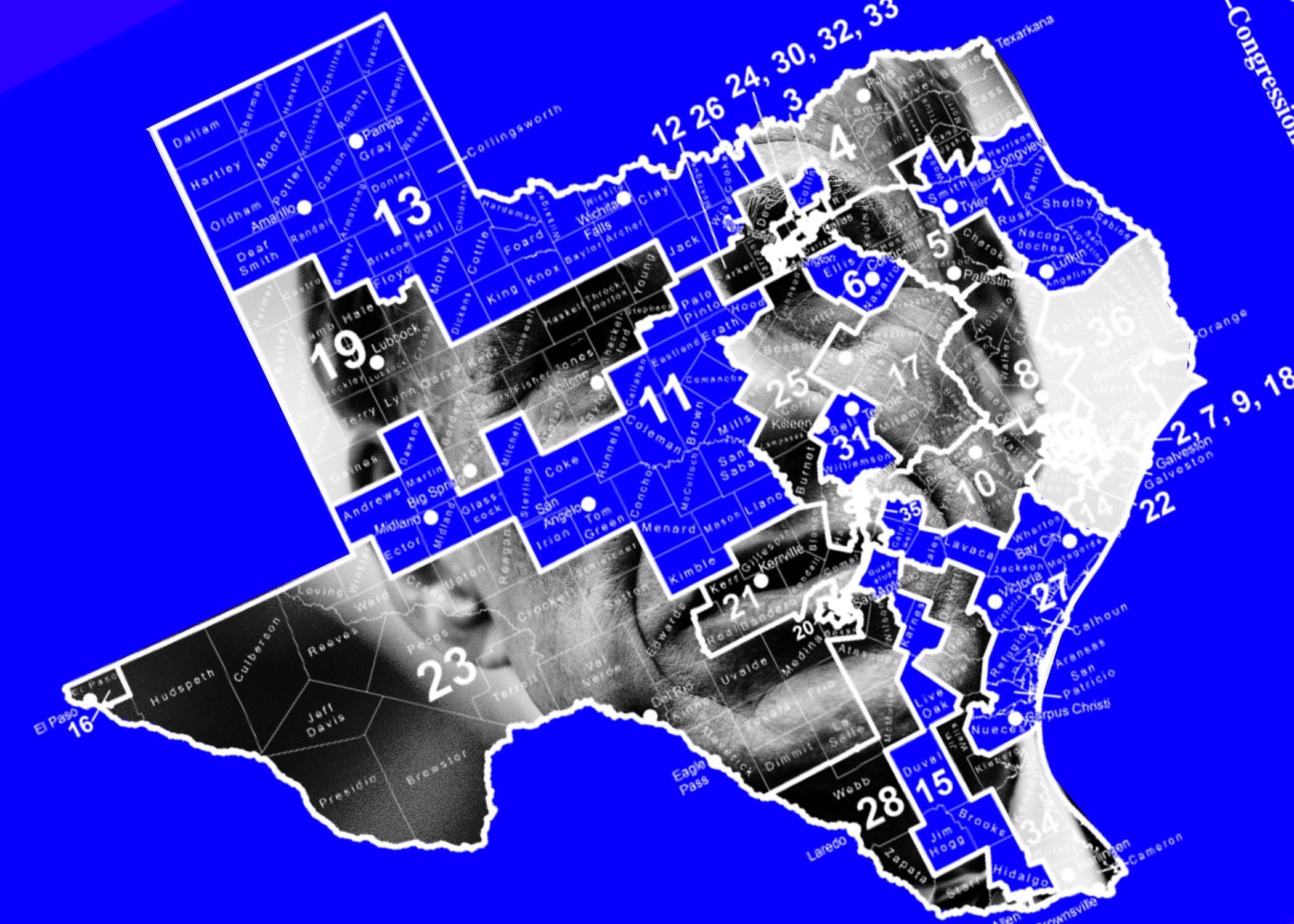
AS TEXAS DEMOCRATIC LAWMAKERS hunkered down in the Chicago area last week in hopes of thwarting Gov. Greg Abbott’s redistricting push, there was a sense brewing among them that they needed to find an offramp—and soon.
Not all of the Lone Star State Democrats could do their day jobs remotely. Some had kids starting back up at school. Others were worn down by the personal strain—between the $500 daily fines for missing the legislative session, hotel bills, bomb threats, and the Texas attorney general’s promise to “hunt down” members. But mainly, they understood that no matter how long they held out, Republicans were certain to get their way. In fact, several of the Democrats had left home with just a small carry-on suitcase—a sign that there was never an expectation that they’d be staying long.
When Abbott called a second special session on Friday, the main point of debate among those Democrats gathered in hotel meeting rooms was whether to go home that day or wait until the following week.
“We are a minority in Texas,” state Rep. Ann Johnson said in a Friday Zoom call with reporters. “There is [only] so far that we can go.”
Whether the Texas Democrats achieved what they had hoped to when fleeing the state depends on one’s perspective. For starters, they’ve cheered the fact that Abbott was forced to end the first special session without passage of the new congressional maps. But that’s less of a success than it is delaying defeat: The new maps are likely to pass during the second special session.
The Texas Democrats also feel they’ve helped energize California Gov. Gavin Newsom’s effort to build support for redrawing his state’s congressional maps. But it’s not a certainty that California can neutralize Texas’s gains, since doing so would require defeating a well-funded and organized opposition. And even then, Florida or other GOP-controlled states could decide to redraw their maps as well.
“The way we fight may evolve over time, but one of our big goals was to kill this special session, to have a conversation with the American people, raise awareness that Donald Trump and Greg Abbott were trying to steal the midterm elections, and then get other states prepared to act,” Texas Rep. John Bucy told me in a phone call from his Illinois hotel last week. “That’s a big success for us.”
Bucy may be right. Other party strategists told me they thought Texas Democrats had not only put a national spotlight on the redistricting issue but also helped motivate the base and convinced donors to start opening back up their pocketbooks.
But to portray the past few weeks as a victory for the party is an overly optimistic read. In reality, they’ve underscored just how fragile is the opposition to Trump. Democratic voters may be desperate for effective acts of resistance, but that resistance has often proved futile. The standards for what it means to fight back and win have been defined down.
“Democrats can pretend like they have just as many cards to play as Republicans do, but that is not the reality,” said one voting-rights advocate.
IF NEWSOM SUCCEEDS IN GETTING a new map in November, it will be a bright spot for Democrats. But it will come amid a sea of setbacks.
Recent court decisions have undone the early hurdles Trump faced in dramatically revamping and gutting federal agencies. Top Trump appointees have begun acting with less regard to public pushback, including Robert F. Kennedy Jr., whose Department of Health and Human Services has moved swiftly to turn his anti-vaccine views into policy. Even legislatively, Democrats have not enjoyed the successes that they had during the first Trump term, in which the party was able to beat back his efforts to repeal Obamacare. Congressional Democrats have at times seemed frozen in place as Trump rolls along.
Meanwhile, Democratic mayors and governors have been watching the events unfolding in the nation’s capital. Muriel Bowser, the mayor of Washington, D.C., offered fairly modest pushback last week as the president took over her city’s police department and ordered federal law enforcement officers into the streets.1 Her middle-ground approach has come as Trump allies begin pondering the takeover of additional cities. Yet those close to Bowser reportedly view the whole situation as a win for the mayor, telling Politico that it could be much worse.
Other pillars of resistance are also looking shaky. Harvard University is reportedly on the verge of reaching a settlement with the Trump administration. Although the terms of the agreement appear far more palatable than those of the deals cut by other schools—such as Columbia—it’s a remarkable about-face for the university and its president, which had been lauded by the public and alumni for not bending the knee.
Trump appears to relish flaunting his ability to get institutions to fold. Some of the law firms that struck deals with the Trump White House earlier this year were recently asked to help broker the president’s trade deals. It was one of the first indications that the president continues to dictate the terms of those agreements, in which it was not entirely clear what type of “pro bono” work the firms had committed to doing.
Not all Trump opponents see these acts of acquiescence as five-alarm fires. Texas Democrats can only do so much while in the minority. Having law firms work on trade deals is better than having them involved in the president’s immigration crackdown. And the universities settling with Trump are doing so in order to unlock critical research funding—a deal that is defensible on the merits.
“Cutting a deal to get back critical research money is easier than fighting him in court for some of these universities,” said Michael Trujillo, a California-based Democratic strategist. “The one thing Trump should understand, he’s gone in three years so folks find it cheaper to wait him out. Trump is a piece of ‘rent to own’ furniture for many organizations who believe once he’s gone, so are many of his weird demands.”
But victories are hard to celebrate when they’re largely Pyrrhic. And party officials fear that Trump may continue to steamroll those in his way. There is widespread concern among Democrats that their congressional leaders will cave on the government-funding negotiations next month; one senior House Democratic lawmaker who spoke with The Bulwark put the prospect of cutting a deal at 50/50. There is also fear that Trump will continue to ram through controversial nominees, with Democrats unable to do anything to stop him.
All of that is causing despondency among Democrats, who know that not much will change until they win elections again. In the meantime, delay may be the best they can expect to accomplish. Which would mean that the Texas Democrats secured the closest thing to a victory the party can hope for.
🫏 Donkey Business:
— By now, most of y’all have probably seen the video of Sean Charles Dunn, the guy who threw a foot-long sub at federal officers on August 10 in Washington, D.C. According to police, Dunn was yelling at the law enforcement officials and calling them “fascists.” The whole episode led Attorney General Pam Bondi to fire Dunn from his job at the Justice Department. The 37-year-old is now facing felony charges.
But the left has also embraced Dunn in the wake of the incident, with New York magazine declaring that “the resistance found its new folk hero.” RAYGUN, the Iowa t-shirt company that often pokes fun at the GOP and is popular among Democrats, started printing a new shirt—“Sandwich Against the Machine”—celebrating Dunn.
— ActBlue recently made a little noticed, but telling, change to its platform. According to Axios, the Democratic-aligned online funding portal is now giving independent candidates access earlier in the campaign cycle, even if a Democrat is already in the race. The move seems like a clear attempt to buoy Democrat-turned-independent candidates running in red states, such as Brian Bengs in the South Dakota Senate race and Todd Achilles, a former Democratic Idaho state representative, who is now challenging Sen. Jim Risch.
My open tabs:
— The Fool’s Gold of Midterm Success
— The Magic of a Weird Tyler Childers Pop-Up Concert
— These Are the Voters Who Should Scare Democrats Most
Though the mayor launched a successful legal challenge late in the week against the full commandeering of the city’s police force, she has tried to downplay frictions with Trump as he takes over the city’s law enforcement. It’s been a sharp change in posture from the first term.
Democrats in the Texas State House are the minority, but voter registration tells a different story:
TEXAS
Total Registered Voters: 17,485,702
Democrats: 8,133,683 (46.52%)
Republicans: 6,601,189 (37.75%)
Unaffiliated: 2,750,830 (15.73%)
(source: Independent Voter News)
So, what is wrong with this picture? Turn out the Democrat vote, and have something to draw the Unaffiliated, and you win Texas.
Also, admitting that the following comment is anecdotal -- but I have 14 relatives in Texas who lean right. I just saw them at a family reunion; we had not seen each other since 2018 and half of them defriended me on Facebook back in 2017. They are yeehaw Texas-loving, liberal-fearing (except me, I guess), patriotic always-voters. To a person, they are totally quits with Trump. If the Democrats don't mess it up and have their House candidates start trying to sell nothingburgers or yammer on about identity politics, and instead start selling good old American values of hard work, civil rights for all, better pay and benefits, a safe border at a reasonable social and budgetary cost, and continue their fight for redistricting fairness; if they will continue to point out the corrupt, anti-constitutional things that Trump and Abbott/Paxton are doing and amplify their own rising stars like Christian legislator James Talarico, then there's a good chance that Trumpian redistricting or no, a lot of Texas might turn purple.
"All of that is causing despondency among Democrats..."
Wut?
Democrats have gained +7 points in voter identification since Q4 2024 and now lead Republicans by 3 points.
Democratic voter intensity is way ahead of Republican voter intensity.
Democrats lead the generic poll by 3.6 points.
But Democrats are "despondent". 🙄