Inside Dems’ Plans to Beat Back Trump’s Attacks on the Midterms
The party is taking concrete actions now to preempt the election meddling they know is coming.

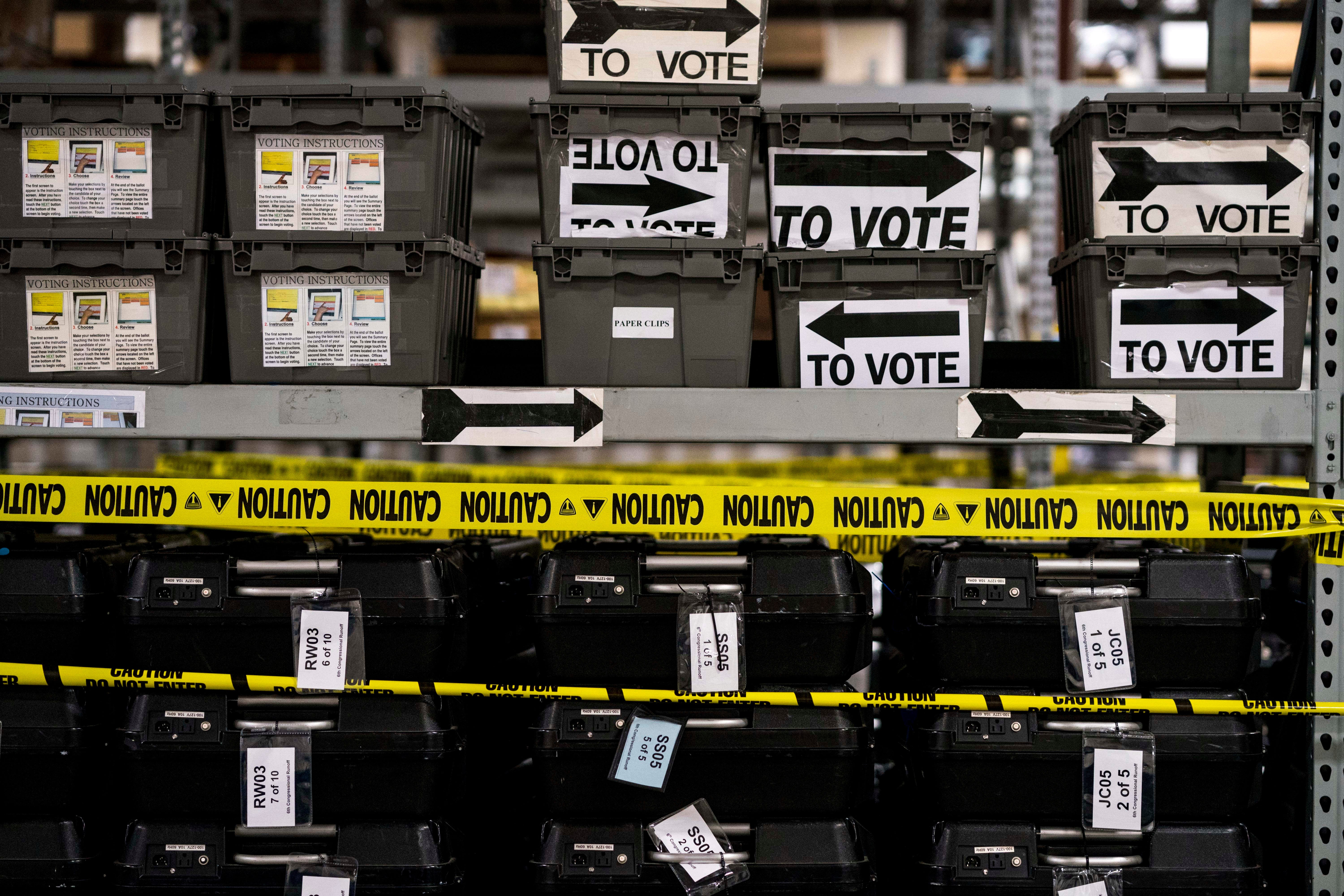
IT’S ALARM-RINGING STUFF: The FBI raided an election center in Fulton County, Georgia, last week, seizing some 700 boxes of ballots and other materials related to the 2020 election. Director of National Intelligence Tulsi Gabbard was on the ground monitoring the operation. She called Trump and put him on speakerphone so that he could talk directly to the FBI agents conducting the investigation, according to the New York Times. Later, Trump went on Dan Bongino’s podcast and said Republican officials should “nationalize” and “take over” voting procedures in fifteen states.
For Democrats, it swept away whatever doubt may have lingered that Trump would try to subvert the 2026 midterms. In fact, it’s now become an accepted fact among many party leaders that the worse Trump’s polling gets, the more aggressively he will look for ways to interfere with the elections.
“It’s not just an old man who can’t get over that he lost an election six years ago. This is a purposeful, meaningful attempt to continue to undermine faith in our elections and our ability to conduct elections in one of the most critical counties in a swing state,” Dana Barrett, a Fulton County commissioner and Democratic candidate for secretary of state, told me in a phone call. “The Republicans know that they cannot win unless they cheat, and that is exactly what they’re trying to do in Fulton County.”
But diagnosing a coming crisis is one thing. Taking steps to prevent it is another.
To get a sense of how hard it will be to stop Trump’s election interference, consider the long list of actions he has taken in just the past year—all of which appear aimed at creating a pretext to cast doubt about the midterm results or assert more control over election administration.
For months, the Trump administration has been attempting to build a national voting database, which experts have warned could be used to discredit election results. Attorney General Pam Bondi sent a letter just last month to Minnesota Gov. Tim Walz suggesting that the administration would scale back its ICE presence in the Twin Cities if he turned over the state’s voter rolls. There’s growing concern among election officials that ICE agents could be deployed to intimidate voters from going to the polls. And just last month, Trump told the New York Times that he regretted not ordering the National Guard to seize voting machines in swing states after he lost the 2020 election.
“We are seeing, particularly in the last couple of weeks, how the administration is targeting the core tool that Americans can use to hold their elected leaders accountable, which are free and fair elections,” said Cole Leiter, executive director of Americans Against Government Censorship. “The administration’s ultimate goal is not to give the power away that they’ve consolidated.”
In my conversations with the party’s top lawyers and strategists, it’s clear that Democrats are doing a lot to try and push back right now. Powerful Democratic-aligned law firms like the Elias Group have quickly and successfully intervened in the DOJ’s voter data lawsuits. Democratic governors in states that Trump could target have been huddling with their teams to game out how to handle potential interference from the White House.
“We have to plan to safeguard the ballots and ballot equipment against federal seizure. We have to plan for the potential specter of armed, masked men roaming our streets and scaring people away from the polls,” said Shenna Bellows, Maine’s secretary of state who is running in the Democratic primary for governor.1
The Democratic National Committee also created a new litigation department last year in preparation for election challenges. They’ve spent much of the past year building out a team of volunteer lawyers across the country and have been making contingency plans for problems that could arise in the leadup to or on election day.
Some of these are steps that the DNC and its allies took in prior cycles. But what is different now is that no one is treating them as just boxes to check. Nor do they view the threat as theoretical. After the 2020 elections and January 6th, Democratic officials understand the stakes and are approaching voter protection and election interference with deep consternation—which has influenced both the resources they’re putting into this year’s election and the ways they’re talking about it.
“Everyone who cares about democracy should be alarmed, because this is authoritarianism,” said Bellows. “The Framers of the Constitution understood that if the federal government were in charge of elections, that’s a path to tyranny. They had just declared independence, 250 years ago, from King George, and they placed the people closest to the voters, local and state election officials, in charge of elections for that very reason.”
IT’S NOT JUST TRUMP and the power of the executive branch that Democrats have to worry about. Some local GOP leaders are likely to follow his directives. And just this week, House Speaker Mike Johnson echoed Trump’s conspiracies about voter fraud.
For those reasons and others, many of the Democratic leaders I spoke to said that they ultimately believed the best way to defend against potential attempts to overturn the election results was to win by indisputable margins—across the board.
“If we come out in record numbers, there’s no ‘We need 11,000 votes’ to even talk about,” said Barrett, referencing the phone call Trump had in 2020 with Georgia’s secretary of state asking him to “find 11,780 votes” to overturn the results in his favor.
A DNC official I spoke with referred to this as the “margin of litigation,” telling me that “there is a point outside of which you don’t see serious post-election litigation.”
But even the official conceded that the “margin of litigation” theory only worked “if there aren’t attempts to seize ballots before the counts are made.”
It’s also optimistic to assume that Democrats will win beyond the “margin of litigation” in all the competitive races across the country. That almost certainly won’t be the case in the Senate, where control of the chamber could come down to one or two extremely close contests.
After 2026, questions about how to combat Trump’s efforts to take over elections and to undermine their results become more difficult. The political environment might not be as favorable for Democrats, and a strategy that requires them to win by landslides to win at all is really just a strategy for losing most of the time.
Figuring out how to deal with the election denialism that has infected the Republican party will remain a challenge—probably even after Trump has left the political scene. And most Democratic officials that I spoke with said it would require public outrage and pushback. That’s an uncertain factor to count on.
“After January 6th there was such consensus against the types of actions that were taken. And it is so deeply tragic that that consensus faded,” the DNC official told me. “We need to just stamp it out. And that’s not a legal strategy, right? That is communication, that is searching within our nation’s soul what we want to be.”
🫏 Donkey Business:
— There’s a lot of drama swirling around the Democratic Texas Senate primary this week. It started when influencer Morgan Thompson posted a TikTok alleging that, in a private conversation, State Sen. James Talarico, who is running for the seat, told her that he “signed up to run against a mediocre black man, not a formidable, intelligent black woman”—refering to Colin Allred, who dropped out of the race in December, and Rep. Jasmine Crockett, who remains in it. In the TikTok, Thompson argued that calling Allred “mediocre” was “problematic.” She went on to explain that Talarico made the comments after she approached him to voice concerns that veteran party strategist James Carville was fundraising for his campaign, given that he has called for ending “woke” politics.
Most people probably would have never been aware of this TikTok if it weren’t for Allred’s decision to respond. In a video posted to social media, Allred accused Talarico of “tearing down a black man” and said “maybe you use the word mediocre because there was something creeping into your mind about yourself.” Talarico said in a statement that Thompson’s description of his comments was “a mischaracterization of a private conversation,” and explained that he “described Congressman Allred’s method of campaigning as mediocre—but his life and service are not.”
The saga gives off the heavy whiff of a high school lunchroom spat. But it’s also sparked a very real debate about the role of identity politics in the Democratic party. It’s also been maddening for fellow Democrats to watch. The Texas seat is a really important pickup opportunity for the party, and it doesn’t bode well that candidates are doing this rather than focusing their energy on winning in November.
My open tabs:
— The Murder of The Washington Post
— Alex Pretti Was Part of a Growing Gun Culture in Minneapolis
— ‘Comeback Kid’ no more: Dems aren’t protecting the Clintons from Epstein scrutiny
Maybe she reads the newsletter?
Maybe just take a page from the Trump playbook and start today announcing that the Republicans are going to cheat and drive that point home incessantly so that everyone understands that any Republican victory will be illegitimate.
Trump's recorded call to the Georgia secretary of state seeking additinal votes should have disqualified him for holding another public office and should have resulted in his conviction and prison term.