How the Iran War Looks From Russia
And what it could mean for Ukraine.

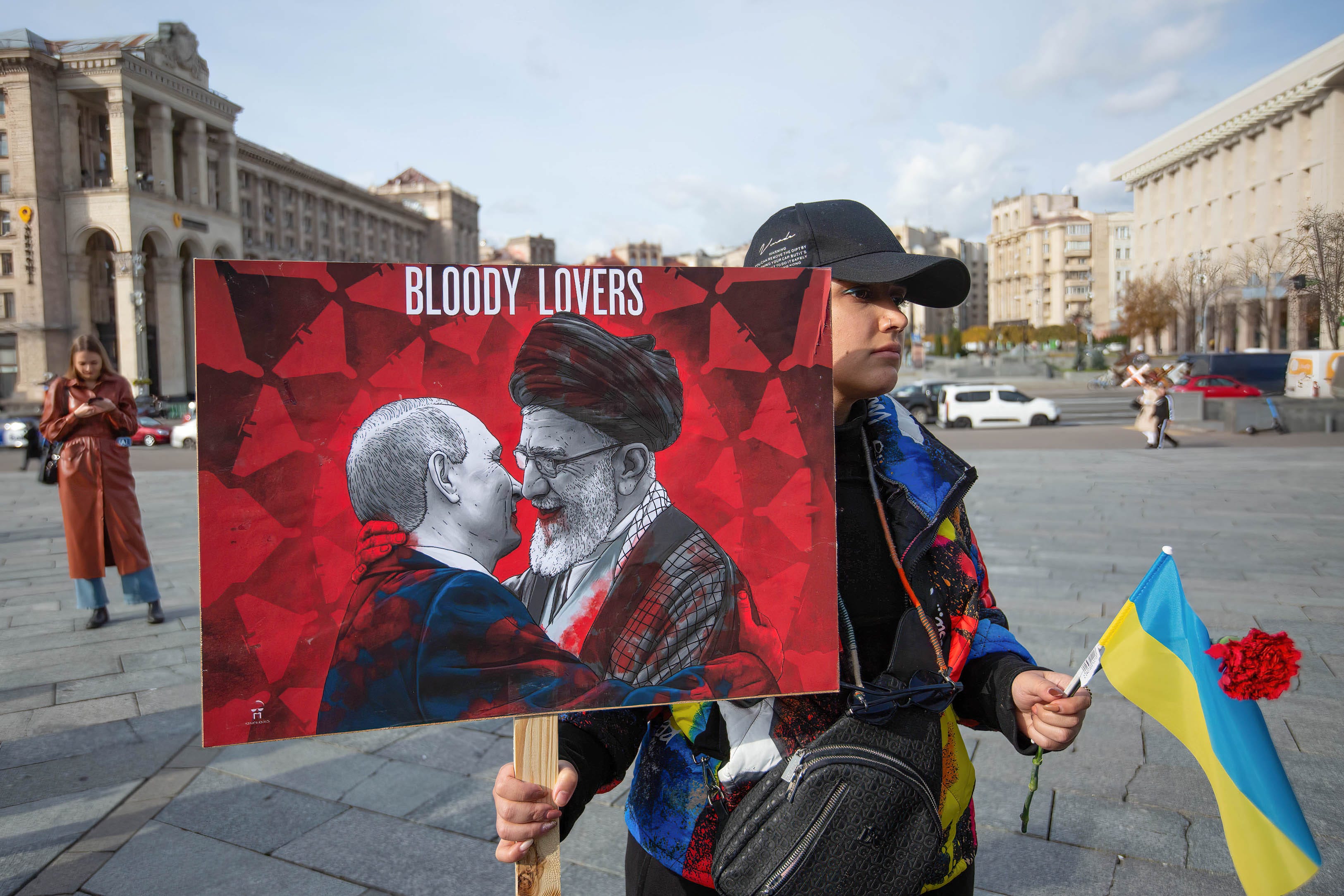
HOW WILL THE WAR launched by Donald Trump against Iran affect Russia and Ukraine? A few days after the first strikes by the United States and Israel, opinions are all over the place. American political strategist and Kyiv Post correspondent Jason Jay Smart has argued that the swift decapitation of the ayatollahs’ regime in Iran is also a devastating blow at Vladimir Putin’s regime in Russia, which loses a political and military ally and strategic partner. Others take the exact opposite view: Bloomberg columnist Marc Champion argues that Trump’s “Operation Epic Fury” is likely to be an epic win for Putin, especially if the war in Iran drags on. There is even some innuendo that this is part of a not-so-accidental pattern in which Trump’s actions always benefit Putin.
The reality is not so simple—and, at this point, far from clear. I think we can say with fairly high certainty that helping Putin was not a priority for Trump when he decided to take out Ali Khamenei. But, of course, Putin could still end up benefiting from this war: A spike in energy prices could give the Russian economy a much-needed boost, and the depletion of munitions that might have otherwise gone to Ukraine, particularly air defense interceptors, would also work in Russia’s favor. While Iran has been a key supplier of arms to Russia—to the reported tune of about $4 billion’s worth of Iranian military equipment since the end of 2021, most notably the “Shahed” drones, but also missiles and ammunition—its role in arming Russia has dwindled recently, with Russia stepping up the domestic production of Shahed drones and their components.1 The London-based Chatham House think tank concludes that “Russia can absorb Iranian instability without immediate capability collapse.”
Yet the Chatham House analysis also concludes that in a larger strategic sense, the fall or even drastic weakening of the Tehran regime hurts the Kremlin, which “might see its already wobbly strategic architecture in the Middle East so badly undermined that it is compelled to reassess its regional calculus.”
Expatriate Russian opposition activist and YouTuber Maxim Katz is convinced that “the Kremlin is watching the unfolding events [in Iran] very closely and not very joyfully.” The regime in Iran, he argues, was not just an ally for Moscow but a “role model,” especially in recent years—not only because it managed to stay in power while weathering both elections (or “elections”) and popular discontent, but because it managed to survive despite punitive American and European sanctions. Other independent Russian pundits in exile, such as TV-RAIN’s Ekaterina Kotrikadze, point out that Khamenei’s demise is the latest in a series of events in which Putin has been exposed as entirely unable, and perhaps unwilling, to do anything to bail out an ally in trouble. (Think Nicolàs Maduro and Bashar al-Assad—though the latter, at least, now leads a comfortable life playing video games in his new Moscow home.) This certainly undercuts Putin’s attempt to position himself as the leader of global resistance to Western hegemony.
And there are other, more personal considerations. There is little doubt that Putin, the strongman who has long cultivated a macho image, sees Russia’s impotence as not only a strategic problem but a personal humiliation. What’s more, say dissident Russian observers who have been watching Putin for years, the Kremlin autocrat is extremely triggered by the physical termination of dictators anywhere: He was reportedly “apoplectic” over Muammar Gaddafi’s brutal murder by a mob during the U.S. intervention in Libya in 2011. The targeted strike that killed Khamenei undoubtedly rattled him as well; his official message of condolence on the ayatollah’s death referred to it, in a very “pot, meet kettle” moment, as a “cynical violation of all norms of human morality and international law.”
Notably, Putin’s message did not name any persons or even countries responsible for that violation; it’s likely that he is still trying to avoid angering Trump. But Dmitry Medvedev—Putin’s former puppet president who is now his designated trash talker—was far less restrained: In a TASS interview, he assailed “Trump’s insane course of criminal regime change,” summed up U.S. policy in the Middle East as “pigs don’t want to give up their feeding trough,” and deplored the actions of “out-and-out morons and mental-case bastards.” Besides the colorful language, there was also the usual nuclear saber-rattling: If the United States ever tried to strike at Moscow, Medvedev said, “Hiroshima and Nagasaki would look like child’s play in a sandbox.”
EVEN MEDVEDEV’S BELLIGERENCE, though, could not outdo that of Putin’s TV propaganda machine. Vladimir Solovyov, who has been swinging back and forth on whether Trump is a friend or an enemy, now allows a guest, Moscow State University dean Andrei Sidorov, to express regret that “the guy in Butler didn’t aim a centimeter to the right.” (Solovyov flippantly told Sidorov, “You can’t say such things”—as a Christian, not as a TV commentator—and suggested that he himself, being Jewish, was not bound by such ethical scruples.) Trump, said Sidorov, was “a terrifying man” who was now unstoppable.
Is this unhinged rhetoric a mere smokescreen to cover up the fact that the Kremlin benefits from Trump’s actions in Iran? Such subtlety of maskirovka seems unlikely.
That doesn’t mean the Putin regime won’t emerge as a winner from Trump’s Iran adventure, especially if the war drags on: Russian émigré opposition activist and energy expert Vladimir Milov has said that the loss of Iran as an ally would be easily offset by tangible benefits from higher oil prices and more opportunities for oil exports. (The U.S. Treasury Department has already issued a thirty-day waiver to let Indian refiners buy Russian oil in order to prevent disruptions to oil supply, though Treasury Secretary Scott Bessent claims that this will apply only to oil “already stranded at sea.”) But at this point, too much remains uncertain—for instance, how long Iran will be able to keep the Strait of Hormuz effectively closed or strike oil facilities in the region.
Other possible consequences also involve too many variables. For instance, the Chatham House analysis suggests that Moscow may use the “distraction” in Iran “in the hope of depriving Kyiv of media oxygen and pushing the war on Ukraine into the background.” But that “distraction” could also divert Trump from trying to push Ukraine into a bad peace, especially since it seems that his Nobel Peace Prize dreams have gone up in smoke in Tehran. And while Trump has continued to take swipes at both Volodymyr Zelensky and the past U.S. aid to Ukraine, Zelensky—who has been remarkably canny in his handling of Trump after the Oval Office fiasco in February 2025—may yet be able to leverage Ukraine’s “expertise and real operational experience” with fending off Shahed drone attacks into more U.S. aid. The Ukrainian president says he is negotiating not only with the United States but with the leaders of Gulf states—and that Ukraine may supply not only experts but inexpensive interceptor drones designed to stop the Shaheds.
[Update, March 6, 2026, 11:30 a.m. EST: After this story was published, the Washington Post reported that, according to unnamed officials in the U.S. government, Russia has been providing Iran with intelligence on U.S. forces, including the locations of ships.]
Of course, there’s also the possibility that Trump’s “special operation” in Iran may turn into a drawn-out slog like Putin’s war in the Ukraine. Here again, we reach the limits of our ability to foresee the future: The fallout from such a protracted war is too unpredictable to say what it would mean for Russia or Ukraine. It could boost Putin. Or it could lead to a crushing Republican defeat in the midterm elections that would empower Ukraine’s allies in Washington. When asked on a Ukrainian YouTube podcast what the American war in Iran changed for Ukraine, Russian-born, Kyiv-based Israeli analyst Michael Sheitelman replied, “It changes everything—depending on the results,” and then laughed, as to underscore that the answer was both absurd and fitting. The results are highly uncertain. All we can say for now is that the longer the conflict, the greater the chance that something truly surprising—and disturbing—will emerge from that fog.
The Russian version of the Shahed is the Geran-2, or Geranium.