


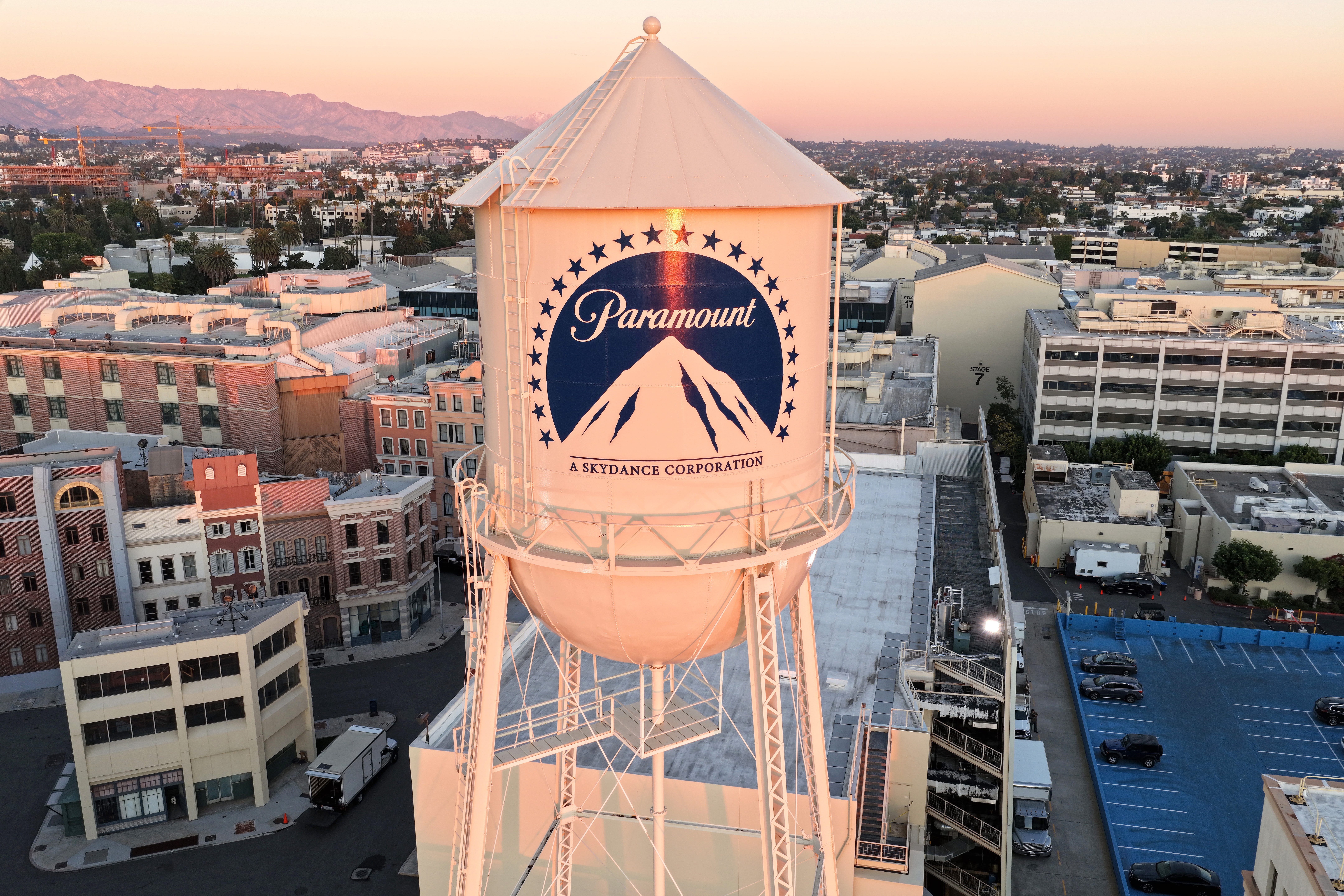
FOLLOWING AN IMPROVED BID by Paramount Skydance for Warner Bros. and a quiet visit by Netflix co-CEO Ted Sarandos to the Trump White House yesterday, the streaming giant dropped out of the hunt for WB in a move that practically guarantees a consortium of deep-pocketed GOP donors (and Qatari money) will take over the storied movie studio that is home to Superman and Harry Potter.
While regulatory hurdles remain—possibly including a antitrust investigation by the Department of Justice and, more likely, lawsuits from progressive attorneys general at the state level—the terms of the Larry and David Ellison–backed deal suggest the Paramount Skydance team has great confidence it has effectively greased the skids for speedy approval. In addition to raising their all-cash offer for the entirety of Warner Bros.-Discovery to $31 a share and paying the $2.8 billion breakup fee Warner Bros. owes to Netflix, Paramount Skydance signed off on a $7 billion regulatory termination fee and a fee of 25 cents per share per quarter if the deal hasn’t closed by September 30, 2026.
The deal would give Paramount Skydance control not only of Warner Bros.’s theatrical production and distribution and HBO Max, but also the Warner panoply of cable networks. That includes CNN, a company that so agitated Donald Trump during his first term that his Department of Justice spent nearly two years trying to block a deal between AT&T and Time Warner. Given Paramount Skydance’s pliancy with regard to CBS, where it has placed the Free Press’s Bari Weiss in charge of news operations, it seems unlikely that CNN will inspire similar tsuris this time around.
Indeed, the deal seems primed for speedy approval.
As Matt Stoller noted last week in his writeup of what would happen if a Netflix-WB deal fell apart, Paramount has been operating as if the DOJ wouldn’t be much of an obstacle, largely completing the paperwork needed to finish a deal before the sale was even officially announced. “If the Netflix deal falls apart and Paramount wins the bidding war, then the antitrust enforcers have just fifteen days to rush a complaint out to a court to ask to pause the merger,” Stoller writes.
If the Trump DOJ doesn’t show much interest in fighting this—and we’ve seen nothing to suggest they will—state AGs can still try to step in. Last week, California AG Rob Bonta issued a fairly weak statement saying that he was keeping an eye on things. Cool beans, but he’ll likely have a tough time proving that the feds were wrong to skip their fight. Sen. Elizabeth Warren (D-Mass.) said something similar in a statement: “With the cloud of corruption looming over Trump’s Department of Justice, it’ll be up to the American people to speak up and state attorneys general to enforce the law.”
The question is whether or not the merger rises to the level of monopolistic concern. As Josh Wright wrote late last year, it seems unlikely that a Paramount-Warners deal will merit a “PNB Presumption”—which is to say, it’s unlikely to capture 30 percent of the market in any market segment, the level at which a merger is presumed to be unlawful—and therefore could be hard to strike down.
And the numbers here are pretty clear. According to Nielsen’s Media Distributor Gauge, Paramount and Warner Bros. Discovery controlled just 13.7 percent of total TV usage last month when considering all channels: streaming, cable, broadcast, etc. When looking just at streaming video on demand (SVOD)—that is, HBO Max and Paramount+—the two companies control less than 8 percent of all streaming viewing on television in January.1 The best case against Paramount’s acquisition of Warner Bros. on antitrust grounds is that they would control too much of the theatrical film business, but even here we don’t quite hit a PNB Presumption: According to the movie-biz website The Numbers, between 1995 and 2026 Paramount and Warner Bros. accounted for 25.4 percent of the total domestic box office.
This isn’t to say that fans of theatrical distribution like myself have nothing to worry about. The lesson of the Disney/20th Century Fox deal is pretty clear here: We’re likely to see fewer wide releases and stingier prestige acquisitions, which in turn could cripple theatrical exhibition fatally. It’s certainly what Cinema United (the exhibitor trade group formerly known as NATO) is worried about. “If Paramount or another major studio ends up displacing Netflix as the buyer, our concerns are no less serious. A combination of Paramount and Warner Bros., for instance, would consolidate as much as 40% of each year’s domestic box office in the hands of a single dominant studio,” they said in a written statement submitted to a House hearing last month.
Regardless, it’s important to emphasize that the only part of Paramount Skydance’s improved deal that is guaranteed to put more money in the pockets of WB shareholders is the dollar-per-share uptick in price. Every other element here is functionally a bet by the Ellisons that they have enough sway over the Trump administration and its DOJ to get the deal done, and done quickly.
It’s worth noting that, just as Democratic state attorneys general are now gearing up to scrutinize the Warner Bros. deal, it was eleven Republican state attorneys general who, just a few days ago, wrote a letter criticizing the now-dead Netflix offer—expressing concern “that the proposed merger . . . will likely result in undue market concentration that stifles competition and therefore creates higher prices, lower reliability, and less innovation for one of America’s major industries—all to the detriment of American consumers.” You can see why Paramount has some confidence in their ability to get this done and why Sarandos decided to pull the plug.
Needless to say, this is a horrible way to manage an economy. This is the most troubling aspect of the whole deal: The whims of a mad king should not be the main calculus involved in the sale of a company worth tens of billions of dollars. That’s insane. It’s an insane way to run a business, and it’s an insane way to run a country. And look: I am open to the idea that there were legitimate concerns about Netflix taking over WB! I voiced concerns myself! But any such concerns also apply to Paramount, arguably even more so in the world of theatrical distribution, for reasons noted above. And any regulatory concerns I have about monopolies pale in comparison to the political concerns I have about an administration monkeying with the process for its own nefarious ends.
I was, and remain, a Netflix skeptic. I’m not horribly disappointed their deal was shot down. That said, I can’t help but hear a line from one of my favorite Warner Bros. movies echoing around in the back of my mind.
“Not like this. Not like this.”
Much More on the Merger
This morning I talked about the Paramount/Warner Bros. deal with my colleagues JVL, Sam Stein, and Catherine Rampell. Check it out here on Substack or over on YouTube:
The Greatest Cinematic Decade Ever
On this week’s episode of The Bulwark Goes to Hollywood, I talked to Paul Fischer about his new book, The Last Kings of Hollywood: Coppola, Lucas, Spielberg—and the Battle for the Soul of American Cinema. I hope you give it a listen:

Apologies for repeating myself here, but one thing I’m always struck by is how good Francis Ford Coppola was for the entirety of the 1970s. I mean, he kicks things off by winning a screenplay Oscar for Patton, then two years later makes what is arguably the greatest American film of all time, The Godfather, and then two years after that has a pair of films competing against each other in several Oscars categories (The Godfather Part II and The Conversation). Then he disappears to the jungle for a few years only to close out the decade with what is, arguably, the greatest war film of all time: Apocalypse Now.
There are a handful of filmmakers you could argue had better decades (Billy Wilder’s run in the 1950s that starts with Sunset Boulevard and ends with Some Like It Hot is certainly up there), and there are a handful of directors you could argue had better ten-year runs that weren’t bounded by a numerical decade (Spielberg himself has, arguably, had two of them: 1975 to 1984, and 1993 to 2002). But for my money, Coppola’s 1970s were the absolute peak. It’s hard to imagine we’ll see anyone pull off anything quite like it again.
Assigned Viewing: High Tension and Snow White (1937)
Next week on The Bulwark Goes to Hollywood, I’m going to be joined by Rod Blackhurst (we discussed his film Blood for Dust a couple of years back) as well as actor Ethan Suplee (who you will know from projects as varied as Mallrats, “My Name Is Earl,” and The Wolf of Wall Street) to discuss Rod’s new horror film, Dolly.
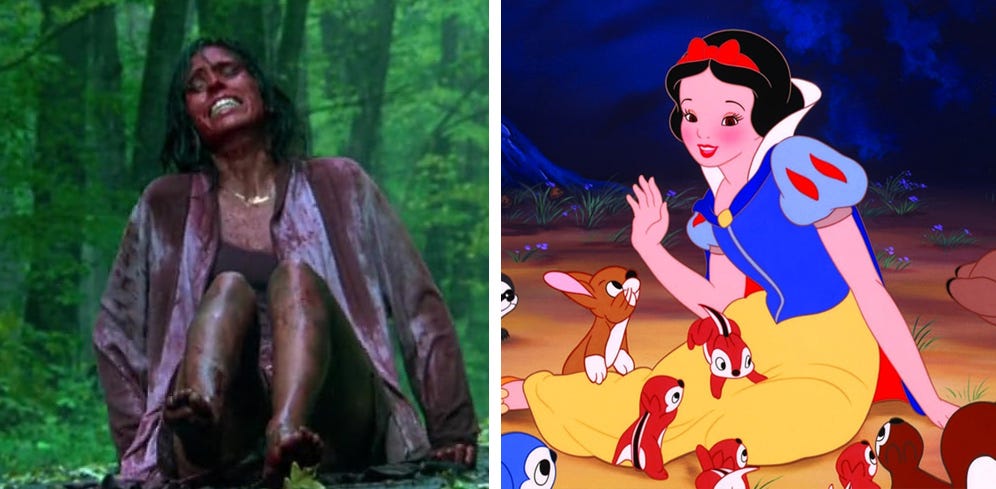
Now, I’ve seen Dolly and it’s a pretty lean and mean horror film starring Suplee, Seann William Scott, and Fabianne Therese. I asked him for an assignment for this week to help prepare folks for the movie, which hits theaters March 6, and he suggested a gnarly double feature: Alexandre Aja’s 2003 slasher High Tension and Walt Disney’s classic animated feature, Snow White (1937). That is not a combo for the faint of heart!
According to Nielsen, in January 47 percent of all time spent watching TV was spent watching a streaming service. HBO Max and Paramount+ accounted for 3.7 percentage points of that 47 percent, or 7.8 percent of the total streaming market watched via TV. I have to qualify all of this specifically by TV viewing time since that’s what Nielsen measures, but I’m making an educated guess that Paramount and HBO Max viewing overindexes on TVs as opposed to phones/tablets/laptops. Which is to say that in reality they probably account for far less than 7.8 percent of all streaming viewing.
I guess the countdown to my dumping HBO Max has begun...
I’m guessing they will do a “Comcast” and bundle up the cable properties and spin those off, unless the deal with Trump is to put CNN under Bari Weiss 🤣. 🥂Here’s to David Ellison pissing away more of daddy’s money.