Saving History for the Future at Auschwitz-Birkenau
How the memorial and museum plans to continue its mission of preservation after the last Holocaust survivors pass away.


STANDING WITH A HANDFUL OF OTHERS before a row of single shoes in the preservation lab of the Auschwitz-Birkenau Memorial and Museum, I draw my thumb along the edge of a preservationist’s cloth. Its fibers are soft enough to lift decades of accumulated grime from these objects without erasing the wear and tear of each one’s original ownership. The museum’s collection includes 40 cubic meters of shoes like this—more than could fit in a standard 20-foot shipping container—and according to conservator Christin Rosse, the goal for them is simple: preservation, not restoration. To maintain them and similar objects in the condition in which victims and survivors left them, and to do no more.
It is in that state that the objects speak most clearly. I watch Rosse lift a woman’s heeled shoe, its upper a faded but still beautiful brocade, from the lab table; with a gloved hand, she holds out the fraying edges of a piece of rope that the owner used as a lace in a moment of necessity. She reaches into another shoe on the table, a boot, and carefully shows us several sheets of paper that had been cut and tucked inside to fit the insoles: a bit of extra insulation from the cold. Conservators, she says, once worked on a child’s shoe that contained a crumpled, completed math test.
“In circumstances like this,” she says of those sent to the camp, “everything you encounter is of vital importance to your life.” A bit of wire or string, a piece of fabric—each object recovered from the site was of crucial significance to the person who once held and used it. This alone would justify the careful and slow work of preservation, but there is also the fact that each item is a trace of a person the Nazis intended to eradicate. Preservation thwarts those genocidal aims, even in the smallest of ways.
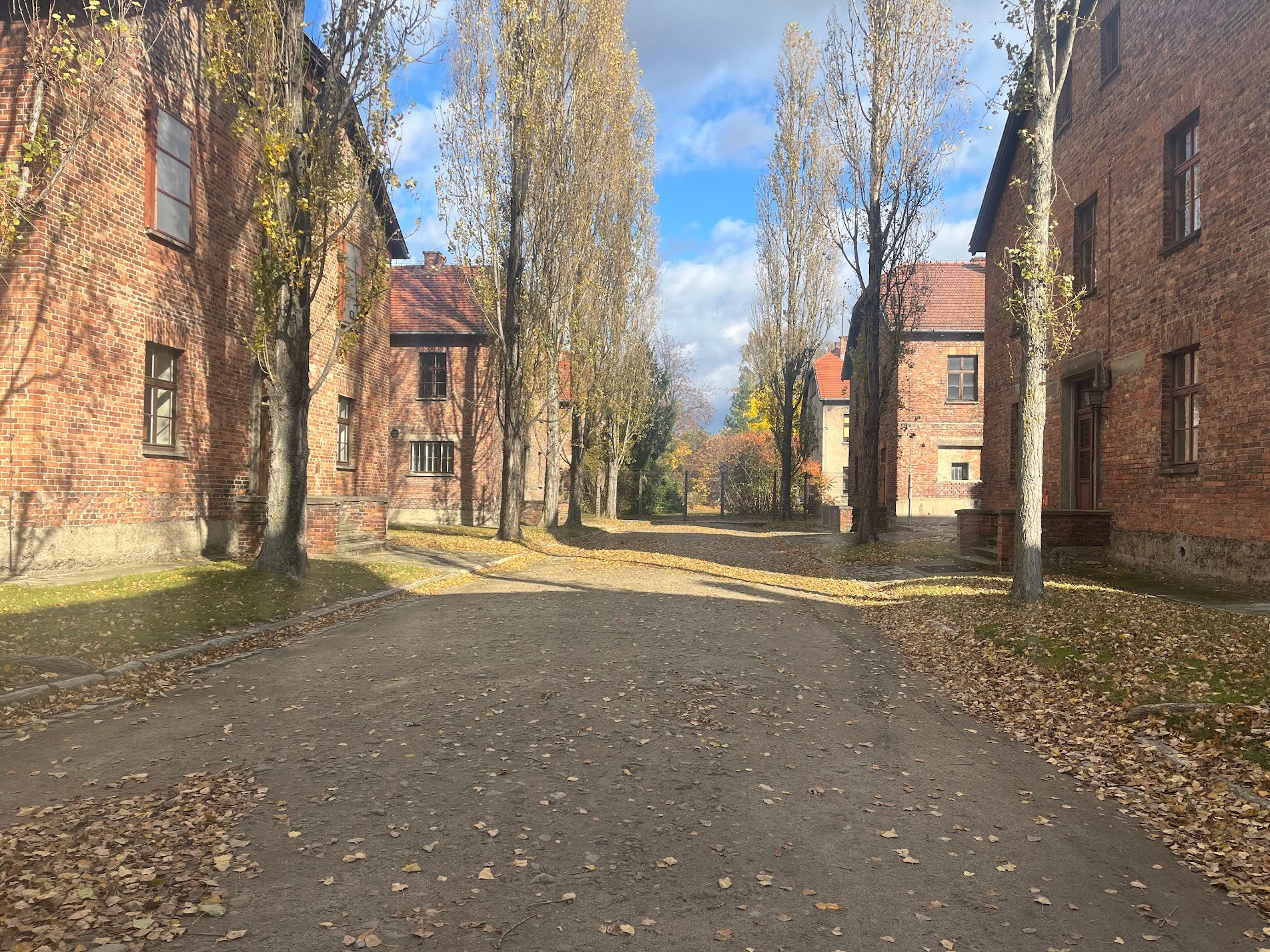
I’d boarded a train from Kraków on a cloudy afternoon in October to spend three days here with other journalists. We came for a seminar hosted by the state museum, which preserves and facilitates research at one of the world’s most visited Holocaust remembrance sites. Though conflict and instability in Ukraine and Israel have kept attendance from returning to pre-pandemic levels, 1.83 million people visited these grounds in 2024. Three hundred and fifty guides give tours in twenty languages; they lead visitors through the Auschwitz 1 prison camp and nearby Birkenau, where the main extermination camp was located. As the events memorialized here grow ever more distant in time—the museum celebrated the eightieth anniversary of the camp’s liberation last year—millions of people continue to seek out what has been left behind of one of the twentieth century’s greatest atrocities.
“What people really get here is a confrontation with the authenticity of the site,” says Dr. Piotr M.A. Cywiński, the museum’s director. The task for him and his staff, as he sees it, is to allow that authenticity to provoke a response within an individual without dictating what that response should be. The focus on allowing the site itself to speak necessitates incredibly high standards: The museum’s preservation department employs forty-one conservation specialists who work to preserve the site and its buildings, as well as a massive and ever-expanding collection of artifacts.
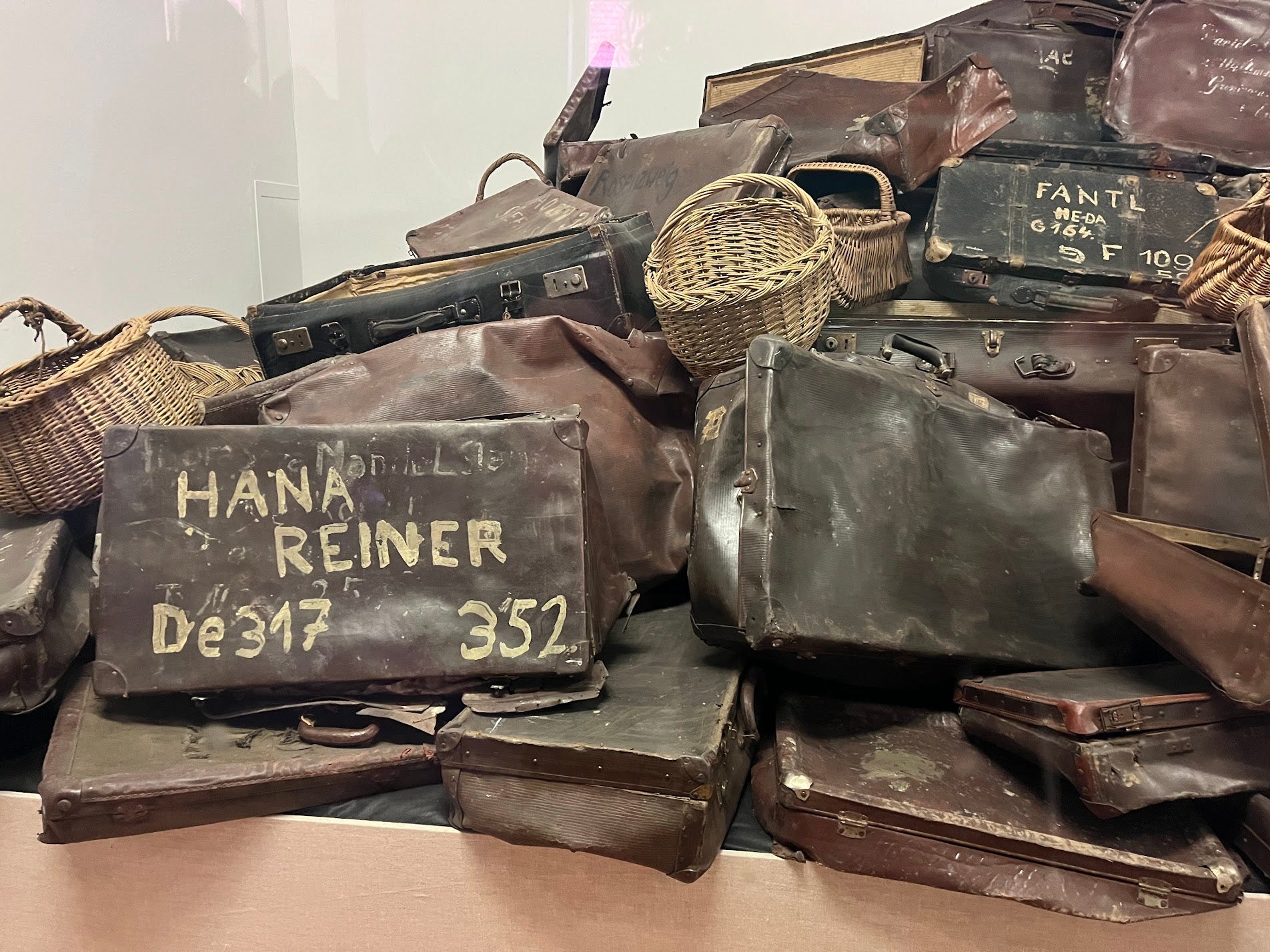
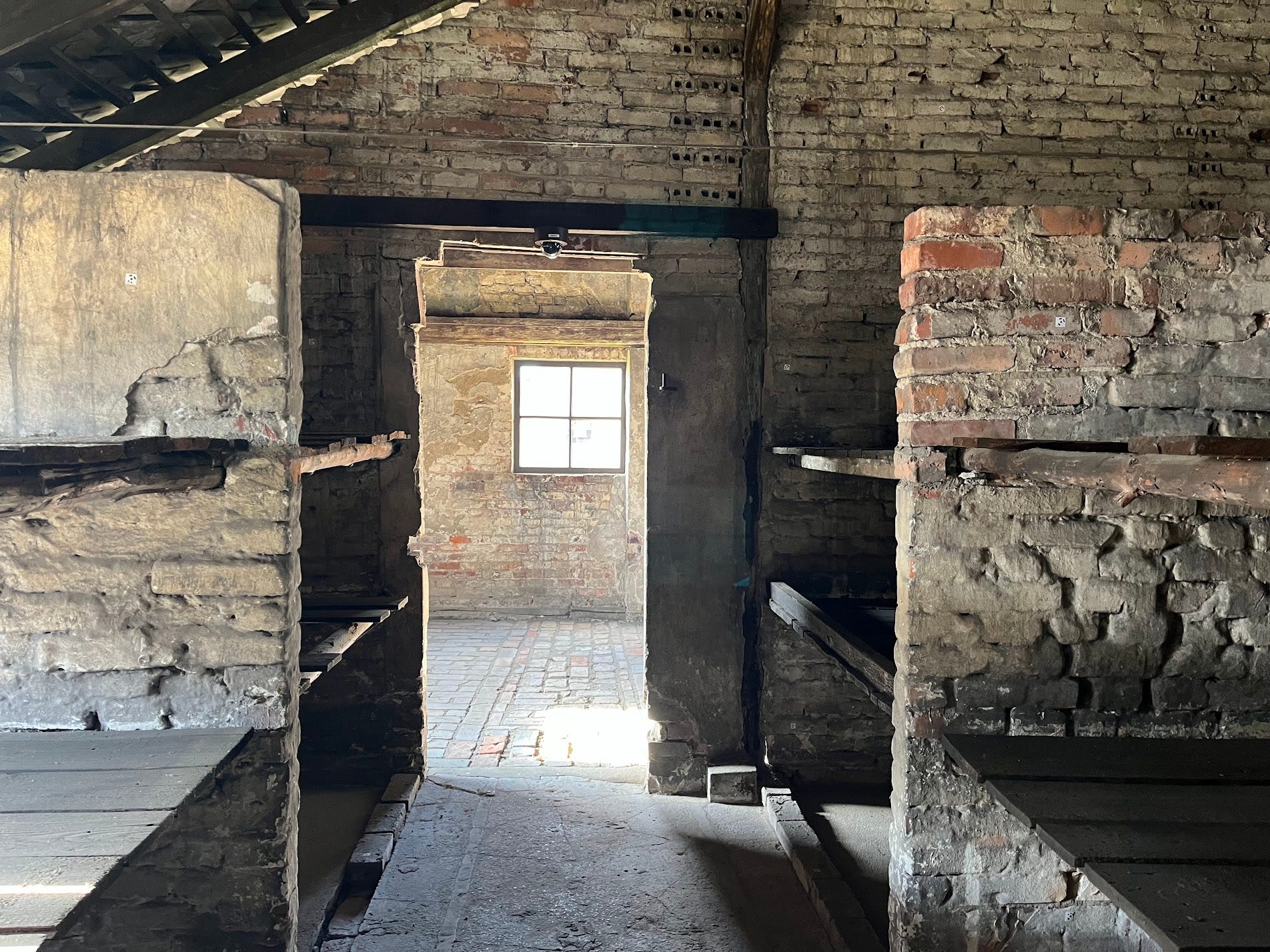
Cywiński describes plans for decades of continuous conservation. The museum is continually updating its methods to slow the inexorable work of time: Plastic and wooden toothbrushes are now stored separately in accordion files, for instance, and precise temperature control prevents fungus from blooming across the massive collection of suitcases. Maintaining any historic site’s authenticity requires significant investments of time, labor, and resources. (The full preservation of one set of barracks takes two years.) But these investments yield returns. As I pass through prison blocks with preserved walls still decorated with floral motifs or running patterns of green paint, the reality of the place—and of the events that transpired here—feels disturbingly near.
ONE OF THE MOST RECENTLY COMPLETED preservation projects is the camp shower at Birkenau, which is expected to open soon visitors. The day I step inside, rain had passed over the site but given way to the autumn sun, and I find in the concrete rooms a high contrast of light and shadow. The water pipes are gone, but rusted hooks still jut out from the walls where they hung. Divots and channels in the floor for drainage remind me, unnervingly, of the edges of a swimming pool.
Its austere design and brick-on-brick construction leave an impression of forcefulness, but this is overmatched by my sense of the unconquerable humanity present in the press of each foot that passed through this space. It’s a lot, to be confronted with all this while standing inside a mostly empty building. Anyone who is passingly historically literate has seen pictures of the faces and read the stories of victims of the Holocaust. But this is a different order of experience.
Auschwitz is not, however, a place that everyone can visit. In recent years, the museum has worked to develop a significant online presence; its social media accounts post every two hours to reach two million followers across various platforms. The posts most often feature photos and accounts of the lives of people who either perished in or survived the camp. Many are scheduled in advance to go out on their subjects’ birthdays.
I was surprised to discover that this prolific social media presence is mostly the work of one person: Paweł Sawicki, the Auschwitz Memorial’s deputy spokesman. He calls the posts “digital meditations” and imagines them as a way of breaking through the clamor of users’ timelines to prompt them to take a moment to reflect and remember.
The museum finds online engagement complicated for many reasons, one of which is that the factual and moral complexity of what it attempts to represent is not always well suited to the internet’s brevity and fragmentation. But Sawicki’s brief posts conveying the birth, death, nationality, personal fate, and image of victims and survivors still do much within small character limits.
Online, the memorial and museum must also contend more directly with the quickening spread of Holocaust denial. White supremacist and Holocaust denier Nick Fuentes has in recent months gotten airtime from Tucker Carlson and Piers Morgan, extending his reach to millions of new viewers. Elon Musk, a public supporter of far-right political parties across Europe, such as the Nazi-dogwhistling Alternative for Germany, gave what appeared to be a Nazi salute early last year; his AI chatbot Grok told at least one user that the Auschwitz-Birkenau gas chambers were for typhus disinfection, not mass murder. Both Carlson and ultra-popular podcaster Joe Rogan have hosted Nazi apologist Darryl Cooper on their shows. In edgier and younger quarters of the populist right, Holocaust denial and antisemitism are close to being de rigueur.
Antisemitism on X in particular doubled after Musk purchased and took over the platform, but the Auschwitz museum has kept its account active there because the alternative is to allow the social media site to become a vacuum of truthful information.1 When it comes to engaging in these spaces, the museum team’s policy is to forgo direct debate with Holocaust deniers while instead pointing users to a page they maintain that is dedicated to debunking various denialist theories circulating online.
The museum’s other online offerings include a podcast, a teaching series, and—since 2024—the option of taking a virtual tour facilitated by a guide on video. But to be sure, none of the online materials are meant to replace the experience of an actual physical visit, says museum educator Anna Stańczyc. They are instead meant either to provide something of the experience for those who could never come, or to prepare those who can. When it comes to the museum’s mission and strategy, the authentic presence of the site itself remains paramount.
THE AUSCHWITZ MUSEUM NOW FACES a deepening but long-anticipated challenge to its mission of preservation: the irreversible, imminent loss of one of its most powerful sources of authenticity as the last survivors of the Holocaust pass away.
At last year’s event commemorating the eightieth anniversary of the camp’s liberation, honored guests included fifty-six survivors of the camp. All were quite elderly; most had been small children during their time there. The loss of the last living witnesses to the reality of the camps—about two hundred thousand are still alive, but most will pass away over the next ten years—will be a generation shift for Holocaust remembrance in general, but it is a unique consideration at Auschwitz, where survivors started the memorial and served as the first guides.
“When I started working here, half the groups were led by a survivor,” says Cywiński, the museum director; his relationships with survivors over the years have deeply influenced him. Sawicki, the deputy spokesman, tells visitors about some of the ways conversations with survivors have given him new perceptions of things, as when one of them explained to him which bunk was preferable in the hospital barracks. Most visitors to the museum these days don’t interact with survivors, but the people they do meet at the site have been shaped in ways large and small by them. The next generation leading and guiding at the memorial, however, will not have these relationships to draw on and learn from, as the experience of the camps is passing out of living memory.
“You know where your parents are buried. Your grandparents, you probably know that,” says Cywiński. “But your great grandparents? All eight of them? That’s a harder thing to know.” As a matter of cultural memory, the events that took place here are receding into that generational category. The museum’s work to preserve its collection of objects—like those shoes, which contained so many stories—does much to convey a vivid sense of the reality of what happened, but no one would claim this is the same as hearing from the living, breathing person who may have walked in them.
As we gradually lose the living presence of these remarkable people, what else are we losing?
Sawicki puts it this way: When people actually have the chance to talk to survivors, he says, they do not ask the date they arrived or on which transport—that is to say, they are not concerned to establish facts or learn information.
“They ask them how it felt,” he says.
The challenge for the Auschwitz museum now is finding a way to preserve the human feeling of testimony when the question of how it felt can no longer be answered firsthand.
The best solution, Sawicki believes, might be through art. The museum’s vast collection of objects and artifacts includes so many artworks that there isn’t room to display them all. In total, there are 4,500, which range from landscapes commissioned by SS officers to small animals carved from toothbrush handles.
A selection was made available for members of our seminar group to view. In the long, tiled room where the pieces are displayed, I see a rosary made of bread. Nearby: a cover for a chess set, made from prison uniform fabric. There are Dina Babbitt’s portraits of Romani prisoners, commissioned by Josef Mengele.2 On one wall are sketches of SS officers made with smuggled materials; their mouths are wrenched open in angry screams, and one of them has a comically large nose. If discovered, these sketches would have resulted in horrific punishments. It seems the prisoners were compelled to draw them despite the potential consequences.
On the opposite wall are works produced after liberation, by survivors. The largest is a painting with a small child sitting in the foreground, back hunched, arms curled around knees. The ground below is gray and black, fenced on one edge. The background, which takes up most of the painting, is fire. Standing before it, I do feel as though I am being given an answer, of sorts, to the question Sawicki mentioned.
The main exhibition at the museum also contains some camp artwork, but much more of this material will be put on display after renovations have been done in the camp kitchen at Auschwitz 1, which will create a much larger permanent home for the museum’s art collection. The goal in presenting the work is to pay homage to the testimony survivors have provided, and to enable future visitors to encounter something of the emotional reality of what they lived through. “It will all be done to emphasize the emotions that are saved in this unique form of a testimony,” says Sawicki.
Between now and then, the museum will continue to safeguard the authenticity of the site for the millions of people who come to see it each year. The newly renovated camp shower at Birkenau will open to visitors in the coming weeks. Preserving as much of the original wood in the structure as possible was a priority, though its age and condition presented staff in the preservation department with formidable challenges. Wood pillars so dark they’re almost black line the center of the room, cracks and splits spreading across their surfaces. Conservationists have fitted the pillars with metal braces to hold them together.
As I inspect the bolts and braces scaffolding each block of wood, I think of the museum and memorial’s plans for its artworks. I hope that Sawicki is right, and that it will be possible to create a scaffold of human feeling around the fading human presence, one that can be preserved when the last of the survivors have gone. Because there is no question that we will continue to need whatever of their presence we can hold on to in the years to come.
There is one major platform on which the Auschwitz museum decided it isn’t worth having a presence at all: TikTok. According to Sawicki, that platform’s algorithm is so polarizing that any users who viewed truthful material about Auschwitz would likely be served denialist content in relatively short order.
After the museum notified Dina Babbitt in 1973 that they were in possession of several of the Romani portraits she had composed, the artist spent the rest of her life trying to get them back. The museum refused on the grounds that the paintings must be preserved and protected on site and continue to be made available in its permanent exhibition to educate the public about the crimes of the Nazis.
 | A guest post by
|