

Don’t look now, but there’s still no solution to the crisis in the Strait of Hormuz—and oil prices are once again over $110 a barrel, nearly as high as they’ve been since the war in Iran began. Happy Tuesday.
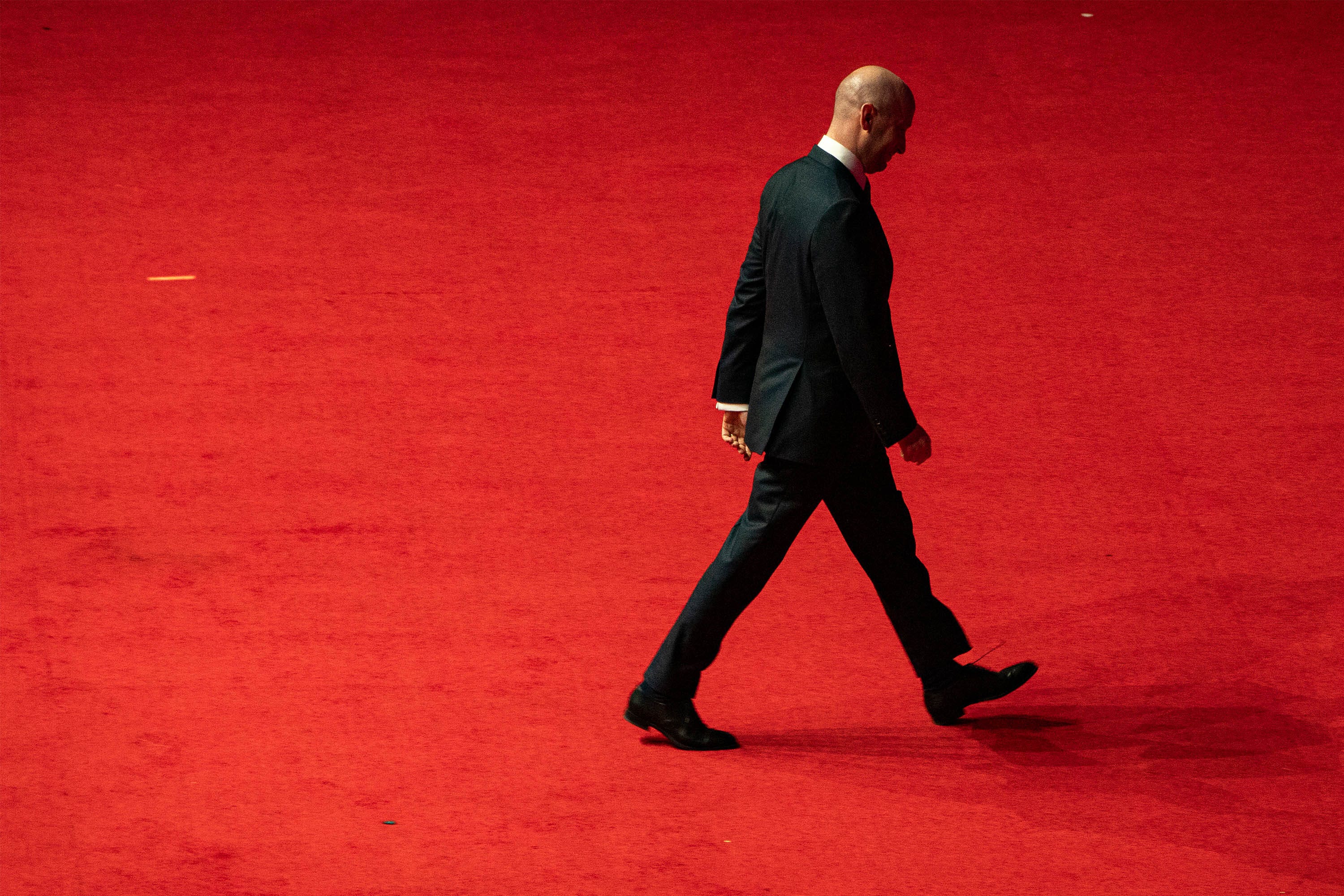
Where’s Steve?
by Andrew Egger
In yesterday’s newsletter, Bill warned us all to brace for more attempts by the White House to use Saturday’s dreadful attempted mass shooting at the White House Correspondents’ Dinner to immediately press its political aims. That’s just what we saw yesterday—but perhaps not in the way we’d expected.
In the White House and on Capitol Hill, the response to the attack quickly consolidated into two demands.
The first involved Trump’s longed-for East Wing ballroom. All legal attempts to prevent its construction, the president and his Justice Department demanded, must immediately cease. For good measure, despite months of Trump insisting the project would be privately funded, some Republican lawmakers insisted Congress must now allocate hundreds of millions of dollars for its construction.
The second involved Trump’s latest TV nemesis, ABC’s Jimmy Kimmel. Two nights before the attack, Kimmel had joked on his show that First Lady Melania Trump had “a glow like an expectant widow.” On Monday, both Trumps accused Kimmel of “a despicable call to violence” and demanded his immediate firing. “People like Kimmel shouldn’t have the opportunity to enter our homes each evening to spread hate,” Melania wrote. “It is time for ABC to take a stand.”
All this was very silly. The White House Correspondents’ Dinner is an event hosted by the White House Correspondents’ Association, not the White House; it will not take place on the White House grounds whether Trump gets his ballroom or not. And Kimmel, as he insisted last night on his show, had obviously not been making a call to violence, but a silly age-gap joke about the president’s much younger third wife.1
But set that aside. Of far greater note than these trifles is what the White House isn’t doing in the wake of the attempt—at least not so far, at least not in public.
Think back to the last big, rallying moment for the right. After the assassination last year of Charlie Kirk, Trump did some of the same things he’s doing today—right down to picking a fight with and about Kimmel. But that wasn’t all. Trump’s government also immediately pledged to launch a whole-of-government mobilization against what it described as the “domestic terrorism” of the political left.
This broad effort had a single architect and public cheerleader: Trump adviser Stephen Miller. In the days after Kirk’s killing, Miller was omnipresent on X and on cable news, where his declarations of war were sweeping, ecstatic, apocalyptic. I wrote at the time:
Last Thursday morning, less than 24 hours after the shooting, Miller tweeted out a thesis statement. “There is an ideology that has steadily been growing in this country,” he wrote, “which hates everything that is good, righteous and beautiful and celebrates everything that is warped, twisted and depraved.” This ideology has “one unifying thread,” he added: “the insatiable thirst for destruction.” . . .
“The last message that Charlie Kirk gave me before he joined his creator in heaven was he said that we have to dismantle and take on the radical left organizations in this country that are fomenting violence,” Miller ranted. “And we are going to do that, under President Trump’s leadership. I don’t care how. It could be a RICO charge, a conspiracy charge, conspiracy against the United States, insurrection. But we are going to do what it takes to dismantle the organizations and the entities that are fomenting riots, that are doxxing, that are trying to inspire terrorism, that are committing acts of wanton violence.”
Miller made a promise: “The power of law enforcement, under President Trump’s leadership, will be used to find you, will be used to take away your money, take away your power, and, if you’ve broken the law, to take away your freedom.”
You might have expected the latest assassination attempt of the president would have Miller back out there again, pressing his case. But we haven’t been seeing as much of Miller lately, on TV or online. (His last original tweet was more than a week ago, on April 20.) In fact, he’s gone to ground for quite some time. His one big attempt to wage total war against his perceived enemies, the ICE occupation of Minneapolis that culminated in the deaths of two protesters, proved a massive political liability. Miller found himself forced to beat a tactical retreat. He hasn’t abandoned his political goals, but—as the New York Times reported this month—he has found it prudent to let others make the pitch to a country that plainly isn’t buying what he’s trying to sell.
Miller, who remains one of Trump’s most trusted advisers, can obviously still do plenty of damage behind the scenes. But it’s interesting that now that he’s unable to lead the messaging charge himself, the White House’s response to political violence seems in some ways to have collapsed in on itself. Absent (so far) are any disciplined attempts to use the outrage over the attack to deal damage to the left. Instead, the Washington Republican response has followed the contours of the president’s own ridiculous—but far more harmless—obsessions: his personal vanity projects and grievances against one particular TV personality.
In a weird way, the whole thing shows how much better off we are today—from the point of view of the weaponization of the federal government—than we were six months ago. A government where Stephen Miller is playing hurt turns out to be far less dangerous than the alternative.
AROUND THE BULWARK
Right-Wing Lies, Left-Wing Violence… The WHCA dinner gunman and what the data actually say about political rage, observes CATHY YOUNG.
Trump Called It ‘White Genocide.’ Now the White People Are Flocking Home… The president’s ravings about South Africa are comical. But their effects aren’t, writes HOLLY BERKLEY FLETCHER.
Orbán Rigged the Game—and Still Lost… On The Mona Charen Show, DALIBOR ROHAC joins MONA CHAREN to analyze Hungary’s stunning rebuke of Orbán and implications for other democratic nations.
Could the Florida Gerrymander Blow Up on the GOP? On Bulwark+ Takes, friend and former colleague MARC CAPUTO joins SAM STEIN to discuss Florida’s new redistricting map—and the legal storm it’s about to trigger
Quick Hits
GERRYMANDERING TOTAL WAR CONTINUES: Democrats pulled narrowly into the lead in the mid-cycle redistricting wars after Virginia’s gerrymander was approved last week, but the victory may be short-lived. Yesterday, Florida Gov. Ron DeSantis unveiled a new map for his state that could give Republicans as many as four additional House seats in the midterms. The supermajority-Republican Florida legislature enters special session today to consider it.
DeSantis’s gerrymander is both legally and politically risky. It openly defies redistricting standards passed by Florida voters in 2010, which have been used to successfully challenge maps in the past. But the Florida Supreme Court, which is stuffed with DeSantis appointees, has signaled a reluctance to enforce the “Fair Districts” amendments recently against the governor. DeSantis is additionally betting that the U.S. Supreme Court will soon rule against the constitutionality of considering race in redistricting—something he says the current map unacceptably did.
Meanwhile, back in the Old Dominion, Democrats are holding their breath to see if the Virginia Supreme Court will allow their new gerrymander to go into effect. The court, which is considering the question of whether Democratic lawmakers cut procedural corners in hustling the question onto the ballot, heard oral arguments yesterday.
ROUNDUP CRACKUP: The U.S. Supreme Court yesterday heard oral arguments in a suit against the maker of the weedkiller Roundup—a landmark environmental case that has significant political repercussions for the Trump administration, too.
The Court is hearing a case from a Missouri man named John Durnell, who argues that years of Roundup use caused him to develop lymphoma. Bayer, the German conglomerate that purchased Roundup creator Monsanto nearly a decade ago, has argued in court that it should be protected from state-level civil claims over a product that the federal Environmental Protection Agency has ruled is safe to use. A ruling is expected this summer.
The case is fraught for the Trump administration, which joined the lawsuit on Bayer’s side last month—to the outrage of the MAHA wing of the president’s coalition. Understandably, the group united around the conviction that megacorporations are poisoning the environment and the population have well-developed views on whom they support in the fight between the chemical company and the man who accuses it of giving him cancer. If Health and Human Services Secretary Robert F. Kennedy Jr. still shares their concerns, however, he’s keeping it to himself.
Cheap Shots

The gap is 23 years, if you’re wondering.
Andrew: "For good measure, despite months of Trump insisting the project would be privately funded, some Republican lawmakers insisted Congress must now allocate hundreds of millions of dollars for its construction."
< Tim starts laughing hysterically >
You mean the same Congress that stood silent when the East Wing got demolished? You mean the same Congress that has abdicated its Article I responsibilities with respect to a war of choice with Iran?
There are no words to describe the burning, infinite contempt I have for these people.
I suspect Stephen Miller is being ragged about the widespread photo of Stephen using his pregnant wife as a shield from the correspondents dinner gunman. Courageous move, Stephen.