

Trump’s ‘Great Healthcare Plan’ Is Not Great. It’s Not Even a Plan.
And this is not what it looks like when you’re serious about lawmaking.

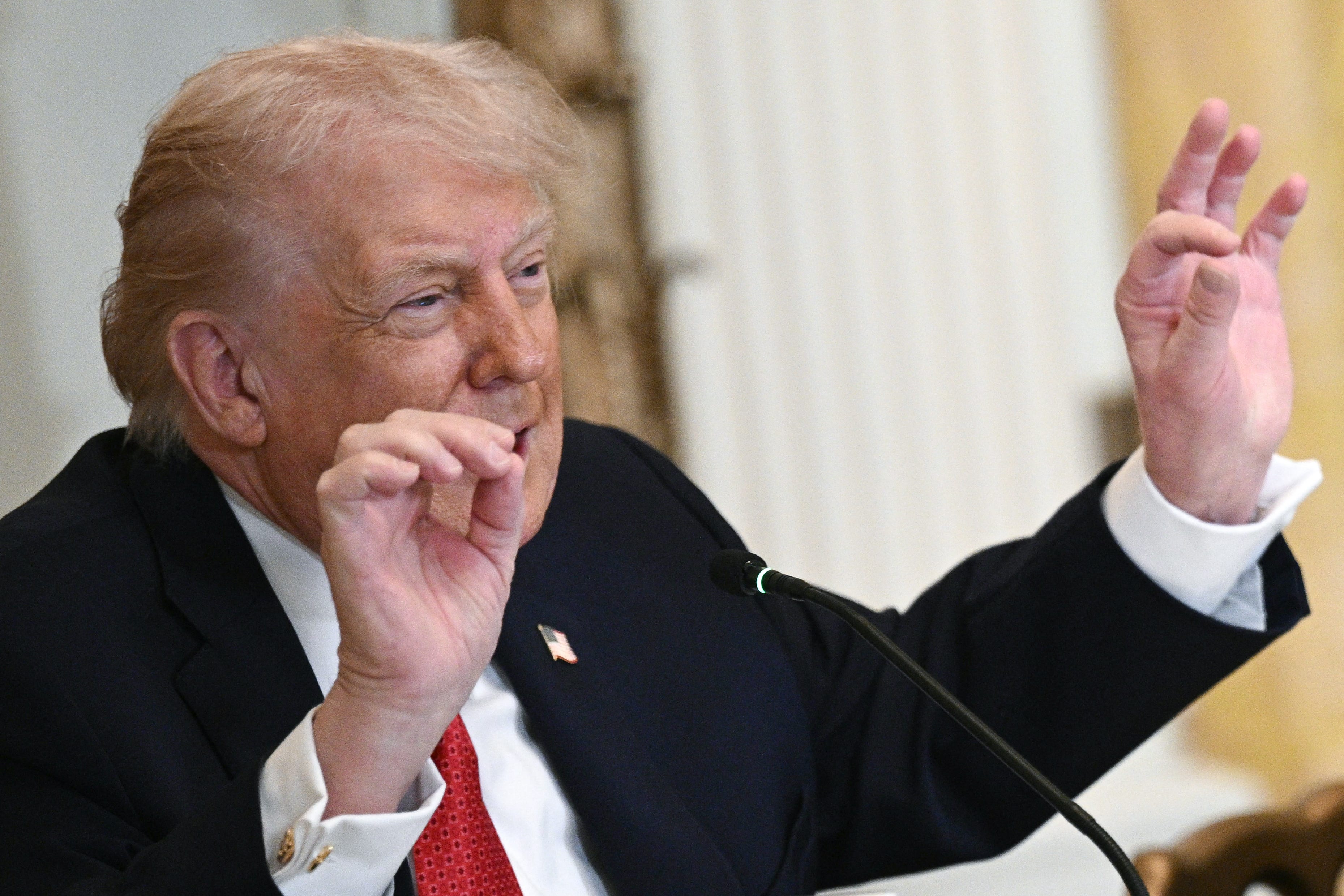
DONALD TRUMP ON THURSDAY rolled out what he is calling “The Great Healthcare Plan” and the single most important thing to know about it is that it’s not really a plan.
A real plan would have details and numbers, plus experts on standby to explain and defend it. It would reflect weeks of behind-the-scenes work, and represent the beginning of a serious, persistent effort to get a bill through Congress. That is not what the White House produced.
The online summary is just 350 words and fits on a single printed page. The extended “fact sheet” clocks in at just 825 words. There are days Trump writes more than that in his posts on Truth Social.
And it’s not like those 825 words are dense with policy substance. About a third is a summary of some modest—er, “historic”—executive actions Trump has already taken. The rest is a list of ideas either Trump or Republicans in Congress have endorsed before, with no guidance on the specifics that it would take to turn them into legislation.
It’s hard to know what kind of effort went into this proposal; probably there were some knowledgeable, diligent wonks at the Office of Management and Budget or the Domestic Policy Council staying up late recently to craft and vet the document’s language. But the reaction on Capitol Hill was a collective shrug, which suggests the White House didn’t spend much time coordinating with the people whose input and support would be necessary to pass a health care law.
“It doesn’t appear to have done anything positive,” Debbie Curtis, a principal at the health care lobbying and consulting firm McDermott+, told me. “If Congress wants to tackle health care, they have to think through what they want to do. This doesn’t help them do that.”
None of this is surprising. Trump has been promising to release plans for “great” health care throughout his two presidential terms, going back to the very first days of his initial campaign when he was launching his crusade to repeal the Affordable Care Act. “I am going to take care of everybody,” Trump boasted in a 2015 CBS News interview. “Everybody’s going to be taken care of much better than they’re taken care of now.”
But you can count on one hand the number of times Trump has actually produced a written proposal. And even those documents were more like “concepts of a plan”—that is, press releases with talking points, which is a fair description of what his administration put out Thursday.
Honestly, it’s become a running joke among those of us who follow health policy. And yet there a bunch of us were on Thursday, on Zoom for a White House briefing call, wondering if maybe this time would be different—not because Trump has done anything to suggest he’s gotten more serious about policymaking, but because political circumstances seemed to demand some kind of action.
TRUMP’S POLL NUMBERS are in the dumps, with voters identifying the high cost of living as a top concern. That includes the price of health care, which just went up for more than 20 million Americans who rely on the Affordable Care Act. The reason for the increase—as loyal readers of The Breakdown know well!—is the expiration of a temporary boost in the program’s subsidies, which Democrats have been pushing to renew.
Republicans have refused to go along, because most see any expansion of health care as sacrilege, especially if it’s connected to “Obamacare.” GOP leaders refused to consider the subsidy expansion even when Democrats shut down the government over it, and then declared victory when a December Senate vote on extension failed.
But things haven’t gone so well for the Republicans since. All over the country, GOP lawmakers are hearing from constituents whose premiums have gone up—sometimes by hundreds or thousands of dollars a year, and in extreme cases by many thousands. These people are sucking up the increase, switching into cheaper plans that stick them with higher copays and deductibles, or they are dropping coverage altogether.1
That pressure was enough to get legislation extending the subsidies out of the House, where seventeen Republicans broke ranks and voted with the Democrats. And while the Senate last week rejected that proposal, a bipartisan group has been hard at work, trying to find some kind of compromise that can pass (and then go back to the House for passage there).
Negotiations have since stalled, making Thursday’s plan the latest in a series of chances for Trump to weigh in strongly on what he wants. And at first blush it looked like Trump might do just that, finally, because he endorsed two key ideas that Republicans have been discussing in the debate over extending the subsidies.
One—which has gotten a fair amount of attention—would take at least some of the money from those extra subsidies and put them instead in tax-favored spending accounts that people can use on health care. Republicans like this because, they argue, it gives more people control over their spending, unleashing competition that will bring down prices. Trump in his endorsement even picked up on their rallying cry, which is that (in Trump’s words) it will “send the money directly to the American people” rather to big insurance companies.
The other idea Trump endorsed is a call to provide funding for something called “cost-sharing reductions,” which are part of a particularly convoluted mechanism within the Affordable Care Act that reduces out-of-pocket costs for lower-income buyers. Trump’s fact sheet promotes this step as both lowering premiums for the standard Affordable Care Act plan while saving the federal government $36 billion.
Making health care cheaper for people while also saving people money might sound too good to be true. In this case, it is. Because of the law’s complex formula for calculating assistance, “funding” this feature designed to lower costs would—paradoxically—make insurance more expensive for millions. In fact, the Congressional Budget Office predicts the feature would lead several hundred thousand people to drop coverage altogether.2
The effects of diverting subsidy money into health savings accounts would depend on exactly how it’s done. But the version that excites most Republicans—the one being pushed by Bill Cassidy, the senator from Louisiana—would come with a really important condition. The only way to get the extra money would be to enroll in a plan with ultra-high copays and deductibles. The math would work out poorly for lots of people, especially those with serious medical needs because the extra money they’d get would not be enough to offset the higher out-of-pocket costs.
The idea is toxic with Democrats. So is funding the cost-sharing reductions. A serious push to include them in legislation would diminish whatever slim chances exist for a compromise.
But—and this arguably was the weirdest part of Trump’s announcement—the endorsement of these ideas was conspicuously half-hearted. During a briefing call with reporters on Thursday, a White House official speaking anonymously on behalf of the administration said Trump’s proposal “does not specifically address those bipartisan congressional negotiations that are going on.”
It’s possible Trump and his advisers were making a conscious, strategic choice not to slam the door on anything that might come out of the bipartisan talks on Capitol Hill. But staying out of the process isn’t going to get a deal done, either, because getting to sixty votes in the Senate would almost certainly require pressure on Republicans hesitant to support any extension of the subsidies—if not because of the extra government spending, then because of a demand from some conservatives (a demand unacceptable to most Democrats) that legislation roll back abortion coverage.
And Trump, who earlier in January made comments suggesting he was ready to push Republicans on that front, has said nothing since.
THE AMBIVALENCE ABOUT what happens to the Affordable Care Act subsidies is, according to the White House, a deliberate attempt to move the conversation beyond the debate over the law itself.
In fact, when Washington Post White House correspondent (and longtime, award-winning health care writer) Dan Diamond tweeted that Trump’s plan was a “grab bag” of familiar proposals that “feel far short” of the Affordable Care Act replacement he’s long promised, a White House spokesperson responded that Trump’s plan was much broader—that it was designed to lower costs for all Americans, not just the 7 percent who get coverage through the Affordable Care Act.
“This is comprehensive, commonsense reform that some Fake News clowns are struggling to comprehend,” wrote White House Deputy Press Secretary Kush Desai.
Ambition was also a big theme of the White House briefing call, which was led by Mehmet Oz—a.k.a., Dr. Oz, the celebrity physician and failed Senate candidate who is now serving in the Trump administration. “The real question,” said Oz, who now oversees Medicare, Medicaid and the Affordable Care Act, “is how do we get past lazy lawmaking and actually start to address the underlying problems—not just throw more taxpayer money at issues, but get to the root causes of why the system right now is not really great.”
He’s not wrong about the importance of addressing those root causes. The United States spends more than any other peer country on health care, and in just the last year or two there have been signs it’s starting to rise more quickly than usual. This isn’t because of the Affordable Care Act, as Trump and Republicans frequently suggest. It’s because of a combination of underlying factors, including everything from the power of hospital monopolies to the high cost of some new, breakthrough drugs.
One way to approach that would be to get more serious about using government power to force down drug prices, which is an issue that Trump has talked about pretty consistently since getting into politics—and an area where he could find willing partners with Democrats. Trump’s preferred method is to link U.S. prices to the lower prices other countries get when they negotiate directly with manufacturers, a concept known in policy circles as “international reference pricing.”
Trump calls it giving the United States “Most Favored Nation” status on drug prices—which, credit where due, is pretty good marketing. And Trump has personally negotiated a series of agreements with drug manufacturers that, he says, will bring down prices. But it’s hard to know whether those deals will actually produce real savings, or what he promised them in return. And whatever the agreements’ short-term impact, they are purely voluntary. The only way to have a significant, long-term effect on drug prices would be to pass a law putting such a mechanism in place.
Here again the obstacle to such a law is congressional Republicans, who say government interference would distort markets and stifle innovation—and who are generally close with the pharmaceutical industry.3 If Trump were serious about trying to pass “Most Favored Nation” legislation, as the Thursday document says he is, he could lean on wary Republicans in the way he did—for example—when he was locking down the final votes for massive Medicaid cuts in his “One Big Beautiful Bill” last summer.
But there are no signs that Trump is making that effort. And the history here is not encouraging. Trump had a chance to pass similar legislation during his first term, but it would have required pushing GOP leaders against it. He whiffed.
It’s one more reason to think Trump is less interested in passing legislation to make health care more affordable, and simply looking to grab some favorable publicity—although he seemed to struggle even at that task Friday, during yet another health care event.4
It was a roundtable that included several Republicans lawmakers, all of them facing tough re-election fights in part because of the Affordable Care Act price hike. About fifty minutes in, as they were taking their turns speaking, Trump started tapping his fingers and looking around the room. “We are way behind schedule and I have a couple of meetings that are very important,” he announced in between speakers, whispering a few minutes later to somebody nearby something that sounded like “We gotta finish this.”
Eventually the meeting ended and the lawmakers scattered, most of them bound for districts or states where they’ll have to face some of those angry constituents. And Trump? He also left Washington on Friday. He’s spending the weekend at Mar-a-Lago.
The initial data from states and the federal government suggest overall enrollment this year is already down slightly. And while it’s hard to know exactly why, the big test will come in a month or two, as the bills for the higher premiums come due and people who can’t afford them start to drop coverage.
So the longer explanation here <takes a breath> is that Trump killed funding for this provision back in his first term, in an effort to sabotage the Affordable Care Act. But insurers and state regulators, who had been anticipating that move, figured out a way to restructure insurance pricing so people wouldn’t end up paying more—and, in fact, would end up paying less. Basically they turned Trump’s attempt to cut the program into a funding increase, one that made insurance plans more affordable. In effect, Trump is calling to reverse the process.
The one big step toward giving the federal government more pricing power took place in 2022, when Joe Biden and Democratic majorities in Congress enacted legislation to give Medicare negotiating power over a limited set of high-priced drugs.
The focus of Friday’s event was a new rural health care fund that Republicans say makes up for this summer’s Medicaid cuts. It won’t. The rural fund represents a one-off expenditure of $50 billion. The Medicaid cuts to rural America are projected to be around $137 billion over the first ten years, and will continue indefinitely unless somebody changes the law.
Typical Trump theater make big announcements with nothing of substance behind the noise. Hope nobody calls him on it. Rinse,repeat.
Typical Republican response do nothing while pointing at the other party yelling it's all their fault!
I worked in both group and individual life insurance and participated in putting together proposals to insure large employers - so a full package of benefits including medical coverage. I looked at the White House write up and it makes health insurers out to be the bad guys. Also big pharma and Pharmacy Benefit Managers. The fantasy that insurers are at fault is nonsense. Yes they do have admin costs. But health care costs have been going up for at least 5 decades starting when health insurance was the old major medical.
In any case there is no mechanism in the Great plan that will reduce Obamacare premiums.
Nor will price lists help. For the most part we are not price shopping when an ambulance takes us to an Emergency Room.
Everyone in the system is responsible for some of the costs. A universal plan could may things much simpler.