

Trump’s “Warflation” Has Just Begun
If he were trying to increase prices on purpose, would he be doing anything differently?

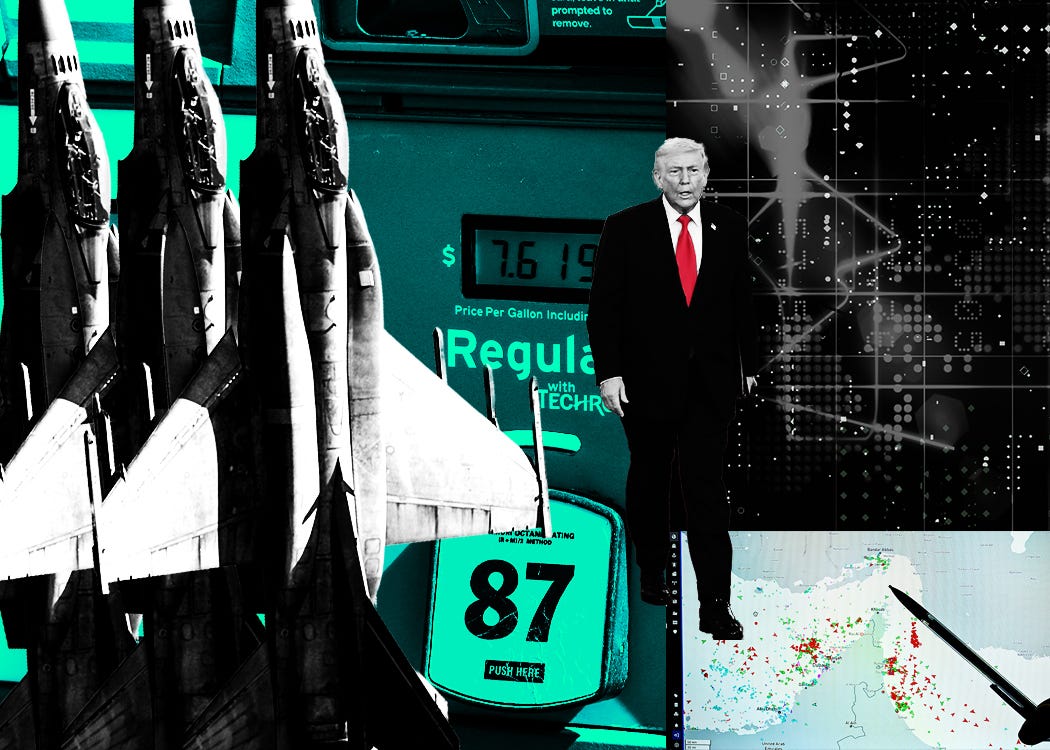
AHEAD OF THIS NOVEMBER’S MIDTERM ELECTIONS, the White House has reportedly grown worried about high consumer prices, particularly for fuel. Trump aides are now “looking under every rock for ideas on improving energy prices, especially gasoline prices,” per Politico.
Hmm. Have they perhaps tried not starting a war in the Middle East?
Until quite recently, oil and gasoline prices had been a bright spot in the affordability fight, registering modest price declines since Trump took office. But since we bombed Iran, energy costs have risen sharply. To put things in perspective: Oil prices are up about 20 percent so far just this week.
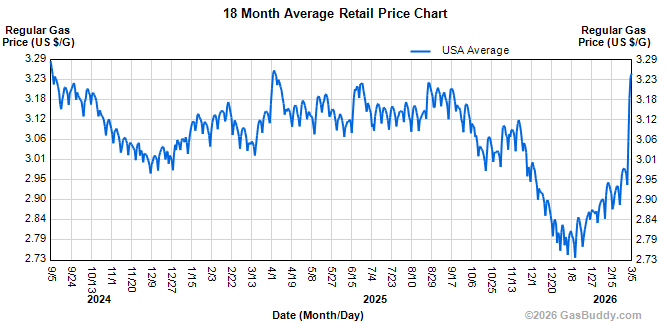
In other words: If Trump intended to start a war abroad to distract from problems at home, as some have proposed,1 he has instead made his domestic problems much worse. Trump’s “warflation” has just begun.
The top crude oil expert at S&P Global Energy warned that the military conflict has the potential to become “the largest oil supply disruption in history.” That’s because about a fifth of the world’s oil passes through the Strait of Hormuz, on Iran’s southern coast—or at least, it used to. Iran warned tankers and other commercial vessels not to transit the strait, and at least nine of them have now come under attack in the Gulf region. Shipping traffic through the strait has virtually stopped.
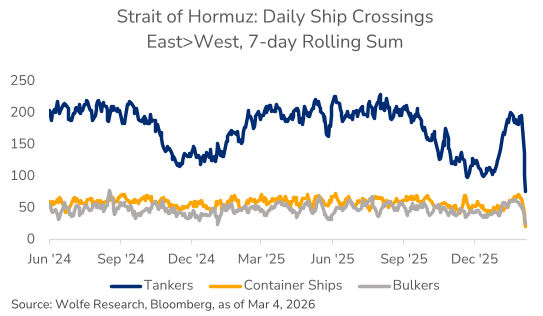
Trump has offered U.S. Navy escorts (and insurance) to vessels transiting the strait, but as my colleague Ben Parker explained, that’s not a feasible solution. We’re now seeing the fallout: Iraq, for instance, slashed oil production by nearly 1.5 million barrels a day because it’s unable to load tankers and is running out of storage. Refineries in Saudi Arabia, Kuwait, and Bahrain have slowed output or shut down entirely; one in Bahrain was reportedly hit by a drone strike today. Meanwhile, China has begun hoarding fuel.
Gasoline might be the most noticeable price Trump is turbocharging right now, but it’s far from the only one.
Other energy markets are affected, too. Qatar, which supplies about 20 percent of the world’s liquefied natural gas, halted LNG production after a drone attack. Production there will take weeks to restart.
As a result, downstream firms that require LNG to operate are closing shop, too. For example, the Gulf region is responsible for nearly a tenth of the global aluminum supply. Already this week, multiple major aluminum smelters had to initiate shutdowns; one company says it may take up to a year to restart production.
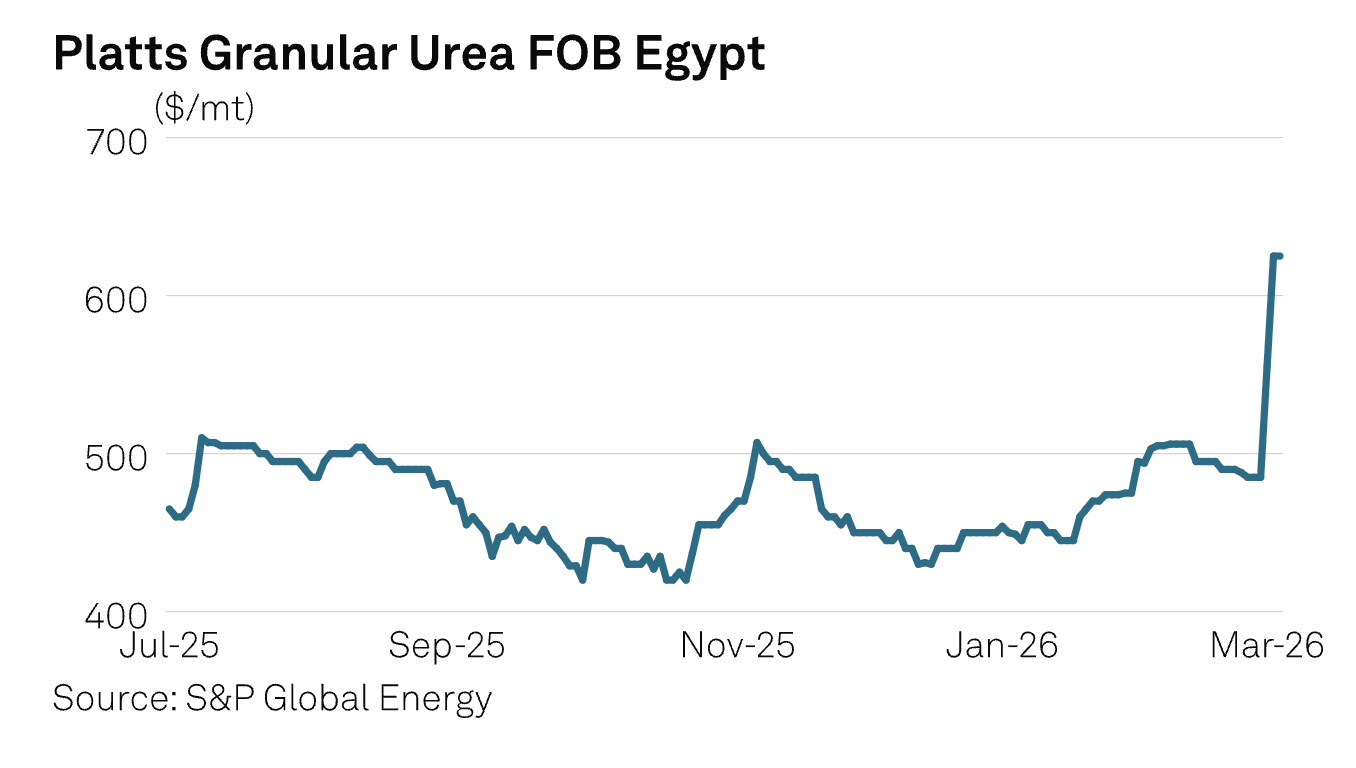
Production of methanol and other chemicals has also been disrupted. Same with fertilizers used to grow the world’s food supply: Roughly 35 percent of global exports of urea (the most common nitrogen fertilizer) and 45 percent of global exports of sulfur (used to produce phosphate fertilizers) traversed the Strait of Hormuz. Fertilizer prices are already spiking, and American farmers are freaking out. Consumers may see “higher prices for bread within six to 10 weeks, eggs within a few months and pork and broiler chicken within six months,” according to an estimate from food-system expert Raj Patel.
And then there are the gazillions of consumer goods that people may not realize use petrochemicals as inputs. Those include clothes, iPhones, candy, dentures, dishwashing liquid, footballs, shampoo, toothpaste, lipstick, plastic toys, trash bags, umbrellas, tires—you name it. These products won’t immediately get more expensive, but we should anticipate that the chemicals that go into these products will start to get costlier if the war continues for a month or two, per Seth Goldstein, a senior equity analyst who covers chemicals for Morningstar.
Higher fuel prices also feed into higher prices for virtually all other goods—and many services, too—because most modes of transportation use fossil fuels.
I DON’T THINK TRUMP is deliberately trying to raise prices. But if he were, it’s not clear how much he’d be doing differently right now.
This is why it’s so striking that Trump decided to start this war in an election year—and at a time when prices were already arguably the biggest issue dragging down his approval ratings, to boot. (I’ll leave geopolitical, military, and humanitarian considerations of the war to other experts, but my colleagues suggest those aspects don’t reflect particularly well on him, either.) The Biden administration went through a similar cost-of-living crucible in the 2022 midterms, when gasoline prices spiked because of a different war and featured prominently in GOP midterm attacks; and then again in the leadup to the 2024 presidential election.
At the time, naïve economic commentators such as yours truly had to explain that presidents can’t have much effect on prices, despite what voters assume. But between tariffs, mass deportations (and a resulting depletion in the agricultural workforce), politicizing the Federal Reserve, and bombing Iran, Trump seems intent on proving us wrong.
Ramparts
— Voters may be mad, but there will also be winners from rising oil prices, of course—including producers outside the United States. Vladimir Putin, for instance, can use the windfall to help pay for his war in Ukraine.
— Trump and White House Press Secretary Karoline Leavitt appear to believe that the military conflict will ultimately reduce energy costs in the United States. It’s unclear how that would work. I imagine it involves “taking the oil” (à la Venezuela) and underpants gnomes.
— The Pentagon estimates that the war costs around $1 billion per day, according to the Atlantic’s Nancy Youssef.
— New possible sign of frailty in the U.S. economy: The number of Americans withdrawing money early from their 401(k)’s just hit a record high.
— Meanwhile, Sens. Ted Cruz (R-Texas) and Tim Scott (R-S.C.) are asking the Treasury Department to approve a $200 billion tax cut without congressional approval. It would be an effective cut to capital gains taxes, which overwhelmingly would benefit the wealthiest Americans. Nice splitscreen there with the prior item.
I’m not saying this is definitely the reason Trump bombed Iran; we still don’t really know why we’re at war. Maybe it’s nukes, the Iranian missile program, The Jews, or even freedom for the Iranian people. But it seems at least as likely that it’s about trying to revive Trump’s dismal poll numbers with a rally-round-the-flag bombing campaign, as he projected then-President Barack Obama would do more than a decade ago.
“This is why it’s so striking that Trump decided to start this war in an election year….”
Is it? The man is a complete moron and Dunning Kruger specimen surrounded by more self serving examples of same.
Starting a war in an election year. My theory is that he plans to use the war to declare an emergency and cancel an election his party is almost certain to lose.