Trump vs. Truth, Justice, and the American Way
Plus: A case that could split the Supreme Court conservatives.


The FBI is reportedly subjecting its employees to polygraph tests to determine if they’re loyal to Director Kash Patel. Shall we count the ways this is stupid?
(1) Polygraph tests are, scientifically speaking, hokum. They’re not admissible in court, and the FBI probably shouldn’t use them for anything—not for routine security clearances, and definitely not for (arguably illegal and unconstitutional) personal loyalty tests.
(2) Because polygraphs don’t actually detect lies, some employees who are loyal to Patel might wind up punished or even fired, while employees who aren’t might get rewarded and promoted.
(3) If past is precedent, Patel likely won’t be in his job in a few years. Certainly the odds of him serving a full ten-year term are extraordinarily low. So are they gonna do a whole new round of polygraphs after the Senate confirms Catturd as FBI director in 2027?
Happy Friday.
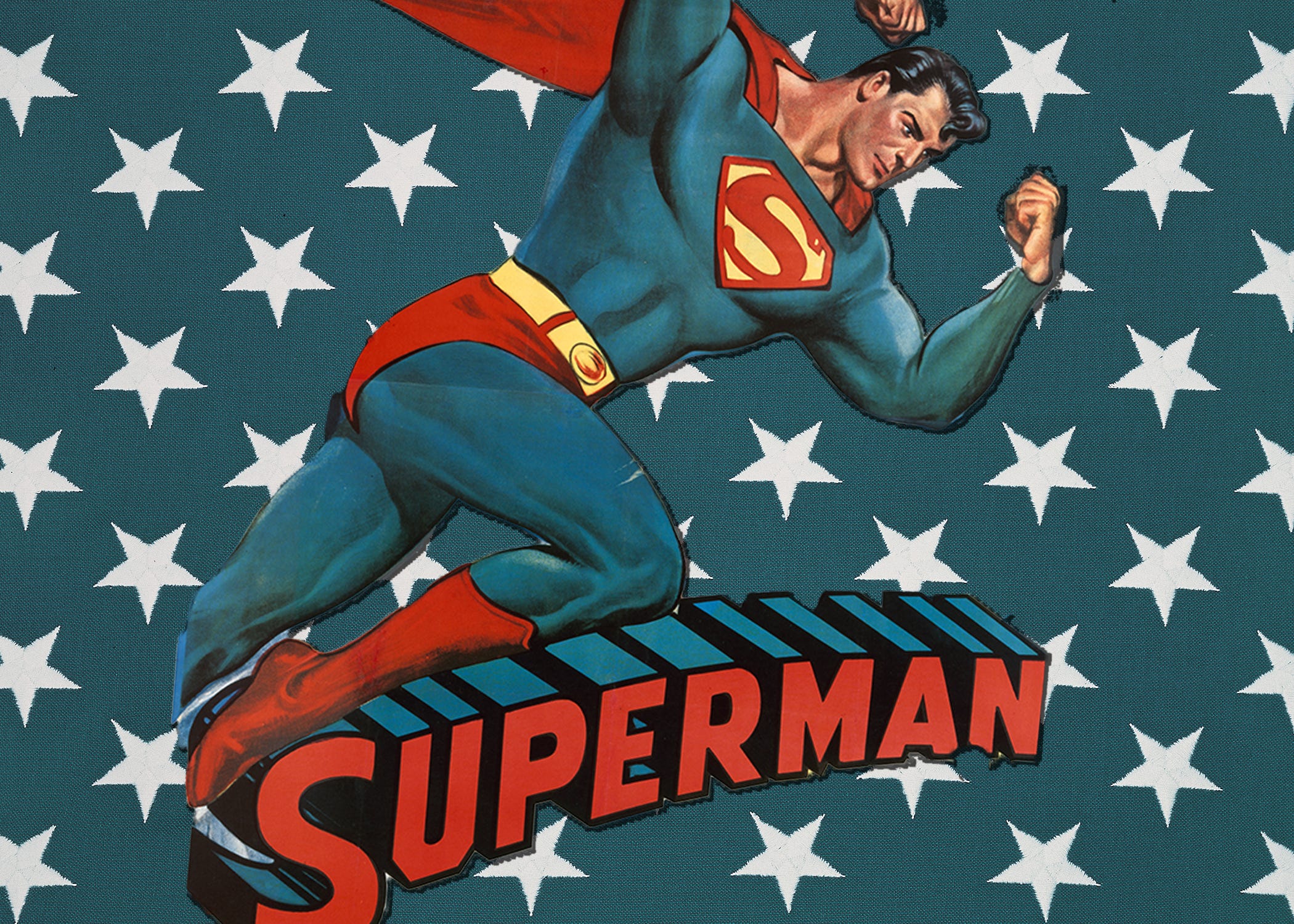
Superman and the Other Great Books
by William Kristol
When I woke up today, I wasn’t sure what I was going to write about. Should I raise the alarm (again!) about how Trump’s mass-deportation policy is not just deplorable in itself but key to his authoritarian project? Should I call attention to new reporting about Trump’s politicization and corruption of the Justice Department and the FBI? Should I offer some further thoughts on the Trump administration’s lack of candor about Trump’s good friend Jeffrey Epstein?
All important. All kind of depressing.
Then, catching up on the latest developments this morning, I saw the White House tweet from last night in which Donald Trump’s head has been photoshopped into the poster for the new Superman movie:

It cheered me up.
Now you might think that the fact that this is what the official White House account is producing should make you cry, not laugh. But it’s so juvenile and vulgar and ridiculous that I couldn’t help but smile.
More importantly, the image of Superman led me back to my youth, and away from the contemporary topics I was planning to focus on, all of which have to do with how bad and dangerous the Trump administration is. I was able to put all that aside for a minute as memories came flooding in about those years in the early 1960s, when as a kid I used my allowance to buy Superman comic books from the newsstand and soda fountain (I believe it was called “Sam’s”) at 81st and Broadway, and when I watched reruns of Adventures of Superman, the 1950s show starring George Reeves as the Man of Steel.
Good times for me! In some ways, I might add, more hopeful times for the country!
I can still hear the off-screen narration that opened the TV show:
Faster than a speeding bullet! More powerful than a locomotive! Able to leap tall buildings at a single bound!
(“Look! Up in the sky!” “It’s a bird!” “It’s a plane!” “It’s Superman!”)
Yes, it’s Superman . . . strange visitor from another planet, who came to Earth with powers and abilities far beyond those of mortal men! Superman, who can change the course of mighty rivers, bend steel in his bare hands, and who, disguised as Clark Kent, mild-mannered reporter for a great metropolitan newspaper, fights a never-ending battle for truth, justice, and the American way!
Classic.
I don’t think my interest in Superman, either in comics or on TV, lasted more than a couple of years. By 1964, I was reading James Bond novels (the first Bond movie had come out in 1962), The Man from U.N.C.L.E. was debuting on TV, and it was election season—I was for LBJ against Goldwater (“All the Way with LBJ!”) but supported the moderate Republican, Ken Keating, against the carpetbagging RFK (“Keep Keating!”).
So I lost interest in Superman. And while public interest in Superman waxed and waned across various incarnations in comics and cartoons and movies and TV shows and spinoffs, I’ve been mostly oblivious.
The only time during that stretch when Superman did briefly re-enter my consciousness was when I was an assistant professor at Penn in the late 1970s and early 1980s. I was teaching, or more accurately trying to teach, political philosophy to students who weren’t, if I may say, naturally disposed to be fascinated by the great books of the past.
It did occur to me that I might try to use pop culture to grab students’ interest. I think I was trying to explain the notion of the “regime” in Plato and Aristotle, and vaguely remember giving a brief discourse on Superman and the famous slogan, “truth, justice, and the American way.” I pointed out that in listing those terms separately, the writers of Superman were acknowledging that the three things are separate and distinct. In particular, “the American way” implies that every political order has its own ordering of things, its own spirit, its own “way,” which doesn’t simply coincide with justice or truth. That’s a regime: It claims the support of truth and justice, but has its own distinctive character.
(Indeed, this interesting article points out that when in the original radio show premiered in 1940, Superman fought simply for “truth and justice.” “The American way” was added after we entered World War II.)
In any case, you won’t be surprised that the Penn students weren’t wowed by my digression on Superman. But I did find myself this morning thinking back fondly to those days around 1981 with students at least pretending to listen to me—and with Ronald Reagan standing astride American politics, not Donald Trump.
Which brings us back to today, and to the White House post portraying Trump as Superman and repeating the phrase, “truth, justice, and the American way.”
It goes without saying that no American president has been more distant from truth-telling than Donald Trump.
It goes without saying that no president has been more scornful of elementary principles of justice.
And I’d add: No administration has been further removed from what we’ve generally understood to be the American way. Now it’s true that what we like to think of as the American way has at times been more aspirational than real, more honored in the breach than in the observance. But the writers of Superman understood this. That’s why, in the intro to the 1950s show, the battle for truth, justice, and the American way is “never-ending.”
All of this leads me to this thought: I don’t know that we can defeat Trump and Trumpism politically by appealing to abstract concepts of truth or justice. But I do wonder if we might have more success if we spent more time pointing out how much Trump distorts and how much Trumpism does violence to the American way.
Or to put it differently: I’m not sure how much political punch there is in the argument that Trumpism isn’t truthful. I’m not sure how much political punch there is in the argument that Trumpism isn’t just. But couldn’t there be political punch in pointing out that Trumpism isn’t patriotic?
If (like Superman!) you value the American way, you really can’t be for Trump.
Kavanaugh–Alito Cage Match
by Benjamin Parker
Last month, when the Supreme Court allowed the Trump administration to begin enforcing the president’s almost definitely unconstitutional executive order attacking birthright citizenship, it invited two more legal battles on the same subject. The big one is whether the order is constitutional at all, but that’s going to take a while. The smaller battle, though, has already arrived.
In last month’s case, Trump v. CASA, the Court focused only on the question of whether a district court judge can block the executive branch from enforcing a particular policy across the entire country.
Such “nationwide injunctions” or “universal injunctions” have become increasingly common in recent years—for several reasons, including the desire to prevent unjust or impractical disparities that would arise if a policy were implemented in an inconsistent, “patchwork” way across the country. There are also decent arguments against universal injunctions, including the concerns that they put too much power in the hands of district court judges and that they heighten the risk of “forum-shopping.”
The conservative majority in Trump v. CASA held that universal injunctions overstep the authority of federal courts. Writing for the Court, Justice Amy Coney Barrett pointed out that the law offers another avenue for reaching the same destination: class action suits. Judges can certify classes of defendants and use that process to protect people’s rights in an organized way—perhaps even nationwide. Justice Brett Kavanaugh seemed particularly pleased with this resolution, emphasizing it in his concurring opinion. Judges, he wrote, could still issue “the functional equivalent of a universal injunction” by granting “a preliminary injunction to a putative nationwide class.”
Justice Samuel Alito disagrees. In his own concurring opinion, he explicitly warned lower courts not to let class-action suits fill the jurisprudential void left by the elimination of universal injunctions.
The ACLU promptly filed a class-action lawsuit against Trump’s birthright citizenship order on behalf of a large class of people—a nationwide class of babies, in fact. And yesterday, a federal judge in New Hampshire ruled in the case, blocking the enforcement of Trump’s order across the entire nation as it applies to babies.
When this case comes before the Supreme Court, as it inevitably will, it could shape up to be a showdown between Kavanaugh and Alito—and arguably a clash between two kinds of judicial conservatism. If I can oversimplify for the sake of argument, the Kavanaugh position is basically representative of what “textualism” was—or at least tried to be—before the age of Trump. It’s conservative in that it views the expansion of nationwide injunctions as upsetting to the way the institutions are supposed to work and prefers using the existing, tried-and-true structures and systems to solve problems.
Alito’s brand of legal conservatism is somewhat different; he has been described as paying attention to “text, history, and tradition” and criticized for putting outcomes before process (a critique also often raised about the Court’s most proudly liberal justices). You might even say Alito’s jurisprudential conservatism is Trumpian: outcome-driven, unapologetically inconsistent, and based on a selective, nostalgic, and often ahistorical view of America’s past.
Maybe a Kavanaugh–Alito clash won’t materialize in this case. And it will likely be irrelevant to the ultimate outcome of the birthright citizenship question, which will eventually hinge on whether the Court accepts Trump’s executive order itself and his brazen attack on the Fourteenth Amendment. But given the Court’s conservative supermajority, surprising differences in how these justices approach the law could matter in all kinds of cases for years to come.
AROUND THE BULWARK
Why Kristi Noem’s Incompetence Matters… On Bulwark+ Takes, JVL and SARAH discuss the tragic flash flooding in Texas and break down CNN's reporting about how Kristi Noem’s cost-cutting directive slowed FEMA’s ability to deploy rescue teams and paralyzed relief efforts.
Case Closed on Epstein? Not So Fast… Take a closer look at what the Justice Department memo says—and doesn’t say—about the sexual predator’s “client list” writes PHILIP ROTNER.
Lawmakers Shocked to Discover What’s in Trump Tax Bill They Passed… In Press Pass, JOE PERTICONE observes that republicans were caught off guard by the budget they rushed to Trump’s desk. Whoops! Who could have predicted this?
Is Trump Losing Control of the Pentagon? On Shield of the Republic, ERIC EDELMAN and ELIOT COHEN break down Pentagon dysfunction, stalled Ukraine aid, and confusion over Trump’s defense plans. They also dig into Trump’s authoritarian style and divisions about foreign policy within MAGA.
At a cabinet meeting this week, Donald Trump acted shocked that people are “still talking about Jeffrey Epstein.” Our friends at Home of the Brave, an effort our Sarah Longwell and Bill Kristol are involved in, made a video with all the receipts. Check it out:

Quick Hits
THE TRUMP–MS-13 AXIS: One of the outstanding questions from the Trump administration’s notorious deportation of more than 200 people to El Salvador’s megaprison was what Salvadoran dictator Nayib Bukele got in return. The New York Times now has some answers:
An investigation by The New York Times found the U.S. government not only paid Mr. Bukele’s government around $5 million to incarcerate more than 200 Venezuelan deportees, but added a bonus at his request: the return to El Salvador of several top MS-13 leaders in American custody, some thought to have knowledge of Mr. Bukele’s ties to the gang.
American authorities have found substantial evidence of secret negotiations between Mr. Bukele’s government and MS-13 leaders, and some experts say Mr. Bukele may want to bury that evidence. He has denied having any pact with the gang; his administration did not respond to a request for comment.
MS-13 has been a fixture in Trump’s rhetoric about the dangers of migrants. Trump even accused Kilmar Abrego Garcia, one of the men deported to El Salvador, of being a member of the gang based on an obviously photoshopped picture prepared by his own administration.
Yet Trump appears to be actually helping the gang avoid criminal justice and cement its alliance with the Central American dictator. I imagine when MS-13’s leaders gained an ally in Bukele, they were happy. Imagine how ecstatic they must be to have an ally in the White House.
A TILLIS OLD AS TIME: Since announcing his decision not to seek re-election, Sen. Thom Tillis (R-N.C.) has been liberated—not, apparently, from the demands of party conformity but from any impulse to consistency or rationality.
On Wednesday, Tillis, a key vote on the Judiciary Committee, announced that he would oppose any nominees who expressed support for the January 6th attack on the Capitol. On the very same day, though, he also said he was leaning toward supporting Emil Bove, Trump’s former personal lawyer who, in his brief stint as acting deputy attorney general, fired prosecutors who had brought cases against the January 6th rioters and asked the FBI to draw up lists of agents who had worked on those cases. If there is any clearer expression of support for January 6th than trying to purge the government of career civil servants who enforced the law against the rioters and insurrectionists, we haven’t seen it.
This isn’t Tillis’s only head scratching take on the insurrection. “There are about 200 or 300 people that should be behind bars now for what they did on January 6th,” he said this week. Is Tillis aware that President Trump pardoned about 1,500 people who had been convicted of participating in the riot? If so, then Tillis apparently thinks that only a small minority of them were fairly and rightly convicted in the first place. He also reportedly told Capitol Police officers that “what the president did sucked”—yet when given the chance in Trump’s second impeachment trial to render a verdict on the one man who supported January 6th more than any other, Tillis voted to acquit.
One almost has to feel sorry for Tillis, who clearly has, buried deep down, some still-glowing ember of independence and a sense of right and wrong. It may be good for him that he’s getting out of politics before it’s extinguished entirely. But it doesn’t say anything good about our politics.
DON’T TRUST, JUST VERIFY: Donald Trump’s suddenly belligerent comments about Vladimir Putin earlier this week (“We get a lot of bullshit thrown at us by Putin”) understandably caused a flurry of excitement among pro-Ukrainian commentators—and anti-Putin Russian pundits in exile.
“Trump’s eyes have suddenly opened,” declared former Moscow radio journalist Michael Nacke, in an optimistic mood despite his usual extreme Trump skepticism. Russian-Israeli-Ukrainian political strategist Mykhailo Sheitelman speculated that perhaps Trump had finally taken the time to give Putin’s nonsensical ramblings on Ukraine a proper listen.
Veteran Ukrainian journalist Vitaly Portnikov didn’t see in Trump’s remarks a revolution so much as much as a revelation: Portnikov argued that Trump had been on to Putin all along, but had hoped that he could get the Kremlin autocrat to cooperate by dangling a deal that would have let Russia keep all of its occupied territories in Ukraine and even get formal recognition of its occupation of Crimea. But, said Portnikov, Putin got so high on his own supply of propaganda that he thought he could humiliate Trump by pounding Kyiv moments after the two presidents wrapped up their latest phone chat. Trump, the theory goes, saw that he was looking like an utter chump.
Exiled Russian writer Dmitry Bykov, who had confidently predicted last week that U.S. aid to Ukraine against Russia would continue because “that’s what history dictates,” described Putin’s humiliation of Trump rather more colorfully: “Putin peed in his underpants and then slapped Trump in the face with them.”
So is Trump now in the pro-Ukraine/anti-Putin corner for good? That seems to be the consensus among the Ukrainian, and pro-Ukraine Russian, commentariat. But we’ve been here before, haven’t we—for instance, after Trump played golfwith the anti-Kremlin president of Finland Alexander Stubb. Maybe Stubb can jet down to Florida for a few more rounds to help shore up Trump’s newfound skepticism about Russia.
–Cathy Young
IF YOU’RE IN TOWN: The Institute for the Study of Modern Authoritarianism, publisher of the UnPopulist, is hosting its second annual “Liberalism for the 21st Century” conference on August 14–15 at the Watergate Hotel here in Washington. This conference brings together different varieties of liberals (in the broad sense of the term) who see the authoritarian threat clearly. Last year’s conference “grappled seriously with challenges to liberalism,”as our colleague Cathy Young put it.
Scheduled speakers at this year’s conference include Steven Pinker, Francis Fukuyama, Derek Thomspon, Jack Goldsmith, Ruth Marcus, and anti-Putin activist Vladimir Kara-Murza, among many others. Bill will be moderating a panel with David Goodhart and Chandran Kukathas on liberalism and immigration. Register here.
Cheap Shots

Nothing says loser like an 80 year old three hundred pound man photo shopped into Superman's picture. Also, Superman Trump, Superman doesn't use his actual name, because no one is supposed to know who he is. What a thirsty, pathetic little bitch.
Just what is Trump's Kryptonite? The question being asked since 2015!