
We’re the Bad Guys Now
America has become the kind of country it used to oppose.

THE EDITORIAL BOARD OF THE Wall Street Journal has delivered its share of idiocies over the past few years, but its response to the capture of Nicolás Maduro has set a new standard. Calling the military intervention “justified” because Venezuela had allied with “Russia, China, Cuba, and Iran,” the board then declared triumphantly that “Mr. Trump is pursuing the Bush freedom agenda, at least in the Western Hemisphere. Are we all neocons now?”
Also living in a dream world is Sen. John Fetterman, who told Fox News that “We all wanted this man gone, and now he is gone. I think we should really appreciate exactly what happened here.” Fetterman then offered a benediction, saying that he just wanted to “remind everybody that America is a force of good order and democracy, and we are promoting these kinds of values. We are the good guys.”
That’s delusional, and I say that as someone who believed in humanitarian interventions abroad, who supported the Gulf War, the Iraq War, the bombing of Serbia, and the invasion of Grenada. American power has been used for bad ends at times (the Mexican War was unadulterated aggression), but it’s hard to think of a country that has more often extended itself for good purposes around the globe. We had losses and failures—South Vietnam, Afghanistan, Libya—but tens of millions of people in places like Taiwan, Germany, South Korea, Kosovo, Kuwait, Bosnia, and, yes, Iraq owe their freedom and prosperity to American arms. Hundreds of millions more live free from oppression only because the United States armed them against aggressors or threatened to use force if they were attacked. Damn right we were the good guys! As Colin Powell put it in 2003: “We have gone forth from our shores repeatedly over the last hundred years . . . and put wonderful young men and women at risk, many of whom have lost their lives, and we have asked for nothing except enough ground to bury them in.”
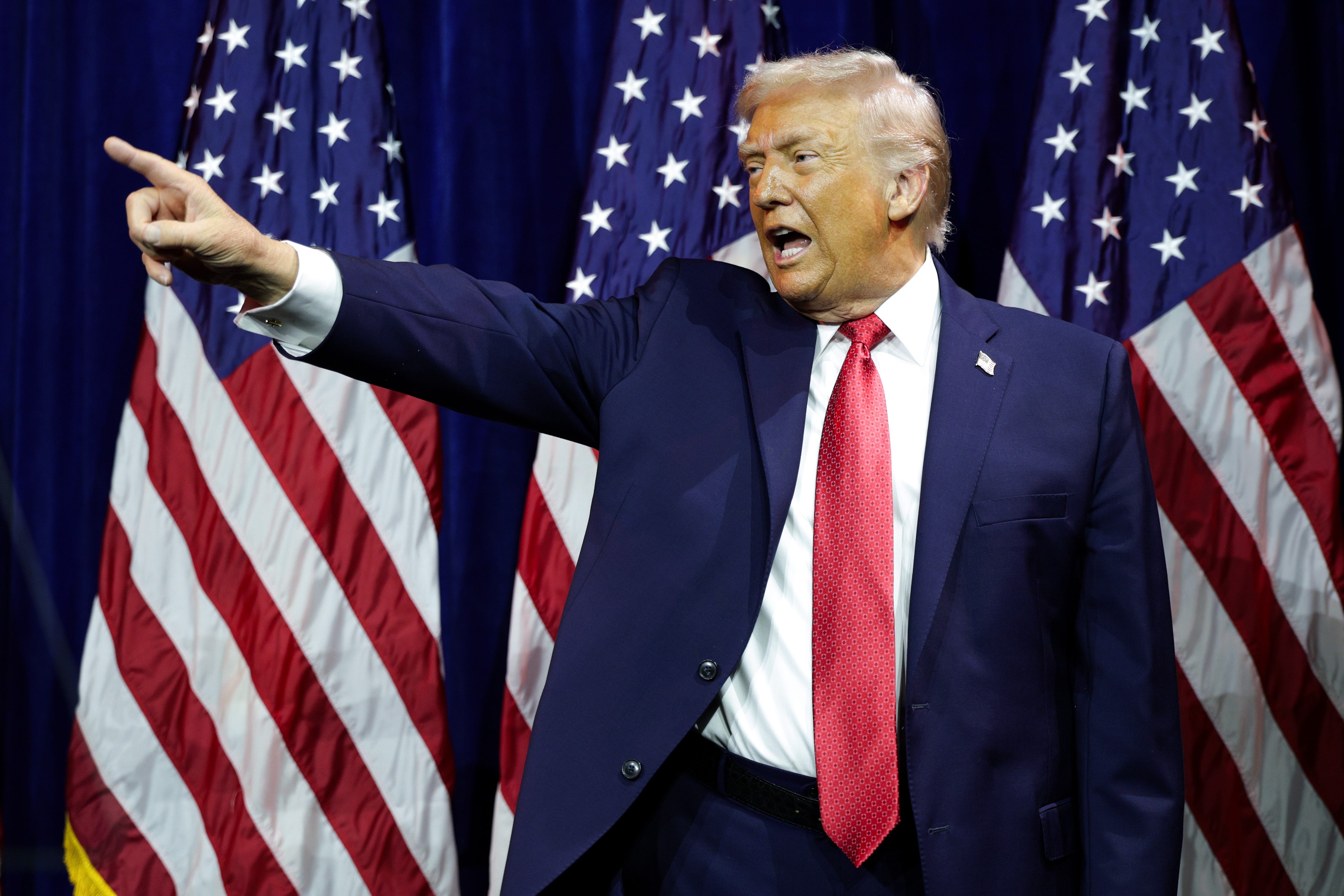
To imagine that Trump is doing anything remotely like those interventions in Venezuela is risible. “Good order and democracy”? At his strutting press conference, Trump mentioned the country’s oil more than twenty times and democracy not at all. Asked later whether the United States would encourage elections, Trump dismissed the idea: “We have to fix the country first. You can’t have an election. There’s no way the people could even vote.” Would a “freedom agenda” president beat his chest and roar that “American dominance in the Western Hemisphere will never be questioned again”?
That press conference was not about democracy or human rights or even capitalism. It was about straight up plunder undergirded by threats. The country’s oil, Trump announced, would be pumped by American oil companies for American oil companies—not even for American taxpayers. The welfare of Venezuelans is, at best, an afterthought, if that. Trump’s eyes sparkle at the prospect of looting another country’s natural resources. His lone complaint about the first Gulf War was that we failed to “take the oil.” He has shaken down Ukraine for its rare earth minerals, and he is casting lascivious glances Greenland’s way. But sure, it’s a freedom agenda.
Venezuela was—and is—worthy of rescue. Once the wealthiest nation in South America, and among the wealthiest in the world, populist leftist governments under Hugo Chávez and Nicolás Maduro have reduced it to a basket case in which 91 percent live in poverty (67 percent in extreme poverty) and a quarter of the population has fled. Chávez came to power promising to share the nation’s oil wealth with the poor and middle class, but instead delivered poverty to nearly everyone. And not just poverty, but corruption, crime, repression, and torture.
In the past, when the United States has toppled dictators, it has sought plausible leaders from among the democratic opposition, and sometimes settled for less than inspiring choices like Hamid Karzai and Nouri al-Maliki. But as Larry Diamond noted, “Despite the viciousness of the Venezuelan regime, the country’s political opposition has repeatedly mobilized, against daunting odds, for a peaceful transition to democracy.” Not only is the Venezuelan opposition unusually united and organized; not only does it have a legitimate president in Edmundo Gonzàlez; but it has a clear leader in María Corina Machado, who happens to be a global heroine and Nobel Peace Prize winner.
As Machado recounted in her Nobel acceptance speech, the opposition was particularly inspired in 2024:
600,000 volunteers across 30,000 polling stations; apps to scan QR codes, digital platforms, diaspora call centers. We deployed scanners, Starlink antennas, and laptops hidden inside fruit trucks to the furthest corners of Venezuela. Technology became a tool for freedom.
Secret training sessions were held at dawn in church backrooms, kitchens, and basements, using printed materials moved across Venezuela like contraband. . . .
And then the electoral tally sheets—the famous actas, the sacred proof of the people’s will—began to appear: first by phone, then WhatsApp, then photographed, then scanned, and finally carried by hand, by mule, even by canoe.
They arrived from everywhere, an eruption of truth, because thousands of citizens risked their freedom to protect them.
The opposition won that election with two-thirds of the vote, though Maduro refused to recognize his loss (sound familiar?) and held on to power. There is no need to search for plausible democratic leaders. They are right there, in plain sight, begging to reclaim their nation. But Trump has no interest in that. He dismissed Machado as unable to lead. “She’s a very nice woman, but she doesn’t have the respect.”
How can the Wall Street Journal editorial board and others credit the idea that Trump is pursuing some sort of freedom agenda when he has rejected the clear democratic leader of the country and the winner of the last election, and instead chosen to work with Maduro’s Marxist vice president, Delcy Rodríguez?
Well, “work with” needs some clarification. He has chosen to designate a strongman (woman, in this case) whom he can push around. Rodríguez, he told reporters, is “essentially willing to do what we think is necessary to make Venezuela great again.” And if not? “If she doesn’t do what’s right, she is going to pay a very big price, probably bigger than Maduro.”
Maduro was kidnapped and imprisoned, so “bigger” than that fate would seem to be a death threat. Still think we’re the good guys, Sen. Fetterman?
And while we’re on the subject of virtue, Trump and his people don’t leave any doubt that they are in the business of intimidation and possible conquest. Marco Rubio warned other leaders not to “F around” lest they find out what a bad hombre the president is. There were direct, bald threats against Cuba, Colombia, Mexico, and of course, Greenland.
Trump has hardly bothered to offer a reason for his intervention in Venezuela, and when his team has come up with some, they don’t bear scrutiny. Was it drugs? That seems unlikely since Trump just issued a pardon to Juan Orlando Hernández, former president of Honduras, who was convicted of drug running. Was it communism? Not if Trump is content to leave the regime intact. Was it immigration? Not when the Trump camp is forgoing a clear chance to restore democratic stability in that country, which would reduce emigration.
The sheer pleasure of bullying seems to be the likeliest explanation, but here again, Trumpland is another planet. None of the reasons that Venezuela is truly guilty seem to interest Trump, but he’s obsessed with the fantasy that they somehow emptied their prisons and insane asylums and shipped the inmates to America.
Back in 1980, when Trump was just a novice charlatan, Fidel Castro did something like that during the Mariel Boatlift. Trump got that idea stuck in his brain and spews it about every country he dislikes. During the 2024 campaign, he falsely claimed that Venezuela’s crime rate had dropped because they dumped all of their criminals in the United States. It’s deranged.
The United States under Trump is an outlaw nation, threatening excellent neighbors like Canada with economic devastation, blasting people in fast boats to pieces, withdrawing from international agreements, bullying friends and foes alike, and now kidnapping foreign leaders (however evil). We are becoming the kind of nation against which America used to defend others.