

NEWS BROKE LATE LAST NIGHT that Netflix has apparently won the fight to acquire the Warner Bros. studio and streaming assets from Warner Bros. Discovery, which will split off its cable assets (including CNN) into a separate company for sale to someone else.
As you might have guessed from, say, the headline of my newsletter last week, I’m not a fan of this deal for a number of reasons. On a purely artistic level, I have no interest in Netflix’s slop factory taking charge of the highbrow output of HBO and am skeptical that they will make good use of the intellectual property reserves at Warner Bros. On a business level, though, I think this is basically disastrous for the industry as it is currently constituted. Over the last thirty years, Warner Bros. has the second-largest market share at the box office, second only to the Marvel- and Pixar-powered behemoth that is Disney.
I interviewed box office guru Scott Mendelson earlier in the week about what such a deal might do to the world of theatrical exhibition, and the short answer is “nothing good.” Listen here:

Mendelson pointed to what Netflix has done to the award-season market as an example.
I’m going to put on my tinfoil hat here, but I think it’s backed up by recent history. Something that Netflix has done a lot of in the last few years is it seems like every time there’s this big, buzzy, crowd-pleasing festival flick that might theoretically do well in theaters, Netflix flies in, drops a $20 million check on it, grabs distribution rights, and then it dies in the algorithm. And I think, I would argue, that they are doing that at least partially intentionally because the worst thing that can happen for Netflix is for that film to be successful in theaters.
You see this throughout the exhibition industry: Netflix has cut the legs out of the comedy market by throwing enormous amounts of money at people like Adam Sandler and has radically driven up the cost of big-budget tentpoles by throwing enormous sums of money at stars like Dwayne Johnson and Ryan Reynolds, depriving theaters of butts-in-seats stars.
Whether or not the deal will survive regulatory scrutiny is a separate question. And whether or not that scrutiny will be fair or just in the age of Trump is another separate, and important, question: The only thing worse than Netflix destroying the theatrical ecosystem is Donald Trump’s regulatory apparatus destroying mergers because the guy in the White House is buddies with another company that wants to buy it. All the options here are bad. Hooray modernity.
Over on the homepage I’ve got a review of—or really more like a roundup of reactions to—three awards-season films: Hamnet, If I Had Legs I’d Kick You, and Train Dreams. One thing they have in common: plots that involve babies and young children in danger.
Children in Peril Are Powering Awards Season

ONE OF MY QUIRKIER BELIEFS is that Rotten Tomatoes would be well served by adding a parental filter to its rating results. No, not of the sort that guides audiences toward “clean” films—I’m not worried about cursing and nudity sullying my ears and eyes—but one that g…
It Was Just an Accident: The Shot-in-Secret Iranian Film Earning Awards and Punishments
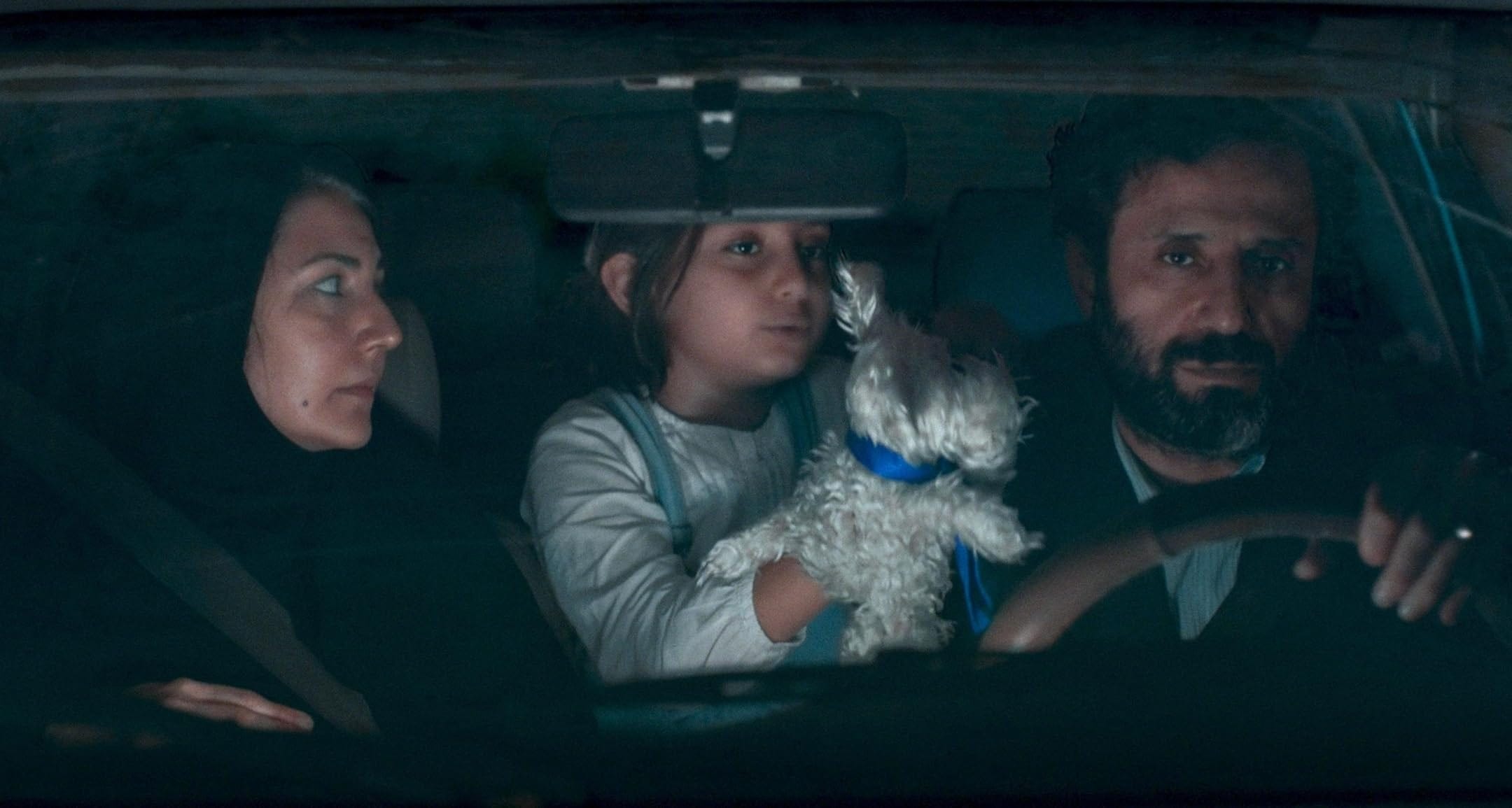
It Was Just an Accident is the best type of cinema. It is an encompassing and engrossing journey into a foreign land and, for many of us, a foreign mindset: that of the perpetual terror and lingering trauma of the authoritarian state.
Director Jafar Panahi accomplishes at least part of this effect via a clever perspective shift in the opening moments. We begin in the car of a family man (Ebrahim Azizi) driving on a dark Iranian street. His daughter is listening to pop music, dancing along to it with her stuffed bunny; his wife encourages him to let her have her fun. He acquiesces, at least until hitting one of the wild dogs running the streets. Things are more subdued after that, particularly when the car stalls and can’t restart.
And it’s here that the perspective shifts, from this family man we think we’re meant to relate to to one of the mechanics who works in the shop. Vahid (Vahid Mobasseri) hears this father and his face freezes; you can see the life drain from it. Vahid hears his voice, yes, but more than that, hears his walk, his limp. There’s a drag and a thump; it’s distinctive.
Distinctive—and, to Vahid, terrifying. When the man calls up, Vahid responds in a way that masks his voice; after he leaves with his family, Vahid hops on a motorcycle and chases him to his home. And when this man takes his car to the shop, Vahid follows him in the shop van, keeping tabs, waiting for him to be alone. Then he kidnaps him, knocks him out, and throws him in a hole in the desert: Vahid is going to bury this man alive.
But Vahid has doubts. About whether or not this man is, in fact, the notorious torturer Eghbal, or simply a family man who lost his leg in an accident a year ago—the aforementioned perspective shift also leaves us, the viewer, with doubts—and what should be done with him even if he is Eghbal. And this is what the rest of the movie is about: Vahid conferring with other victims of the torturer known alternately as “Peg Leg” and “The Gimp” about whether or not this is the man they all loathe and debating what should be done with him if he is their tormentor.
Panahi’s window into this world is both piercingly specific and unnervingly universal. The specificity of the Iranian experience here is what makes the film intriguing to outsiders. One small example: seeing how the women of Iran navigate day-to-day life in the Islamic Republic. Shiva (Mariam Afshari) is a photographer shooting a wedding party, and while she’s doing her job she does not feel the need to wear a headscarf; when she goes out onto the street, to a pharmacy, she puts it on. It’s a small touch, not really remarked upon, but its very commonness serves as a reminder that these people’s lives, in a very real way, are not their own. There are social and governmental forces bearing down on them. The specter of authoritarian oppression looms.
And while this variety of authoritarianism is, thankfully, not universal, it is distressingly common; it is the sort of thing we should pray never comes to our shores, that we should fight every moment to oppose. The final shot of this film—perhaps more importantly, the sound design of that final shot, the noise we hear that reveals the truth of Vahid’s predicament—is one of the most chilling things I’ve ever seen (and heard) in a movie. It is a reminder that reconciliation without punishment is, ultimately, impossible.
Panahi has had an interesting week.
On the bright side, It Was Just an Accident followed its Palme d’Or at Cannes in May with a best director award from the New York Film Critics Circle on Tuesday and a trio of trophies at the Gotham Awards in New York City. These are big wins for both Panahi and distributor Neon, which hopes the Iranian film will be a player during Oscar season. (According to the Ankler’s Prestige Junkie Pundits, a group that has foolishly offered me membership, Panahi is one of the five most likely nominees for best director and the film has a decent shot at a best picture nomination.)

But Panahi’s success at drawing attention to Iran’s internal troubles—to the state’s apparatus of oppression, to the torture of dissidents—has, perhaps unsurprisingly, had internal consequences. This week, he was sentenced in absentia to a year in prison and given a two-year travel ban. Panahi told the Marrakech International Film Festival that he plans to return to Iran, according to a report in the Associated Press: “I know the films I make don’t please the government, but that’s not a reason to leave my country. . . . My country is where I can breathe, where I can find a reason to live and where I can find the strength to create.”
He shot the film in his country in secret, knowing full well what the repercussions would be for doing so. He knew that he would suffer for his art and he felt it was worth it.
There’s a lot of snickering about awards season—it’s a vanity play, it’s meaningless, who cares—but Panahi’s film is the sort of picture that makes the whole thing worthwhile. Awards season serves a very specific purpose: shining a light on movies that otherwise might get ignored because they are, simply, not as commercial as mainstream horror or action movies. It Was Just an Accident is as good an example of this as there is: Here’s a movie that is both profound and important and made by someone who will suffer for what he has done.
What could be more worth celebrating?
Am I the only one one tired of pastie white men with self satisfied grins and pats on each other backs ?
I am fortunate to live near alocal non-profit cinema that got Del Toro's Frankenstein for one week, and is ow showing thr new KnivesOut flick.
(We don't own a smart TV, so we don't stream).
Frankenstein looked fabulous on the big screen. That is really how many films are still meant to be seen.
I wish there were another way to save WB.