Why Are Noirs Making a Comeback?
Plus: IMAX is great—but not the greatest reason to go to theaters.

SEVERAL HOURS AFTER I BIT THE BULLET and bought third-row tickets for a 7:30 a.m. screening of The Odyssey in 70mm IMAX,1 the powers that be extended that film’s run in the format for another month or so, into the middle of September. So good news for those of you, like me, who had been lax in picking up tickets in the system.
For those of you who are blissfully unaware, 70mm IMAX is a vanishingly rare format at movie theaters: There are only twenty-five screens in America that can play the massive reels of film, and a small (but increasing) number of auteurs have begun to prize getting releases in the boxy 1.43:1 aspect ratio. Dallas is lucky enough to have one of these screens, and I’ve made sure to check out nearly every film released in the format since I moved here, from Oppenheimer to Sinners to One Battle After Another.
The tiny number of screens worldwide combined with enormous demand for the films has led to a pretty basic supply-and-demand problem: Tickets were sold out weeks in advance aside from a handful of terrible showtimes and awful seats, and IMAX literally cannot build more of the projectors that play the film. This in turn led to rich tech bros suggesting that the real problem here is that IMAX isn’t charging people more efficiently and thus leaving money on the table. If you don’t let the wealthy throw money at their FOMO, are you even trying to gougemaxx?
As I noted on Twitter at the time, a better solution is simply to extend the run, which is what wound up happening. Win-win: More showtimes, meaning more money for theaters equipped to play the format, all without sacrificing film’s status as the last truly mass medium.
Still, some theater owners are worried that the emphasis on IMAX is, ultimately, bad for the theatrical experience. As Matthew Frank reported in the Ankler, there’s concern that the emphasis on premium large format (PLF) screens like IMAX and Dolby is creating the impression that screen size and general loudness are the best and most important reason to go to the theater. As Frank noted, “One exhibition exec [says] their theater is ‘very careful’ not to brand too hard around PLFs in order to avoid ‘deterring a customer who may think, If I can’t see it in a PLF, I shouldn’t see it in a theater.’”
I’ll be honest: This is an understandable concern, and one that’s at least partly of the exhibitors’ making. You know if you go see a movie on IMAX or Dolby or one of the other proprietary formats like Cinemark’s XD or Alamo’s The Big Show, you simply know you’re not going to have to worry about little things like projector-bulb brightness or blown speakers. This is . . . not always the case in the average multiplex shoebox.
That said, I’ll just repeat a point I’ve made before: The best reason to go to the theater isn’t the size of the screen or the quality of the surround sound, though those things are nice. The reason to go to the theater is that it’s one of the few places you have permission to unplug from the world, to put the phone down and lock in on one screen, to revel in joy and sadness and excitement with strangers in the dark. I prize going to the theater because it’s one of the last places you can really focus on a movie and just the movie.
Still: A giant screen will help you focus even better. So get those 70mm IMAX tickets while you can!
Our Bulwark+ members make possible our growing coverage of movies, books, arts, and culture. Sign up to become a member yourself, with this free trial:
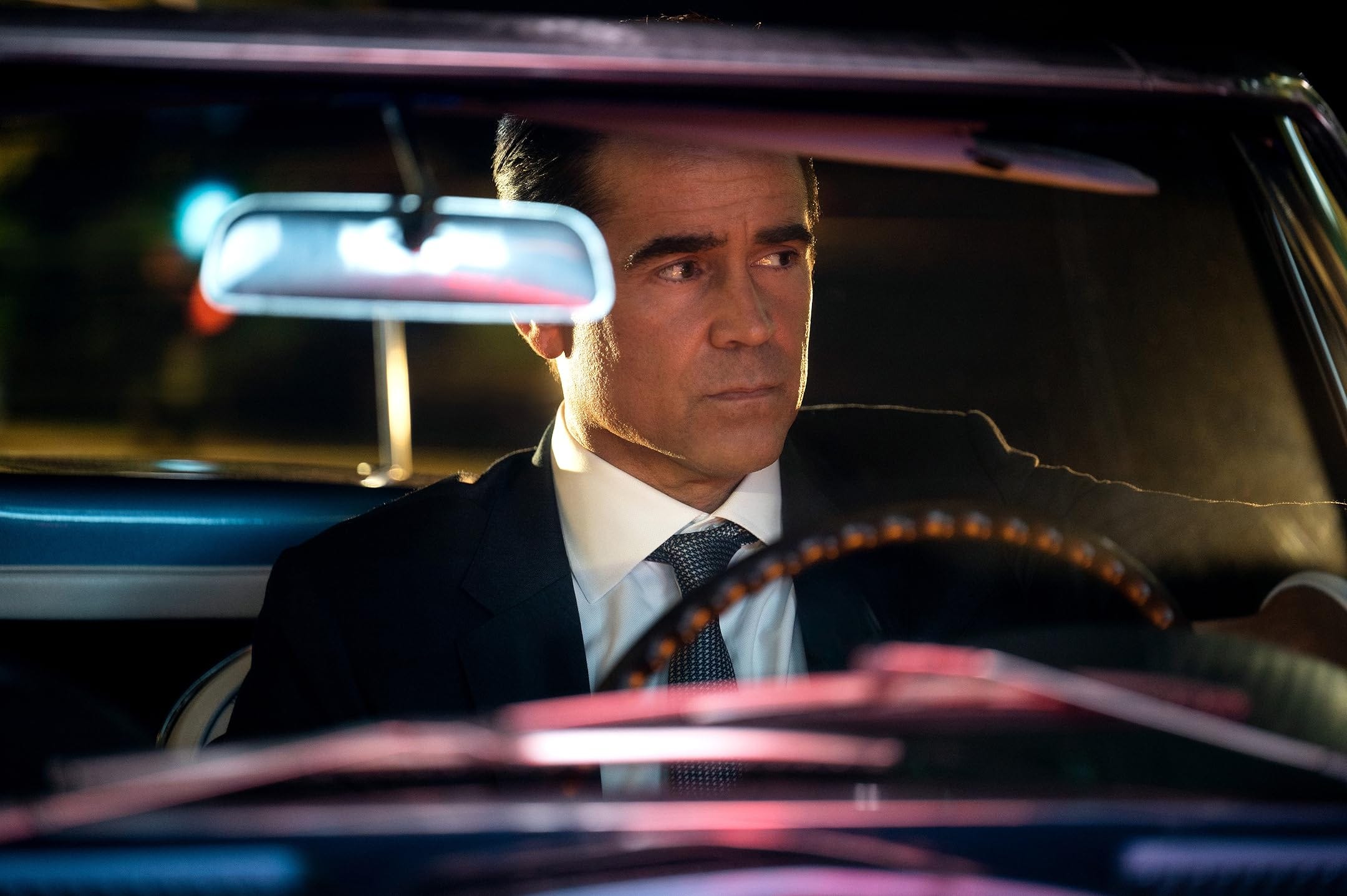
ON THIS WEEK’S EPISODE of The Bulwark Goes to Hollywood, I talked to Sam Catlin, the showrunner on the second season of the Apple TV show Sugar. For those of you who don’t know, Sugar is one of the best shows on television, a neo-noir starring Colin Farrell with a sci-fi twist. That twist, which came in the sixth episode of the first season, alienated some viewers, but I thought it was a nice little deke and when you rewatch that first season, it pays off tremendously.

One of the things Catlin and I discussed was the modest resurgence in noir, at least as an additive for certain types of storytelling. As it happens, I reviewed Prime Video’s Spider-Noir this week, a sort of alternate universe Spider-Man story set in the 1930s in which Nicolas Cage stars as private dick Ben Reilly, aka “The Spider.” This is a show with a murder mystery, yes, and a femme fatale, sure, but it’s also about crime and corruption and the way the mob and the mayor collude to ensure they both remain in power.
In the second season of Sugar, a similar idea manifests in the world of construction, where political favors and outright police corruption commingle with drug dealing and the elimination of the homeless population.
“A big part of noir is this idea that there’s something that’s always going to be bigger going on out of sight, just over the horizon that, like, you may get this guy, you may get that guy, but there’s a bigger contamination that’s going on out there that you’ll never be able to get your hands around,” Catlin said. “And I feel like that’s very much in the zeitgeist now, which is like: powerful forces out of our control . . . and you have to fight against a sense of futility.”
This is, of course, very much in line with the origins of the genre, which rose out of simmering unease following the end of World War II.
“The nation’s sigh of relief on V-J Day ought to have inspired a flood of ‘happily ever after’ films,” Eddie Muller wrote in the introduction to his history of the genre, Dark City. “But some victors didn’t feel good about their spoils. They’d seen too much. Too much warfare, too much poverty, too much greed, all in the service of rapacious progress. Unfinished business lingered from the Depression—nagging doubts about ingrained venality, ruthless human nature, unchecked urban growth throwing society dangerously out of whack.”
And these sentiments settle then recur: in the 1970s, with classics like Chinatown and The Long Goodbye, and again in the 1990s with L.A. Confidential and Fargo and Bound. That we seem to be in another prominent cycle of noir—in our age of rampant, unchecked corruption at the federal level and clear feelings of impotence and uselessness at the local and state levels—should not be surprising to anyone who is familiar with the genre or its trappings.
As alluded to in my 2024 piece about Interstellar during its 70mm IMAX run that year, I am an inveterate procrastinator when it comes to actually buying tickets for movies.
Oh Sonny, thank you so much for "gougemaxx,"
And yes, this is a perfect noir moment in the life of the culture. Haven't watched Sugar: may give it a try.
We bought tickets 2 weeks ago for Odyssey in the full IMAX format and still don't see it for 2 more weeks. It was virtually sold out that entire time. I finally gave up and took row 4 seats. Can't wait. I enjoyed the 2024 version, The Return, so am looking forward to this take on it.
I love Sugar. It took a while for my husband to come around to it, even though he loves Noir. I don't love Noir usually, but it is done so beautifully in this show, and I completely love that he is an alien. And I really want to stay at his hotel! 116 degrees in Phoenix tomorrow, I want to go anywhere else.