

Alex Pretti, Renee Good, and Flight 93
The memorials are the same; it’s the terrorists who have changed.

We’ll talk about the State of the Union address in tomorrow’s newsletter. Tonight, Tim and the gang will be live starting at 8:50 p.m. EST on Substack and YouTube to preview the speech, suffer through it with you, and give reactions after it wraps. Watch your inbox for location links.
Today, I want to keep talking about Minneapolis. I hope you’ll stick with me.
1. Shanksville
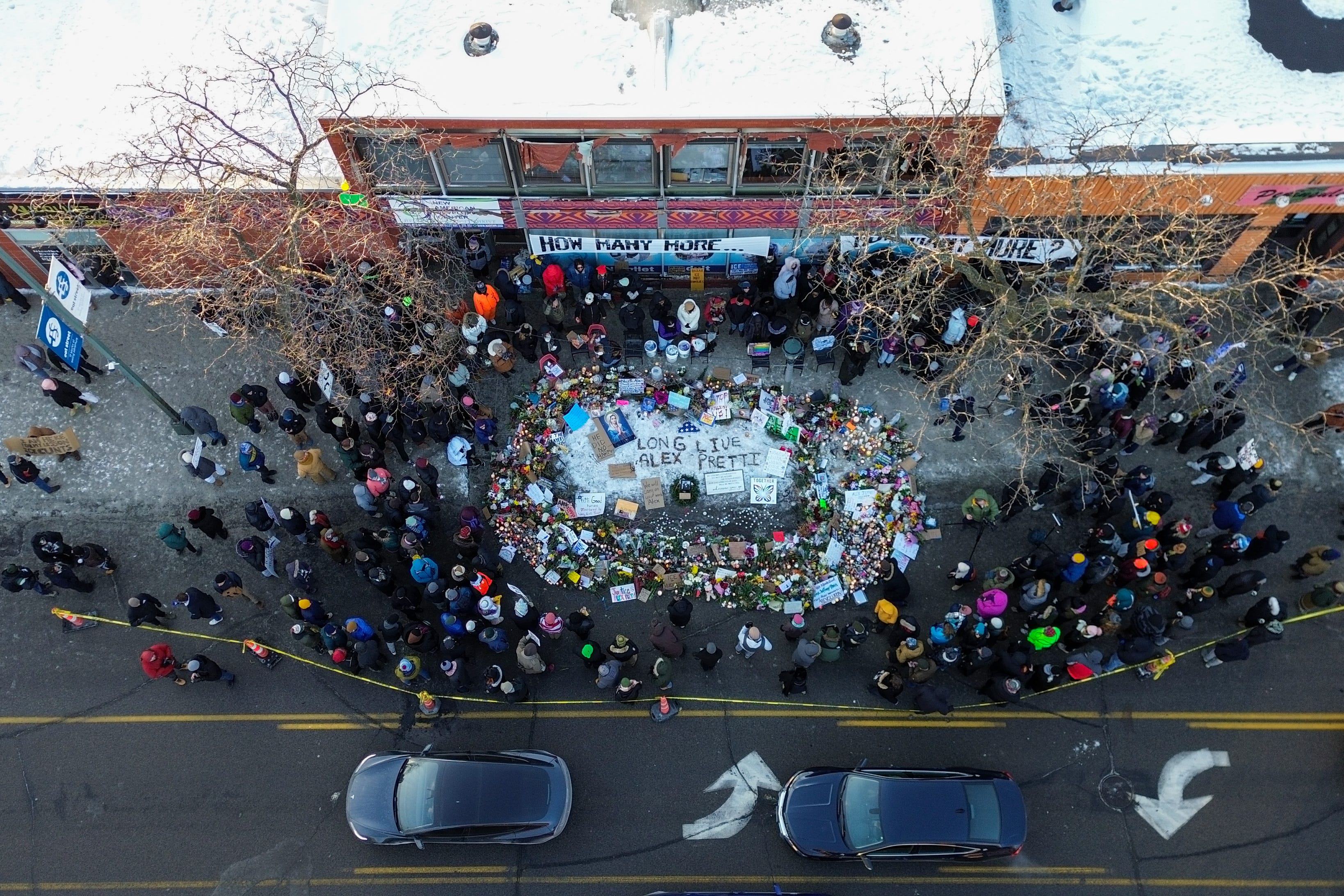
Tim and Sam have talked movingly about their reactions to visiting the makeshift memorials to Alex Pretti and Renee Good that emerged on the sidewalks of Minneapolis. (Tim here; Sam here.) Both were touched in a deep place.
I had a different reaction. Because I have seen this kind of memorial before. Let me tell you a story, from the before times.
A lifetime ago, in 2002—before I was married, before I had kids—I had a strange journalistic subspecialty. I was the guy who wrote about the Flight 93 memorial.1
It started in the winter of 2002 when I drove from Washington to Shanksville, Pennsylvania. For complicated reasons, I was drawn to the Flight 93 crash site.2 I didn’t have any expectations; I just wanted to stand there and pay my respects to the people who saved the U.S. Capitol. Here’s what I wrote at the time:
After spending an hour or so snaking up and over hills on Route 30, eventually you come to the little Buckstown Road, and from there to Skyline Road, a paved, single-lane way which comes out of the hills and slopes up and out to the fields. Off to your right you can see the hulking, rusting remains of earth-movers, left over from mining which finished years ago.
Then there’s a break, and you see little paved parking lots on either side of the road, and off to your left, a 60-foot length of chain-link fence, a couple flagpoles, and a giant wooden cross.
It started on the afternoon of 9/11. Hundreds of workers and investigators from the federal government arrived at the crash site looking for survivors and sifting for evidence. Shanksville—which had a population of 245—went to work feeding and housing them.
After a week of so, one of the townspeople, Donna Wilt, set up a small memorial to Flight 93 in her front yard. One morning she awoke to find a bouquet of flowers left next to it with a card that read, “Thanks for saving our lives. —The Capitol employees.” This was the first of a trickle of tributes that became a stream, and then a flood as visitors came searching for the crash site and left behind mementos. The town tried to bring some order by putting up that length of chain link fence so that visitors could stack their offerings.
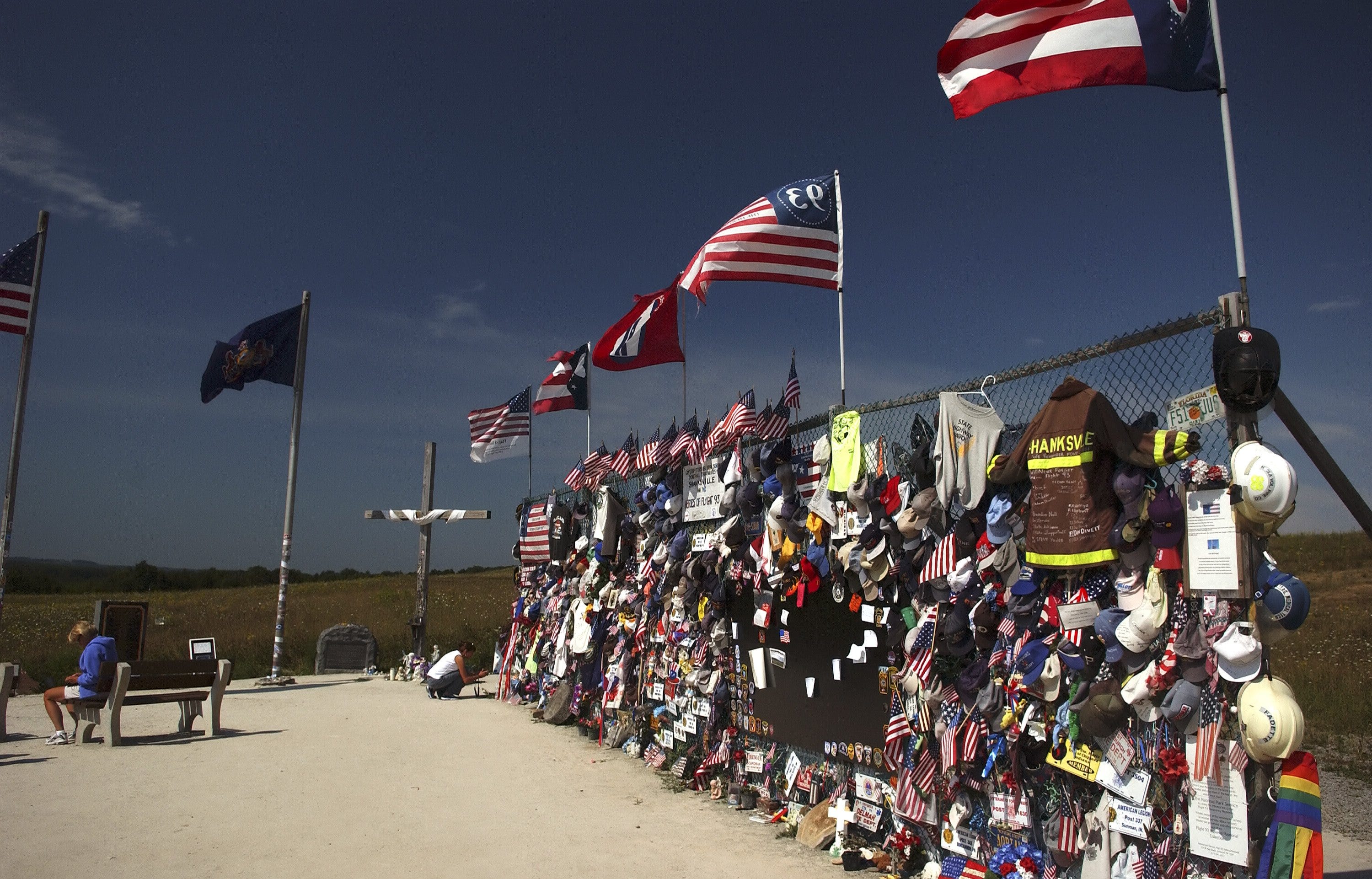
The residents of Shanksville self-organized into a group that called themselves the Flight 93 Ambassadors. These volunteers staffed what became formally referred to as the “Temporary Flight 93 Memorial” pretty much around the clock.3 There was always someone there to answer questions from visitors, or give a hug. The ambassadors kept the area tidy, shoveled snow, put down ice melt, and—most importantly—took down tributes when the area became overstuffed with them. Which was weekly. The level of care these volunteers showed for the little trinkets left behind was extraordinary. They catalogued and saved every single one, putting them into a storage space they rented.
What hit me hardest about that temporary memorial were the things people left behind. There were flags and crosses but it was truly ecumenical: Flags from every country you could imagine and signifiers from every religion. People left baseballs and photos and helmets and prayer cards; they wrote letters. Every time I visited the memorial, there would be a bunch of plush stuffy animals with note cards around their necks written by children.
One thing I never saw: anger. In all the times I visited Shanksville I never once saw anything that referenced the terrorists who crashed the plane. There was never anything about revenge or justice, even. The sentiments—universally—were about gratitude, love, and grace.
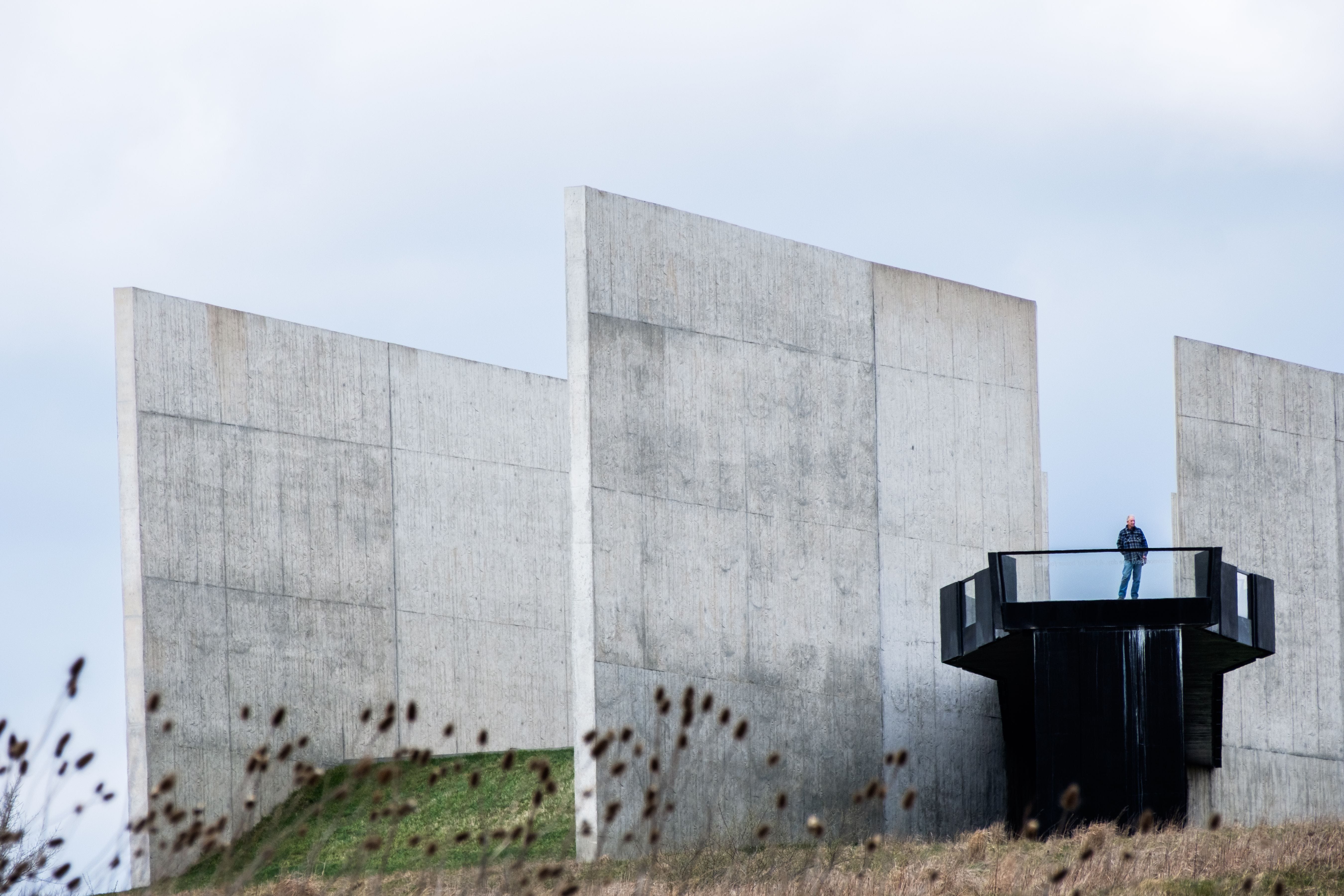
Eventually the federal government got involved and built a grand, permanent memorial. It was not to my taste. Just one man’s opinion, but I found it sterile, ponderous, and blandly sentimental. When the permanent memorial was built, the Temporary Memorial was taken down.
Again, this is just one man’s opinion, but I always thought that was a shame. The temporary memorial was a living tribute and its vitality gave it power.
But even though the Temporary Memorial functioned for nearly a decade, maybe it would have eventually petered out. Maybe a formal, permanent stone memorial was necessary to preserve the memory of Flight 93 in Shanksville.
Or maybe building such a thing unintentionally encouraged the country to stop tending the flame. Maybe it gave the citizenry permission to forget.
I’ve left this edition of the Triad unlocked. If you’re interested in extended meditations like this, I hope you’ll consider becoming a Bulwark+ member.
2. Alex and Renee
The organic, makeshift memorials to Pretti and Good immediately reminded me of Shanksville.
Just like Flight 93, people showed up without being asked.
Just like Flight 93, the tributes left behind were eclectic: flags, crosses, rosaries, stuffed animals, letters, flowers, pictures, stethoscopes, poems.
Just like Flight 93, local residents self-organized to tend the memorial.
Just like Flight 93, there was not a single expression of anger, or even reference to the killers. The sentiments expressed were entirely those of gratitude and love.
Two sets of memorials, separated by a quarter of a century, so alike. The reactions of the public exactly the same. The solemn responsibility shown by local residents almost identical.
But of course, there is one difference.
The forty people killed on Flight 93 were murdered by terrorists from foreign countries.
Alex Pretti and Renee Good were murdered by terrorists acting under the aegis of the president of the United States. Their murders were not accidents. They were policy. There has never been even the pretense of accountability for the men who perpetrated these crimes.
Instead of investigating and prosecuting the killers, the federal government praised its agents as heroes and said that, actually, it was Pretti and Good who were—their word—“terrorists.”
I can think of no better example of how our country has changed.
3. Bishop Barron
I wish I could say I was surprised that Bishop Robert Barron became a MAGA apologist, but I wasn’t. Like the Joker, I always know a squealer when I see one.
This is the first part in a series by Steven Greydanus seeking to understand what happened to conservatism’s most popular TV priest.
For many years, I am not ashamed to say, I called Bishop Barron one of my heroes. His gifts, his intellect, and his communication skills made him, in my view, “one of the Church’s best commentators on popular culture today,” as I wrote a dozen years ago. . . .
Around the same time, I was delighted to hear that Bishop Barron brought African American speaker and scholar Gloria Purvis to Word on Fire to film a series on racism and the Church in the U.S. . . .
Then a funny thing happened.
Filming on the series wrapped around the end of May 2021, and months went by … and there was no more mention of the series. On social media people were asking when it was coming. No response. 2021 turned into 2022. On June 2—coincidentally, one year to the day after he announced a wrap on the final episode—I noted on Facebook that the project seemed to have vanished without a trace. Only after that, between mid-June and mid-July 2022, did the series finally appear. Compared to other Word on Fire productions, it was a bare-bones release, without the spit and polish of many of their videos: no photos or illustrations; no graphics or title cards highlighting important quotations; no opening music, even. . . .
It was also in 2021, I think, that I started to become aware of Bishop Barron’s pattern of consistently negative messaging regarding the terms “woke” and “wokeism.” He was aware, certainly, that “woke” could be used in a positive sense: “If you want to define ‘woke’ as simply being alert to social injustice and passionate about addressing it, then sure,” he said, Catholic heroes like Dorothy Day and Oscar Romero “were ‘woke.’” But he acknowledged that usage only to dismiss it. He was also aware that Catholics like Gloria Purvis had defended just this use of the term, which originated in African American vernacular usage and has ties to the Black church. He was aware of dismay among African American Catholics over his messaging choices in this area. Still, Bishop Barron not only lent his credibility and authority to the pejoration of this term, he made anti-wokeism a key part of his brand.
One of my rules of thumb is that anyone who elevates “anti-wokeism” to pride of place in their personal ideology is just camouflaging their real beliefs.
This was still the early internet so most of those pieces are lost unless you have a Nexis subscription or a lot of patience to dig around in the Internet Archive.
My young adulthood was inextricably bound up with September 11. At the time I lived in Alexandria, Virginia, maybe two miles downriver from the Pentagon. On the evening of 9/11 I sat in my apartment, praying. The windows were open because it was a beautiful evening. I could smell the Pentagon burning all through the night. One of my aunts died in the North Tower. (I’ve still never been to Ground Zero; just too painful.)
At the time, I fixed my attention on Shanksville and Flight 93 because I worried it would be forgotten by the world.
The ambassadors would stand watch over the memorial even in the dead of winter, when no visitors were present. There was a vigil aspect to their duties.
“One of my rules of thumb is that anyone who elevates “anti-wokeism” to pride of place in their personal ideology is just camouflaging their real beliefs.”
You’ve said many true things. None truer than this.
I don't want to bring anger into such a beautiful moment as this. You are correct - we should memorialize the dead, and not their murderers.
But some amount of anger is appropriate.
Nothing made me more furious than that Michael Anton 'The Flight 93 Election' article in 2016. Flight 93 was a group of passengers, realizing that not just they but other people were in danger, all coming together and ending up sacrificing their own lives in order to save others.
It was a minor feature of conservative commentary to talk about how feminized and weak we had become that four people with boxcutters were able to hijack planes with dozens of people aboard. I always said that Flight 93 showed that was wrong - as soon as the people aboard the plane realized what the terrorists planned to do, their priorities instantly and completely shifted. While they thought they were hostages, they tried to make things easier on the negotiators who would be freeing them; when they realized they were weapons, they turned themselves on the terrorists who sought to wield them.
And what was the threat that demanded a vote for Donald Fucking Trump as some sort of 'we may die, but if we allow this to happen it will destroy America'? Huh? Barack Obama and Hillary Clinton in the Oval Office? Did Barack Obama send a mob of rioters to kill Joe Biden because Joe Biden wouldn't declare Barack the winner of the 2016 election? Of course not.
Just say it, Michael Anton. When you talk about 'saving America and dying in the process', you mean that America no longer being a democracy is an appropriate price to pay for maintaining it as a white man's country, where everyone who isn't a white man understands that they only have what their racial betters permit them to have.
It disgusted me. It disgusts me.