Pardon the Corruption
Trump’s blanket pardons for stop-the-steal illegality aren’t only about settling scores from past elections. They’re about laying the groundwork to subvert future ones.


Will the Supreme Court take aim at legal gay marriage in America? Not for the moment. In an unsigned order, the court declined yesterday to take up a legal challenge to its 2015 decision in Obergefell v. Hodges. The challenge was brought by Kim Davis, the Kentucky county clerk whose refusal to issue marriage licenses to gay couples made her a Republican folk hero at the time. Another L for Davis. She’s racking them up. Happy Tuesday.
The Dangerous Pardon Power
by William Kristol
Article II, Section 2 of the Constitution stipulates that the “The President . . . shall have Power to grant Reprieves and Pardons for Offences against the United States, except in Cases of Impeachment.”
This pardon power has often been regarded as a kind of incidental or relatively minor presidential power. But it is a power. And as the Supreme Court has interpreted it, it is a plenary and almost entirely unconstrained power.
Donald Trump understands power. And—as you’d expect from someone with the mindset of a lawbreaker—he has been particularly attuned to the potential use of the pardon power. In his first term he used pardons aggressively to induce allies not to testify against him, and to reward those who had stood with him.
But the lesson Trump took from his first term was that he hadn’t exercised his presidential powers aggressively enough. And that included the pardon power.
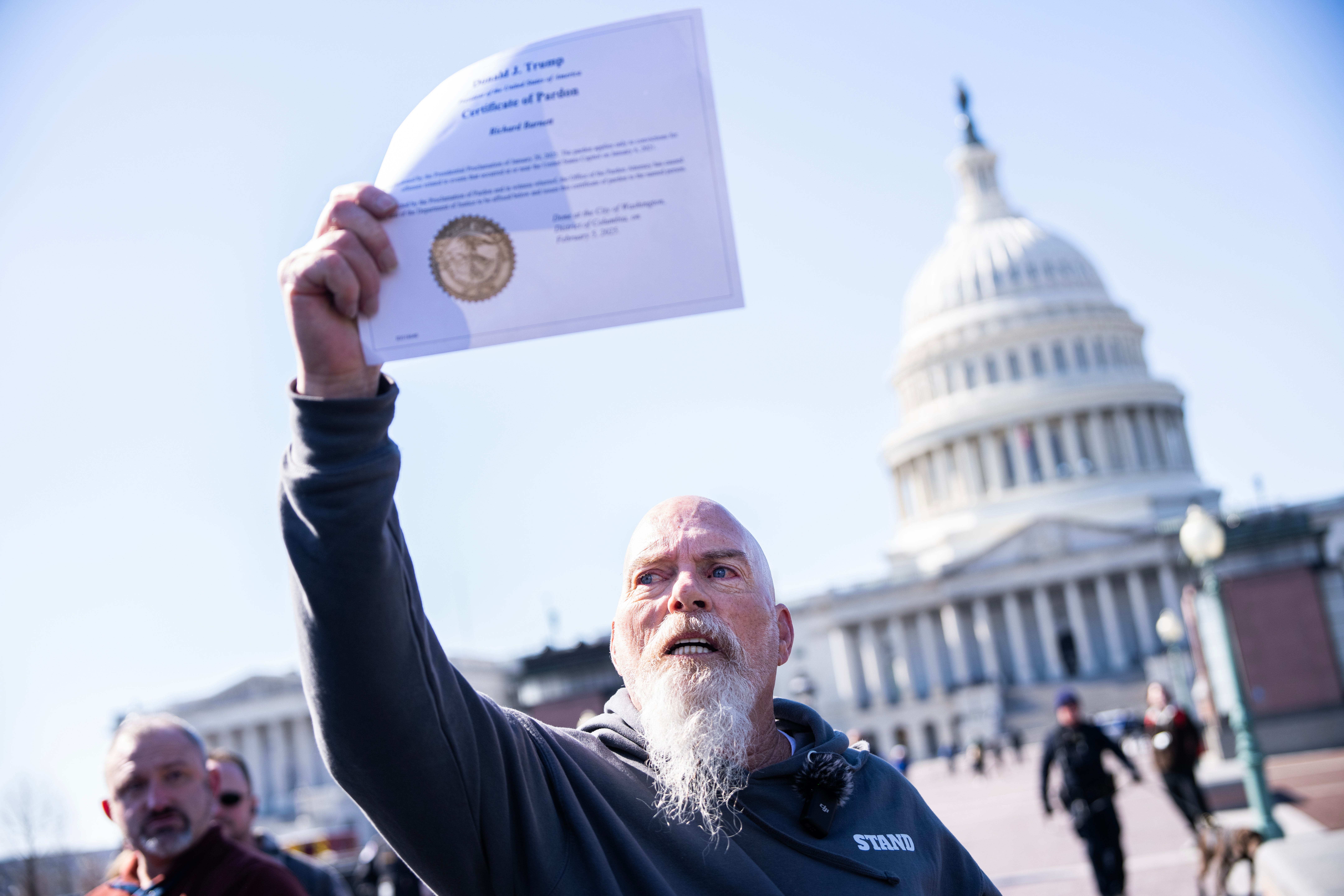
So he began his second term with the mass pardon of the Jan. 6th insurgents he’d incited to storm the Capitol. This wasn’t merely a reward for his past followers. It was an unmistakable signal for the future to those who might be asked or inclined to take extra-legal action on his behalf: You act for me, I’ll take care of you. Over the last ten months, Trump has followed up with all manners of pardons for friends, allies, business partners and the like, sending an unmistakable signal to others on his side: You scratch my back, I’ll pardon yours.
Then, yesterday the Justice Department announced a mass pardon for 77 named individuals but also for basically anyone involved in Trump’s campaign to overturn the 2020 election.
It was a preemptive pardon, proclaimed before any federal charges had been brought, in order to preclude such charges in advance.
And it was very broad. Trump’s “full, complete, and unconditional” pardon insulated from federal prosecution “all United States citizens” for any “conduct relating to the advice, creation, organization, execution, submission, support, voting, activities in, or advocacy for or of any slate or proposed slate of Presidential Electors, whether recognized by any State or State official, in connection with the 2020 Presidential Election, as well as for any conduct relating to their efforts to expose voting fraud and vulnerabilities in the 2020 Presidential Election.”
With this pardon, Trump rewarded all those who helped him try to subvert the 2020 presidential election results, as he had earlier rewarded those who tried to block the peaceful transfer of power on Jan. 6th.
But the true message of this wave of pardons—the prospective message—is that pardons will be available to everyone who joins him in the effort at election subversion in 2026 and 2028. This wave of preemptive pardons is a permission slip, an encouragement, even an order, to be ready for election subversion in the future.
And we know that Trump is interested in election subversion. Not just because of various efforts in this direction his administration has already launched, but because, after all, he tried it before. In his first term, he hadn’t been able to organize the federal government well enough to successfully pull it off. But now, Trump has Pam Bondi in place at the Justice Department instead of Jeff Sessions and then Bill Barr; he has Kash Patel at the FBI in place of Chris Wray; he has Pete Hegseth at Defense instead of Jim Mattis and then Mark Esper; he has Kristi Noem at DHS in place of Kirstjen Nielsen and then Chad Wolf. And from the first day of the second term, apparatchiks have been put in place beneath all of them, and elsewhere and in the White House. They will have little or no hesitation in doing whatever it takes to keep Donald Trump or a designated successor in power.
The wielding of the pardon power helps remove whatever hesitation might remain on the part of Trumpists to engage in election subversion. The pardon power is also a useful reminder that Trump and his minions are willing to use parts of the constitution against itself. That has been the practice of other authoritarian movements seeking to subvert free governments. And so the defenders of free government need to think beyond a kind of narrow legalism that can lead them to simply shrug their shoulders about the pardons.
The pardons are a legal and constitutional part of an anti-legal and anti-constitutional project. But that doesn’t make them any less dangerous. And it makes it even more important to expose them for what they are, and to work to make Trump and the GOP pay a political price for them.
Whatever It Is, It’s Not Popular
by Andrew Egger
Donald Trump’s constant, open flouting of laws and norms can be paralytic to the mind. It seems like every day it’s another thing—he helps himself to another billion dollars of U.A.E. crypto money, or launches investigations into political enemies, or pardons another tranche of people who tried to help him steal the 2020 election, or threatens the broadcast licenses of TV channels he doesn’t like, and on, and on, and on. It’s easy to fall into the cynical trap of thinking none of it matters—that voters don’t care about this sort of thing anymore.
But it’s an illusion. The fact is that this stuff is deeply, remarkably unpopular, with no real constituency outside the hardcore MAGA base. It’s supplying constant low-level drag on Trump’s approval rating.
That’s the main takeaway from new polling from Democratic research firm Blueprint Strategies, shared first with The Bulwark today. Blueprint asked voters a series of straightforward questions about 25 of Trump’s most controversial policies and actions this year: Do they consider those actions authoritarian? And do they approve of them? The answer was, largely, “yes” and very much “no.”
Fifty-four percent of respondents said that signing executive orders to investigate or persecute political enemies qualified as “authoritarian”, as did 50 percent of respondents when asked about deploying the National Guard to blue cities and firing the head of the Bureau of Labor Statistics over irritatingly weak job numbers. Strong pluralities described as “authoritarian” a whole host of other Trump actions (see the full slate below).
Another remarkable thing to note here is the delta between voters’ willingness to describe any specific action as “authoritarian” and voters’ approval of those actions. Only 42 percent of voters, for instance, use the term “authoritarian” to describe Trump’s massive self-dealing and personal enrichment during his second term—but a full 64 percent percent of voters disapprove of that behavior regardless.
These numbers get even more eye-opening when it comes to independents, where strong majorities describe a host of Trump actions as “authoritarian” and a full two thirds register their disapproval for those actions, such as Trump’s threats to pull FCC broadcast licenses from NBC and ABC and his ordering of masked ICE raids nationwide. Just under two thirds of independents disapproved of a wide swath of other actions, such as the firing of DOJ lawyers who prosecuted Jan. 6th rioters and the Trump family investing in crypto and using political power to promote it.


In a better world, none of this would come as much of a surprise. Trump obviously isn’t bothering to triangulate for political popularity when he goes after guys like Adam Schiff, Letitia James, and James Comey for retributive prosecutions, or when he tries to purge the government of inspectors general and non-MAGA federal prosecutors.
But there’s a valuable lesson in these numbers for those who consider Trump’s growing authoritarianism the most glaring threat in America today. Voters are open to the argument that “authoritarianism” describes the Trump project. And they’re repulsed by the project when it is broken down into individual actions and policies. We shouldn’t get so hung up on the label that we forget to prosecute the deeply unpopular facts of each individual case.
That’s especially true for the Democrats. Running on affordability is a great thing—but it shouldn’t be the only thing. Donald Trump’s inability to control his own appetites for wealth, flattery, and vengeance is deeply unpopular. They must recognize and act on that.
AROUND THE BULWARK
Who We Choose to Be: A Reflection on the Character of Veterans… It is a shared culture of service, observes MARK HERTLING.
The New McCarthyism Comes from the Top… This week on the Mona Charen Show, MONA CHAREN talks with NICO PERRINO of FIRE about the unprecedented First Amendment assault under Trump 2.0.
Trump’s DOJ Lost to a Hoagie… On a double-stuffed George Conway Explains it All, GEORGE CONWAY walks SAM STEIN through the “sandwich man” acquittal and the failing Comey case, then joins STEVE VLADECK to examine the Supreme Court’s review of Trump’s tariffs and why they may not survive.
The Blaze’s Pipe-Bomb Bombshell Appears to Bomb… The right-wing outlet claimed to solve the Jan. 6th pipe-bomb mystery. Things quickly looked less certain, reports WILL SOMMER in False Flag.
Right-Wing Critics of Antisemitism Keep Strikingly Silent About Trump… But this fish rots from the head, writes GABRIEL SCHOENFELD.
Democrats Need to Learn to Talk to Veterans Again… The gulf between service members and Democrats isn’t good for the military, the party, or the country. WILL SELBER’s February column is worth a re-read this Veteran’s Day.
Quick Hits
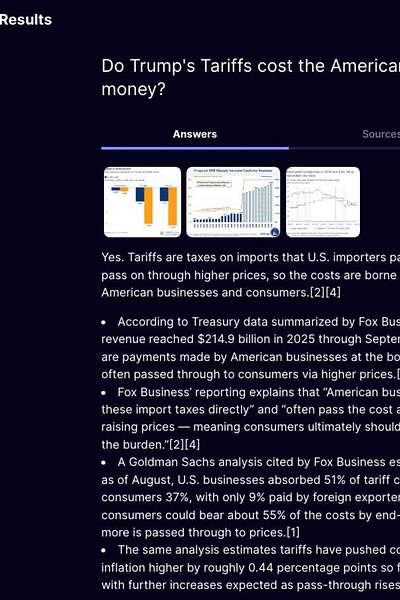
THE ACTUAL TRUTH (SOCIAL): Donald Trump’s Truth Social website has its own AI search tool, which the company debuted a month after Trump signed an executive order to end the use of “Woke AI” in the federal government. We understand if you have not made it to the site to see it. But it’s doing something remarkable and unexpected. It’s telling the truth. Here are some prompts we tried out, along with the answers edited down for size (we’ve included the full answers in an embed below):
Q: “Do Trump’s Tariffs cost the American people money?”
Truth Search AI: “Yes. Tariffs are taxes on imports that U.S. importers pay and largely pass on through higher prices, so the costs are borne mainly by American businesses and consumers.”
Q: “Did Donald Trump lie about the 2020 election being ‘rigged’ and ‘stolen?’”
Truth Search AI: “Yes. Courts, Trump’s own advisers, and official investigations found no evidence that the 2020 election was ‘rigged’ or ‘stolen,’ despite his repeated claims.”
Q: “Did people storm the U.S. Capitol on January 6, 2020, because of Donald Trump?”
Truth Search AI: “Yes. Multiple official and contemporaneous records attribute the January 6, 2021, Capitol breach to a pro‑Trump crowd mobilized around his false election‑fraud claims and pressure campaign to stop certification.”
Q: “How many wars has Trump ended since taking office in 2025?”
Truth Search AI: “None. There is no verified instance of President Trump formally ending a war since taking office in January 2025.”
Q: “Have grocery prices gone down since Donald Trump took office on Jan. 20, 2025?”
Truth Search AI: “Short answer: No. As of 2025, grocery prices have not fallen since Jan. 20, 2025; they have continued to rise modestly on net.”
As they say: You can fool some of the people all of the time, and all of the people some of the time, but you can not fool Trump’s AI bot . . . until Devin Nunes gets in there and fixes the settings.
Read the full answers here:
—Jared Poland
UNDER THE KNIFE: Blowing up the Kennedy Center isn’t the only change Donald Trump is bringing to D.C. cultural life. Area plastic surgeons report that MAGA’s re-ascendance is changing city norms around getting work done. No, not office work. Cosmetic work. People in Trump’s orbit are actively chasing the uncanny-valley effect of “Mar-a-Lago face.” Axios reports1:
President Trump is all in on aesthetics, and bolder is always better. . . . And some of the people in his circle are embracing that maximalist ethos when it comes to their visage, surgeons tell Axios.
Washington is typically an understated town regarding plastic surgery; people want to look good, but don’t want it to be obvious they’ve had work done, says area plastic surgeon Troy Pittman, who works with a lot of Trump insiders. But that’s no longer the case since Team Trump 2.0 rolled into town: “[Now] we’re seeing people who want to look like they had something done,” he says.
Some area plastic surgeons even report turning MAGA potential clients away, worrying that the amount of treatment they’re requesting can be dangerous. Surgeon Anita Kulkarni warns of “filler blindness,” in which people who get more and more extensive plastic surgery while surrounded by people who are doing the same “lose sight of anatomic normalcy.” Which definitely doesn’t sound like a metaphor for anything else happening in Washington these days at all.
BRAIN DRAIN: Donald Trump has spent his second term running the executive branch with an uncompromising ethos: If you’re not 100-percent USDA Grade-A Ultra MAGA, the government’s better off without you. The problem they’re discovering is there may not be enough highly qualified 100-percent USDA Grade-A Ultra MAGA people to go around. Take the Justice Department, where thousands of experienced attorneys have hung up their spurs this year, creating a yawning crater of vacancies of which only a fraction have been filled. The Washington Post has more:
The department’s struggle to fill vacancies reflects a dramatic shift for a law enforcement agency that has long attracted high-performing alumni from the nation’s top-ranked law schools and law firms.
Multiple people familiar with the student bodies at top-ranked law schools and the department’s hiring process said the share of recent graduates across the political spectrum who are applying for jobs at the Justice Department has plummeted. The department has had difficulty finding qualified candidates for open slots, according to more than a half-dozen people familiar with the process, several of whom spoke on the condition of anonymity because they were not authorized to comment on the record.
The result of all this has been a Justice Department that’s better than average at certain things—getting criminal indictments of Trump foes, for instance. But when it comes to the normal business of holding normal criminals accountable for violations of federal law, it’s hard to make the case that Trump’s gang is knocking it out of the park.
Cheap Shots
NB: After years of just writing around them, I have at last made the decision to simply omit from this quote all ridiculous little Axios-isms like “What they’re saying” and “The big picture.” A man’s got to have a code.
It’s always fun watching a woman who has been married and divorced multiple times wage a war against gay marriage in defense of the “sanctity of marriage.” Time for Kim Davis to be relegated to the dustbin of history.
Presidential immunity + Pardon power = dictatorship