‘The Drama’ Review
What’s the worst thing you’ve ever done?

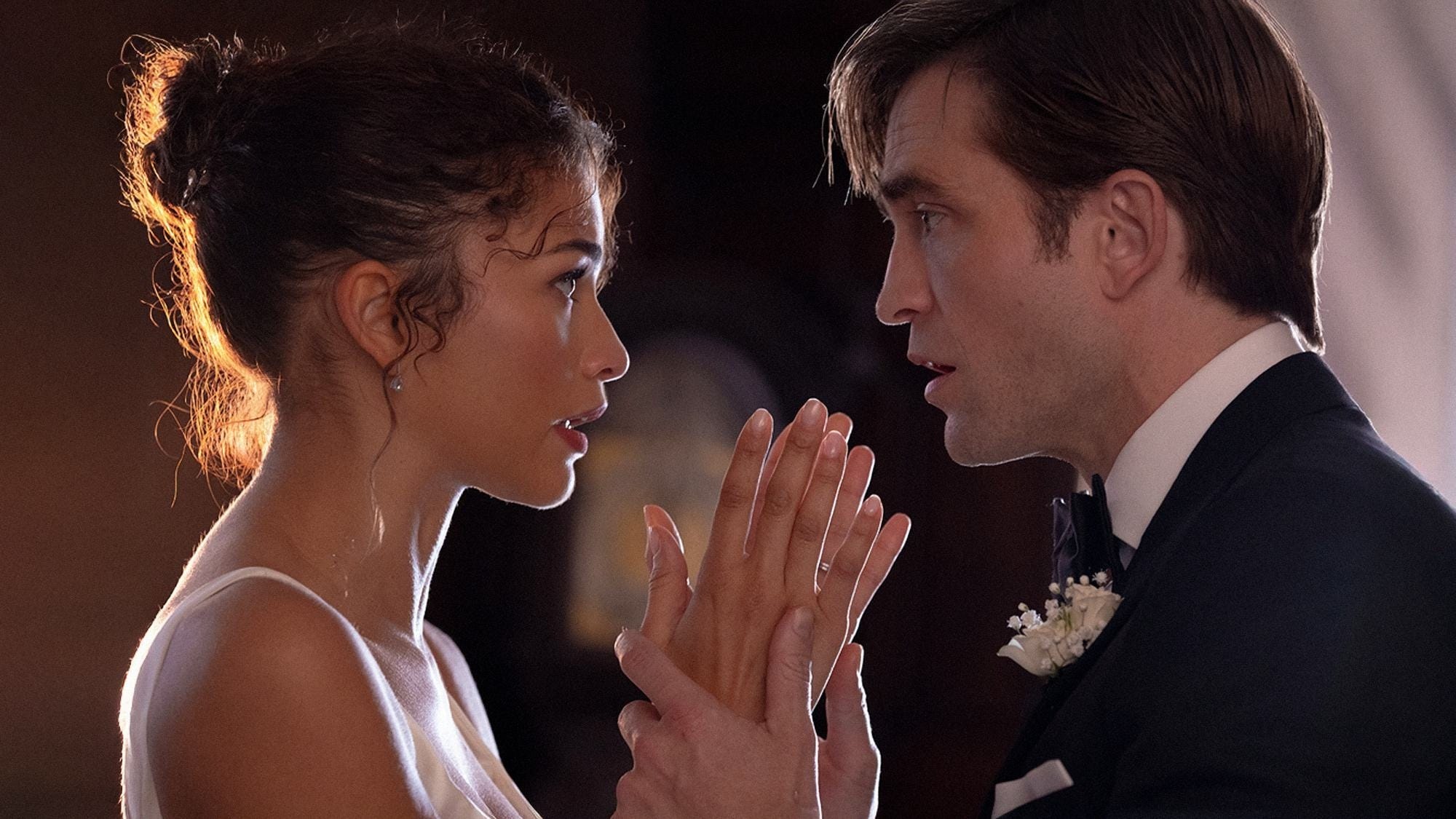
[Note: The Drama is a film about secrets and our reaction to them, and, as such, it is difficult to discuss without spoilers. So in the top half of this essay, I will endeavor to review it sans significant plot points outside of the very basics; after the jump, we’ll discuss a bit more of what writer-director Kristoffer Borgli is up to.]
As I was walking out of The Drama on Thursday night, I heard one of my fellow moviegoers admit something to her seatmate: “I like movies that make you think, and I never would have thought about that.” And this is a rather solid encapsulation of The Drama: It is a movie that is being sold as an awkward romcom starring two of the great millennial faces of our age, Robert Pattinson and Zendaya. And it is that—the trailers aren’t lying, quite. But it’s also something more.
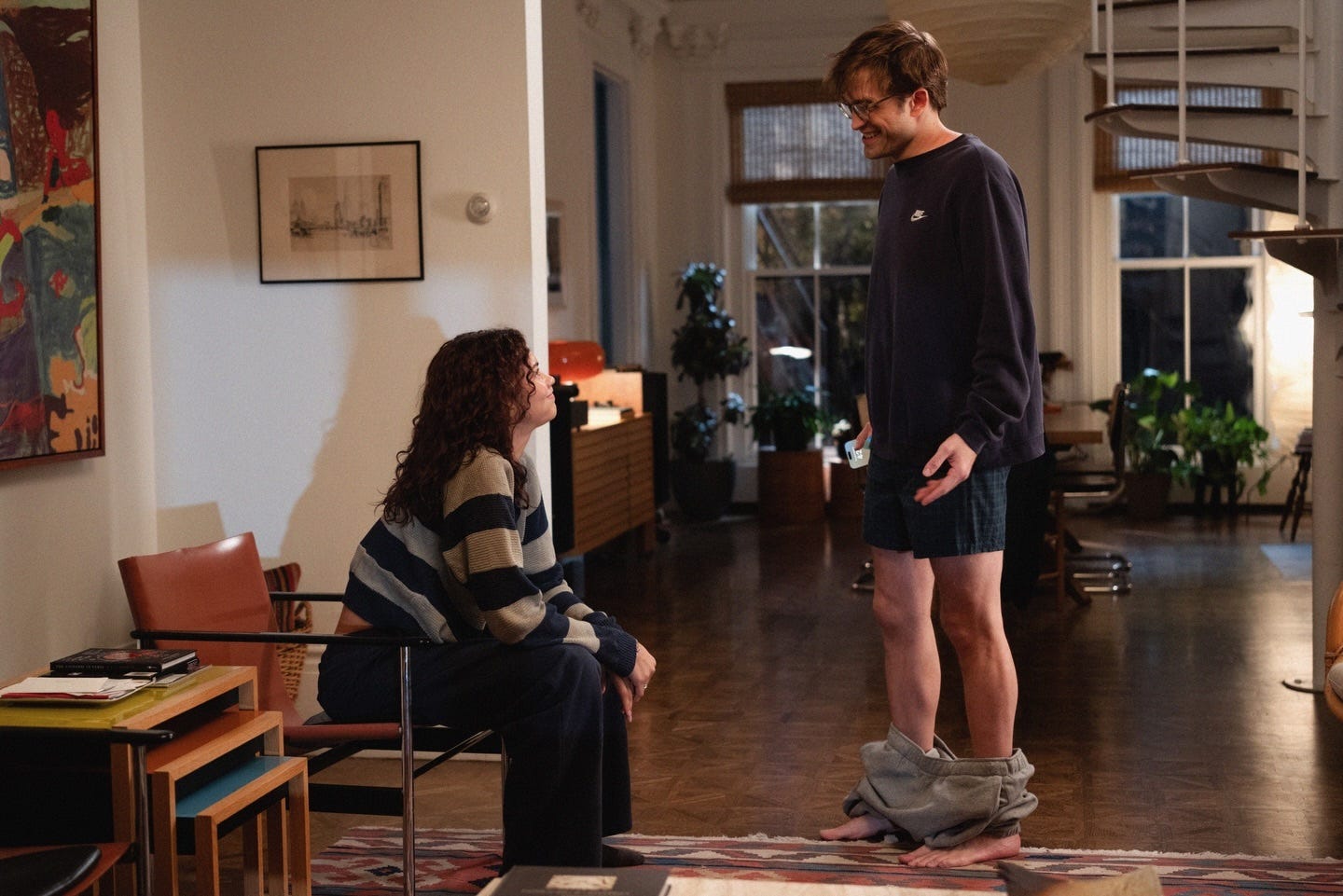
In the opening moments, we see Charlie (Pattinson) and Emma (Zendaya) working out their wedding-day speeches with best man Mike (Mamoudou Athie) and maid of honor Rachel (Alana Haim). Their speeches are the stuff of movies, all meet-cutes and faux-admissions. Charlie lied about having read the book Emma is reading to get an in with her for a first date and then admitted to the lie on the first date; she pantses him when he gets weird and doesn’t mind having been stuck with him in a locked, alarmed vestibule, which is where he plants his first kiss.
They quarrel about who gets to use which anecdote at the wedding. And then have to decide whether or not to confront their DJ about seeing her (they think?) freebase heroin on a street corner.
None of this is The Drama.
That comes later, after Rachel forces Mike to reveal the worst thing he’s ever done. They go around the table, each revealing something a little sinister about themselves. And then someone says something they can’t take back.
That is The Drama.
We’ll get to that in a bit. Let’s, for now, discuss the broadest reason why this film works: You can buy Zendaya as attractive but awkward and thus, unsure of herself. She has that sort of difficult assertiveness mastered by someone who isn’t fully sure she belongs, doesn’t know if she’s being judged. A sort of defensive transgression, a desire to be in control while knowing it can be stripped away at any time. Pattinson, meanwhile, embodies a sort of classically British upper-middle-class passivity: not wanting to give offense, yet terrified he’s entering into an arrangement that will bring disgrace on whatever dwindling old-money fortune his family has left.
You get some of Charlie’s backstory and mental state through the set dressing: Their Boston apartment is absurdly large and well-trimmed, and Emma’s dad was in the military. He works in a museum; she does some sort of consultancy work in an open-office grindhouse. It screams family money, as does his—pointedly, not her—desire for their first dance to be perfect, planned, bespoke. He does not want to bring shame to the family name.
Borgli shoots the film in a way that simultaneously never leaves any doubt as to what any of the participants are thinking—when The Drama is revealed, we are up tight on everyone’s face (except, interestingly, Mike, who is a pace backwards, his face not quite fully taking up the frame; he maintains just enough distance to understand everyone is going a little bit nuts), demonstrating just how tight and tense this situation is—and also leaves much doubt as to the reliability of the narrator, so to speak, in any given moment. The language of the film suggests certain moments are flights of fancy, or something out of a dream, or simply misheard.
Needless to say, this all only heightens The Drama.
The Drama is not infidelity; infidelity is, relatively speaking, easy. The Drama is, for lack of a better word, intent. Intent, and maybe follow-through. If you intend to do a horrible thing but don’t do the thing, is it worse than doing another bad, but lesser, thing? What’s the worst thing you could have planned to do but not done?
In this film’s case, the answer is: plan a school shooting but not go through with it because the computer on which you were taping your preplanned confession gets the blue screen of death.
That’s what Emma admits to after Rachel initiates her sick game of Truth and Worse Truth, and Rachel, of course, gets horribly offended: Doesn’t Emma know that she has a cousin who was paralyzed in a shooting? Never you mind that Rachel herself admitted, earlier, to having locked a mentally disabled child in an abandoned RV’s closet without telling anyone, potentially scarring him for life and leaving him in real danger. No no: Her literal crime is less horrifying than Emma’s thoughtcrime because it came on a whim.
Emma had intent.
And . . . that’s not actually unreasonable, is it? And herein lies The Drama, right? The thing that Charlie has to accept and live with—or possibly reject and break it all off as a result—is that there might be something deeply wrong with Emma. Who could imagine and plan and almost do such a thing? What kind of monster is he literally getting into bed with? The way Borgli shoots all of this is just about perfect. Charlie, contemplating his position, flashes back to moments of Emma’s rage, as when she flipped out on a bad driver who nearly ran them down in a crosswalk. He is all reticent, lordly British reserve, apologetic even in the face of near maiming. She is fiery American rage. But is there something more to that very American fire?
And this, ultimately, is what the movie from the Norwegian writer-director is poking at: America’s acceptance of some sordid level of gun violence as background noise to our daily life and the way we personalize that horror even if it doesn’t take place. He peels back the layers quite delicately, laying the blame not so much at the feet of gun culture but the copycat fatigue that time and again we see playing out.
These things come in bunches and they come in bunches because kids see cool things and want to be remembered; Emma’s decision is first and foremost aesthetic, she’s doing her hair to mimic the rappers on her bedroom posters and shooting her confession in a way to appeal to early internet incels. At one point, Borgli makes the subtext text, placing an (I believe fictional) artbook named Brainrot on Charlie’s desk, the photos inside featuring attractive women posing with guns in a sort of faux-Terry-Richardson minimalism. Charlie, thinking of the book, interposes Emma inside its covers, echoing an earlier sequence in which he saw himself marrying teenaged, wannabe school shooter Emma.
For a movie with as heavy a subject matter as this, The Drama is never pedantic and is often quite (darkly) funny—as when, after the revelation, Charlie and Emma meet with their wedding photographer who goes through the schedule of photos, kicking each segment off with “And then we shoot.” (“Shooting grandparents, TBD” sparked a particularly loud snort-chuckle from my audience.)
Borgli (who previously directed Dream Scenario), like his Scandinavian compatriots Halina Reijn (Bodies Bodies Bodies, Babygirl) and Ruben Östlund (Triangle of Sadness, The Square), is pushing buttons few American directors feel comfortable pushing. All three have a keen outsider’s eye for the absurdities of American life and the conversational taboos under which we live. The Drama is a step up for Borgli, as the buttons pushed by Dream Scenario were a bit forced and clumsy. This is defter, more incisive work.
I am curious how audiences looking for something to think about will think about it.
I normally avoid spoilers. But reading the first half of your review, it was so good I could not help but keep reading. And now, even knowing what “The Drama” is, I want to see this.
A good friend of mine’s daughter plays young Emma, so for that reason alone I hope the film does well. I’m looking forward to seeing it.