
THERE’S A PHRASE IN JOURNALISM that most reporters have come to dread: the negative-space story.
The concept is that if something isn’t happening, then that itself is the news. Often this is a crutch that reporters use to produce copy on deadline for demanding editors.1 But occasionally that absence of activity does actually signify something of note. As is the case in the wake of Disney’s decision to put Jimmy Kimmel on leave.
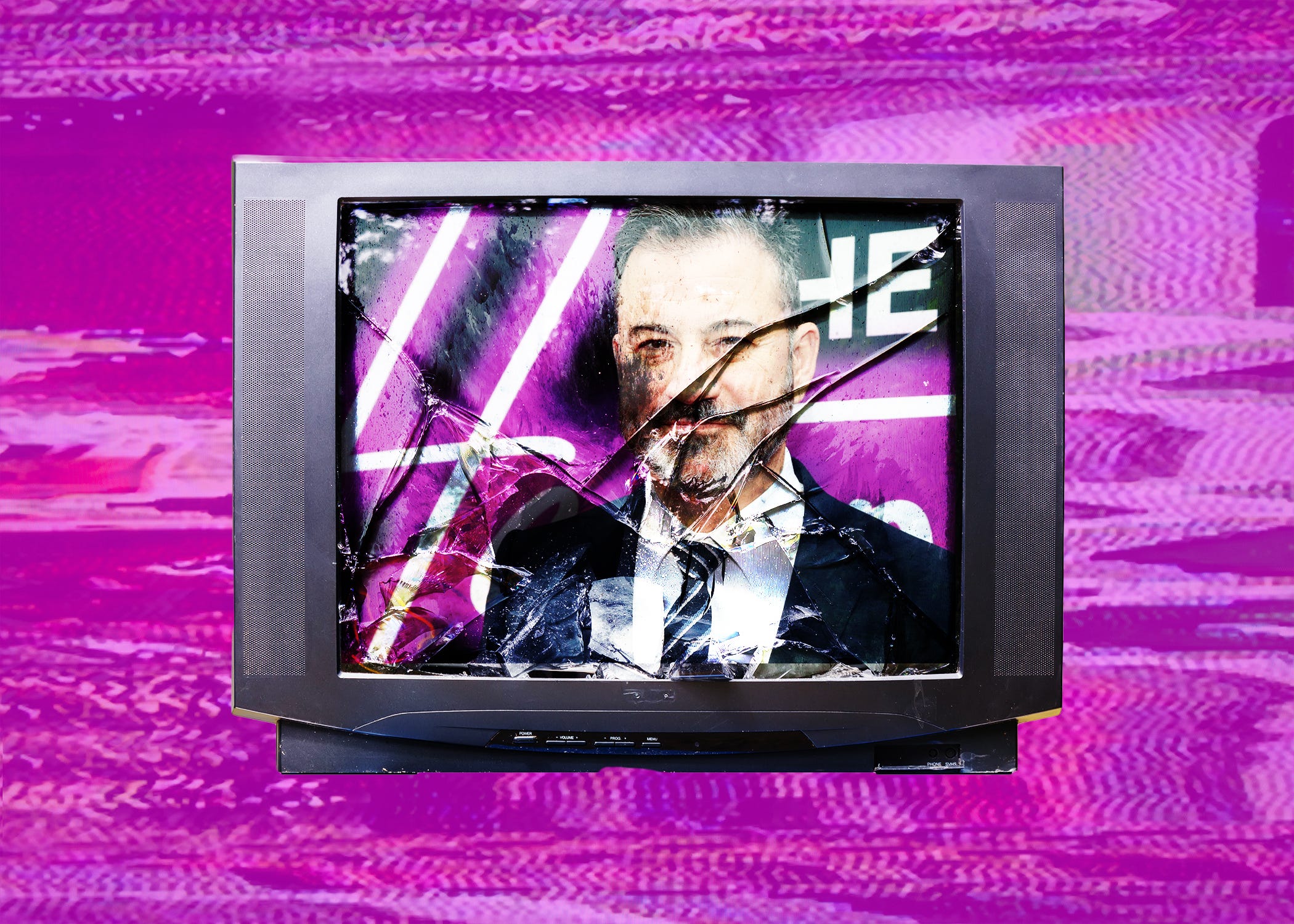
Kimmel’s icing certainly was a story on its own, both for what it said about the Trump administration’s attempts to censor speech it doesn’t like and corporate media’s weak-kneed response to it. But what stood out to me was the reaction on the left; or, rather, what was missing from it. There was no organized campaign against Disney.2 No calls by major liberal groups for people to cancel their subscriptions and have their kids survive without Bluey until Kimmel was put back on air. Instead, the blowback was largely organic—even if it ended up being fierce.
This says a lot about the Democratic party and the groups that support it. Mainly because it looks nothing like Donald Trump’s first administration. Back then, the liberal watchdog group Media Matters was constantly punching back against media entities that they viewed as too extreme and too cozy with the president and his party.
In 2017, Media Matters, along with other progressive groups, organized a boycott of Fox News’s Sean Hannity over comments he made about Alabama Senate candidate Roy Moore. After Tucker Carlson said on his Fox program that mass immigration “makes our country poorer, and dirtier, and more divided,” Media Matters pressured companies to stop buying advertisement slots on his program. When Laura Ingraham mocked Parkland shooting survivor David Hogg, Media Matters also helped pressure advertisers to boycott her show.
There was debate, at the time, as to whether this was the most efficacious of tactics. After all, Fox News still exists, Carlson continues to have a dedicated following, and Ingraham and Hannity are still on air. But people involved with those boycott efforts told me that the aim wasn’t really to get hosts canceled (although that did happen to Glenn Beck in 2011). Rather, it was about forcing the media ecosystem—not just Fox News—to confront where the country was (or, at least, seemed to be heading) on certain social and cultural issues. And on those grounds, it sort of worked. Ingraham, for example, ultimately apologized to Hogg after companies pulled their ads.
So when ABC (which is owned by the Walt Disney Company) announced Wednesday that it was suspending Kimmel over remarks he made about the assassination of Charlie Kirk, it seemed like a natural moment for Media Matters to launch into action. But, at least on a large scale, it didn’t.
Matt Gertz, a senior fellow at the organization, wrote that Kimmel’s cancellation demonstrated how Trump “wants to ensure that media outlets don’t produce coverage that criticizes him or his administration, but instead convey an endless stream of propaganda about his accomplishments.” Beyond that, there wasn’t much else, at least based on a review of the materials the group published on its website. Calls from Media Matters to boycott Disney, or to take some other action against the company, never came.
Media Matters officials declined to speak on the record. But it’s not hard to guess why they might be somewhat reticent or feel hamstrung at this moment.
The group has been under intense scrutiny from the Trump administration. In May, the Federal Trade Commission opened an investigation into whether Media Matters illegally colluded to damage the relationship between Elon Musk’s social media company X and advertisers. A federal judge blocked the investigation in August saying that it violated the group’s free speech rights, but the effort was still seen as a clear attempt to intimidate a watchdog group that had a long history of being critical of Trump and his allies. It also drained resources, scaring donors and forcing the group to downsize significantly.
It’s not just that Media Matters is feeling a financial pinch. Democratic strategists say the Trump administration has also imposed rules and restrictions that make the very act of boycotting companies like Disney more difficult. Earlier this year the FTC approved a merger between two of the largest advertising agencies, and took the unusual step of issuing a consent decree barring the agencies from boycotting media platforms because of their political content. The rule, some operatives stress, essentially turned advertising boycott efforts into a useless endeavor overnight.
And yet, the absence of an organized pushback to the Kimmel saga does provide a window into the state of Trump opposition in the current moment. And it underscores just how much the administration has wielded the powers of government against the opposition. It’s not just that the president and his allies have systematically picked out targets and gone aggressively after them, it’s that they’ve moved swiftly to defang the very institutions—from academia to the nonprofit world to media to law—that would traditionally rally to defend those targets.
“Where has all the leadership gone? If not for university presidents, law firm managing partners, and corporate chief executives standing up against bullies, who then will step up for the first amendment?” former Disney CEO Michael Eisner posted on X. “The ‘suspending indefinitely’ of Jimmy Kimmel immediately after the Chairman of the FCC’s aggressive yet hollow threatening of the Disney Company is yet another example of out-of-control intimidation.”
Not everyone has been bowed into submission, it’s worth noting. On an individual level, some progressive activists have called for people to cancel their ABC-Disney subscriptions and contact the company’s top advertisers to urge them to drop the network unless it brings back Kimmel. Some Hollywood luminaries, like Lost showrunner Damon Lindelof, threatened to not work with Disney unless Kimmel was reinstated.
Some Democratic officials and activists also pointed out that it’s not like there have been zero successes during this Trump term when it comes to galvanizing consumer and voter opposition. They note that the Tesla Takedown movement put acute pressure on Elon Musk when he was spearheading DOGE. They argued that there has been real grassroots energy at “No Kings” rallies across the country.
“I do not think there has been any lessening of popular energy,” said Norm Eisen, founder of the Democracy Defenders Action (of which The Bulwark’s own Bill Kristol is a board member). “The protests are larger and more geographically distributed than ever before.”
But the Tesla Takedown movement was largely organic, as were the No Kings rallies. That could very well be a good thing. At a time when the Democratic brand is in the toilet, it may make sense to have an opposition movement take root on its own, without being drummed up by an organization like Media Matters. But it’s made for pushback that could best be described as dispersed and decentralized—and, in certain quarters, even a bit timid.
When I started calling up some of the groups that are typically involved in this type of advocacy, I was surprised by how few were willing to speak with me on the record. One person went out of their way to make sure I did not describe their organization as “liberal” out of concern that it would draw unwanted attention from bad actors on the right. Everyone agreed that the chilling effect was real and they all complained that funding from deep-pocketed liberal donors had dried up, making it almost impossible to organize a healthy opposition to Trump—especially considering his litigiousness and his eagerness to sic the Justice Department on his foes.
“A lot of these organizations don’t have the money, they don’t have the resources, they don’t have the staff,” said Amanda Litman, cofounder of Run for Something. “That might sound like an excuse, but you just can’t do this shit if you don’t have the people.”
🫏 Donkey Business:
— Kamala Harris’s book officially goes on sale this Tuesday, but we already have a pretty good idea of what’s in it. There have been a number of excerpts, leaks, and reviews published in the past few days, including this one from Politico about how Joe Biden called Harris right before her debate with Trump and demanded to know why she had badmouthed him to donors. “My head had to be right. I had to be completely in the game,” Harris recalled. “I just couldn’t understand why he would call me, right now, and make it all about himself.”
As I wrote last week, Harris does not hold back about her feelings toward Biden and the anecdotes she shares, at least in the excerpts published so far, portray him as a very insecure, self-obsessed man. She also writes about how she wanted to pick Pete Buttigieg as her running mate but she did not think the country was ready to elect a black woman and a gay man. She also interviewed Gov. Josh Shapiro of Pennsylvania for her running mate, but said she ultimately passed because he came off as too eager for the job and she worried he couldn’t be trusted.
Unsurprisingly, the book is continuing to cause a headache for Democratic officials. Politico reports that Democratic leaders are “baffled and angry” about her decision to air her grievances. Last week Buttigieg also responded, suggesting it was wrong to assume that Americans would have responded poorly to a gay man being on the ticket. Shapiro also pushed back at Harris in an appearance on Stephen A. Smith’s podcast last week, saying she would “have to answer” for why she did not speak out publicly about Biden’s ability to serve another term.
— House Minority Leader Hakeem Jeffries and Senate Minority Leader Chuck Schumer sent a letter to President Trump over the weekend demanding a meeting with him as the government-shutdown deadline nears. A letter demanding a meeting. For their sake, let’s hope the Dems have a few more plays in the playbook as the shutdown nears.
My open tabs:
— How the Kimmel saga reorders FCC politics
— How Podcasts (and Plastic Surgery) Are Shaping Male Beauty Standards
— In a new era of college football, how much are players still part of campus life?
I love all of my editors. Especially Sam. He’s just the best. The rest of the gang is okay, I guess, but Sam is a-number-one.
Every Hulu or Disney ad on TikTok is full of comments right now saying the poster has canceled. Here’s the thing: I have no idea if there are enough of us to make a difference, but we’re not taking our marching orders from Dem leadership. Nobody thinks Schumer or Jeffries has the juice. For me I’m looking to the strong governors and the up and comers, but not to national leadership. I don’t know if I ever will again.
So you admit in your piece that there is a grassroots boycott of Disney. A significant one. Why is a grassroots boycott less valuable than one run by Dem leadership?
I read your piece as dismissing grassroots movements in general, and I don't understand why. We the people are the last defense against autocracy, so isn't it a good thing that we're standing up?