Overseas Family Reunions
‘Sentimental Value’ and ‘Sirāt,’ reviewed.

ONE OF THE JOYS OF AWARDS SEASON, from the critic’s perspective, is the crush of good movies. It’s like every studio has been handed a mandate from heaven that no awards-caliber film shall be released before October 1, on pain of torture. And while some slip through the cracks—Warner Bros. rolled out Weapons, Sinners, and One Battle After Another before the sacred date and the studio has zero (0) films hitting theaters for the rest of the year—distributors large and small mostly hew to this.
But this joy is also a curse, because it means there are approximately five thousand movies to watch. I caught up with three of the buzzier English-language titles, Hamnet, If I Had Legs I’d Kick You, and Train Dreams, last week. This week, we’ll catch up with a pair of foreign films earning some late-season momentum, Sentimental Value and Sirāt.1
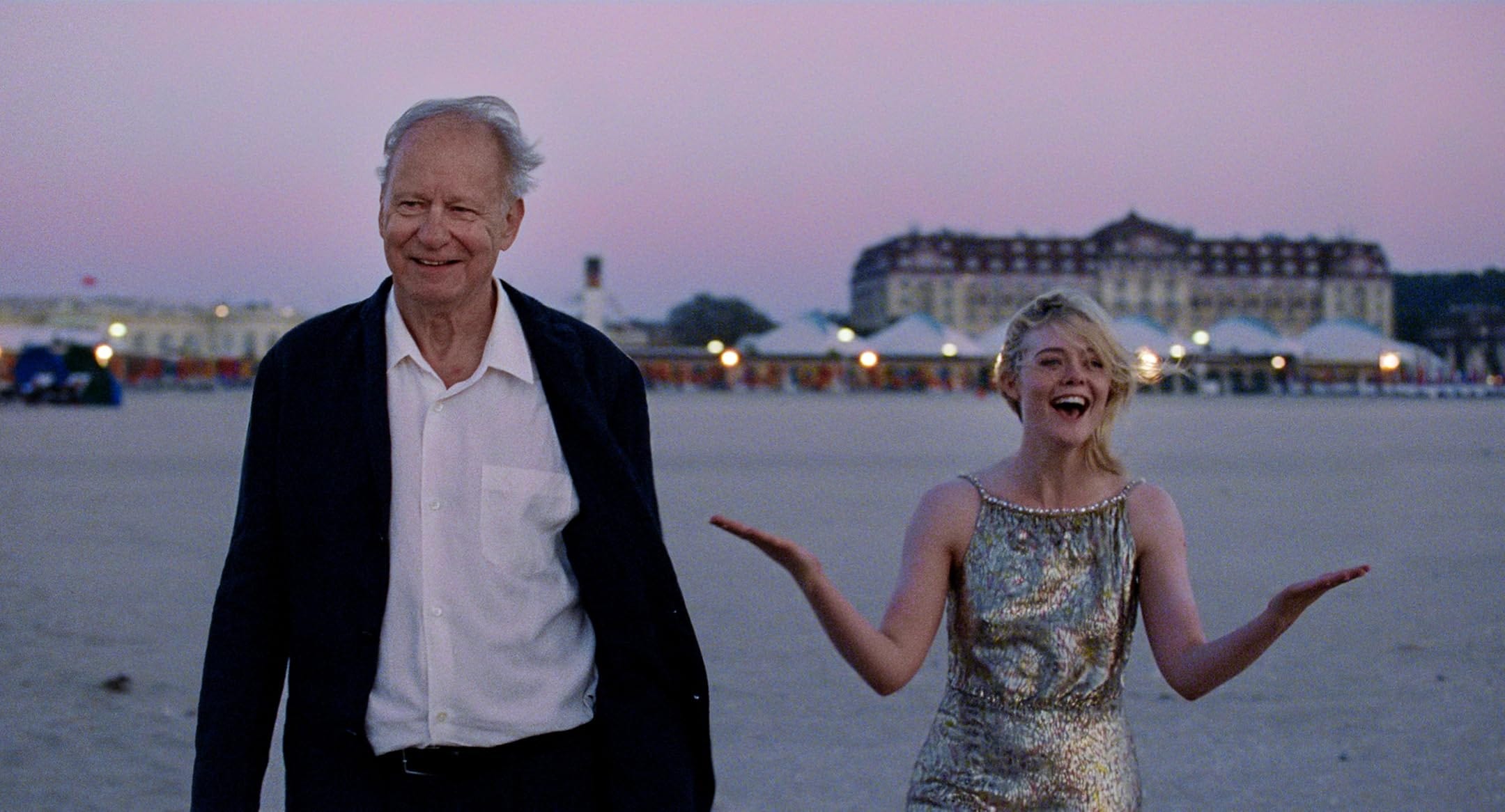
Filmmakers sometimes talk about their cast and crew being family, and Joachim Trier’s Sentimental Value takes that semi-literally.
Stellan Skarsgård plays Gustav Borg, a Norwegian director of some acclaim whose career and travels have removed him from the lives of his grown daughters, Nora (Renate Reinsve) and Agnes (Inga Ibsdotter Lilleaas). Nora is currently working as a stage actress (when she can overcome her near-crippling bouts of stage fright) and has earned a small measure of fame on a television show; Agnes starred in one of Gustav’s biggest early films as a child, though she now works as a historian.
When Nora and Agnes’s mother dies, Gustav returns to reclaim his family’s ancestral home, which we learn in the early going has a foundational flaw that shoots a lightning-bolt crack up the wall and will cause it, eventually, to sink into the Norwegian soil. (I could be mistaken—I miss these things sometimes—but I believe the director intends this to be a metaphor.) Gustav, whose career has been in a rut, has a secondary motive: He has written a script for Nora that calls to mind the family’s struggles with mental illness and hopes she will act in it. Nora refuses, but Gustav gets lucky when famous American actress Rachel Kemp (Elle Fanning) shows interest, attracting Netflix’s bottomless budget.
What follows is a delicate dance between family members and the fundamentally inseparable nature of artistry and personal experience. First and foremost, though, this is an actor’s showcase, and it’s probably worth dwelling for a second on some of the work done in Sentimental Value.
Skarsgård, of course, is familiar to American audiences for years from films like Good Will Hunting and television shows like Andor. It’s no surprise to see him slip into the surly-yet-loving father-figure role like an old glove; he radiates both desire for connection and contempt for the personal weakness such desire implies, a furrowed brow and a narrowed set of eyes saying more than any five lines of dialogue could. Fanning is probably the biggest star—one wonders how much of the film’s funding was in fact contingent on her signing up to play the part of the A-Lister—and there’s a version of this picture where she plays an American ditz, a star who is both unsuited for the subtlety of the role she has been assigned. But Fanning plays the part, as written by Trier and Eskil Vogt, with real compassion and an artist’s understanding of her own weaknesses. She doesn’t want to hurt the work but is afraid her inadequacies—her unfamiliarity with the language, her distinctively blonde hair—will smother it.
Reinsve and Lilleaas are given the showcase roles here, and both crush them. Reinsve’s ongoing mental breakdown in the face of personal and professional difficulties is the showier part, but Lilleaas is doing something more interesting as the stronger sister. There’s a sequence in which she’s investigating the imprisonment of her grandmother during the Nazi occupation and the torture she endured at the hands of the Third Reich, and the look on Lilleaas’s face as she is overwhelmed by the enormity of it, just imagining what this poor woman must have gone through, tells the whole story.
Sentimental Value may be slightly too sentimental about the nature of filmmaking for its own good; Trier has a shot at the end where proud papa Gustav has gathered his blood-and-celluloid family together for one last artistic triumph that tips things slightly too far into “Behold, the Magic of The Movies” land for my taste. Still, it’s a compelling portrait of a family in turmoil and art’s usefulness in helping people work through their problems.

I’D LIKE TO THANK (?) JOHN WATERS for recommending Sirāt on his year-end best-of list, routinely one of the only such lists worth reading. I probably would have missed what he describes as “the best feel-bad acid adventure ever filmed” were it not for his recommendation, and while I might have been less traumatized if I avoided it, well, I can’t say I regret it.
The setup for Sirāt is pretty straightforward: Luis (Sergi López) and his young son, Esteban (Bruno Núñez Arjona), are searching for Mar, their daughter and sister, respectively, at a Moroccan rave. She disappeared a few months back and they’re worried but unsure where to look; this isn’t their culture, after all. Handing out photos of the girl, they’re stymied—at least until a diverse group of partygoers suggests she might be at another rave deeper in the desert.
On the edges of this story about this missing girl and her distraught family is a tale of economic and social collapse. The military breaks up the party Luis and Esteban begin the film searching, and they follow the band of ravers off into the desert in search of this new rave. We hear snippets of hostilities come in over the radio: Is it some sort of civil war, or a broader conflict? NATO is involved; is this World War III?
None of the characters know and none of them really care; they live on the outskirts of society as it is, the detritus and refuse of civilization looking for nothing greater than some decent party drugs and an EDM beat to groove to. This motley crew of outcast cripples and inked-and-pierced ravers have intentionally disconnected from society, choosing to dance their lives away while the world burns. But eventually the fire comes for them, and no amount of psychedelics will keep it at bay.
Sirāt is a movie I very much wish I could have seen in a big theater with a glorious sound system; watching it at night with AirPods on isn’t quite the immersive sonic assault needed to really enmesh the viewer in the aural soundscape. It’s more than a music video—there is genuine tragedy2 at the heart of this picture—but one could imagine it working best as a music video first and foremost. Many filmgoers will likely find the film’s conclusion unsatisfying (often a philistine’s lament, though one I regrettably share here), but the harrowing nature of Luis and Esteban’s journey might be enough to satisfy most of us.
I plan on reviewing The Secret Agent once its release goes a little wider, since it too is an awards-season contender.
Last week I discussed “child in peril” movies; Sirāt is, additionally, a “dog in peril” movie. Buyer beware.
How were you able to watch Sirat? JustWatch isn’t showing any options.
Sadly, I never see movies in theaters with glorious sound systems, so maybe I lack the experience to fully appreciate the comparison, but I gotta say that when watching at home and listening on my AirPods Pro they sound pretty great. (Not an Apple stockholder, just a satisfied customer.)