TACOs With a Side of War Porn
Despite his callous bluster, Trump is seemingly retreating.


When we mentioned yesterday that Trump was blaming Iran for firing the Tomahawk missile that destroyed an Iranian girl’s school on February 28, we suggested he’d probably (or hopefully) have been briefed otherwise and was merely lying. Now we’re not so sure. Asked at his presser yesterday why he was the only member of own administration accusing Iran of the strike, Trump replied: “Because I just don’t know enough about it.” Truest thing he’s ever said.
Watch Bill and Andrew on Morning Chaser at 10am EDT.
Happy Tuesday.
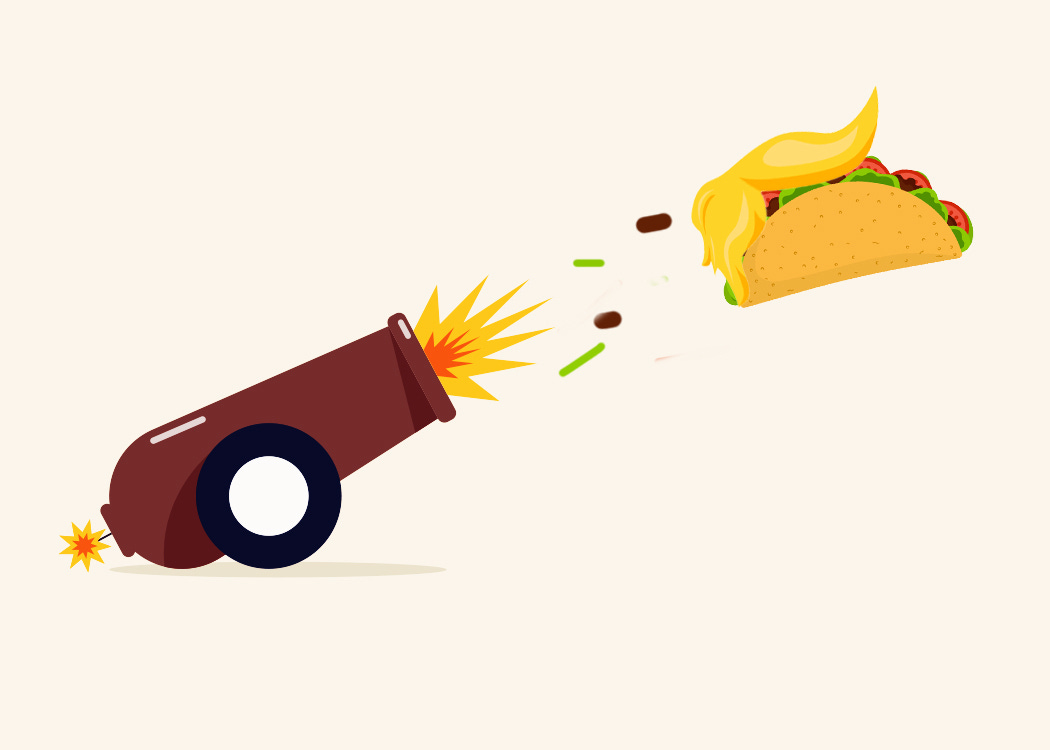
It’s TACO Time
by William Kristol
To TACO or not to TACO, that is Donald Trump’s question.
I think we know how it’s likely to be resolved.
TACO, for those sane humans who haven’t been obsessively following all the commentary on our 47th president, is an acronym for Trump Always Chickens Out. The term originated on Wall Street last May, after Trump would threaten or even announce tariffs and then reverse himself after a negative market reaction. A TACO trade involved buying stocks after a tariff announcement pushed them lower, then selling them after the tariffs had been postponed or reduced and the market had rallied. In general, the Street has found betting on the TACO trade to be profitable.
Yesterday we saw the mother of all TACO trades. Oil prices were soaring and the market was falling. Then at 3:30 p.m., President Trump told Weijia Jiang of CBS that the war could be over soon: “I think the war is very complete, pretty much.” Oil prices promptly plunged and stocks shot up. You could have made a lot of money in that last half hour of trading. For all we know, some Trump insiders did.
But chickening out isn’t a matter of one phone call. It takes time and can be a bit complicated to pull off. And of course Trump won’t acknowledge he’s doing it.
So in his speech later that afternoon to House Republicans, Trump dutifully read the hawkish passages that had been written for him: “We have won in many ways, but not enough. We go forward more determined than ever to achieve ultimate victory that will end this long-running danger once and for all.”
In his more off-the cuff remarks, though, and in his answers to questions at the press conference that followed, Trump’s inclination to TACO was dominant: The war was a “short-term excursion,” its progress “was ahead of schedule,” and it could be over “very soon.”
Now Trump will continue to unleash violence and destruction for a while. And he’ll continue to threaten, as he did last night on Truth Social: “If Iran does anything that stops the flow of Oil within the Strait of Hormuz, they will be hit by the United States of America TWENTY TIMES HARDER than they have been hit thus far. Additionally, we will take out easily destroyable targets that will make it virtually impossible for Iran to ever be built back, as a Nation, again—Death, Fire, and Fury will reign [sic] upon them.” But this protesting-too-much bluster was followed by the TACO tipoff sentence: “But I hope, and pray, that it does not happen!”
I suggested late last week when I took a brief excursion into Trump’s mind that he was already thinking then that “it’s getting to be time to end this, to pull the plug. Because it could all go south.”
Over the last few days the markets started to go south. So did the optics and politics of the war. And so Trump’s now looking to end it.
This process will have plenty of zigs and zags. Pulling a TACO in war isn’t simple. Once you’ve decided to “Cry ‘Havoc,’ and let slip the dogs of war,” it’s not as easy to get the fierce dogs of war back in the kennel as it is the docile puppies of tariffs.
And it’s not at all easy to contain or manage the real-world consequences of the havoc the war has caused. But worrying about the real-world consequences of his actions is never what’s uppermost in Trump’s mind.
What will be top-of-mind for Trump is the need to look tough, even or especially while chickening out. He’ll want to pull off a face-saving TACO. You might call it a macho TACO.
After all, the macho stuff has been central to the war effort, as Mark Hertling details below. Indeed, it’s central to fascism, including in its Trumpist iteration. As Umberto Eco points out in his great 1995 article “Ur-Fascism,”
Since both permanent war and heroism are difficult games to play, the Ur-Fascist transfers his will to power to sexual matters. This is the origin of machismo . . . Since even sex is a difficult game to play, the Ur-Fascist hero tends to play with weapons—doing so becomes an ersatz phallic exercise.
So Trump will continue “to play with weapons” and to talk about playing with weapons. That is harmful, and dangerous, and can certainly get out of control. But at least for now the weapons-playing will primarily be in the service of obscuring the fact that he’s chickening out.
Hamlet says near the end of his great soliloquy, “Conscience doth make cowards of us all.” Markets and politics do make a coward of Donald Trump. For Trump’s war, I think it’s TACO time.
If Trump TACOs out of Iran, can he really avoid the repercussions? Or was Colin Powell right—you break it, you buy it? Share your thoughts.
“War Porn”
by Mark Hertling
In the first week of our war on Iran, Americans have been subjected to a series of highly produced videos released through the White House communication apparatus showing military strikes. At the same time, the political leaders most important in wartime have engaged more in swagger than explanation. This “messaging”—circulated on social media and repeated during press briefings by President Donald Trump, Secretary of Defense Pete Hegseth, and others—is less the sober reporting of combat operations and more like something drawn from a video game highlight reel.1
Those of us who have served have a term for this kind of imagery and rhetoric: “war porn.” That phrase captures a troubling trend in how war is increasingly presented to the American public—stylized, dramatic, titillating, and not at all like the real thing. Videos like these strip away the gravity that should accompany decisions involving sending men and women into harm’s way, potentially to their deaths.
I’m not the target audience for these clips: I’m a boomer and a combat veteran, so maybe I don’t understand how this kind of content appeals to younger audiences raised on digital media and immersive graphics. But generational preference doesn’t matter when you’re speaking about the seriousness of war.
War is not entertainment. It is not a meme. It is not a cinematic product designed to generate likes and shares. And it should not be influenced by partisan language or hyperbolic and unrealistic statements. War is the realm of the profession of arms, where young Americans—our sons and daughters—carry out missions that involve lethal force under strict legal and ethical obligations.
The way leaders communicate about those missions matters.
During recent press conferences, the secretary of defense has paired slick and meaningless videos with familiar talking points—phrases that repeat the mantras of “the most lethal fighting force the world has ever seen,” the “restrictive, minimalist rules of engagement,” or the need to avoid “politically correct wars of the past.” These phrases may be politically effective because they resonate with audiences already inclined to believe that the military has historically been constrained by timid civilian leadership.
But they are also misleading.
Yes, our military is first-rate and extremely lethal; it has been for years, and little has changed with this administration. Rules of engagement have never been bureaucratic obstacles imposed to handicap the military; they are tools developed by commanders and military lawyers to ensure that force is applied lawfully and strategically, in accordance with the laws of armed conflict, and to avoid war crimes and the misapplication of violence. Far from restricting effectiveness, they help ensure that tactical actions support strategic objectives. Showing “no mercy,” as a graphic posted by the Department of Defense yesterday proclaimed, may be a way to rack up a kill count, but it’s no way to isolate your enemies, multiply your allies, and win a war.
The same is true of the phrase “forever wars.” It’s a powerful political slogan, but it often obscures more than it explains. Wars become prolonged not because soldiers are overly cautious or politically correct, but because the political objectives behind them are unclear, shifting, or unrealistic.
Sound bites may work in campaign speeches. They are a poor substitute for explaining what the military is doing to our nation’s citizens, most of whom don’t understand the details of combat operations.
There is another problem with turning combat footage into social media content: credibility.
For generations, the American military has tried to maintain a professional distance from domestic political messaging. Updates on operations have traditionally come from commanders, Pentagon briefings, or reporting by journalists embedded with units in the field. The purpose was to inform the public and explain the strategic context—not to produce dramatic visuals for political consumption.
When the White House communications team becomes the primary producer of war imagery, that balance shifts. Especially when most of those producing the videos have never experienced combat. The line between informing the public and promoting a narrative becomes blurred. And that’s dangerous.
Behind every strike video is a chain of command, months or years of training, and the possibility that someone—on our side or the other—does not come home. Those realities rarely show up in slickly edited footage.
The profession of arms is built on discipline, responsibility, and a profound respect for the destructive power entrusted to those who serve. Military leaders understand that using force is sometimes necessary. But they also understand it should never be trivialized or packaged in slick messaging that does not represent what is really happening. Americans deserve to know what their military is doing. And the military, in order to maintain its edge over our adversaries, needs Americans to have an accurate, if not thorough, idea of what it is that those in uniform do and are doing. Transparency matters in a democracy because that candor should illuminate the reality of war, not turn it into a spectacle.
When the imagery of combat begins to look like a video game highlight reel, or when a press briefing uses partisan talking points in place of strategy, we risk forgetting what war is—and what it costs the young Americans of all political backgrounds whom we ask to fight it.
A MESSAGE FROM UNITEDHEALTH GROUP
Meeting patients where they are

UnitedHealth Group’s home visits bring comprehensive medical exams directly to patients, making it easier for those with chronic conditions to access care.
Our patients received over 19 million home visits in 2025.
More book news: Mark Hertling’s new book is out today! If I Don’t Return: A Father’s Wartime Journal is a collection of letters he wrote to his sons from Saudi Arabia, Kuwait, and Iraq during the Gulf War—plus more recent reflections on friendship, leadership, courage, honestly, faith, and character.
AROUND THE BULWARK
Trump Is Repeating Putin’s Blunder… Both men thought they could start easy, quick regime-change wars at minimal cost, observes MATT JOHNSON.
What It Felt Like to Face Combat in the Middle East… Everyone experiences fear differently. MARK HERTLING writes about what it was like for him in an excerpt from his new book.
Trump Says the War Is “Very Complete,” But Also Just “Beginning”... Come get existential with SARAH and SAM as they break down Trump’s bizarre Iran presser on a Bulwark+ Take.
‘Project Hail Mary’… is the most crowd-pleasing movie SONNY BUNCH has ever seen. “Good movie!” (There’s more to the review than that.)
Why Primaries Reward The Most Extreme Candidates… MONA CHAREN talks with Unite America’s NICK TROIANO about the structural problem driving America’s political polarization: the primary system.
Quick Hits
ANTHROPIC FILES SUIT: Anthropic is still trying to mend fences with the Pentagon—but now they’re fighting back, too. On Monday, the frontier AI lab sued the government, arguing that the Defense Department’s attempt to designate them a “supply chain risk” was meritless retaliation and that the government has no valid basis to forbid it from doing business with other government contractors.
“Anthropic was founded based on the belief that AI technologies should be developed and used in a way that maximizes positive outcomes for humanity,” the company said in its suit. “Anthropic brings this suit because the federal government has retaliated against it for expressing that principle. . . . The Constitution does not allow the government to wield its enormous power to punish a company for its protected speech.”
Until recently, Anthropic was the AI company the Pentagon relied on most. But Defense Secretary Pete Hegseth went nuclear on the company after it refused to withdraw redlines over the use of its AI for mass surveillance of Americans and autonomous weapons systems. He cancelled all the military’s contracts with the company and forbade all military contractors from doing business with them as well. The rest of the federal government quickly followed suit.
“President Trump will never allow a radical left, woke company to jeopardize our national security by dictating how the greatest and most powerful military in the world operates,” White House spokeswoman Liz Huston told The Bulwark in a statement yesterday. “Under the Trump Administration, our military will obey the United States Constitution—not any woke AI company’s terms of service.”
RUBIO RISING?: The more Trump falls in love with war, the more he seems to fall in love with Secretary of State Marco Rubio. On the first evening of the conflict, February 28, Trump was schmoozing with donors at Mar-a-Lago when he asked them an interesting question: Who should he support to succeed him in 2028, Rubio or Vice President JD Vance?
The attendees, NBC News reported, “overwhelmingly indicated” Rubio. “It was almost unanimous for Marco,” one anonymous source said.
There’s little question Rubio has managed to distinguish himself over the past year, at least in Beltway circles, by a simple strategy of leaning in on polite professionalism when so many other prominent Trump cabinet members favor mawkish and vulgar pugnaciousness. His role as the adult in the room has been underscored by the increasingly tall pile of jobs and responsibilities the president has heaped on his shoulders.
That said, JD shouldn’t feel too badly: There is plenty of room for his isolationist star to rise again if and when the Iran conflict goes sideways.
Cheap Shots

Credit to Bulwark+ member AngieP, who said the administration was treating war like a video game the day before the White House posted a video combining footage of the war with actual video games. Here’s her insight:
I’ve commented before that the DoD decision-makers’ only model for armed conflict is a videogame. . . . Winning in a videogame is a matter of mashing buttons, perhaps coordinating with other players who are also mashing buttons, until the enemies and bosses die, and then you win. Having won, there’s also no need to rebuild a civilian government, administration, and infrastructure. . .
I think there are plenty of people in the Department of Defense who have a pretty good understanding of war and its difference from video games. But ultimately, they have to listen to their civilian bosses.
It's so great that General Hertling is such a significant and important contributor to The Bulwark
There needs to be much more coverage of the recent revelation from Tony Blinkin that the Israelis came to Obama and tried to convince him to go to war with Iran, saying that Israel was going to attack Iran and that Iran would hit US facilities so we had to participate. This is exactly what Rubio said before being forced to walk it back after being caught telling the truth in a way that accurately made it appear that Trump was led by the nose by Netanyahu into this crazy catastrophe. This is the reason we went to war. None of the other justifications make any sense once you consider this rationale and know how easily our moronOTUS can be manipulated into doing the bidding of other unscrupulous men.