Tit-for-Tatting Democracy to Death
We should try for more than Gerrymandering Total War.


Yesterday brought an exciting new innovation in the field of unaccountable executive-branch war-waging. By law, when the president takes military action against another country, he must get Congress’s blessing within sixty days. As of today, time’s up for the war in Iran—but yesterday, Defense Secretary Pete Hegseth told Congress that the administration believes it has more time. Why? Because, they’ve decided, the clock stops during a ceasefire. Happy Friday.
Give Peace a Chance
by Andrew Egger
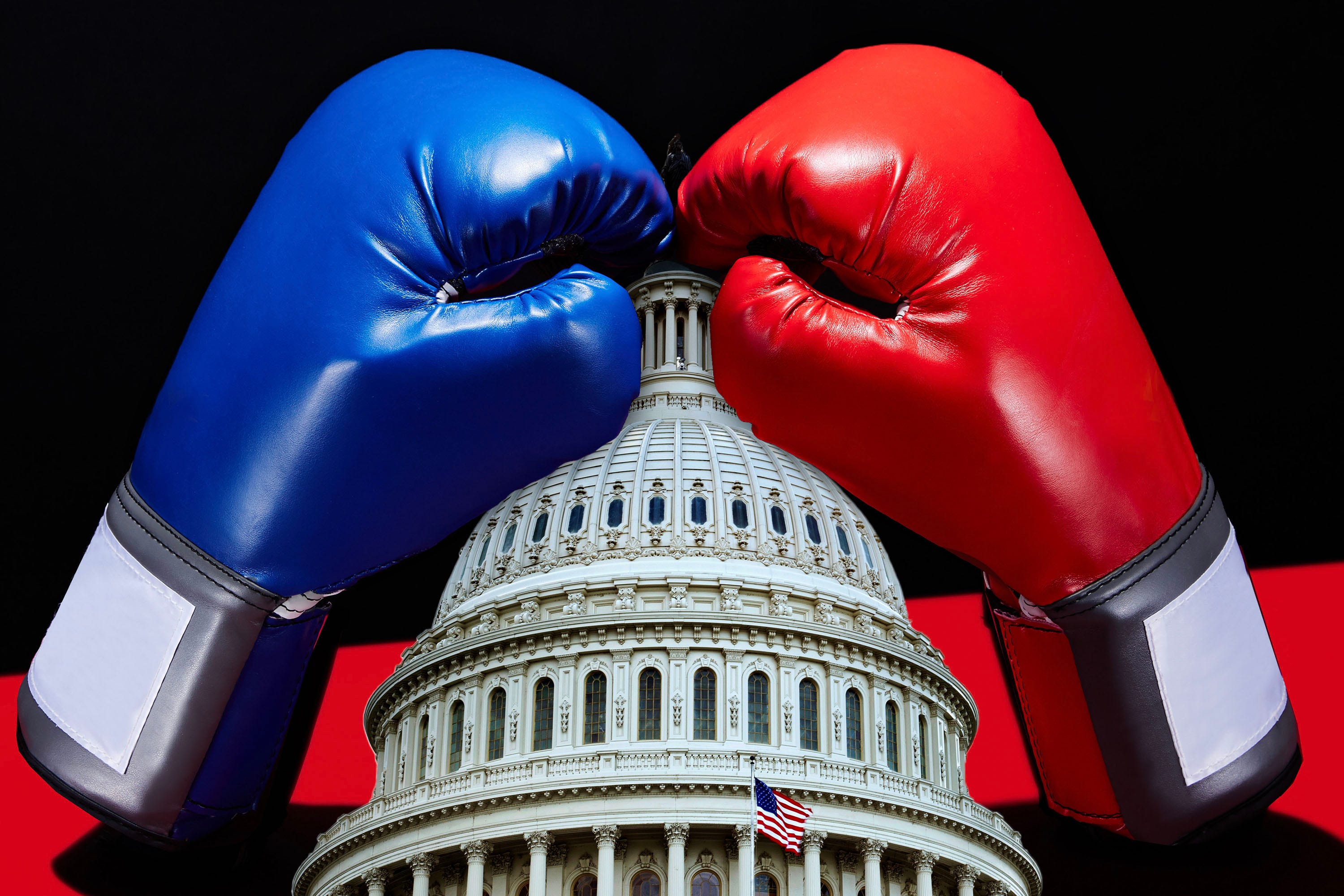
Last August, with Texas sprinting toward a Republican partisan gerrymander and California threatening to respond with a gerrymander of its own, I lamented that “Republicans and Democrats alike are dropping all pretense of high-mindedness and rushing to crank out the most screamingly lopsided gerrymanders their population maps can sustain.” Trump and the GOP had started this fight, “but voters in both red and blue states will be worse off for it.”
We hadn’t seen anything yet. This week’s Supreme Court decision in Louisiana v. Callais, which all but ended the legal mechanism of majority-minority districts across the South, promises to ratchet up our ongoing partisan redistricting total war to heretofore unimaginable levels.
There’s been plenty of end-of-democracy hand-wringing on the left over the Callais decision—some reasonable, some silly. There were good reasons why Congress felt the need to pass the Voting Rights Act in 1965 to protect black voters’ political franchise in the segregated South, where white politicians were then actively straining to dilute their power along explicitly racial, not merely partisan, lines. Still, there’s a reasonable argument to support Justice Samuel Alito’s conclusion that the way some courts had chosen to apply the VRA over the years had become preposterous—finding that if a state’s population could support a racial gerrymander creating a certain number of majority-minority districts, it was bound by law to do so.
But reasonable or unreasonable, the decision’s effect on the gerrymandering fight—if current trends continue—is going to be extreme. Freed from the legal regime that forced them to leave a number of Democratic districts in place, Southern Republicans will stroll easily into new districts that they will draw to take as many as nineteen formerly Democratic House seats.
Many Democratic groups are pledging to continue the fight-fire-with-fire approach they’ve carried out successfully over the last year. The voting-policy group Fair Fight Action is arguing this week that Team Blue could theoretically fight Republicans to a draw ahead of the 2028 elections by pushing hard for Democratic gerrymanders in seven additional blue and purple states: New York, Colorado, Oregon, Maryland, Wisconsin, Pennsylvania, and Minnesota.
“Democrats have a clear path to neutralize this GOP power grab if they want to take it,” Fair Fight Action’s Max Flugrath told the New Republic yesterday. “This is the ‘break glass in case of emergency’ moment for American democracy.”
Color me skeptical. Fair Fight Action’s proposal relies on a lot of cheerful assumptions about the outcome of the 2026 midterms, about various state legislatures’ willingness to knife fight, and about the ability of further mid-cycle gerrymanders to survive the courts. More than that, though, it shines a megawatt spotlight on the problem that Gerrymandering Total War has presented for the anti-Trump, pro-democracy coalition. You’re just never going to convince me—and more important, you’re never going to convince a critical mass of Americans—that the only way to save democracy in this country is by gerrymandering the shit out of every state that is willing to give Democrats an ounce of political power.
Many Democrats contend their hands are forced. They’d be willing to take up federal legislation to try to stop the gerrymanderers, or at least to take weapons out of their toolkit; the problem, they say, is that Republicans won’t support such measures.
But why stop trying? The gerrymandering tit-for-tat has grown so extraordinarily stupid over the last year, so bad for voters of both parties across the country—and it threatens to get so much worse in the years to come—that it seems the very least congressional Democrats could do is to strain to find some anti-gerrymandering measures on which there’s an appetite for bipartisan agreement. Incumbents hate regular re-gerrymanders, which scramble their districts and risk their long-term political prospects: the state of perma-redistricting that Gerrymandering Total War promises is something they regard with dismay. This is true of Republican incumbents too. Democrats should go kick their tires.
Maybe no such measures exist; maybe congressional Democrats would be banging their heads against the wall looking for them. But at least they’d be banging their heads against the wall in support of actual improvements. Simply gerrymandering as hard as Republicans are to fight them to a draw is an extraordinarily grim idea of a best possible Democratic—or democratic—future. We should all demand a little more.
The Lovely Month of May
by William Kristol
Cheer up. It’s May.
For one thing, this means it’s no longer April. And no less an authority than the formidable T.S. Eliot assured us back in 1922 that “April is the cruellest month.”
The month of April of 2026 had its cruelties. From Donald Trump’s executive branch to the Supreme Court to the Republican party in Congress and state houses, the assault on our liberties and our democracy didn’t let up.The replacement of Pam Bondi by Todd Blanche seems to be resulting in what President Trump intended—an even more vigorous weaponization of the Justice Department than before. The Supreme Court eviscerated the Voting Rights Act, and Republicans at the state level moved feverishly to alter the electoral playing field for November. The Republican Congress continued to be committed to not exercising its constitutional responsibility for matters of war and peace, and to getting more funds to ICE and the border patrol with no reforms of their practices.
And they’re not stopping. Trump may have to beat an ignominious retreat from Iran—but he could well try to compensate by invading Cuba or Greenland. The Republicans in Congress will try to jam through everything they can while they’re still in charge. The Trumpist kleptocrats in government will try to steal everything they can get their hands on. And the Trumpist apparatchiks will try to tighten their control over everything they can within the executive branch, and to intimidate everyone they can outside of the government, in business and the media and the private sector. In sum: Trump and his Republican party have plenty of levers for the exercise of authoritarian power and oligarchic greed, and they remain determined and ruthless in trying to exercise them.
So in that way, “April” is not over.
But one does have the sense, as we enter May, that the wind is finally in the Trumpists’ faces, not at their backs. Trumpism seems less fated to be triumphant than it has been.
As the polls show, Trump is weaker than he’s ever been as president. The Iran “excursion” has been a disaster—and while that’s bad for the country and the world, it has exposed him as a commander-in-chief who’s both reckless and feckless. Inflation is up and broader economic prospects aren’t great—and while that too is bad for the country, it’s also bad for Trump. And it’s bad for his party’s prospects in the midterms, which seem worse than ever, despite their efforts to try to alter the playing field in every way possible, as Andrew described above.
And it’s now increasingly possible to glimpse a world in which the authoritarian axis of Trump and Putin and Xi may not succeed in shaping events. Ukraine has held its own against Russia. Viktor Orbán was defeated in Hungary. Perhaps the future will be shaped by the patriotic liberalism of Volodymyr Zelensky and Peter Magyar.
Who knows? There are challenges a-plenty. But some things are looking up, and surely we’re entitled after the last eighteen months—the last ten years—to a moment of hope.
So on this first day of May, I turn away for at least a moment from the stern and gloomy visage of Eliot. I appeal instead to the good cheer of the lyricist and librettist Alan Jay Lerner and the composer Frederick Loewe, the pair who brought us so many great musicals, including My Fair Lady and Camelot.
For as Guenevere explains in Camelot,
Tra la, it’s May, the lusty month of May
That lovely month when everyone goes blissfully astray
Tra la, it’s here, that shocking time of year
When tons of wicked little thoughts merrily appear . . .
It’s mad, it’s gay, a libelous display
Those dreary vows that everyone takes
Everyone breaks
Everyone makes divine mistakes
The lusty month of May.
Perhaps this May could be the month when we succeed in forcing Trumpism and authoritarianism to go astray. Perhaps this May we could start to turn the corner away from a path to an authoritarian future. Perhaps this May we could begin to see ahead of us a future that, if not mad and gay, is at least decent and free.
AROUND THE BULWARK
The Free Speech Warriors Who Now Love Cancel Culture… As Trump once again calls for Jimmy Kimmel’s firing, many purported defenders of the First Amendment have betrayed their signature cause, observes CATHY YOUNG.
How Democrats Can Have a Better Conversation About Israel… It starts with asking better questions, writes former U.S. Ambassador to Israel DANIEL SHAPIRO.
‘Madman Theory’ Confronts a Real Madman… Pretend irrationality has long been a part of U.S. foreign policy. Now we have the real thing. BRIAN STEWART reviews James D. Boys’s new book on “madman theory” from Nixon to Trump.
The Fan-Driven Distribution Company… Legion M cofounder Jeff Annison on getting movie lovers in on the financial action, reports SONNY BUNCH on The Bulwark Goes to Hollywood.
SCOTUS Profoundly Changed Elections—Mid-Vote… KATE SHAW joins SARAH LONGWELL to explain Louisiana v. Callais, the final shoe to drop in the high court’s dismantling of the Voting Rights Act.
Quick Hits
OUT MEANS OUT: Casey Means is a wellness influencer, a MAHA-movement heroine, and an RFK Jr. ally—but she won’t be U.S. surgeon general. On Thursday, the White House abruptly yanked her nomination, replacing her with radiologist and Fox News contributor Dr. Nicole Saphier, a more unambiguously pro-vaccine choice.
Since her nomination, Means had raised eyebrows with her history of kooky new-age online content—think blogs about “full moon ceremonies,” “spirit guides,” and “plant medicine experiments”—but it was her halting testimony on vaccines in her Senate confirmation hearing that really doomed her nomination. While stating that “vaccines save lives,” Means repeatedly sidestepped questions about whether she would recommend Americans get vaccinated for measles and flu.
That was apparently enough to lose the vote of Sen. Bill Cassidy (R-La.), himself a physician and a vaccine advocate.1 In a Thursday Truth Social post, Trump blasted Cassidy as “a very disloyal person” for standing in the way of a “strong MAHA warrior”—but he ended up giving Cassidy what he wanted anyway.
Saphier will be Trump’s second nominee for surgeon general to be plucked from the ranks of Fox News. He was forced to withdraw his first choice for the position, Dr. Janette Nesheiwat, amid suggestions that she had embellished her résumé and credentials.
ONE NICE CHANGE: You know what senators and their staffs shouldn’t be doing? Insider trading on prediction markets. Interestingly, the Senate agrees. Here’s Politico:
The Senate Thursday unanimously voted to ban senators and their staff from trading on prediction markets, a practice that has come under growing scrutiny on Capitol Hill in recent months.
The resolution, spearheaded by Sen. Bernie Moreno (R-Ohio), prohibits senators and staff from using prediction markets. It goes into effect immediately.
“United States Senators have no business engaging in speculative activities like prediction markets while collecting a taxpayer-funded paycheck, period,” Moreno, who spearheaded the resolution, said in a statement.
Minority Leader Chuck Schumer, who supported the measure, called on House Speaker Mike Johnson to pass similar rules in the House—and said he would work to pass legislation constraining administration officials, as well.
Cheap Shots

Cassidy, you’ll remember, has been badly burned in the past by a MAHA nominee: Many of RFK Jr.’s first-year moves as HHS secretary, like his purge of a vaccine advisory committee, were direct betrayals of specific promises he’d made Cassidy to get his confirmation vote.
Fighting hard not to just simply post, "Shaddup, Egger!" =)
But in all seriousness, I do agree. We can't just gerrymander and re-gerrymander ad infinitum. We need to get a majority, and then we need to pass durable anti-gerrymandering measures everywhere. Make gerrymandering air-tight illegal all over the country. Tit-for-Tat is the way to get us to that majority, but it is not the way we should proceed.
I would like to point out that Democrats have kicked the tires on anti-gerrymandering and even passed a bill that included a ban on partisan gerrymandering on March 8 2019 and again on March 3 2021. Neither of these bills went anywhere because Senate Republicans weren’t interested. If you look at the states which passed independent redistricting commissions most were either blue or purple states with the exception of Florida but that was back in 2010 when the state was still electing Democratic presidents and senators. The state under Ron DeSantis has done everything to reverse what the voters passed. The failure of the good governance crowd and those working against gerrymandering failed to make their case convincingly Republicans. At the moment those arguments have lost the day, and hopefully not for ever, but they will need to convince Republicans and red states why that matters, and have to accept responsibility that their arguments in that regard failed.