Trump Is Right: The Filibuster Should Die
A broken clock is right twice a day. This time he’s right about a broken legislative process.


There are elections tonight, you may have heard. Not only will we get new governors-to-be in Virginia and New Jersey and a new mayor-elect in New York City, we will also get our first really clear sense of what direction the Democratic party is heading. Among the questions to answer: Will centrist Democratic candidates for governor prosper in Virginia and New Jersey? Will Virginians really cast ballots for a guy who fantasized about the murder of a Republican lawmaker and his children? Will congressional redistricting go forward in California? Exactly how excited are New Yorkers over the last-minute endorsements Andrew Cuomo received from [checks notes] Donald Trump, Elon Musk, and Stephen Miller? And, of course, can Bill Ackman literally tweet through a Zohran Mamdani victory—and how long will those tweets be?
We’ll be covering it live at 8:00 p.m. Eastern on YouTube and Substack, so please do join us. Happy Tuesday.
Down With the Filibuster
by Andrew Egger
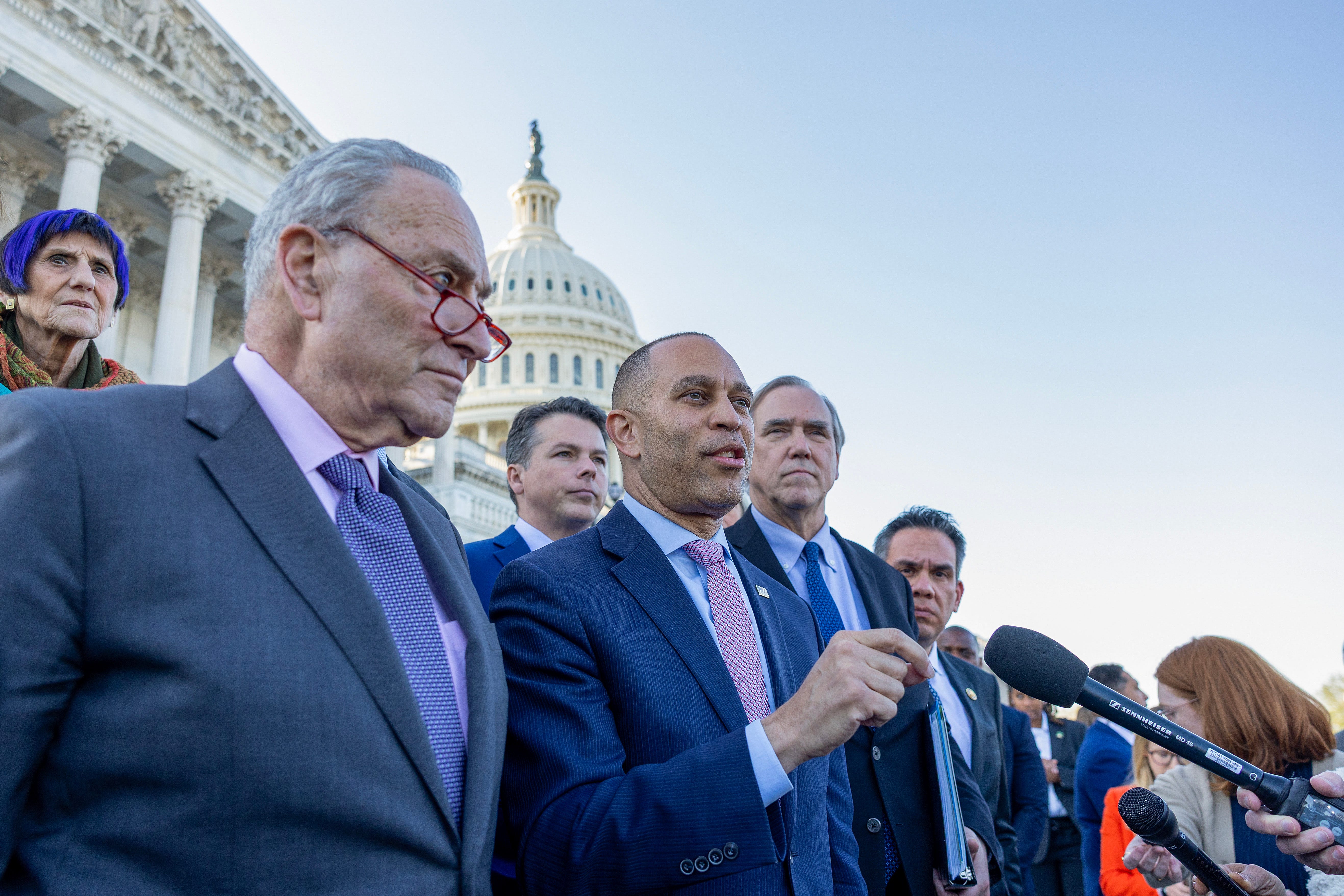
Donald Trump has his sights on the filibuster—ranting about it as recently as 8:21 a.m. this morning. The Senate’s longstanding convention requiring sixty votes to pass most legislation, the president grumbles, is a kink in the hose of his governing agenda, one that lets the Democratic minority stop most of the bills he wants to pass and even shut down the government by withholding their votes. His solution: Republicans should just abandon the filibuster altogether, which they could do pretty easily: All it takes is fifty votes.
Hey. When he’s right, he’s right.
In recent years, it has typically been progressives who have chafed at the filibuster. The 2021 book Kill Switch, written by Adam Jentleson, who served as a top staffer for Senate Majority Leader Harry Reid in the 2010s, laid out the argument: In Jentleson’s telling, the filibuster is a pointless vestigial mechanism that has never been good for anything but paralyzing lawmaking. Trying to pass legislation in the modern Senate is like trying to drive down the interstate with the emergency brake on.1
Many conservatives have long responded by saying: Yeah, buddy, that’s the point. Passing new laws should be a struggle even during single-party control of D.C.: Giving the minority at least a small say in shaping policy is a safeguard against the too-rapid, too-partisan reworkings of the U.S. code.
I’m a conservative myself, a believer in the virtues of slow, careful change. In other words, I am pretty much the target audience for this argument. But lately I’ve been wondering whether it’s been rendered obsolete by recent events.
When you look around the country right now, do you see a federal government whose policy regime is being held judiciously in check by minority-respecting Senate procedures? Of course not. Instead, Congress sits gridlocked and the president runs the country by fiat, helping himself repeatedly to powers that rightly belong to the legislature. He has claimed authority to set government spending levels wherever he likes, to levy any tariffs he likes, to commit acts of war against any country he likes, to decline to enforce laws of Congress (like the TikTok ban) whenever he likes. Gridlock has enervated our legislators, made them lazy: Trump might as well grab those powers; it’s not like we were using them anyway.
Meanwhile, the Senate’s filibuster-induced gridlock has given significant political cover to Trump’s Let’s just do it and be legends populist pitch. The jalopy that is Congress is struggling laboriously down the highway, fighting the brake, smoke puffing ominously from under the hood—and here comes Trump, saying, “Come on, baby, you ever been on a motorcycle?”
Other supposed benefits of the filibuster keep conspicuously failing to materialize. In theory, the sixty-vote legislative threshold is supposed to induce some bipartisanship. Meanwhile, we’re breaking the record for longest government shutdown.
There are better arguments for the filibuster—including that it does still frustrate some parts of Trump’s agenda. And of course this is the reason Trump wants to do away with it. But the filibuster constrains the president only in ways that are distorted and strange. The only major policy bills that make it through the Senate these days are passed via the odd auxiliary method of budget reconciliation, which lets the Senate dodge the filibuster for certain bills that deal with federal spending and revenues. In practice, this system perversely ties Trump and his lawmakers more closely together, since the only hope for getting anything significant passed is to graft it onto one of the major reconciliation packages, like the One Big Beautiful Bill, that the president spearheads and promises to sign.
Whatever Chesterton’s-fence conservatives like me might prefer, the era of swift, radical political change is upon us. So the question now becomes: Who will develop, deliver, and set the course of that change? Will it be Congress, or will it be the president? Speaking for myself, I’ve had my fill and plenty more of the latter option; I’d like to see a world where the legislators get a say—and with the voters getting to render their judgements every two (as opposed to four) years. And that means a world where we reevaluate the structures that have helped tip the balance of power so far toward the executive. Maybe there was a time when Congress getting too muscular with its lawmaking was a real political concern. That’s not the situation in which we find ourselves today.
In a fight between Donald Trump and Senate Majority Leader John Thune, I’d take the Thune side 99 times out of 100. But when it comes to the filibuster, Thune is a general fighting the last war. Why not take a little power back for Congress, John? You’re the ones who are supposed to have it in the first place.
Dick Cheney, 1941–2025
by William Kristol
Dick Cheney—a man I admired and was proud to consider a friend—has died at age 84. I honor his life, and mourn his death.
And what a life! He held so many positions of the highest responsibility in our government, and he carried them out with conviction and distinction—and without vacillation or timidity.
When I heard the news this morning, and saw the immediate praise and critiques springing forth on social media, I thought of this famous passage from Teddy Roosevelt’s “Citizenship in a Republic” speech of April 23, 1910:
It is not the critic who counts; not the man who points out how the strong man stumbles, or where the doer of deeds could have done them better. The credit belongs to the man who is actually in the arena, whose face is marred by dust and sweat and blood; who strives valiantly; who errs, who comes short again and again, because there is no effort without error and shortcoming; but who does actually strive to do the deeds; who knows great enthusiasms, the great devotions; who spends himself in a worthy cause; who at the best knows in the end the triumph of high achievement, and who at the worst, if he fails, at least fails while daring greatly, so that his place shall never be with those cold and timid souls who neither know victory nor defeat.
Dick Cheney was a strong man, a doer of deeds, one who strove valiantly in the public arena. He always strove to act with firmness in the right as God gives us to see the right.
There will be much discussion and analysis and debate over Dick Cheney’s long and remarkable career in the days and weeks to come—a career that saw him go from a very young White House chief of staff to Wyoming’s lone House member to U.S. secretary of defense to the most influential vice president in our nation’s history.
And then, near the end of his life, when it seemed his public career was over, with the free government to which he had devoted his life under attack, Dick Cheney stepped back into the arena. At a time when many lost their voice, he was courageous and clear in his denunciation of the man and the movement that now threatens the well-being and future of the nation he loved.
Beyond all the great public issues in which he was engaged, what always struck me about Dick was his deep love of his family and his abiding loyalty to his friends. I offer sincere condolences to Lynne, Liz, and Mary, the rest of Dick’s family, and to those who were close to him.
May his memory be a blessing.
AROUND THE BULWARK
Join Us Tonight—LIVE! Starting at 8:00 p.m. Eastern, SAM STEIN will host a rotating cast to discuss today’s elections, and at 9-ish p.m., TIM, SARAH, and JVL take over! Watch on Substack or YouTube. We’ll send out an email as the gang goes live.
Groyper War Consumes the Biggest Right-Wing Think Tank… In False Flag, WILL SOMMER has an update on the fallout from Tucker Carlson’s interview with Nick Fuentes, including at a pillar of the MAGA right.
Threatening Nigeria? Withdrawing from Romania?… Trump’s meandering on the world stage isn’t leadership, it’s dangerous, writes MARK HERTLING.
Big Law’s Big Choice… A D.C. Bar opinion shows why it would be ethical for the law firms that settled with Trump to rescind those agreements. PAUL ROSENZWEIG explains.
Trump’s White House Fired Prosecutors… for Telling the Truth! GEORGE CONWAY explains it all to SARAH LONGWELL.
Fake News on 60 Minutes... CBS News heavily edited its aired version of the 60 Minutes interview with Trump, not only removing his lies about 2020 but also conveniently cutting the part about how the network paid him off for his bogus lawsuit over a Kamala interview last year. BILL KRISTOL joins TIM MILLER to discuss on the flagship pod.
Is American Education Getting Dumber? The Atlantic’s IDREES KAHLOON joins MONA CHAREN to discuss the worrying learning losses of the past decade and some signs of hope on The Mona Charen Show.

Quick Hits
KEEPING THE CHIPS HOME: It’s that rarest of stories: The foreign-policy hawks of Trump’s cabinet banding together to talk him out of a deal he and his new Silicon Valley buds wanted to strike. In this case, the deal was to greenlight sales of cutting-edge Nvidia AI chips to China. What could possibly go wrong? The Wall Street Journal reports:
Shortly before President Trump met Chinese leader Xi Jinping in South Korea, an urgent issue emerged. Trump wanted to discuss a request by Nvidia Chief Executive Jensen Huang to allow sales of a new generation of artificial-intelligence chips to China, current and former administration officials said.
Greenlighting the export of Nvidia’s Blackwell chips would be a seismic policy shift potentially giving China, the U.S.’s biggest geopolitical competitor, a technological accelerant. Huang—who speaks to Trump often—has lobbied relentlessly to maintain access to the Chinese market.
As they prepared to meet Xi, top officials including Secretary of State Marco Rubio told Trump the sales would threaten national security, saying they would boost China’s AI data-center capabilities and backfire on the U.S., the officials said.
Trump ultimately agreed not to bring up the chips in his conversation with Xi, then doubled down on the new position over the weekend. “We don’t give that chip to other people,” he told reporters of Nvidia’s most advanced Blackwell chip.
WELCOME BACK, JAY JONES: Here’s an election story we missed over the weekend: After weeks of keeping their embattled attorney general nominee at awkward arm’s length, Virginia Democrats fully re-embraced Jay Jones over the weekend, with Jones appearing as a warmup act for gubernatorial nominee Abigail Spanberger and former President Barack Obama at a campaign-climax rally in Norfolk Saturday.
Jones’s campaign was upended last month when National Review reported on insane text messages he sent to former colleagues in the Virginia House of Delegates in 2022, in which he fantasized about shooting the state’s Republican speaker, Todd Gilbert, and discussed his wish for Gilbert to see his children murdered: “Only when people feel pain personally,” he wrote with ludicrous sanctimony, “do they move on policy.”
This is the person Spanberger and Obama felt comfortable enough to bring quietly back into the fold over the weekend, to put before their voters as their pick to run law enforcement operations in the state?
This re-embrace might be slightly more understandable if Jones’s opponent were some sort of bottom-feeding MAGA reprobate. But he isn’t. Jason Miyares has been a solid attorney general for Virginia, even crossing Trump on his purity-test issues of the 2020 election (which Miyares acknowledges Biden won fairly). The big closing knock Democrats have against him is that he failed to sign on to a lawsuit brought by other states to force the Trump administration to keep food stamps funded during the shutdown. Okay—and Jones wants to see children murdered. It’s a toughie!
Polling in the attorney general race swung hard in Miyares’s favor after Jones’s scandal broke, but has inched back toward a tossup in recent weeks. Either Democrats like Spanberger are ready to re-embrace a candidate who has a shot of winning them a race or they’re too spineless to keep Jones at a distance if they might get blamed for costing him his chance at a comeback. Either way, it stinks. At a moment when it would be extremely nice to have at least one party drawing bright lines about political violence in America, it’s dreadful to see Virginia Democrats (and former presidents!) failing what should be an extremely easy test.
MEET THE PRESS: The Pentagon’s press corps underwent a radical transformation last month after every reasonable outlet turned in their badge rather than sign on to Defense Secretary Pete Hegseth’s list of demands about where they could go and what they could cover. But now, we have a new reporter on the scene, one known to dabble a bit in the world of the absurd and for going aggressively at administration officials she doesn’t like. Yes, she is facing accusations of pay-to-play reporting. But she’s also gotten a few folks fired. Ladies and gentlemen, the newest Pentagon correspondent, as scooped by the Washington Post:
Laura Loomer, the far-right political activist and former congressional candidate in Florida, has been credentialed to cover the Defense Department, according to one person familiar with the matter, joining a new cohort of right-wing media that have agreed to the Pentagon’s new press policy.
Loomer, 32, has forged a close alliance with President Donald Trump, routinely meeting with the president in the Oval Office during his second term. She has frustrated some in the administration with her proximity to Trump and public criticisms of high-ranking defense and national security officials who she argues are disloyal to Trump — some of whom have been dismissed soon after her rebukes.
THE DEMOCRATIC PROCESS: Yesterday, Rep. Jesus “Chuy” Garcia (D-Ill.) made an unexpected announcement: He won’t seek re-election next year to the seat he has held since 2019. But the timing of his announcement was highly suspicious. He announced it just as a deadline passed for other candidates to jump into the race, with only one other person having mystically gotten the memo that it might be a good idea to file to run in time: Patty Garcia, his chief of staff.
Hey, why let the voters have a primary when you can just handpick your own successor, right? “This is gross and why people hate politics,” Democratic operative Lis Smith wrote on X. “Chuy ran as a man of the people, but he’s acting like a cog in the machine.”
So there you go: conclusive evidence that despite Democrats’ lofty rhetoric about democracy they’re actually just as bad as—sorry, wait a minute—I’m getting some more news here in my earpiece. It appears Rep. Andy Ogles (R-Tenn.) is arguing that Congress should invoke the Fourteenth Amendment to bar Zohran Mamdani from taking office if elected today. So I guess there’s still some differences between the parties after all.
Cheap Shots

Note that the argument I’m making here applies to the legislative filibuster; there are different arguments to be had about the use of the filibuster in, say, judicial confirmations.
Dick Cheney was a man who fought for unchecked executive power his entire life, only to turn around in shock when Trump came along and say "oh no I didn't mean that!"
We are living in the world he created.
My condolences to his family, and especially to Liz Cheney, who has met the moment.
But I'm not sorry to see the back of Dick Cheney.
Andrew could not be more wrong about the filibuster. The tool isn't the problem, it is the people. Getting rid of the tool doesn't fix the real problem. Plus, does he really think that Congress will start to exert some power over Trump if they got rid of this tool? That seems a bit far-fetched considering how they've acted so far.