Two More Giant Ls for Trump
In Iran, in the Senate, and in court, the losses are piling up.


The war in Iran is going badly, and the PR war to sell it at home isn’t faring much better. RealClearPolitics’s polling average on the subject finds Trump an average of 9.9 points underwater when it comes to the war, with 41 percent approving and 51 percent disapproving. But maybe there’s a bright side for the president: At least that’s better than his generic approval rating, which is 15.4 points underwater in the RCP average. The mission is simple: First, they’ve just got to make the president as popular as his war is. Happy Friday.
The Only Play They Know How to Run
by Andrew Egger
The war in Iran is still at the top of everyone’s mind—and with good reason. But over the last twelve hours, the White House has suffered major defeats across a series of other important fronts.
The DHS shutdown is nearing an end, and it was the Republicans who blinked first. Overnight, Senate Republicans abruptly agreed to the offer Democrats have extended for weeks: full funding for everything in DHS except for ICE and parts of the Customs and Border Protection.
Republicans will try to pass ICE funding as part of a party-line budget reconciliation package later, and it remains unclear whether Democrats will be able to extract any of the ICE enforcement reforms they’ve been seeking. But the Republican capitulation is a significant win for the minority—particularly since President Donald Trump spent much of the last week haranguing his party to reject all deals and blow up the filibuster to pass DHS funding without Democratic support instead.
Just hours before, on America’s other coast, a federal judge delivered the White House another stinging blow, ruling that it appeared to have wildly overstepped its authorities when it attempted to label the AI company Anthropic a supply-chain risk.1
In her ruling, Judge Rita Lin temporarily blocked the government from enforcing its designation as the case continues in court, offering a harsh assessment of the administration’s behavior as she did so: Anthropic, she wrote, appeared to have been “punished for criticizing the government’s contracting opinion in the press.” Even as the government reached for the most powerful tool it could find to punish Anthropic, it hadn’t even bothered to perform the basic compliance tasks required by the laws governing supply-chain risk designations.
“Nothing in the governing statute,” Lin wrote, “supports the Orwellian notion that an American company may be branded a potential adversary and saboteur of the U.S. for expressing disagreement with the government.”
These two losses for the White House—on the DHS negotiations and on Anthropic—have a lot in common. In both cases, the administration held many if not most of the cards. But in both cases, it ended up falling on its face due to an unfortunate combination of sloppiness, hubris, and magical thinking.
As DHS negotiations played out in the Senate, the White House could have played a substantial role, trusting that senators would follow the president’s lead if he entered into the negotiating process. Instead, he remained on the sidelines, only popping out periodically to blow up tentative deals as they emerged: “I think any deal they make,” he said Tuesday, “I’m pretty much not happy with it.”
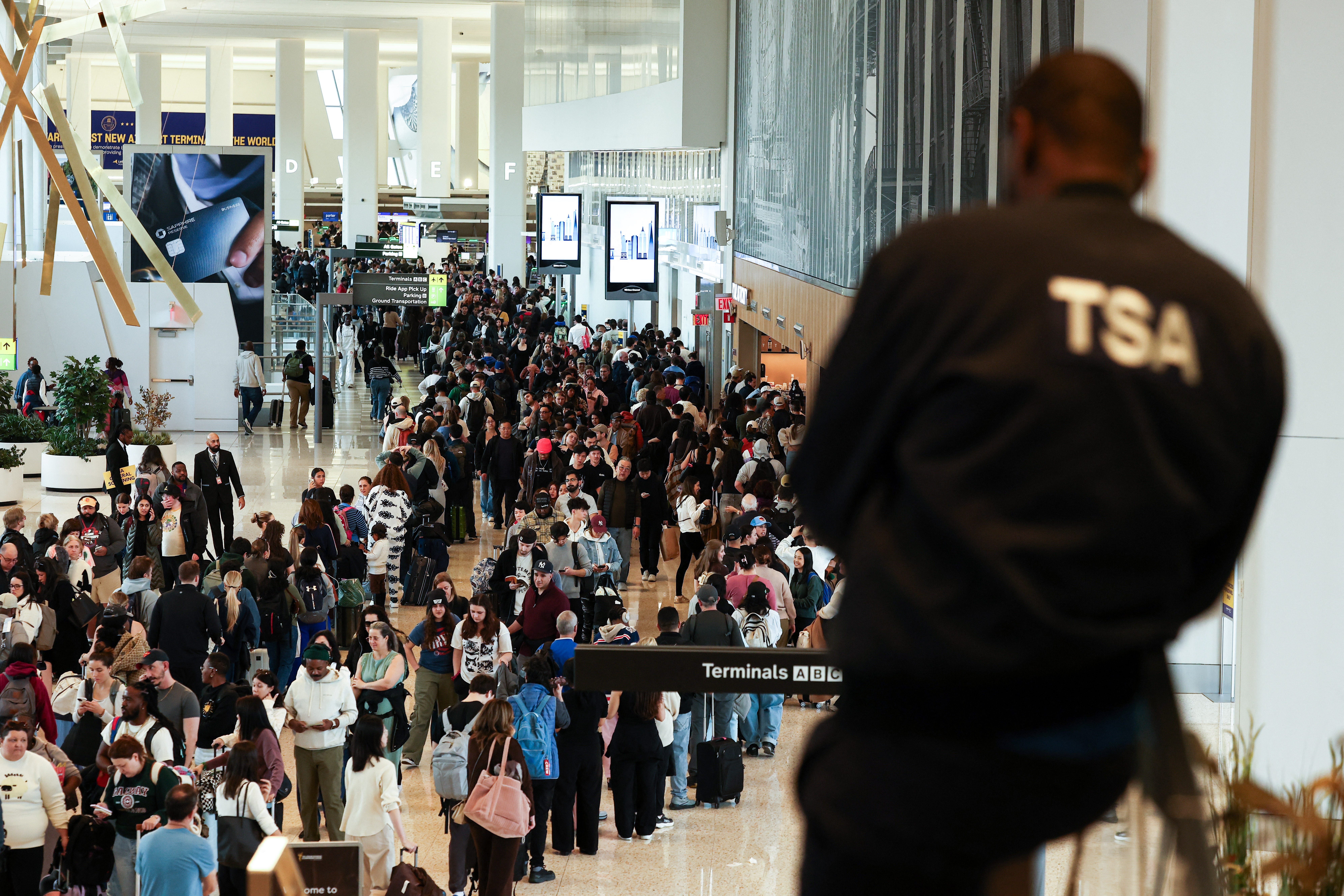
Meanwhile, Trump maintained a steady drumbeat of preposterous public “suggestions” for Republican negotiators: They were wasting their time dealing with Democrats at all, and should simply blow up the filibuster. Or, alternatively, they should keep squeezing the Democrats until they agreed not only to fully fund DHS, but to pass his top legislative priority, the SAVE America Act. The pressure was going to get to Democrats, Trump suggested, because the public was blaming them for the growing chaos at American airports as TSA agents went unpaid. But also, Trump suggested out of nowhere last night, he was going to take care of that too: He claimed on Truth Social that he was signing an “order” (details unclear) directing DHS to pay TSA agents even without congressional funding.
None of this, obviously, added up to anything resembling a coherent political strategy. So it’s not surprising that Senate Republicans, finally despairing of any deal that would bring Democrats and the White House even provisionally together, ultimately threw up their hands and just accepted the compromise Democrats had offered all along.
The Anthropic matter was the same. The Pentagon relied heavily on Anthropic’s AI models, but its usage redlines were a fly in the ointment. Hegseth and Co. could have continued to pressure Anthropic to ease those redlines over time while still reaping the benefits of their partnership. Instead, they got in their feelings, striking a NOBODY tells US what to do posture and trying to make an example of the company.
This rash vindictiveness was always unlikely to hold up in court. And at oral argument Tuesday, it was clear that Hegseth’s personal behavior had made the problem worse: The government, which was already on very shaky legal ground, was forced to argue at length that Hegseth’s imprecise tweets on the matter (“Effective immediately, no contractor, supplier, or partner that does business with the United States military may conduct any commercial activity with Anthropic”) were of no legal effect and should essentially be ignored by the court. The judge was skeptical.
Again and again, it’s the same story. Trump presides over an administration built in his image: Careless, thoughtless, blunderous, sloppy, arrogant, and foolish, it approaches every situation as a squeeze play no matter how many such squeezes blow up in its face. It isn’t just helping itself to the strategies of an authoritarian playbook. It is authoritarian in its bones, and so finds itself unable to try anything else.
Trump seemed more agile, more canny, more inventive in his first term. Agree or disagree? Tell us why.
The View from Inside the Government: Yikes.
by Catherine Rampell
Federal workers are increasingly afraid to report lawbreaking that might2 be happening in the executive branch. That’s one damning revelation from the latest survey of U.S. civil servants, which showed that less than a quarter of government workers believe they “can report a suspected violation of a law, rule, or regulation without experiencing retaliation.”
For more than twenty years, the Office of Personnel Management has fielded an annual, legally mandated survey of federal workers. Its results are used to measure organizational performance across government departments and agencies via questions about morale, merit, training, sense of mission, etc.
Perhaps unsurprisingly, the Trump administration canceled the 2025 survey. But a version of it ran anyway, fielded by the Partnership for Public Service, a nonprofit focused on improving the civil service. The results, collected from 11,000 workers across the government, are pretty abysmal. The numbers reveal a “layer cake of trauma,” as Max Stier, the nonprofit’s CEO, put it.
Which makes sense. Office of Management and Budget Director Russell Vought once promised to put federal workers “in trauma.” Vought, DOGE, and a series of corrupt and/or moronic leaders have more than succeeded in their mission. Morale is in the toilet across the government.
But the damage extends far beyond the psychological wellness of the federal workforce. As the chart above shows, there was not a single large department or agency where a majority of respondents said they could report lawbreaking freely last year. That is in sharp contrast with 2024, when at least two-thirds of every department/agency said they could do so.
Other findings were damning, too. For example, government-wide, only about one in ten workers said their own organization’s political leaders maintained high standards of integrity. Even in the military, the share of civil servants saying their political leaders (such as Secretary Pete Hegseth) have integrity is extremely low.
These responses were collected in November and December of last year; can you imagine taking the country to war if this was the prevailing view in the Pentagon?
The wording for this question changed slightly from the survey the prior year—in 2024, the question asked about the integrity of “senior leaders,” not “political leaders”—but here are the two years side-by-side for a rough comparison.
And lest you think workers are simply cranky because DOGE drained the swamp and made everything more efficient, civil servants do not appear to agree. When asked what happens to poor performers in their unit, half reported that they “remain and continue to perform.” That’s a higher share than was the case in 2024.
You can dig into the data yourself here.
AROUND THE BULWARK
DOGE Targeting Nuclear Safety Brings Back Memories of Three Mile Island… I was a reporter on the ground during the 1979 nuclear crisis—and news of DOGEbros messing with nuclear regulation is setting off familiar klaxons in my mind, writes JILL LAWRENCE.
Trump Has Made a Historic Mistake… Former Vice-President AL GORE joins TIM to explain why Trump’s judgment has been bad on so many things but even worse on climate change.
We Sat Through a Painful Trump Cabinet Meeting So You Don’t Have To… On Bulwark Takes, ANDREW EGGER and SAM STEIN watched an hour-and-a-half long Trump cabinet meeting, and it was a mess.
Quick Hits
MEDIA LAPDOGS: Yesterday, Donald Trump assembled his crack squad of cabinet lackeys for a public meeting full of the usual mix of presidential hero-worship and insane pronouncements about the most important matters facing the nation and world. In Sam and Andrew’s video breaking the cabinet meeting down, there was one thing they didn’t discuss: the ludicrous behavior of the reporters the White House had on hand to ask questions.
Last year, you’ll recall, the administration seized the role of picking which reporters get to participate in the daily press pool that covers the president away from the White House Correspondents’ Association, larding the pool up with goofball right-wing hacks. These were on full display yesterday.
At one point, a reporter asked the president whether he would follow up his rule banning commercial driver’s licenses for some immigrants with a similar order for cab and rideshare drivers: “As someone who takes a lot of Ubers, a lot of my drivers can’t speak English.” After Trump told a long, rambling tale about the Sharpies he uses to sign bills, another reporter told him excitedly: “I actually just looked up the company that owns Sharpie, and their stock went positive after you mentioned it.” (In fact, Newell Brands—which owns Sharpie, a tiny part of its portfolio—lost 2.5 percent of its value amid a broader stock-market slump yesterday.)
With everything going on in the world, you might hope the president would at least have to face tough questions from the people’s representatives in the media. Instead, we get a clown show on both sides of the press line.
ABOUT THAT ‘PRIZE’: Trump’s dribbling lunacy and obsequious MAGA-media questions weren’t the only things to come out of yesterday’s cabinet meeting. We also got some clarity on the matter of the “very significant prize” that Trump said Iran had given the United States on Tuesday, much to the confusion of pretty much everybody.3
What was the “prize”? A handful of ships that Iran had consented to let through the Strait of Hormuz Monday—as they have pretty much every day since the crisis began. “They said, to show you the fact that we’re real and solid and we’re there, we’re going to let you have eight boats of oil, eight boats, eight big boats of oil,” Trump said. “They were real, and I think they were Pakistani-flagged. . . . It ended up being ten boats.”
A trickle of vessels have moved through the strait every day since Iran closed the key waterway, with Iran acting as the sole arbiter of which ships can transit and which cannot. Iran has moved its own vessels and waved through some associated with friendlier nations, with reporting suggesting some ships are paying Iran a toll payment of as much as $2 million to buy their safe passage:
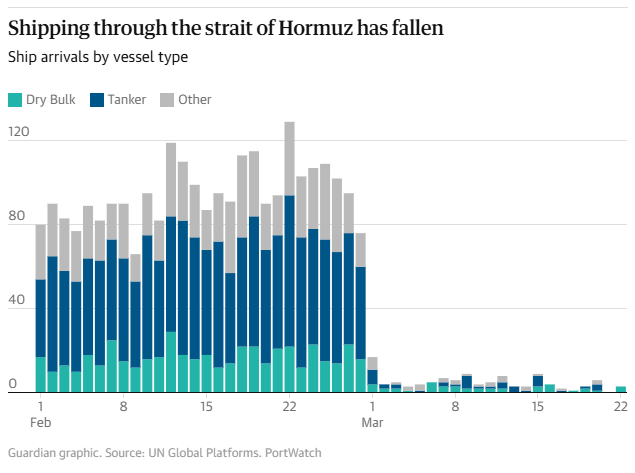
Why Trump would make such a commotion over one particular handful of these ships, or see it as a negotiating thaw rather than business as usual in the Iran-controlled strait, remains unclear.
ON THE MARCH: Another day, another Wall Street Journal report of the White House moving additional troops to the neighborhood of Iran:
The Pentagon is looking at sending up to 10,000 additional ground troops to the Middle East to give President Trump more military options even as he weighs peace talks with Tehran, Department of Defense officials with knowledge of the planning said.
The force, which would likely include infantry and armored vehicles, would be added to the roughly 5,000 Marines and the thousands of paratroopers from the 82nd Airborne Division who have already been ordered to the region.
It is unclear where precisely forces will go in the Middle East, but they will likely be within striking distance of Iran and Kharg Island, a crucial oil export hub off Iran’s coast.
Cheap Shots

We’ve written extensively about the administration’s standoff with the Anthropic, but here’s a quick refresher. Over the past two years, the Pentagon has come to rely heavily on Anthropic’s models, especially in classified settings. But recently, Secretary Pete Hegseth became irritated with Anthropic’s insistence that the military stick to certain contractual redlines: no AI-powered autonomous lethal weapons systems or mass domestic surveillance. He demanded Anthropic drop these stipulations, and when Anthropic would not, he retaliated harshly, tearing up the Pentagon’s Anthropic contract and—more shockingly—reaching for a little-used and expansive security authority to try to ban Anthropic from doing business with other defense contractors by labeling the company a “supply chain risk.”
lol
The full quote: “They did something yesterday that was amazing, actually. They gave us a present and the present arrived today. It was a very big present, worth a tremendous amount of money. . . . It was a very significant prize, and they gave it to us.”
My wife, who has tried to keep her sanity by ignoring Trump, finally summed it up after reading today's news in the NYTs and on her phone; "What a disgusting human being...except for the human being part". Get everyone you know out to No Kings tomorrow. THANK YOU FOR YOUR ATTENTION TO THIS MATTER!
I’d say that the President’s decision to escalate our presence in Iraq, with troops on the ground and increasing their number, shows that he has forgotten the most basic lesson of Vietnam. But he’d have to be smart enough to have learned it in the first place. We see no evidence of that.
Everything we’ve witnessed so far tells us that the only thing he knows (er, believes) is that if you bomb the enemy hard enough and often enough, everything will work out just fine in the end. But the true takeaway from Vietnam was that if the enemy can wait you out long enough, they will win, because they know that someday we will have to go home. They can drain our armaments and oblige us to overspend our vast wealth and turn public opinion until someday the war ultimately becomes an unwinnable battle. Our current leader seems fundamentally ignorant of this most basic lesson from our biggest military and political quagmire, one that happened in our lifetime. There are no excuses not to be aware. Yet here we are, going down those same roads yet again but expecting a very different outcome. As some of our longtime (former?) friends elsewhere might say: not bloody likely, mate.
The President is breaking it. We all own it. The rest of the world pays a price for something it did not seek to buy. MAGA begins to feel the pain, even if they won’t admit it or place the blame where it belongs. They were warned. They chose not to listen. Placed into the increasingly thick and heavy file of: “Choices and Consequences, Trump.”