Why Aren’t Dems Going After Trump’s Tariffs?
They don’t work and Americans hate them. Layup.


Rep. Marjorie Taylor Greene’s “f— it, we ball” tour continues! In a CNN interview last night, the former diehard Trump ally took swing after swing at the president. She called his lunatic post about murdered director Rob Reiner “absolutely, completely below the office of the president of the United States,” “classless,” and “just wrong.” She suggested he lacks empathy for economically uneasy Americans: “When he looks into a camera and says affordability is a hoax and just totally tries to make nothing out of inflation, he’s talking to Americans that are just suffering.” And she took aim at his air of invulnerability with the GOP base: “I think the dam is breaking. . . . Lame duck season has begun.”
Will all this hurt Trump? Or will the venue for Greene’s attacks—a series of suddenly sympathetic mainstream media platforms—burn down her own credibility with the MAGA base faster than Trump himself ever could? Guess we’ll see. Happy Wednesday.
Time To Twist the Knife on Tariffs
by Andrew Egger
Donald Trump sees his tariffs as an economic panacea that will supercharge the economy, pay down the national debt, and breathe new life into the manufacturing sector.
But in the eight months since “Liberation Day,” they’ve done the opposite. The economy is stagnant. The federal debt keeps growing. And yesterday, the Bureau of Labor Statistics reported that the economy lost manufacturing jobs for the seventh straight month.
Trump’s tariffs are a bust. So why do Democrats seem oddly reluctant to twist the knife?
In one sense, Democrats are spending a lot of time these days talking about Trump’s tariffs. But they tend to do so broadly and obliquely—passing over the specific issue of the trade wars to talk in more general terms about Trump’s failure to deliver on affordability. There are plenty of reasons for this. Some Democrats, particularly in the upper Midwest, still have a protectionist streak themselves: They might not like these tariffs, but they’re not opposed to tariffs in principle. And at any rate, talking about tariffs is wonkier and more complicated than talking about rising prices.
“People know tariffs raise costs. Costs are the overriding issue,” Democratic strategist David Axelrod told The Bulwark last week. “You don’t [have] to be the master strategist in this one.”
There’s little doubt that Trump’s tariffs are damaging him politically, even without Democrats’ help. They may be tempted to simply sit back and watch it happen. But it’s unclear just how poised Democrats are to benefit from Americans’ tariff remorse. Writing in the Argument last week, Lakshya Jain noted that while voters don’t like how Trump is handling the economy, many “simply aren’t sold on Democrats as the alternative.” Despite Trump’s flailing on the issue, Jain pointed out, Democrats are still having a harder time reaching voters who say that cost-of-living is a top-two issue than with voters who don’t.
This is hardly surprising: It wasn’t long ago that voters turned hard against Democrats as inflation flared out of control on Joe Biden’s watch. But what better way to get that bad taste out of voters’ mouths than by declaring war on Trump’s most preposterous economic policies?
One of the most resounding lessons Democrats learned—or, at least, should have learned—from 2025 is that they have more agenda-setting power when opposing Trump than when trying to cooperate with him. Trump and congressional Republicans are still flailing in the face of expiring Affordable Care Act subsidies, which they have repeatedly refused to renew while failing to put forward a workable replacement plan. Millions of Americans are set to see their health-insurance premiums spike in a matter of days. All this has damaged Trump and been a political win for Democrats.
On messaging, at least, Democrats came out ahead after the last shutdown battle. So with government funding again just weeks from expiring, why not move on to another pain-point issue? Why not refuse to fund the government unless Republicans agree to claw back some of Trump’s economy-killing tariffs?
While Democrats seem to be gliding toward huge wins in next year’s midterms, there’s one possible event that could do major damage to their prospects. If the Supreme Court rules in the weeks ahead that Trump’s tariffs are broadly unconstitutional, it would change the economic landscape of the country immediately—not only taking a pillow off the face of the economy, but giving it a massive adrenaline shot in the form of corporate refunds for tariffs collected so far.
Even if Trump were to try to put tariffs back in place under other emergency authorities—as he and his allies have suggested they’d do—they’d still likely be obliged to return more than $100 billion in duties collected this year. And if the Court is willing to push back on Trump’s tariff-authority claims in one area, they may be willing to do the same in others.
The result could be a world where the economy escapes Trump’s tariffs despite his best efforts—and where, as Catherine Rampell has written, Trump perversely reaps the political reward, standing to take credit for a suddenly “HOT” economy even when he was the one singlehandedly keeping it cold before.
In a world where this outcome is a real possibility—and it sure seems like it is—then “cost talk is better than tariff talk” suddenly becomes terrible advice for Democrats. They should be out there screaming from the rooftops that it’s the trade wars that are responsible for America’s economic malaise. If the Supreme Court ends up saving the economy from Trump’s tariffs, Democrats will need to convince the electorate that the Court saved them from Trump. The best time to start would have been months ago. The second-best time is right now.
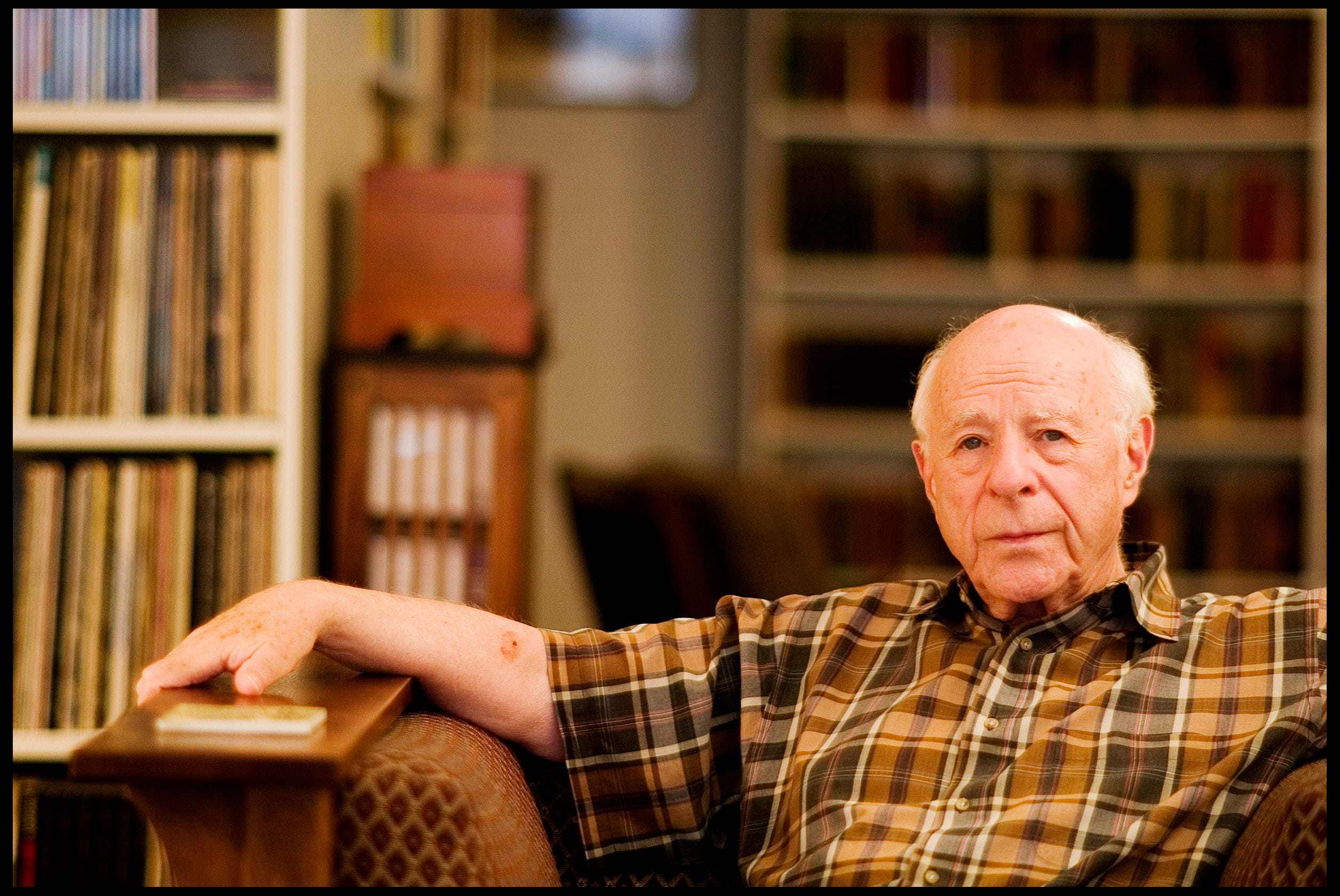
Norman Podhoretz, 1930–2025
by William Kristol
Norman Podhoretz—perhaps the last of the New York intellectuals, one of the great magazine editors of our time, a gifted and powerful writer—died last night at age 95. His son John reports in his lovely eulogy that he died peacefully, “with a new translation of The Odyssey on his desk that had been sent to him by his friend Roger Hertog. It sat next to a copy of Alexander Pope’s legendary translation, which he had asked my sister Naomi to order for him so he could compare the two.”
I would have liked to hear Norman reflect on the relative merits of the Homer of Alexander Pope and of Daniel Mendelsohn. He would certainly have had interesting thoughts, most likely idiosyncratic ones. He surely wouldn’t have been bashful in judging the work of the translators—or for that matter, in judging the work of Homer himself.
Norman Podhoretz was perhaps best known for his firm judgments, expressed powerfully and compellingly. He was a leading and unapologetic participant in the war of ideas—actually, in several wars of ideas. I’d point in particular to his engagement on three fronts: the Cold War, Israel, and America.
Defending the necessity and justice of fighting the Cold War was more controversial in the 1970s and 1980s than we now tend to remember. Norman was an unwavering and unapologetic Cold Warrior, and he emboldened many of us to stay the course in that fight. And not only here in the United States. Many former dissidents from the Soviet Union and Eastern Europe have volunteered how important Norman’s articles, and the pieces he edited and published in Commentary, were to them in their struggle.
Speaking of Commentary, I should say that Norman’s tenure there from 1960 to 1995 ranks as one the most distinguished and important magazine editorships in our history. Take a look at some issues from that period. What a combination of argument, polemic, criticism, and appreciation! And at what a high level!
Norman and Commentary were of course well known as leading voices in making the case for Israel. Norman’s own contributions were distinctive, forceful—and crucial. The defense of Israel was controversial fifty years ago. It remains so today. Which is why his contributions, as writer and editor, were so important.
And Norman was a proud defender of America. His own odyssey from left to right began with a revulsion at what he saw as the left’s anti-Americanism in the 1960s. From then until the end of his life, he went to war for American decency and greatness when that cause was by no means popular in intellectual circles.
But Norman was more than a warrior for ideas. He was a man of ideas. As John put it, “At the very end of his life, Norman Podhoretz was his truest self, a man of letters.” Which meant that even if you didn’t always agree with him, you could always learn something from him, and from the magazine he edited with such distinction.
When I think of Norman, though, I won’t think first of his writing, or his editing, or his many contributions to our public life. I’ll think of him as a friend. And I’ll remember especially the wonderful Passover seders hosted by his daughter Rachel, which would culminate in Norman and Midge agreeing to sing the remarkable Yiddish song, “What Will Happen When the Messiah Comes?” This conclusion to the Seder, at once joyful and melancholy, is a memory Susan and I, and our children, will always cherish.
I don’t know what will happen when the Messiah comes. I am sure that if and when he comes, Norman will be grateful. But he’ll also have many challenging questions. He’ll make some combative arguments. What a scene that will be!
But until then, may Norman’s memory here on earth be a blessing.
AROUND THE BULWARK
Mike Johnson, Speaker Irrelevant… The atrophied chamber is moving legislation without GOP leadership’s blessing, reports JOE PERTICONE in Press Pass.
Susie Wiles and the Quantum Suicide of Democracy… No one will ever pay for this, writes JVL in The Triad.
Conspiracy Theorists Are Behind the Wheel in the Republican Party… WILL SOMMER joins TIM MILLER on the Flagship Pod to explain how nativist populists and conspiracy theorists are increasingly driving the Republican grassroots. And be sure to read Will’s latest edition of False Flag, where he explains how in the Candace Owens vs. Erika Kirk imbroglio, Candace has already won.
Why Did Susie Wiles Do These Interviews? On The Next Level, SARAH, JVL, and TIM discuss the jaw-dropping interviews Susie Wiles gave to Vanity Fair and what they reveal about how Trumpworld actually operates.
Americans Are Turning Hard Against Trumpism… His insane overreaches are giving Americans a new appreciation for free trade, immigration, and international alliances, writes MATT JOHNSON.
This Holiday, Give the Auntly Gift of Books… Young nieces and nephews may not thrill to them—but there is virtually no better way of inviting them into the world of your own childhood imagination, suggests CLARE COFFEY.
Quick Hits
SUSIE SURVIVES: Susie Wiles, Donald Trump’s chief of staff, seems to be doing pioneering new research in the field of political anti-gravity. It was revealed yesterday that she had committed one of Trumpworld’s most unforgivable sins: She gave an enormous trove of shockingly candid quotes undercutting many of the administration’s own talking points to the hated liberal media. (We compiled some of her choicest statements in yesterday’s Morning Shots.) Yet Trump and his allies circled wagons around Wiles yesterday, with everyone from Trump to Don Jr. to JD Vance heaping praise on her and even suggesting her unflattering comments might have had a grain of truth.
Trump told the New York Post he wasn’t offended by Wiles’s comment that he has an “alcoholic’s personality”: “I’ve said that many times about myself . . . possessive and addictive type personality.”
Vance, meanwhile, seemed unoffended that Wiles apparently regards him as a “conspiracy theorist for a decade”: “Sometimes I am a conspiracy theorist,” he said, “but I only believe in the conspiracy theories that are true.”
It’s a remarkable vote of confidence in Wiles, who one can only assume must truly be as indispensable to the functioning of the White House as reporting has always suggested. That, or Wiles is a rare person Trump and Co. are unwilling to make an enemy of—and who could blame them for feeling that way about a woman who went and got Trump re-elected president in large part to spite Ron DeSantis?
PETE SAYS NO: The Pentagon is making video of its controversial September “double-tap” Caribbean strike available to more lawmakers—while slamming the door on releasing the footage more broadly. “In keeping with longstanding Department of War policy, Department of Defense policy, of course we’re not going to release a top-secret full unedited video of that to the general public,” Hegseth told reporters yesterday.
This was a dodge: It would not take a release of the “full, unedited video” of the second strike and the hours leading up to it to establish whether the White House is telling the truth about the shipwrecked mariners they re-targeted, supposedly on the belief they were trying to “get back in the fight.” And it’s not clear Hegseth was too worried about “longstanding Department of War policy” on such matters when he released the video of the first strike as sizzle-reel footage on social media. But it seems the administration has now fully moved on from Donald Trump’s early pledge to release the footage.
‘POTENTIALLY DIVISIVE’ MAKES A COMEBACK: When the Washington Post reported last month that the U.S. Coast Guard was changing its workplace harassment policy to label symbols like swastikas and nooses “potentially divisive”—a significant softening of language from its earlier policy, which called them “hate symbols”—the administration immediately rushed to deny the news. “This is an absolute ludicrous lie and unequivocally false,” DHS spokesperson Tricia McLaughlin said, calling the story “fake crap.” The same day, acting Commandant of the Coast Guard Adm. Kevin Lunday sent a memo to the entire service that seemed intended to clean up the story: “Divisive or hate symbols and flags are prohibited,” Lunday wrote, including swastikas and nooses.
Now, however, the Coast Guard has gone ahead and put the controversial policy into effect. Again, it was the Washington Post that reported on the document, which has been posted online and includes not Lunday’s strong language, but the same mealy-mouthed text the Post reported on originally. “Potentially divisive symbols and flags include, but are not limited to, the following: a noose, a swastika, and any symbols or flags co-opted or adopted by hate-based groups as representations of supremacy, racial or religious intolerance, or other bias.”
Cheap Shots
"It wasn’t long ago that voters turned hard against Democrats as inflation flared out of control on Joe Biden’s watch."
I don't expect to see statements like this in The Bulwark and finding one is a disappointment. Inflation did NOT flare OUT OF CONTROL during the Biden Administration. Biden brought America to a very, very soft landing from the Global Inflation following the pandemic. Only egg prices might truly have been said to be out of control and the cause was supply because of bird flu. Ignorance is expected among American voters, but I have higher standards for those who report on issues, especially here. If it had been written as something people believed, that would be one thing, but it looked like the author was making a statement of fact - which it is not.
Every Dem should be running an ad of the Reagan radio address about tariffs. His message about tariffs is so clear and easy to understand…then any Maggat who complains - ask them on camera “when did Republicans stop agreeing with Ronald Reagan?” Let them explain that.