


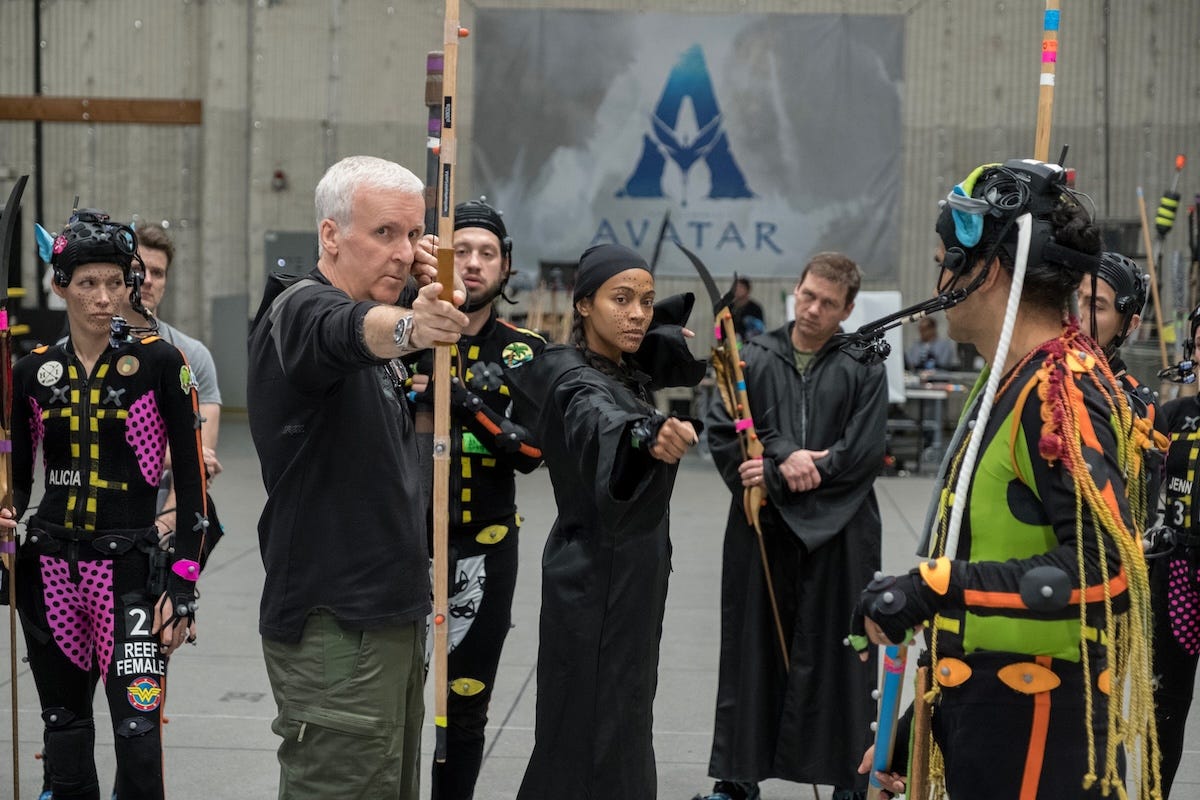
Whatever you think about James Cameron’s Avatar movies—and my feelings on them are mixed1—you really must listen to his two-part interview with Matt Belloni over at Puck. (Here’s part one; here’s part two.) There is no one in the film industry with Cameron’s combination of artistic success, critical acclaim, popular appreciation, technological accomplishment, and his box office returns to give real heft to everything he says about showbiz.
Although the whole conversation is worth listening to, for this newsletter I want to highlight just his thoughts on Netflix’s potential purchase of Warner Bros. Cameron reacted strongly, calling out Netflix’s CEO by name.
“Netflix would be a disaster. Sorry Ted, but geez. Sarandos has gone on record saying theatrical films are dead,” Cameron said.
Cameron’s response is understandable: Alongside Christopher Nolan and a handful of other holdouts like Ryan Coogler, Quentin Tarantino, and Denis Villeneuve, he’s one of the few people in Hollywood truly committed to the big-screen experience. It is, quite literally, the only way his most recent run of films are really worth watching: You cannot replicate the 3D experience at home and even if you could it still wouldn’t be as good as watching movies in a real theater. And Netflix is, ultimately, committed to destroying the theatrical model—which increases its expenditures by driving up labor expenses and costs it eyeballs in the form of lost attention—despite reports that Warner Bros. will honor existing theatrical commitments if it purchases the studio.
“It’s sucker bait, right?” Cameron rhetorically asked, summarizing the Netflix strategy: “We’ll put the movie out for a week. We’ll put it out for ten days. We’ll qualify for Academy Awards consideration.” Cameron knows the truth and is willing to state it publicly: Netflix buying Warner Bros. means that theaters will lose a fifth or a sixth of their regular output, including huge blockbuster properties like DC and other franchises, which would, potentially, send exhibitors into a death spiral they could not recover from.
Now, there are obviously issues with the other bidders, primarily Paramount and its owner, David Ellison. (When we debated this on Across the Movie Aisle this week, Peter took Netflix’s side over Paramount’s for just this reason.) I am also wary of Ellison; I have seen what they’ve done with CBS and I abhor the fact that they seem to be in the driver’s seat of this sale simply because they have Trump-shaped ace up their sleeve and the promise of less interference from the FCC. (There’s also likely to be a reduction in theatrical output if Paramount absorbs WB, but I’m slightly less worried about that since the whole point of buying WB is to put out the movies that actually keep theaters afloat, like The Batman and its sequels.)
But Netflix isn’t free of sin when it comes to bowing to government pressure, having bent the knee to autocratic regimes like MBS’s Saudi Arabia and Modi’s India. And if my good friend JVL is right and we are rounding a corner here, it has to be said that Trump is temporary (and that David Ellison does not really appear to be a super-MAGA type, simply accommodationist in the hopes of greasing some wheels; the fact that South Park has, apparently, been given completely free rein to do anything to anyone in the White House is comforting) but the dissolution of the theatrical experience would be permanent. There’s no rebuilding that ecosystem if it collapses.
Cameron, of course, is an expert on ecological collapse; it’s one of his many interests. So it’s no surprise he looks at the threat to his own ecosystem as an existential one.
Steve Hyden’s piece on The Last Waltz as a Thanksgiving movie remains one of my favorite pieces of writing about Martin Scorsese’s concert movie, so I’m going to share it with you once again:
Allow me to recount the plot of The Last Waltz: A dysfunctional family of five brothers has decided to stop living together. Before they split up, they invite a coterie of friends dressed in colorful suits and floppy hats over for a holiday celebration. Despite years of pent-up resentment — the brother with the amazing voice loathes the brother with the amazing haircut, whom he views as disloyal and undermining — all parties agree to put these tensions aside and put on a good face in front of the guests. …
And yet — in spite of the resentments, and the betrayals, and the intensifying intoxication — everyone is able to come together and conjure a feeling of community. When they gather around to tell old family stories that have been told and re-told umpteen times — like the one about Jack Ruby, or the one about shoplifting bologna and cigarettes — the brothers pretend to laugh whenever the overbearing brother takes over the conversation. (The upside of being on stage is that you can turn off his microphone.) After a while, the laughs seem less forced. They’re faking it so well that they start to feel actual community and love and understanding. This is what The Last Waltz, and Thanksgiving, is all about.
Read the whole thing here.
----
Assigned Viewing: The Family Plan 2 (AppleTV)
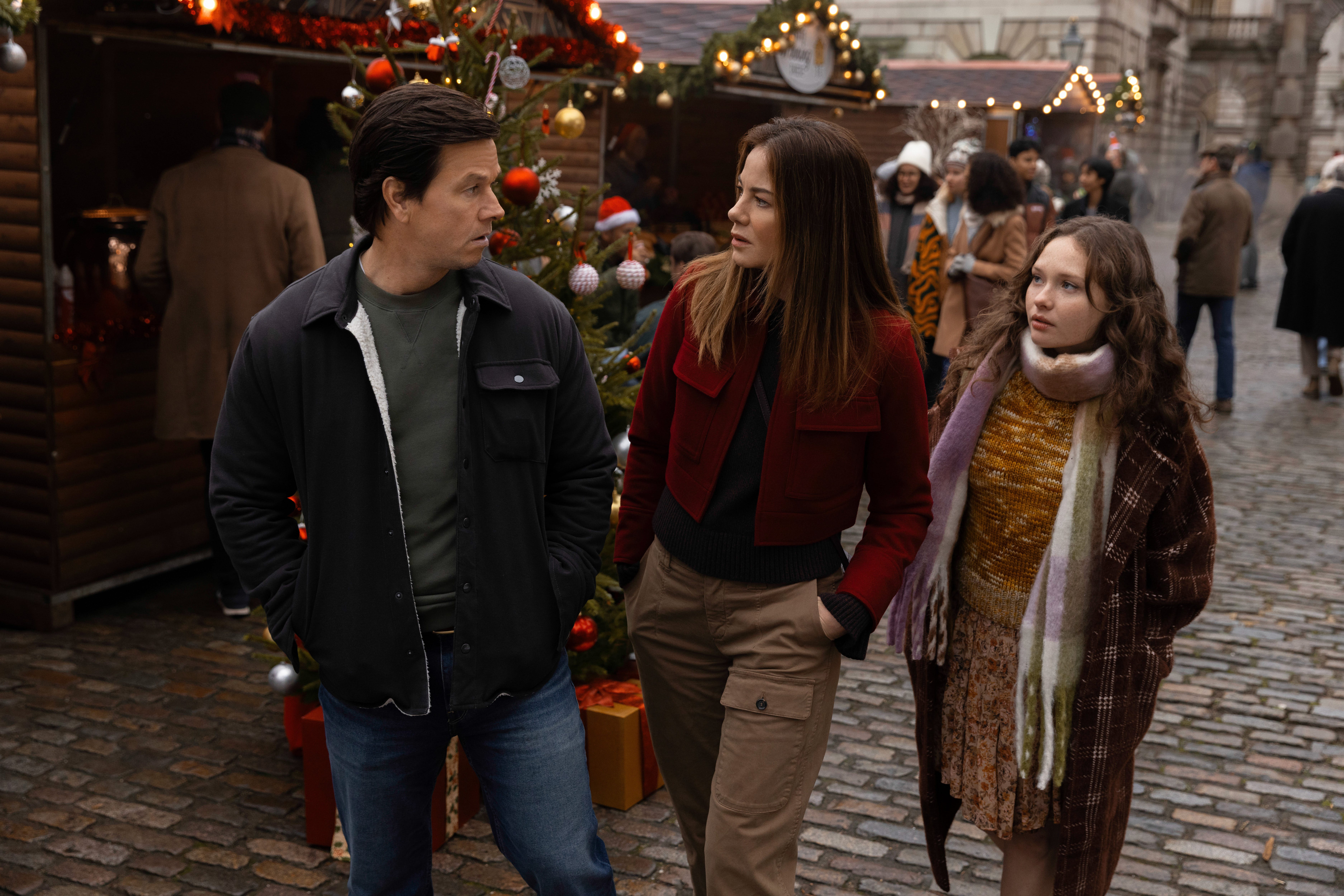
On this week’s The Bulwark Goes to Hollywood, I talked to David Coggeshall about his new movie The Family Plan 2. I’ve had David on before to discuss Orphan: First Kill and the first Family Plan, so it was fun to talk about the film’s expansion and on-location shooting: Whereas the first largely substituted Atlanta for Las Vegas, this one was shot largely on location in London and Paris, and you see that on the screen.
Sticking with 'Family'

On this week’s episode, I’m rejoined by David Coggeshall (previously on to discuss Orphan: First Kill and the first Family Plan) to discuss his sequel to the surprise 2023 hit for AppleTV+. We talked shooting in London and Paris, the inspirations this holiday-season film, and what might come next for this series (and his career!). If you enjoyed this ep…
Look, this flick is getting savaged by critics, but it’s a solid, family-friendly PG-13 action-adventure movie, one with a nice idea about the importance of being together for the holidays. It’s the sort of movie you throw on Saturday afternoon between football games and when the kids are getting restless; I think David described it as a “drunk uncles movie,” and that feels about right. High art? No. Good fun? Yeah, I think so.
As pieces of storytelling they are slavishly dedicated to archetypes, sometimes to their detriment. As examples of technological mastery they are completely mind-blowing. There really is nothing like seeing one of those movies in IMAX or Dolby 3D in a properly calibrated theater. It’s a genuine marvel. And that’s not nothing!
In many ways, the death of the movie theatre is one more signal loss of the public square. Once upon a now no longer relevant time, that was a sort of cultural town hall. Town halls: ritual format for people to gather, debate and take into account the ideas of others living nearby. Based on the idea of shared consensus for matters of importance. Now, though, we have the hived confines of at-home so called theater. We binge watch at the expense of more expansive and thought provoking kinds of intake. We opt for self limiting algorithms of You-tube or TikTok. Which don't expand; they minimize us.
I know we can never get back to a three-network Uncle Walter landscape, but we have gone down confined preselected warrens at an expense- to our understanding culturally, politically and socially who we really are. And this does not serve us well, as a cohesive society. The loss of the theatrical group experience is a parallel to the isolating and fragmenting effects of social media.
I'm totally in favor of Netflix acquiring Warner vs. the Ellisons. Having two large entertainment giants in the hands of the Trump-loving Ellisons is a disaster for democracy - I can only imagine the damage they'd do to the likes of HBO as they're doing to CBS.