




Good news about the war: The ceasefire announced yesterday between Israel and Lebanon seems to be holding. That conflict had been a major obstacle to advances in the U.S.–Iran peace talks, and as we prepared to send this newsletter it appeared to lead to another breakthrough in the form of an X post from Iranian Foreign Minister Seyed Araghchi:
In line with the ceasefire in Lebanon, the passage for all commercial vessels through Strait of Hormuz is declared completely open for the remaining period of ceasefire, on the coordinated route as already announced by Ports and Maritime Organization of the Islamic Rep. of Iran.
It’s not clear yet whether this announcement heralds the real reopening of the strait—a massive breakthrough, if so—or whether this is just yet another change in language describing the same old status quo of Iran trying to route all strait traffic through its tollbooth. We’ll find out soon enough.
One housekeeping note: JVL and Catherine Rampell will be on YouTube and Substack at 12:30 p.m. ET today for Receipts Live. Hope we’ll see you there—Lord knows there’s plenty of economic news to chew through. Happy Friday.
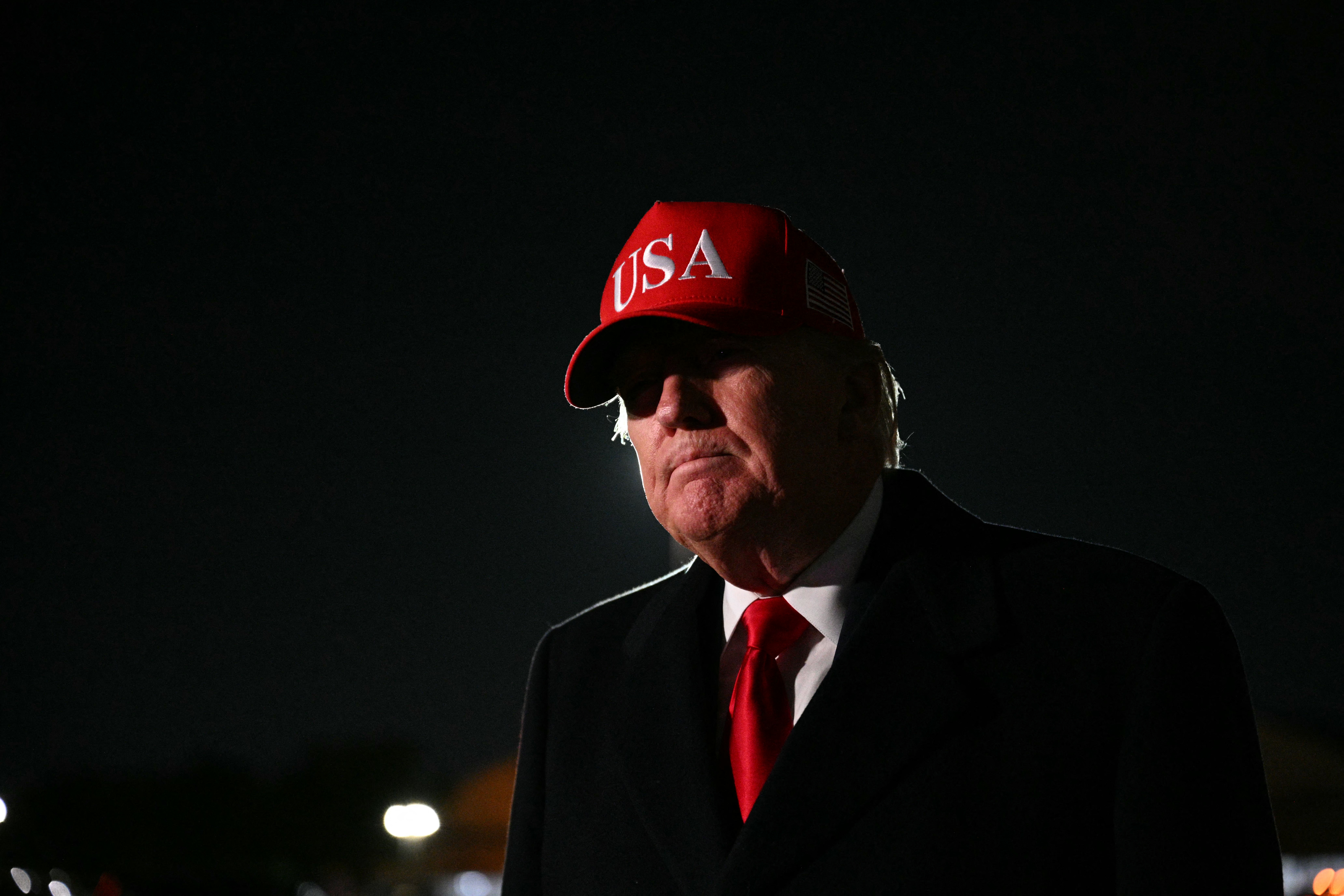
Trump: Less Popular and More Dangerous
by William Kristol
This past week in politics began with a big bang: Péter Magyar’s stunning and momentous electoral victory in Hungary, overcoming all the obstacles Viktor Orbán had constructed over sixteen years of increasingly authoritarian rule. It ends1 with a pleasant coda, one that’s neither stunning nor momentous but that’s still noteworthy: a 20-point Democratic victory in a special election for the New Jersey House seat that opened up when Mikie Sherrill was elected governor last November. In 2024, Kamala Harris had carried the district by nine points, and even Sherrill, a popular incumbent, had won by only fifteen.
So Democratic margins continue to increase, despite the fact that in this case the Democratic nominee was Analilia Mejia, a progressive who had narrowly prevailed in a multi-candidate primary earlier this year, and who was not the most reassuring Democratic candidate for the affluent suburban district. The Republican candidate, Joe Hathaway, argued that Mejia was an unacceptable radical, while trying to present himself as more moderate than Donald Trump.
But it didn’t matter much. The race was about Trump.
As the New York Times reported, “Mr. Trump was never far from the lips of Ms. Mejia’s supporters. ‘At every turn, we have seen an out-of-control president,’ Ms. Sherrill said on Sunday at a rally for Ms. Mejia, who she said would be an effective ‘check’ on Mr. Trump.”
Indeed, as one New Jersey reporter noted, “Several voters who spoke with the New Jersey Globe outside an early voting location in Madison couldn’t name the Democrat they had just voted for.”
In other words, last night’s result was consistent with all the previous results and all the data suggesting a big blue wave this November, driven by disapproval of Trump.
A Quinnipiac poll published Wednesday had Trump’s national approval–disapproval at 38 percent to 55 percent. Quinnipiac broke out the numbers of those who who strongly approve or disapprove:
approve strongly of Trump: 29 percent
approve somewhat of Trump: 9 percent
disapprove somewhat of Trump: 6 percent
disapprove strongly of Trump: 49 percent
If you’re going into a midterm when your party has controlled both the White House and Congress, and that party is joined at the hip to a president who’s losing 29 percent to 49 percent among those who care the most and who are the most likely to vote, your prospects are . . . not good.
So April’s electoral good news from Hungary could well be followed by good news from the United States in November.
But! An increasingly desperate Trump will still be in charge of the executive branch. He’ll have all the levers of presidential power at his disposal, and he has subordinates seemingly as willing as ever to use them as he wishes.
And so, as Nick Catoggio put it last night, Trump administration apparatchiks seem ever “more fanatic about making the president happy, either by carrying out his vendettas more aggressively or by aping his worst impulses more doggedly.”
Catoggio explains that Trumpist fanaticism will have consequences:
To protect their hold on power, he and his menagerie will need to be considerably more ruthless about challenges to it than Viktor Orbán was. . . . As Trump and his aides become more convinced that a Democratic midterm wipeout is a fait accompli, they may surmise that there’s nothing left to lose by leaning all the way in on unpopular autocratic gambits.
With Trump’s unpopularity and his desperation both mounting, the next thirty-three months—especially the next eight months before the new Congress is seated—are likely to be ever more dangerous.
Politics by Other Means and the English Language
by Mark Hertling
An important lesson our war colleges teach rising senior leaders is: Words are important, so be precise in your language.
That lesson was won by hard experience. It’s also borne out by research in the business world, where research on this subject is overwhelming. One of the most common causes of organizational failure is poor communication. When leaders are imprecise, when they rely on jargon or shorthand instead of clarity, when they use improper or fuzzy terms to describe desired outcomes, misunderstandings follow. In war, misunderstandings lead to bad decisions, unnecessary risk, and tragedy.
As George Orwell wrote, “the English language becomes ugly and inaccurate2 because our thoughts are foolish, but the slovenliness of our language makes it easier for us to have foolish thoughts.” Turn on a news program or listen to a political speech, and you’ll hear a steady stream of phrases that sound tough, even authoritative—but convey very little real meaning. They’ve become ubiquitous, especially among civilians trying to describe a battlefield they’ve never seen. And in the process, they distort far more than they clarify. There are far too many to cite, but here are some of my least favorite.
Start with “locked and loaded.” It’s a rifle range term—a command indicating a weapon is prepared to fire under controlled conditions. But more often people who are nowhere near a rifle—and may never have been—use it to signal readiness or resolve. The term doesn’t explain who is ready, what they’re ready to do, where, or why. It may be a catchy phrase, but it’s not precise communication.
I’ve come to loathe the almost ubiquitous phrase “boots on the ground.” It’s often used by media to refer to troops who deploy to conduct land warfare—though I’ve seen it perplexingly used recently to describe naval and air warfare as well. This term reduces human beings to equipment. It distances the public from the reality that deploying a force means putting people—leaders, teammates, American sons and daughters—in harm’s way. It’s a phrase that sounds grounded and authoritative, but it abstracts the human cost of war. And it should be banned. If you want a more accurate image, don’t talk about “boots on the ground”—talk about soldiers prepared for combat or doing what civilian leaders ask them to do.
“Downrange” is another example lifted from the rifle range. Downrange is where the targets are, and it’s not a safe place to be when military personnel are training with their weapons. Yet, we now have people using it to describe where our forces are deployed. Think about what it means for a moment: Taken literally, it places our troops in the same conceptual space as targets. It’s sloppy at best, misleading at worst.
“Warrior” has similarly proliferated. Inside the profession, it can carry meaning tied to ethos, discipline, values, and identity. But in public usage, it’s often a catch-all label applied to anyone in uniform, regardless of role, training, or mission. It blurs distinctions that matter in a professional force and turns a complex institution into a caricature. “Troops” is widely accepted in all branches as a catch-all for all service members and better describes the range of occupations and skills of military personnel.
There are the euphemisms. “Take down the leader.” “Take out the commander.” Those are phrases more appropriate for describing a wrestling match or a bad date than assessing the results of a military operation. In combat, the objective may be to kill or capture an enemy, destroy a headquarters, or defeat a unit. That’s the reality. Softening it with casual, almost flippant language doesn’t make it more acceptable—it makes it easier to ignore what’s actually being done.
I’m not trying to be a doctrinal wet blanket or a grammar nazi. Jargon and shorthand among military professionals, as among any specialized community, saves time and is perfectly appropriate because everyone knows what the terms really mean. Shared experience creates shared understanding, and is often used as verbal shorthand. But used inaccurately, or out of context—even by members of the military—they create a vocabulary that is imprecise, theatrical, and detached from reality.
When leaders and commentators speak about military operations, they are talking to the American people, a high percentage of whom have never served in uniform. And the American people deserve clarity—especially when their nation is committing their sons and daughters to combat.
Imprecise language creates imprecise thinking. It masks risk and obscures costs. It allows policymakers to imply action without defining a purpose, and it encourages the public to accept military operations without fully understanding their implications. There’s a better way, and it’s not complicated.
Say what you mean. If the mission is to deter, defend, attack, or blockade, use those words and then describe what they mean. If the objective is to kill or capture an enemy, don’t hide behind a euphemism. If forces are being deployed, say where and why. Channel Gen. Colin Powell, who as chairman of the Joint Chiefs who succinctly described the goals for Operation Desert Storm with precision: “Our strategy in going after this army is very simple. First, we are going to cut it off, and then we are going to kill it.” War is serious business, and the American people deserve real descriptions of what we are doing when we are engaged in those missions.
Too often, imprecise, militarized language is used to mask something even more significant: the absence of a coherent national strategy. Strategy is not a slogan or a strike. It is the alignment of ends, ways, and means—across all instruments of national power: diplomatic, informational, military, and economic. When those elements are not integrated, when there is no clear strategic framework, it becomes tempting to lean on military phrases and imagery to suggest control or progress. But tough talk is no substitute for accurately describing what our nation is trying to do.
Using the language of war to mask disorganized thinking confuses the public. It also risks committing the military to actions that are disconnected from achievable political outcomes. It places burdens on the one instrument of power that is most visible, most costly, and most dangerous, while allowing others to go underutilized.
We should expect more—from our leaders and from ourselves. War is not a soundbite, and shouldn’t be verbal theater. It demands discipline not just in execution, but in explanation. And that begins with using words that are clear, precise, and honest about what we are asking our military—and our citizens—to do.
AROUND THE BULWARK
How Putin’s Propagandists Are Spinning Orbán’s Defeat… And what has the Russian opposition optimistic? CATHY YOUNG reports.
On this bonus episode of The Focus Group, SAMI SAGE of Betches Media joins RACHEL JANFAZA to wonder whether millennials are truly still ‘cringe.’
‘Lee Cronin’s The Mummy’ Review… A potentially repugnant film, warns SONNY BUNCH.
The Worst President Ever… From Trump’s use of Jesus to corruption, pardons, and self-promotion, no president has sunk lower. Democrats need plans for oversight and stopping midterm cheating. AMANDA CARPENTER joins TIM MILLER on the flagship pod to discuss all that, plus Hegseth’s scripture problem, Trump’s ego-driven 250th birthday plans, and RFK Jr.’s obsession with dead animals.
Quick Hits
OUR EVAPORATING POWER: It seemed unavoidable on its face that Donald Trump’s war of choice in Iran—a war that conjured up a global energy shock out of nowhere and involved Trump threatening genocide and other war crimes against an entire people—would hurt America’s diplomatic standing in the world. Now, reports coming in from U.S. embassies around the globe—a set of which were obtained by Politico—show that this is already happening:
U.S. diplomats at embassies in the countries’ capitals painted damning portraits of an America under siege in multiple media spheres by pro-Iranian actors that are exceptionally agile in the digital space.
In Azerbaijan, what had been a significantly improving relationship has hit a plateau at best, and appears to be faltering. Bahrain’s government is facing questions about whether the U.S. abandoned it to fend for itself against Iranian drones and missiles. And Indonesia’s leader could face growing calls to reduce security ties with the U.S.
Some of the cables describe anti-U.S. sentiment that is having an immediate impact, while others raise concerns that relationships could be in danger if the war continues much longer. Taken together, the cables paint a picture of countries where the U.S. is losing the population’s trust, and potentially that of their governments.
Among the grimmest facts of all, Politico notes, is that the cables would likely never have been sent if the situation weren’t truly dire: “Many U.S. diplomats have become afraid to speak up under the Trump administration after it largely sidelined them from key foreign policy decisions, fired numerous members of the Foreign Service and emphasized ‘fidelity’ for those left, two U.S. diplomats said.” Read the whole thing.
PEACE TALKS WITH CLAUDE: Anthropic’s legal war with the Defense Department (and the Trump administration at large) hasn’t progressed much since a federal judge temporarily barred the government from forbidding the AI company to do business with its contractors. But now a breakthrough suddenly seems imminent—not for diplomatic reasons, but for technological ones.
Anthropic CEO Dario Amodei, Axios reports, is heading to the White House today for a meeting with Chief of Staff Susie Wiles—a meeting that comes as the administration wakes up to the fact that the company’s latest model, Mythos, is reportedly so capable both at engineering cyberattacks and at shoring up computer systems against them that it would be dangerous for the government not to use it. Here’s Axios:
The Trump administration recognizes the power of Anthropic’s new Claude model, Mythos, and its highly sophisticated—and potentially dangerous—ability to breach cybersecurity defenses.
“It would be grossly irresponsible for the U.S. government to deprive itself of the technological leaps that this new model presents,” a source close to negotiations told us. “It would be a gift to China.”
Making peace with Anthropic would be quite a pivot from Trump and Defense Secretary Pete Hegseth, who for months have derided it as “A RADICAL LEFT, WOKE COMPANY” riddled with “leftwing nut jobs” who had “delivered a master class in arrogance and betrayal” by placing “Silicon Valley ideology above American lives.” But as Emerson said, a foolish consistency is the hobgoblin of little minds.
Cheap Shots

Barring any major developments today, of which there may well be a few.
I would add: imprecise.
The state of NC BOE decided yesterday to turn over our voter rolls to DHS, so that’s not terrifying at all. 🫠🫠
He is absolutely going to get more desperate, which mixed with his clear declining mental stability makes the next several months extremely dangerous.
Great work everyone.
The Anthropic story is worth paying attention to. They are trying to do the right thing as a company and Hegseth (in his gravity defying level of ignorance) designated them a supply chain risk. I don't think most people realize just how far along AI has come and just how civilization destroying it could be in the wrong hands (like the hands of anyone with Hegseth level of ignorance).
Suffice it to say, there is a lot of stupid in this country and a disproportionate amount of them are currently at the highest levels of government.