
Horror is the most overintellectualized genre in filmmaking.
This is partly a coping mechanism, an effort to ward off accusations that the genre is fundamentally unserious or gauche. And there have, undoubtedly, been politically minded horror directors over the years, with auteurs like George Romero infusing anger about Vietnam into The Crazies or John Carpenter crafting an anti-Reaganomics parable with They Live.
Sometimes this got stretched a bit (see: The Texas Chain Saw Massacre as Vietnam War metaphor), but in ways that were at least debatable. Then, in the wake of Massacre and Halloween, came the slashers, the endless parade of movies about promiscuous, drug-addled teenagers meeting grisly demises at the hands of Michael, Jason, and Freddy (and more!) before a final, virginal girl saved herself. While normie audiences loved them (at least, enough to turn what we might call Friday’s Nightmare on Halloween Street into an inescapable maxiseries in the 1980s and 1990s), academically minded critics derided them as reactionary Reagan-era amusements. Meanwhile, rape-revenge pictures like The Last House on the Left and I Spit on Your Grave represented the misogynistic spirit at the heart of the American experiment, etc.
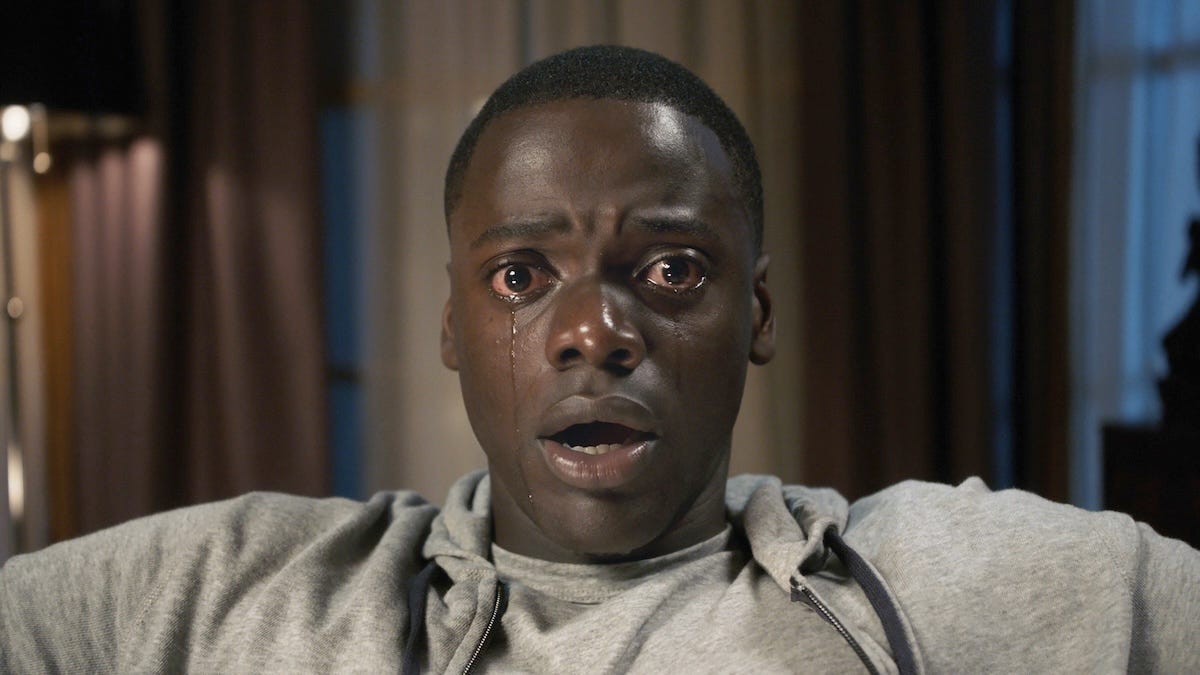
Horror got meta for a while during the postmodernist boom with the Scream series and Cabin in the Woods, and grotesque for a while with the torture porn subgenre (think Saw’s sequels, Hostel etc.) in response to 9/11. Then came the well-deserved critical and commercial success of Jordan Peele’s film Get Out (2017), which crystallized what I sometimes think of as the Op-Ed era1 of horror films: movies intended to have a very precise ideological or political read because they were making a point. Peele’s film, for instance, is, a treatise against cultural appropriation. Or take 2020’s remake of The Invisible Man, a movie about domestic abuse. The remake of Candyman is about the evils of gentrification; The Babadook, an early ancestor of the subgenre, is about the horrors of postpartum depression; Antebellum suggested that modern America is just as bad as the prewar South; and Blink Twice is about the horrors of #MeToo.
Again, some of these movies are great: The clockwork precision of Get Out is a real feat, even if I prefer the messier dream logic of Peele’s economic-inequality metaphor, Us. But the directness of the metaphor and the exchange of text for subtext often neuters the terror—it becomes the horror equivalent of clapter—while also rooting it in a specific period in a way that renders it instantly out of date. The Black Christmas remake, for instance, was hilariously dated even when it hit theaters in 2019, what with its digressions about “not all men” and broadsides against Camille Paglia. It’s a movie that will only really be legible to someone who spent a lot of time on Twitter between 2015 and 2019 or so, and even then only barely.
This is one reason why Zach Cregger’s Weapons, a darkly comic horror movie about the disappearance of an entire class of kids and the ways the townspeople dealt with that tragedy, is such a refreshing change of pace. We discussed it on Across the Movie Aisle this week (link below!), but one of its real pleasures is the slipperiness of the metaphor, the way in which the film doesn’t insist on any one reading. Is it a metaphor for school shootings, as many defenders have vociferously insisted since before the film was even released? A broader statement on the failure of older generations to care for those who came after? A secret pandemic movie? A movie about outsiders infiltrating your communities and poisoning them? Yes, no, sure . . . why not? Make your case, hash it out.
“I am very done with horror as some sort of didactic, you know, tool. Like, I don’t need to go see a horror movie and feel like, well, I didn’t learn a lesson, so it can’t be good,” Cregger recently said on the New Flesh podcast, noting that the film was solely intended as a manifestation of his grief at having suddenly lost a dear friend. “As long as people are having a blast and they’re scared and they’re laughing and they walk out and they feel like it was satisfying and a good story, then that’s the point. . . . I have no problem with a horror movie that is able to like, teach me something about society. I think that’s great. I just feel like we’ve slid into this weird place where it’s like, that becomes the metric of whether or not a horror movie is good.”
Again, there’s nothing wrong with Op-Ed Horror per se—Cregger’s own Barbarian dipped a toe into the op-ed waters, while Sinners, one of my favorite movies of the year so far, inarguably falls into this category—but a horror movie has to be more than the importance of its metaphor to succeed. Hopefully Weapons ushers in a new mode of horror blockbuster.
Seriously, Though, Weapons Is Great
I had a blast talking with Peter and Alyssa about Weapons this week, in addition to diving into the reaction of MAGA world to South Park’s broadsides against the president:
'Weapons': 2025's Funniest Scary Movie

On this week’s episode, Sonny Bunch, Alyssa Rosenberg, and Peter Suderman discussed how to best respond to South Park’s war on the Trump Administration and its cronies. Then they reviewed Weapons, the funniest scary movie of the year (so far!) that nevertheless has a poignant, melancholic core. (There are spoilers in this chat!)
And on the bonus episode, we asked if Hollywood really is getting “hot, horny, and white again”:
Hollywood's Reactionary Turn?

On this bonus episode, Sonny, Peter, and Alyssa discuss this piece in the New York Times, in which Sharon Waxman asked if Hollywood is “hot, horny, and white again” after a dalliance with diversity mandates.
Follow Across The Movie Aisle to your player of choice:
Apple Podcasts | Spotify | Amazon Music | More
That bonus episode is for subscribers only, so if you haven’t signed up yet do so now! First month is free!
Highest 2 Lowest Review
This movie is in a handful of theaters now—Google it, it might be playing near you—but the run will be limited because it’ll be on AppleTV+ in a couple of weekends. Still, if you can find it, go see it. It’s Spike Lee and Denzel Washington, man. They haven’t made a movie together since the great Inside Man in 2006. Here’s an excerpt from my review:
The moral dilemma at the heart of both films is a complicated one: What do the wealthy owe their underlings? Eventually, both David King and Kingo Gondo (Toshiro Mifune) make the same decision—there wouldn’t be much of a movie if they willingly let the boy die—but, without spoiling too much, Gondo’s sacrifice is more dire, harder for him to swallow. Ultimately, I get the sense that neither Lee nor Washington nor screenwriter Alan Fox are all that interested in David King’s financial problems; they are, respectively, more interested in the dynamics of New York City, the dynamics of fathers and sons, and the dynamics of a good insurance industry joke.
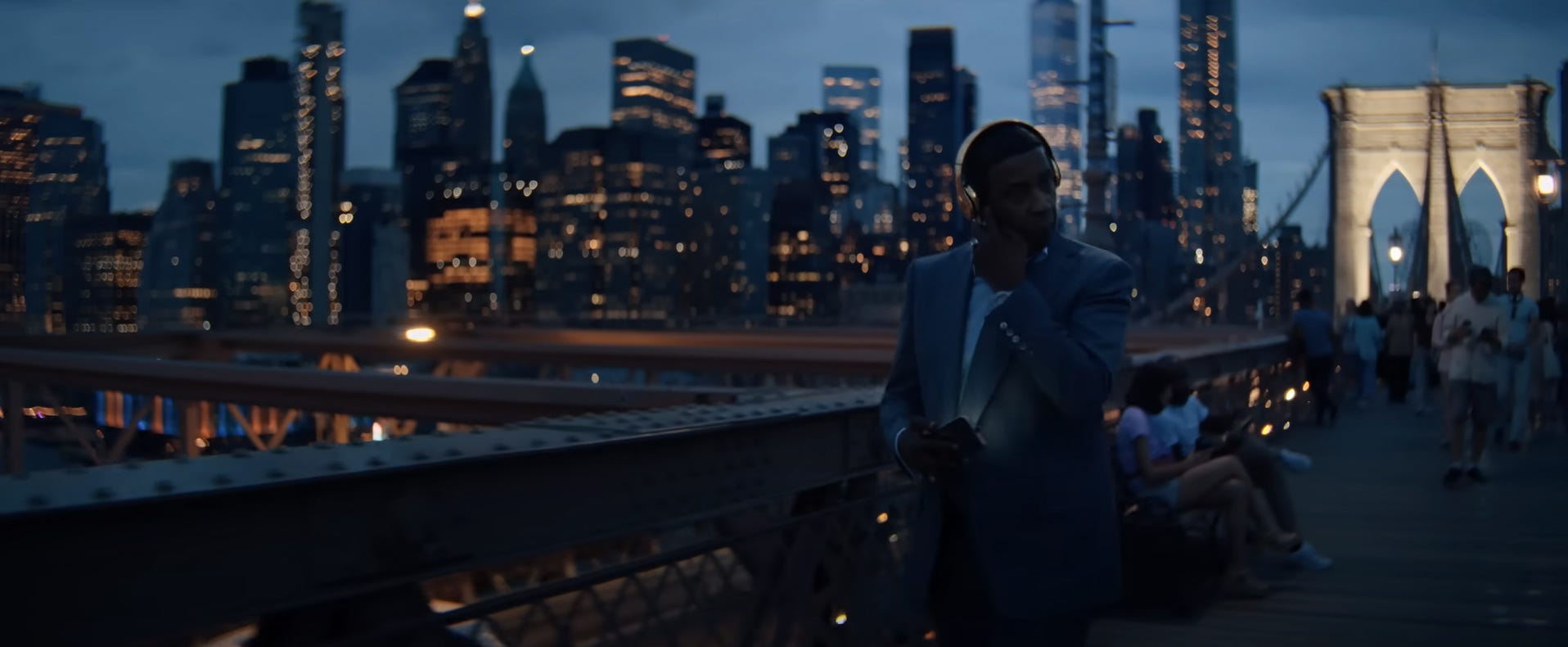
Lee has long been New York’s premier cinematic champion; from 25th Hour to Inside Man to Do the Right Thing, he’s always had an eye and an ear for the way the city looks and sounds. As the opening credits roll, we tour the city’s lowest streets and highest skyscrapers to the classic showtune “Oh, What a Beautiful Mornin’!” A bright red sign beaming WELCOME from Brooklyn Heights greets us on our circuit through the city, Lee returning to it repeatedly, and the whole sequence feels like a welcome to those out of town, assuming they’re not Bostonians. The best portion in the movie comes during King’s attempted handoff of the ransom, which combines Howard Drossin’s dynamic score with a rowdy ride on the subway and a car chase that runs smackdab in the middle of a Puerto Rican pride parade hosted by Spike Lee regular Rosie Perez, playing herself; the cacophony of the city threatens to overwhelm the senses, but it’s just another day in the Big Apple.
Denzel Washington is almost inarguably the most magnetic actor working today. He’s always doing something interesting on screen even when what he’s doing is not particularly interesting, as when he grabs a microphone-shaped paperweight and tells a business partner to just say yes into it. The man can monologue with the best of them, but it’s the moments where he’s trying to create a fatherly connection, to impart dadly wisdom, that he’s strongest, that his heart is most in the action onscreen. He, Washington, wants to be a shaper of men, and this is a movie with some young men who desperately need shaping.
Assigned Viewing: High and Low (Criterion Channel, HBO Max)
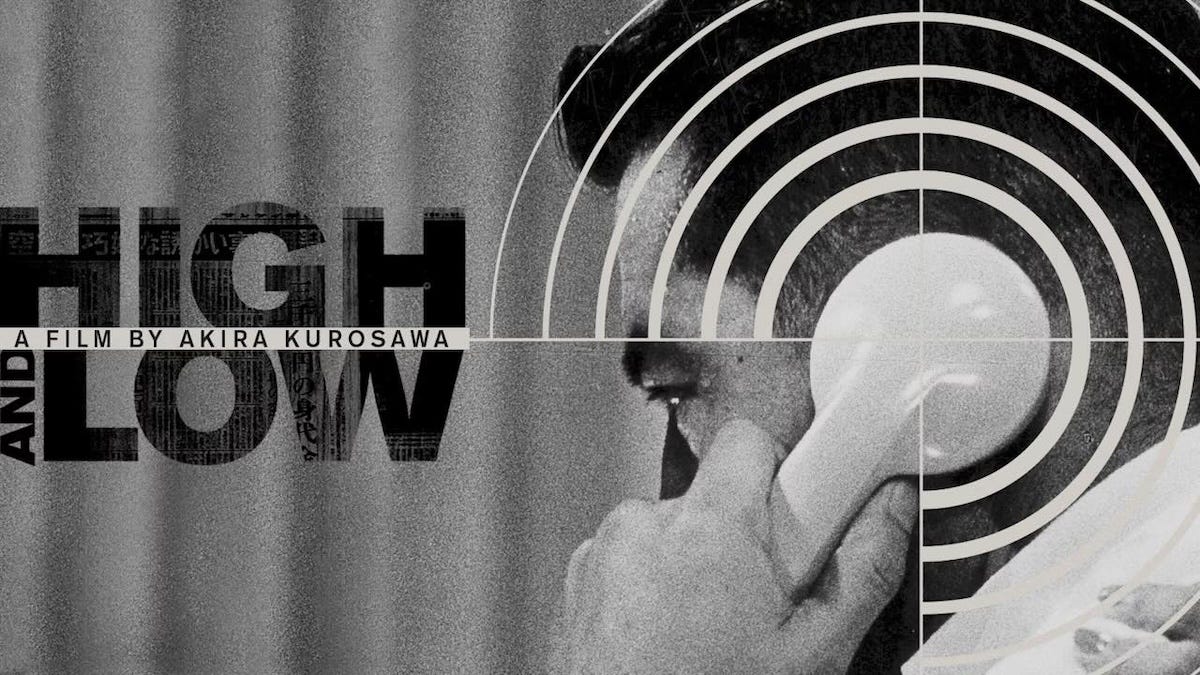
The Kurosawa film on which Highest 2 Lowest is based is about 140 minutes long and the first 55 take place almost entirely in a living room and vestibule. And it is utterly gripping. Check it out before (or after, I’m not the boss of you) you see the Lee/Washington remake.
What I’m calling “Op-Ed Horror” dovetails a bit with what is sometimes called “Elevated Horror,” but I think these are two different things. Op-Ed Horror is typically about a hot-button issue—the logline could be the nut graf of a Vox piece between 2015 and 2024, say—while Elevated Horror films often share a concern with internalized trauma but are rarely straightforward metaphors for a specific topic. To draw a specific distinction: The Babadook is both op-ed horror and elevated horror, but Midsommar and Hereditary are just elevated horror while Antebellum is just op-ed horror.
Hey, I had a lot of fun watching those slasher pics lol 😂 But seriously I agree with you about "Us" and I cannot recommend "Sinners" highly enough. Horror is a fascinating genre and I'm here for it.
Kind of hard to believe you didn’t include Guillermo del Toro’s movies as examples of op-ed horror, especially the Devil’s Backbone, the Shape of Water, and Pan’s Labyrinth.