Trump Is Still Obsessed with Stealing Elections
The FBI’s seizure of Georgia ballots is as much about future elections as past ones.


Operation Sorry About All That is now well underway in Minnesota’s Twin Cities, where White House border czar Tom Homan has replaced Border Patrol cartoon villain Greg Bovino as the point man overseeing ICE’s ongoing enforcement.
As we were preparing to send this newsletter this morning, Homan headed to a press podium for his first public remarks since taking the command. He struck a conciliatory tone in his remarks, speaking of productive meetings with state and local leaders, acknowledging in vague terms that federal officers had made mistakes during the operation, insisting that officers would face accountability for misconduct, and emphasizing that ICE’s focus going forward would be targeted enforcement, not broad sweeps. Still, Homan emphasized that Trump’s deportation mission remained ongoing and that aggressive street protests were a barrier to deescalation.
We’ll have much more on all this tomorrow.
Programming note: No Triad today, but JVL will be back tomorrow. Happy Thursday.
Raiders of the Lost Cause
by Andrew Egger
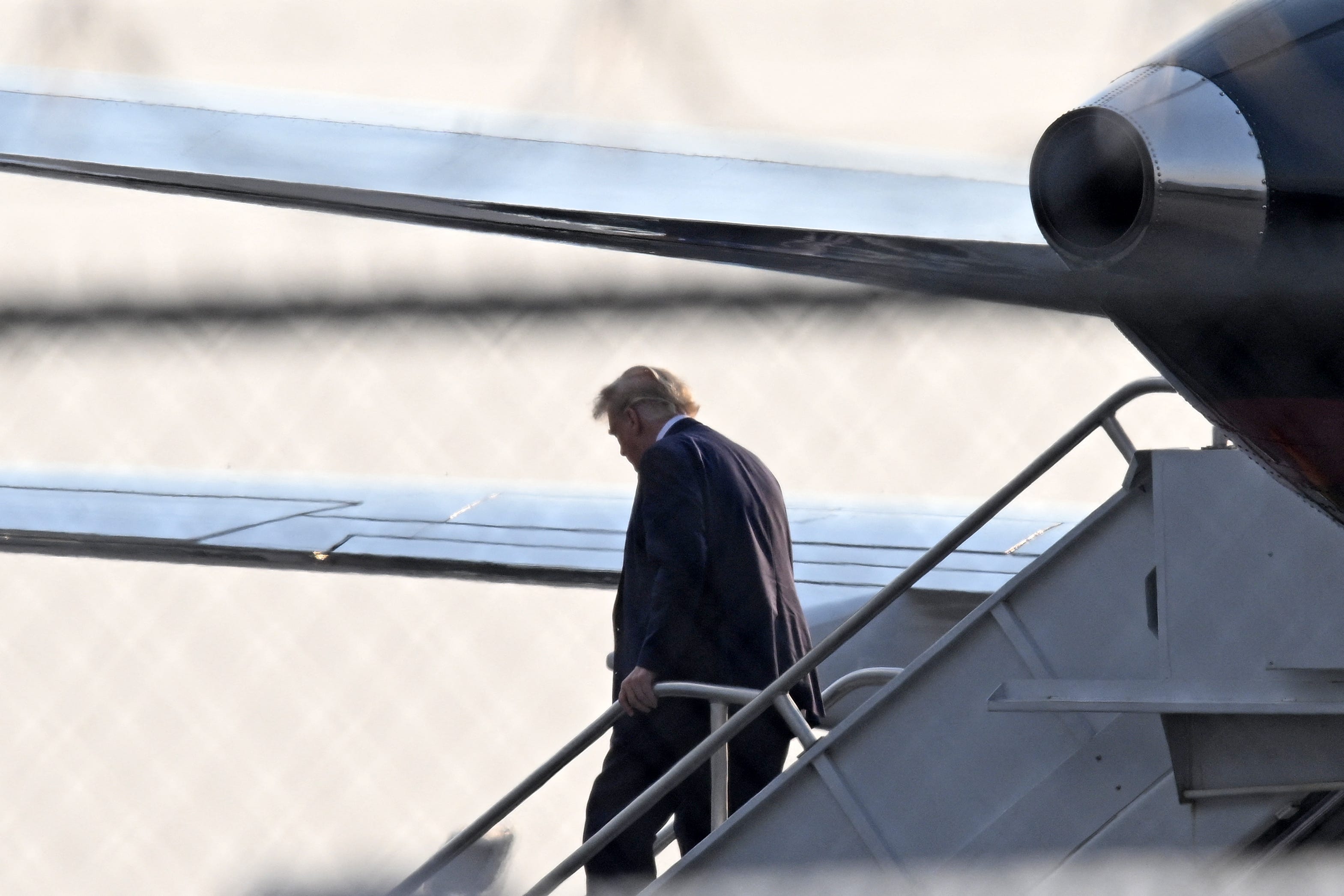
For Donald Trump, the 2020 election still isn’t over. Yesterday, FBI agents executed a warrant at an election office and archive in Fulton County, Georgia. They were seeking, the Fulton County government said, “a number of records related to 2020 elections,” including computers and ballots. Agents ended up carting off more than 700 boxes.
Back in Washington, Trump was watching from afar. He spent the evening retweeting lunatic conspiracy theories about Georgia’s 2020 election, which ultimately broke for Joe Biden by only about 12,000 votes. According to posts he reshared, Fulton County election workers had spent election night “pulling suitcases full of alleged fraudulent ballots from under tables after the election center was shut down, running the same stack of ballots over, and over, and over, all throughout the night until Biden was ahead, stealing the election from President Trump.”
“TRUMP WON BIG,” Trump himself wrote in response. “Crooked election!”
Although it feels insane to have to write this in 2026, I guess I probably should: All Trump’s claims about the supposed mendacity of the 2020 election have been endlessly litigated and relitigated. The votes have been counted, recounted, investigated, and audited. Every investigation into the matter has confirmed the same thing: Trump’s claims were preposterous lies in 2020, and they remain just as preposterously untrue six years on.
There’s one thing that’s new, though. It’s possible that now, unlike in 2020, we no longer live in a world where the actual truth or falsehood of such claims actually matters. That’s the remarkable statement Fulton County Commissioner Mo Ivory made to reporters last night. “We know in America right now it does not even matter if what you are saying is the right thing,” Ivory said. “If our president wants to bring in the forces, he will.”
Trump’s assault on our elections—once unambiguously his most outrageous crime—can now only rarely recapture our attention amid so many other scandals and disasters. It has somehow become, for us, a background matter. When Trump, speaking for America on the world stage at Davos, proclaims that 2020 “was a rigged election” and promises that “people will soon be prosecuted for what they did,” we’re almost too numb to be scandalized. When he commemorates the fifth anniversary of the January 6th insurrection by publishing a website recasting rioters as peaceful patriots and police as violent instigators, or when he hangs a plaque in the White House claiming that Joe Biden took office “as a result of the most corrupt Election ever seen in the United States,” we find it difficult to summon the appropriate spirit of outrage.
Well, it’s time to wake up. Trump remains hellbent on punishing the people he somehow still believes stole an election from him once upon a time. And he seems keen on intimidating election officials—and influencing the vote—in states that will decide the congressional margins in 2026 and the presidential outcome in 2028.
And the fact that he now has the FBI participating in his revenge effort is a terrifying demonstration of just how many guardrails he has steamrolled—or that have fallen away—since that election. Trump wanted the Justice Department to seize voting infrastructure after the 2020 election, too. At the time, Attorney General William Barr refused the request, citing, as Barr testified later, a lack of probable cause. The idea that Attorney General Pam Bondi or FBI Director Kash Patel would ever display the moral fiber to raise similar objections was always laughable. As of yesterday, it is disproven.
It would be one thing if Trump’s campaign against the 2020 election were about vengeance only. That would be despicable, but it’s not obvious it would work. After all, as Trump keeps learning to his fury, really getting retribution on any of these people requires a certain amount of cooperation from judges and juries, which he has so far failed utterly to get.
But Trump has plenty of reasons to care about the 2026 and 2028 elections too. As I wrote earlier this month, his attempt to relitigate 2020
was mostly a matter of arrogance and pride: He simply couldn’t accept that he’d lost to Joe Biden. This time, the personal stakes will be much higher. Wrapped in the powers of the presidency, he’s acted as a law unto himself for too long not to dread going back into private life, where long-delayed legal consequences might be lurking, waiting for him.
Donald Trump is the kind of guy who tries to steal elections. He’s now presiding over a Justice Department that seems primed to help him try. And we cannot permit any scandal of the moment to drive this fundamental reality from our minds.
What can elected Democrats, community leaders, and all of us do to help safeguard our next elections? Share your ideas in the comments.
The Boss Is Pissed
Bruce Springsteen released a new song yesterday, “Streets of Minneapolis.” He wrote, recorded, and released the song in just a few days, “in response to the state terror being visited on the city of Minneapolis,” as he put it. “It’s dedicated to the people of Minneapolis, our innocent immigrant neighbors and in memory of Alex Pretti and Renee Good.”
Mark Hertling has a long history with protest songs, having listened to and reflected on many of them while serving in the Army for forty years. This one, he writes on the homepage today, is unlike any other he’s ever heard.
When I went to West Point in the early 1970s, the country was still locked in the trauma of Vietnam. While my class did not fight there, the music of that era reflected a central tension that shaped us nonetheless: not simply opposition to a war, but an effort to understand the distinction between the war and the warriors sent to fight it. Songs like Phil Ochs’s “I Ain’t Marching Anymore” and Creedence Clearwater Revival’s “Fortunate Son” weren’t abstract. They asked uncomfortable questions about fairness, sacrifice, and power. In nuanced ways, they forced us to confront who was paying the price—and why. . . .
Which brings us to today. Bruce Springsteen’s new song, “Streets of Minneapolis,” released on Wednesday, belongs to a different chapter entirely. It isn’t about soldiers going overseas, or even about war in the abstract. It is about Americans confronting Americans. It is about power exercised at home, lives lost on our own streets, and the strain placed on who we say we are—and who we aspire to be.
Springsteen has always written about place, dignity, and struggle, giving a rock inflection to the kinds of concerns that older generations had taken up in folk music (and sometimes blues, bluegrass, and country). But this song feels more inward-facing than much of Springsteen’s earlier work. It is mournful rather than strident. It doesn’t ask whether a war is just; it asks whether we are. When he sings of “snow-filled streets” and names the dead, he anchors the song in lived loss, not ideology. And when he describes authority moving through a city with weapons visible and fear close at hand, he isn’t protesting a policy so much as questioning a condition.
This represents a profound shift in protest music—and arguably in the nation itself. This isn’t a song about a war we are fighting, or about economic or racial inequality. This is a song about the values we are testing. It asks what we are willing to preserve when authority, fear, and politics collide—when the lines between security and coercion, order and justice, begin to blur.
For someone who spent a lifetime wearing the cloth of his country, that distinction carries real weight. Armies exist to defend nations. But nations endure only if they retain a shared moral center. Music gives expression—and attention and contention—to that moral center. Protest songs don’t offer easy answers. They create space—to pause, to listen, and to ask hard questions we might prefer to avoid.
AROUND THE BULWARK
Trump and the Great Midwestern Divide… His Iowa visit highlights the divergent realities occupied by his supporters and the growing opposition, reports LYZ LENZ from Clive, Iowa.
Federal Agents Shot an American And These Ghouls Defended It… TIM MILLER joined Piers Morgan to give his take on Alex Pretti’s murder by federal officers in Minneapolis and called out panelists defending state violence, while breaking down what real courage and real masculinity looks like.
How Niall Ferguson Learned to Love Trump… and snagged a pundit slot at the Bari-Weissified CBS News, writes CATHY YOUNG.
Retired General Warns Militarizing Minneapolis Would Be A Disaster. In this edition of Command Post, Bill Kristol and Lt. Gen. Mark Hertling (Ret.) give their takes on the federal agents in Minneapolis following the killing of Alex Pretti, explain the dangers of militarizing U.S. cities, and discuss what NATO allies are doing in the Arctic.
Minnesota and Texas, We’re Heading Your Way!
Let’s be together in meat space! February 19, the gang heads to Minneapolis for a Bulwark Live show, and then March 18–19 they’ll have two shows in Texas. Tickets on sale soon—keep an eye out for on-sale dates or check TheBulwark.com/Events.
Quick Hits
WILL NOEM ROEM HOEM?: Homeland Security Secretary Kristi Noem’s seat is getting hotter. A pair of Republican senators—Thom Tillis of North Carolina and Lisa Murkowski of Alaska—have called for Noem to resign over her handling of the aftermath of the killing of Alex Pretti, with Tillis telling reporters he had no confidence in her leadership and saying she “needs to go.”
Noem wasn’t the only administration official to rush to call Pretti a “domestic terrorist” in the hours after his death. When the White House abruptly decided Monday to abandon that line, she attempted to pin the blame on Stephen Miller, saying in remarks reported by Axios that she had simply been following his directions. Still, this was a pretty lame excuse for a bunch of reasons—the whole Minneapolis boondoggle has been her operation, and as a cabinet-level official, claiming I was only slandering this man my guys killed because the president’s vizier told me to doesn’t get you very far.
In ordinary times, so humiliated a secretary would have little choice but to offer a face-saving resignation. But Noem—who has racked up an unenviable pile of truly bizarre scandals, including notoriously shooting her dog and lying about meeting Kim Jong-un—seems likely to hang on as long as her boss will let her. Meanwhile, President Trump has never seemed to mind his subordinates outing themselves as stuffed-shirt yes-men, and he fired back at Tillis and Murkowski yesterday, calling them “losers” and “terrible senators.”
TICK TOCK ON PRETTI: New information keeps coming out about the circumstances surrounding Alex Pretti’s death. CBS News reported yesterday, citing affidavits filed in federal court, that a number of witnesses to the shooting were immediately detained by federal officials, who took them to the Whipple Building—ICE’s Minneapolis headquarters—and held them there for several hours. They were later released without charges.
Meanwhile, new footage emerged yesterday appearing to show an earlier interaction between Pretti and ICE about a week before his death. In this footage, taken by media outlet the News Movement, Pretti shouts and spits at agents whose vehicle is blocking a road. As the agents prepare to drive away, he kicks a taillight out of the vehicle, prompting agents to tackle and pile onto him while also deploying tear gas into the crowd. In this instance, however, they shortly let him go.
Cheap Shots

Tom Homan “striking a conciliatory tone” sounds about as credible as — let’s see — Tom Homan refusing a bribe.
RE: FBI’s Search of Georgia Election Center
What judge issued the warrant?
Magistrate Judge Catherine Salinas
https://georgiarecorder.com/2026/01/28/fbi-raids-fulton-county-elections-warehouse-seeking-2020-ballots/
Given the extensive judicial history regarding the 2020 election, to say nothing of extensive litigation involving Fulton County GA......What was the basis for issuing a search warrant?
I am still looking.